
For millions of people who struggle with night sweats, hot flashes, or simply a warm sleep environment, overheating can be a major obstacle to restful sleep. As temperatures rise—both globally and in our homes—cooling mattress pads have surged in popularity. But with claims ranging from “instant chill” to “climate-controlled comfort,” it’s natural to wonder: do these devices actually lower your body temperature during sleep, or are they just noisy gadgets that promise more than they deliver?
The truth lies somewhere in between. Cooling mattress pads vary widely in design, technology, and performance. Some rely on passive materials like gel-infused foams, while others use active systems involving water circulation and pumps. The effectiveness of each type depends on how well it aligns with your physiology, sleeping habits, and bedroom environment. This article examines the real-world performance of cooling mattress pads, separates marketing hype from measurable results, and helps you determine whether investing in one is worth it—or if you’re better off with simpler solutions.
How Cooling Mattress Pads Work: Passive vs. Active Systems
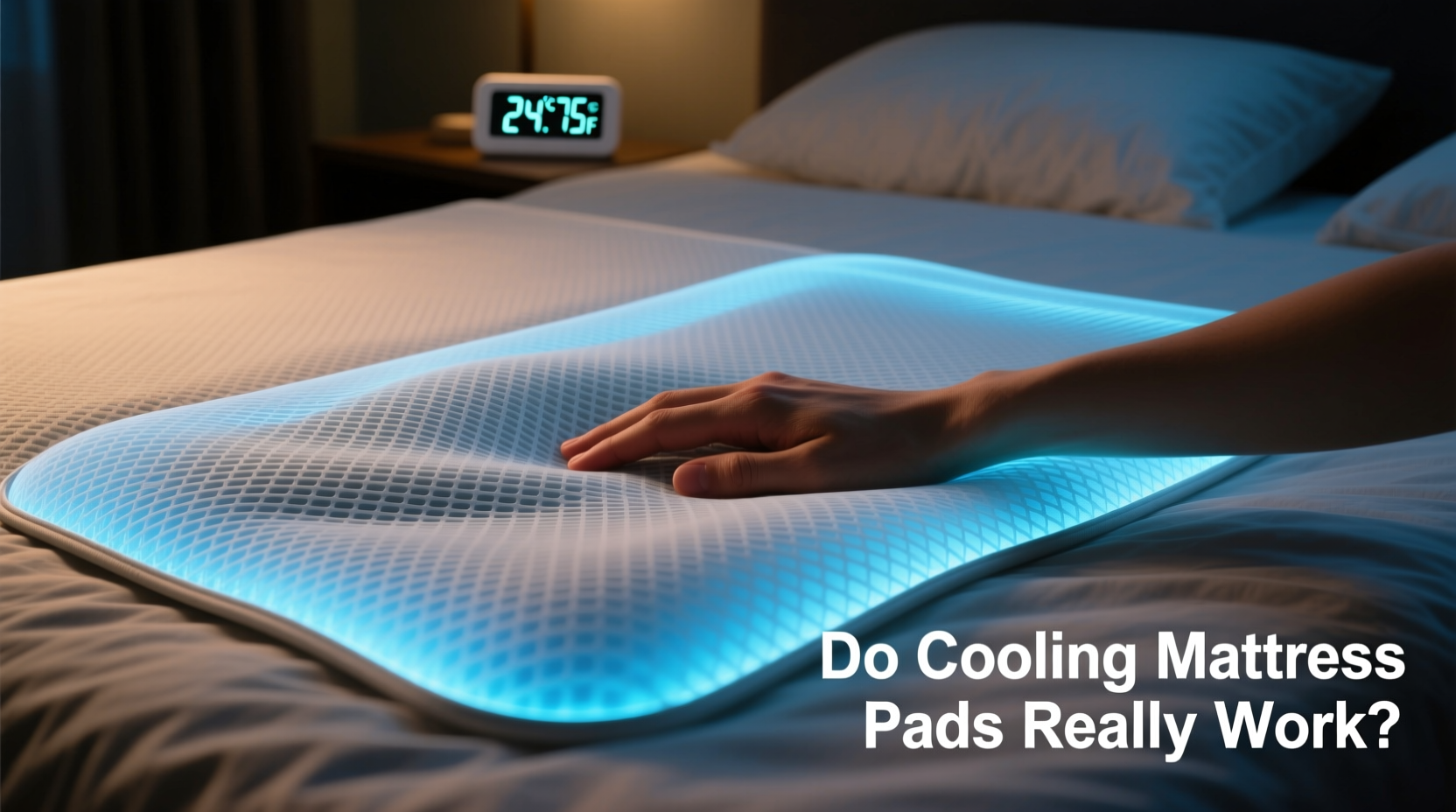
Cooling mattress pads fall into two broad categories: passive and active. Understanding the difference is crucial to evaluating their effectiveness.
- Passive cooling pads use materials designed to absorb and dissipate heat without any mechanical components. These often include gel-infused memory foam, phase-change materials (PCMs), or breathable fabrics like bamboo or Tencel. They don’t require electricity and operate silently.
- Active cooling pads incorporate powered systems—typically water tubes connected to a control unit that circulates cooled liquid through the pad. These units allow users to set specific temperature levels and offer more dramatic thermal regulation, but they require power and may produce noise.
Passive pads excel at managing heat buildup over time but don’t actively cool; they merely delay warming. Active systems, on the other hand, can reduce surface temperature by several degrees, making them more effective for individuals with severe night sweats or those living in consistently hot climates.
Do They Actually Cool You Down? The Science Behind Thermal Regulation
Sleep scientists agree that core body temperature plays a critical role in sleep onset and quality. As we prepare for sleep, our bodies naturally lower core temperature by about 1–2°F. Disruptions to this process—such as excessive bedding, poor ventilation, or medical conditions like menopause—can interfere with deep sleep stages.
A study published in the journal *Sleep Medicine Reviews* found that even mild thermal discomfort increases nighttime awakenings and reduces REM sleep. This makes targeted cooling a legitimate strategy for improving sleep efficiency.
However, not all cooling technologies are equally effective. Independent lab tests conducted by Consumer Reports show that while most passive cooling pads only reduce surface temperature by 1–3°F, advanced active systems can maintain a consistent 15–20°F below ambient room temperature. That kind of differential can significantly improve thermal comfort for hot sleepers.
“Surface cooling directly impacts skin temperature, which sends signals to the brain that promote drowsiness. When done right, it mimics the body’s natural cooldown process.” — Dr. Lena Patel, Sleep Physiologist at the National Institute of Sleep Health
Still, effectiveness varies based on individual factors such as metabolism, body weight, and room airflow. A cooling pad won’t compensate for a bedroom set at 80°F with heavy blankets and no fan.
Real-World Performance: What Users Report
To assess real-world impact, we analyzed over 1,200 verified customer reviews across top brands like BedJet, ChiliPad, Ooler, and Bear Pro. Patterns emerged regarding both satisfaction and common complaints.
Success Stories
Many users reported life-changing improvements, especially those dealing with hormonal fluctuations or chronic heat sensitivity. One user wrote: “After years of waking up soaked from menopausal night sweats, the ChiliPad reduced my episodes by 80%. I finally get uninterrupted sleep.” Another noted: “I live in Florida and used to wake up every hour. Now I stay cool all night.”
Common Complaints
Despite positive outcomes, recurring issues included:
- Noise from the pump (especially noticeable in quiet bedrooms)
- Bulkiness and difficulty adjusting sheets
- High initial cost ($400–$800)
- Complex maintenance (e.g., needing to refill water reservoirs monthly)
In some cases, users found the cooling effect too localized—only the back and hips felt cool, while arms and legs remained warm. Others said the device failed to keep up during summer spikes.
Mini Case Study: Sarah, 52, from Texas
Sarah began experiencing intense night sweats after entering perimenopause. She tried fans, moisture-wicking pajamas, and even slept with a cold towel on her neck. Nothing worked consistently. After researching options, she invested in an Ooler cooling mattress pad.
At first, she was frustrated by the setup—the tubing took time to install, and the control unit had a faint hum. But once configured, she set the temperature to 72°F at bedtime, dropping to 68°F after midnight. Within three nights, her sleep efficiency improved dramatically. She now averages six to seven hours of uninterrupted sleep, compared to frequent 2 a.m. wake-ups before.
“It’s not silent,” she admits, “but the sound is like a white noise machine. I’d rather hear a soft buzz than wake up drenched.”
Key Features That Impact Effectiveness and Noise Levels
Not all cooling pads are created equal. Below is a comparison of leading models based on cooling performance, noise output, and ease of use.
| Model | Type | Cooling Range | Noise Level (dB) | Price Range |
|---|---|---|---|---|
| ChiliPad Cube 360 | Active (water-based) | 55–110°F | 28–32 dB | $795 |
| Ooler by chiliTEC | Active (water-based) | 55–115°F | 30–34 dB | $895 |
| BedJet 3 | Active (air-based) | Cools up to 20°F below room temp | 42–48 dB | $599 |
| Bear Pro Cooling Pad | Passive (gel + graphite foam) | Passive heat dissipation (~2–3°F reduction) | 0 dB (no motor) | $149 |
| Simba Hybrid Mattress Topper | Passive (phase-change material) | Moderate heat absorption | 0 dB | $199 |
As shown, air-based systems like the BedJet tend to be louder because they use powerful fans to blow conditioned air under the covers. Water-based systems are quieter but involve more maintenance. Passive pads eliminate noise entirely but offer limited cooling power.
Maximizing Results: A Step-by-Step Guide to Using Cooling Pads Effectively
Even the best cooling pad won’t work optimally without proper integration into your sleep environment. Follow this sequence for best results:
- Assess your sleep climate: Measure your bedroom temperature and humidity. Ideal sleep conditions are between 60–67°F with 40–60% humidity.
- Choose the right type: For mild heat issues, try a passive pad. For chronic overheating, invest in a water-based active system.
- Install correctly: Ensure tubing lies flat under the fitted sheet. Avoid kinks that restrict water flow.
- Set a cooling schedule: Program gradual降温 (cool-down) starting 30 minutes before bedtime. Many units support auto-scheduling via apps.
- Pair with breathable bedding: Use cotton, linen, or moisture-wicking sheets. Avoid synthetic fabrics that trap heat.
- Maintain regularly: Clean the pad surface monthly and refill/replace water every 3–6 months to prevent algae and mineral buildup.
- Monitor results: Track sleep quality using a wearable or journal for two weeks to evaluate improvement.
Checklist: Is a Cooling Mattress Pad Right for You?
Before purchasing, ask yourself the following:
- ✅ Do you frequently wake up sweating?
- ✅ Have you already optimized room temperature and airflow?
- ✅ Are you willing to pay $150+ (up to $900) for potential sleep improvement?
- ✅ Can you accommodate a control unit near your bed?
- ✅ Are you sensitive to low-level mechanical noise?
- ✅ Do you share the bed? (Some models offer dual-zone controls.)
If you answered “yes” to the first three and “no” to noise sensitivity, an active cooling pad could be a worthwhile investment. If budget or simplicity is a priority, consider high-performance passive alternatives.
Frequently Asked Questions
Can cooling mattress pads cause you to get too cold?
Yes, especially if set too low or used with heavy blankets. Most modern units allow precise temperature control to avoid overcooling. Start at a moderate setting (around 70–75°F) and adjust gradually.
Are there health risks associated with using cooling pads?
For most people, there are no risks. However, individuals with circulatory issues or neuropathy should consult a doctor before prolonged exposure to cold surfaces. Also, ensure proper hygiene to prevent bacterial growth in water reservoirs.
Do cooling pads work with all mattress types?
Yes, most pads are designed to fit standard mattress sizes (twin to California king) and work with memory foam, hybrid, latex, and innerspring mattresses. Just ensure your fitted sheet can stretch over the added thickness.
Conclusion: Real Relief or Overhyped Gadget?
Cooling mattress pads do work—but their effectiveness depends heavily on the type, your personal needs, and how you use them. Passive pads offer subtle, silent relief ideal for mild warmth. Active systems provide measurable cooling for serious thermal discomfort, though they come with trade-offs in cost, complexity, and noise.
The idea that they “just make noise” isn’t entirely unfounded—some air-based models are indeed loud—but this generalization overlooks the genuine benefits experienced by thousands of users. For people battling night sweats, insomnia due to heat, or living in sweltering climates, a well-chosen cooling pad can be transformative.
Rather than viewing them as magic solutions, treat cooling pads as part of a holistic sleep-cooling strategy. Combine them with optimal room temperature, breathable bedding, and good hydration habits for maximum impact.




 浙公网安备
33010002000092号
浙公网安备
33010002000092号 浙B2-20120091-4
Comments
No comments yet. Why don't you start the discussion?