
Essential oil diffusers have become a staple in homes across the world. Marketed as tools for relaxation, mood enhancement, and even air purification, they’re often found in bedrooms, offices, and yoga studios. But beneath the calming scents and soft LED lighting lies a growing question: Do these devices actually purify the air—or is that claim mostly clever marketing?
The answer isn’t a simple yes or no. While essential oil diffusers can influence indoor air quality in subtle ways, their ability to \"purify\" air—especially compared to HEPA filters or UV-C air purifiers—is limited. Understanding the distinction between psychological comfort, antimicrobial effects, and actual air filtration is key to evaluating whether your diffuser is doing more than just making your space smell nice.
How Essential Oil Diffusers Work
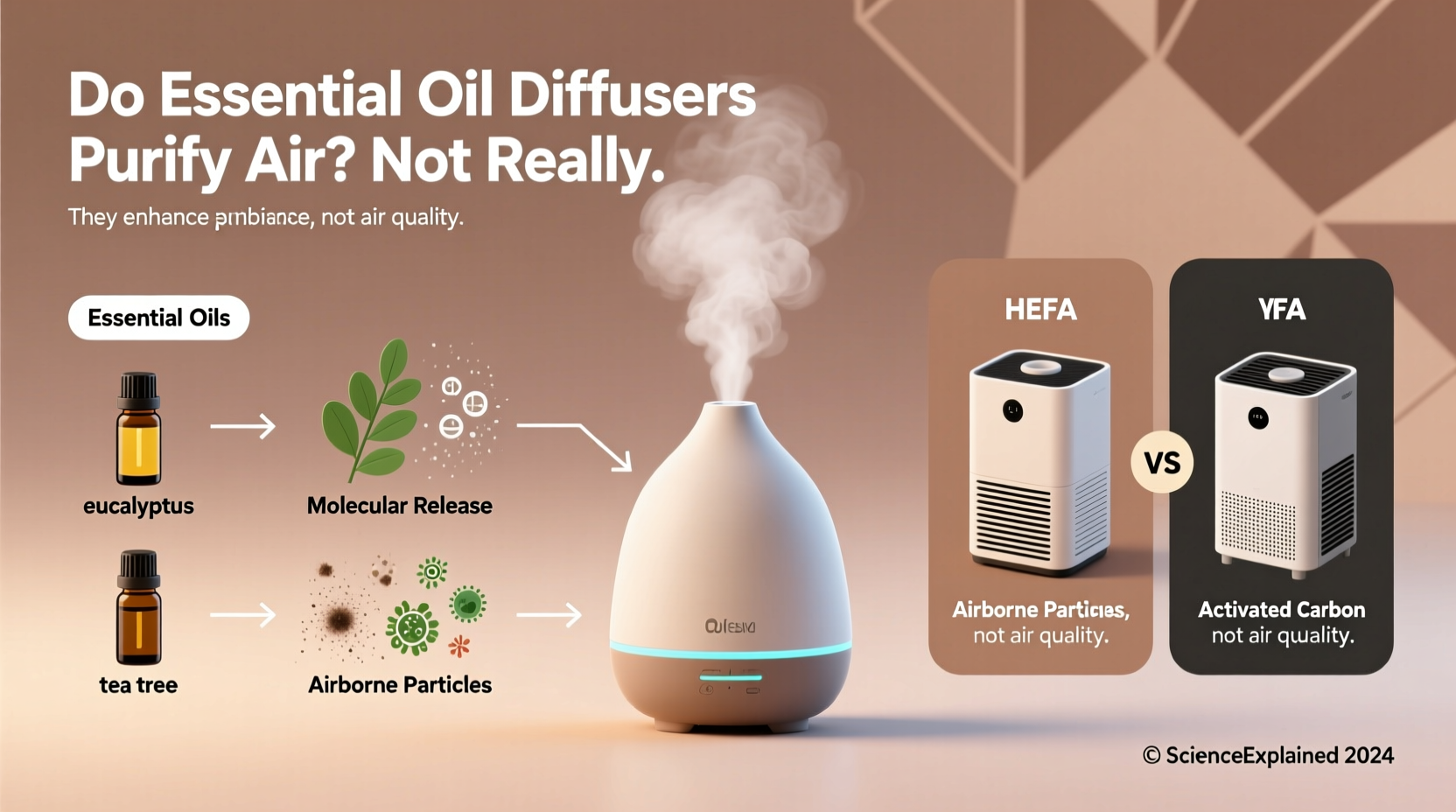
Most modern diffusers use ultrasonic technology. These devices vibrate water at high frequencies to create a fine mist, which carries essential oil particles into the air. Other types include nebulizing diffusers (which spray concentrated oil without water), heat diffusers, and evaporative models. None of these mechanisms physically remove pollutants like dust, pollen, pet dander, or volatile organic compounds (VOCs) from the air.
Instead, they disperse aromatic compounds. Some of these compounds—such as those in tea tree, eucalyptus, or lavender oils—have demonstrated antimicrobial properties in laboratory settings. However, dispersion does not equate to decontamination. Just because an oil kills bacteria on a petri dish doesn’t mean it will eliminate airborne pathogens in a living room.
The Science Behind Air Purification Claims
Air purification typically involves removing or neutralizing airborne particles and microorganisms. True air purifiers use mechanical filtration (like HEPA), activated carbon (for odors and gases), or UV light (to kill microbes). In contrast, essential oil diffusers do not filter or trap particles. They add substances—however natural—to the air.
That said, some peer-reviewed studies suggest certain essential oils may reduce microbial load in enclosed environments. A 2020 study published in Microbiology & Biotechnology Letters found that diffusing thyme and cinnamon essential oils significantly reduced airborne bacteria in a small, sealed chamber. However, real-world conditions—larger spaces, airflow from HVAC systems, varying humidity—are far less controlled.
“While some essential oils show biocidal activity, their efficacy in open indoor environments is inconsistent and concentration-dependent. Diffusion alone is not a reliable method of air sterilization.” — Dr. Lena Park, Environmental Microbiologist, University of Colorado
Moreover, the concentration of active compounds released by a typical home diffuser is much lower than what’s used in clinical studies. Most people run their diffusers intermittently and in well-ventilated areas, further diluting any potential effect.
What Essential Oils Can—and Can’t—Do for Air Quality
Let’s separate fact from fiction:
- Natural fragrance: Yes, diffusers effectively scent a room using plant-derived oils, offering a non-synthetic alternative to artificial air fresheners.
- Mood and cognitive support: Research supports aromatherapy’s role in reducing stress and improving alertness. For example, lavender has been linked to lower cortisol levels, while citrus oils may enhance mental clarity.
- Antimicrobial action: Limited evidence shows certain oils can inhibit bacteria, mold, and viruses in controlled lab environments. Real-world effectiveness remains questionable.
- Removing allergens or pollutants: No. Diffusers do not capture dust, smoke, mold spores, or VOCs. In fact, overuse may contribute to indoor air pollution.
In some cases, diffusing essential oils may worsen air quality. The U.S. Environmental Protection Agency (EPA) notes that terpenes—common compounds in citrus and pine oils—can react with ozone to form secondary pollutants like formaldehyde and ultrafine particles. This is especially concerning in poorly ventilated rooms or homes with existing ozone sources (e.g., laser printers or older air purifiers).
Common Misconceptions About Diffusers and Air Cleaning
Marketing language often blurs the line between “freshening” and “purifying” the air. Phrases like “naturally cleans the air” or “detoxifies your space” are common on product labels but lack scientific backing. Here’s a breakdown of popular claims versus reality:
| Claim | Reality Check |
|---|---|
| “Kills airborne germs” | Limited lab evidence under high concentrations; not proven in real-world settings. |
| “Removes toxins from the air” | No filtration mechanism; cannot capture or destroy chemical pollutants. |
| “Eliminates odors naturally” | Masks smells with fragrance but doesn’t neutralize odor-causing molecules like carbon filters do. |
| “Improves overall air quality” | May improve perceived freshness, but doesn’t reduce particulate matter or allergens. |
The placebo effect also plays a role. If a space smells clean and calming, people tend to believe the air is cleaner—even if pollutant levels remain unchanged.
When Diffusers May Offer Real Benefits
Despite limitations, essential oil diffusers aren’t without merit. Under specific conditions, they can contribute to a healthier indoor environment:
- Reducing surface mold in humid climates: Tea tree and clove oils have antifungal properties. Occasional diffusion in bathrooms or basements may help discourage mold growth on surfaces—not in the air, but on walls or tiles.
- Supporting respiratory comfort: Eucalyptus and peppermint oils contain menthol, which can create a cooling sensation and ease nasal congestion. This doesn’t clear mucus but may make breathing feel easier.
- Lowering stress-related indoor behaviors: Calming scents may reduce anxiety, leading to fewer stress-induced habits like smoking indoors or poor ventilation practices.
Mini Case Study: The Office Wellness Room
A mid-sized tech company in Portland introduced essential oil diffusers into its wellness room, aiming to reduce employee stress and “cleanse the air” after lunch hours. Managers reported that staff felt more relaxed and the room smelled fresher. However, an indoor air quality audit six months later showed no change in particulate levels (PM2.5), VOCs, or airborne bacteria.
Interestingly, employees rated the room as “healthier” and used it more frequently. While the diffusers didn’t purify the air, they enhanced the psychological perception of cleanliness and well-being. The company later added a HEPA air purifier to address actual air quality issues—keeping the diffuser for ambiance.
This case illustrates a crucial point: diffusers excel at sensory and emotional benefits but fall short on measurable purification.
Expert Recommendations for Safer, Smarter Use
If you enjoy using a diffuser, you don’t need to stop—but optimizing how and when you use it can maximize benefits and minimize risks. Consider the following checklist:
Diffuser Best Practices Checklist
- Use only 3–5 drops of essential oil per session to avoid overexposure.
- Choose 100% pure, therapeutic-grade oils without synthetic additives.
- Diffuse in well-ventilated areas to prevent compound buildup.
- Avoid use around infants, pets, or individuals with asthma or chemical sensitivities.
- Clean your diffuser weekly to prevent mold and oil residue accumulation.
- Never leave a diffuser running unattended for more than two hours.
- Pair with a true air purifier if air quality is a concern.
For those seeking actual air purification, experts recommend combining diffusers with proven technologies. A HEPA filter removes 99.97% of particles 0.3 microns or larger, while activated carbon tackles odors and chemicals. Used together, they offer both functional cleaning and sensory comfort.
FAQ: Common Questions About Diffusers and Air Quality
Can essential oils kill viruses in the air?
Some essential oils, like eucalyptus and thyme, have shown virucidal effects in lab studies using high concentrations in closed environments. However, there is no conclusive evidence that home diffusers can reduce viral load in real-world indoor spaces. Relying on them for virus protection is not advised.
Are diffusers better than air fresheners?
In general, yes—but with caveats. Unlike many commercial air fresheners, quality essential oils are derived from plants and lack synthetic phthalates. However, both can emit volatile compounds. Natural doesn’t always mean safer, especially when overused.
Do diffusers help with allergies?
No. In fact, they may worsen symptoms for some. Essential oil particles can irritate sensitive airways, and increased humidity from ultrasonic models may promote dust mite growth or mold. Allergy sufferers should prioritize HEPA filtration and humidity control instead.
Conclusion: Separating Scent from Science
Essential oil diffusers offer undeniable sensory and emotional benefits. The soothing aroma of lavender, the invigorating scent of lemon—these can transform a space and uplift mood. But when it comes to purifying the air, the evidence simply doesn’t support the bold claims made by many brands.
Air purification requires the removal of contaminants, not just masking them with fragrance. While certain essential oils possess antimicrobial traits under ideal conditions, home diffusers lack the power and consistency to achieve meaningful disinfection. At best, they provide mild environmental support; at worst, they may contribute to indoor pollution if misused.
The smart approach? Enjoy your diffuser for what it does well—enhancing ambiance and supporting well-being—while relying on scientifically validated methods like HEPA filters, proper ventilation, and humidity control for actual air purification.




 浙公网安备
33010002000092号
浙公网安备
33010002000092号 浙B2-20120091-4
Comments
No comments yet. Why don't you start the discussion?