
Stress has become an almost constant companion in modern life. In response, many people turn to natural remedies—and few have gained popularity as quickly as essential oil diffusers. These quiet, mist-emitting devices fill homes with calming scents like lavender, chamomile, and bergamot, promising relaxation and improved mood. But beneath the soothing aroma lies a pressing question: Are essential oil diffusers genuinely effective at reducing stress, or are they simply delivering a pleasant placebo effect driven by fragrance?
The answer isn’t black and white. While scientific research supports certain psychological and physiological effects of specific essential oils, the mechanisms behind them involve both measurable biology and subjective perception. Understanding the balance between real impact and sensory suggestion is key to using diffusers wisely and effectively.
The Science Behind Aromatherapy and Stress Reduction
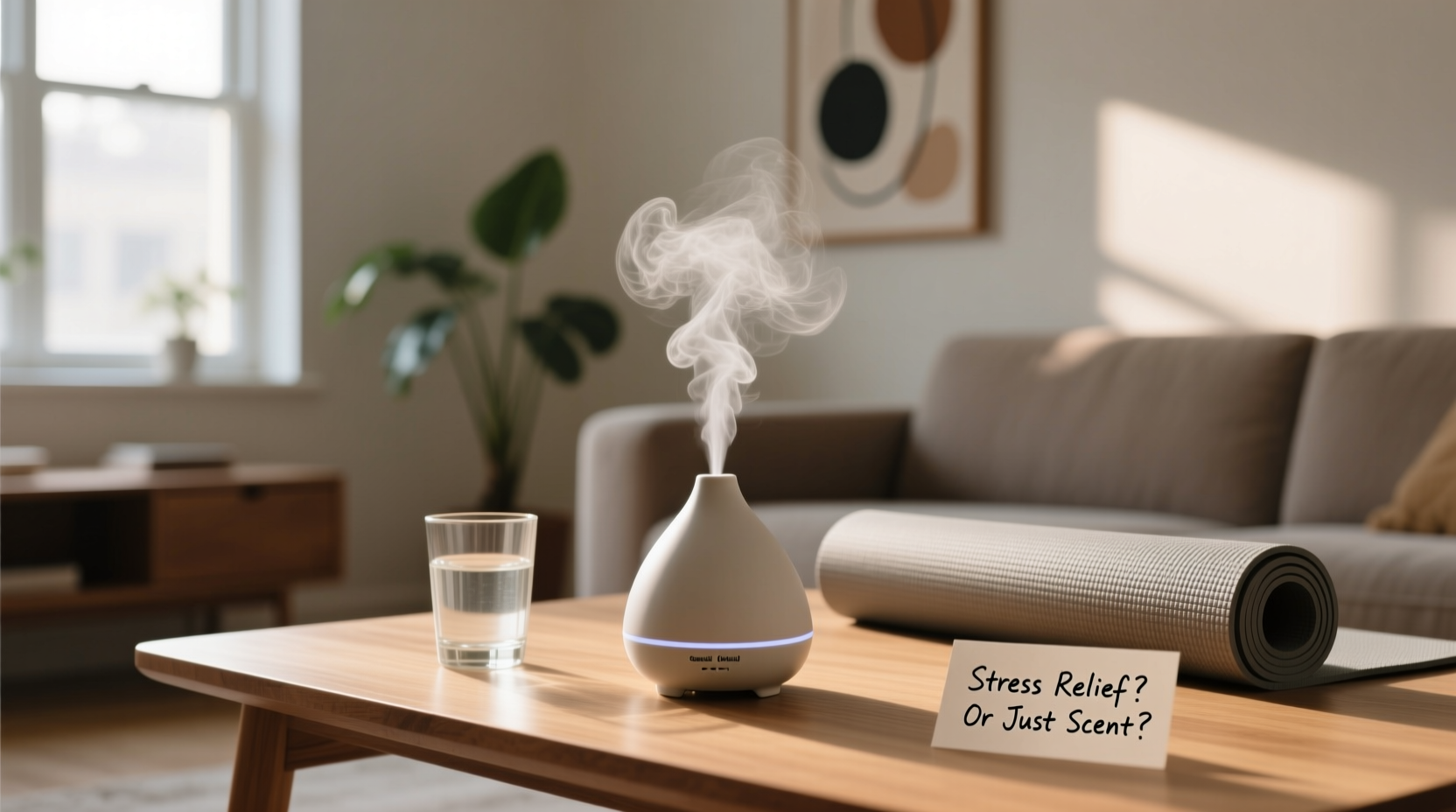
Aromatherapy—the practice of using plant-derived essential oils for therapeutic benefit—has roots stretching back thousands of years. Ancient civilizations in Egypt, China, and India used aromatic plants in rituals, medicine, and daily wellness. Today, modern science is beginning to validate some of these traditional uses, particularly in the context of emotional regulation and nervous system modulation.
When you inhale essential oil molecules from a diffuser, they travel through the olfactory system directly to the limbic system in the brain—the region responsible for emotions, memory, and arousal. This direct neural pathway allows scent to influence mood almost instantly, bypassing conscious thought.
Several clinical studies have demonstrated measurable effects. For example, a 2017 study published in *Complementary Therapies in Clinical Practice* found that participants exposed to lavender essential oil via diffusion showed significantly lower heart rate, blood pressure, and cortisol levels—key biomarkers of stress—compared to controls. Similarly, a meta-analysis in *Evidence-Based Complementary and Alternative Medicine* (2020) concluded that inhaled aromatherapy had a “moderate but statistically significant” effect on anxiety reduction.
However, not all results are consistent. Some trials show minimal difference between active essential oils and unscented placebos, suggesting that expectation and ritual may play a substantial role. The placebo effect in aromatherapy is powerful: if someone believes lavender calms them, their brain may respond accordingly, regardless of biochemical action.
“While essential oils aren’t a substitute for clinical treatment, their ability to modulate autonomic nervous system activity makes them a valuable complementary tool.” — Dr. Rebecca Nguyen, Integrative Neuroscience Researcher
Essential Oils with Proven Stress-Relieving Properties
Not all essential oils are created equal when it comes to stress relief. Some have been studied more rigorously than others, and their chemical profiles suggest plausible biological mechanisms. Here are the most researched and widely recommended oils for calming the mind:
- Lavender (Lavandula angustifolia): Contains linalool and linalyl acetate, compounds shown to interact with GABA receptors in the brain—similar to how anti-anxiety medications like benzodiazepines work, though much more mildly.
- Bergamot (Citrus bergamia): Unique among citrus oils for its documented anxiolytic effects. Studies indicate it reduces salivary cortisol and promotes alpha-wave activity in the brain, associated with relaxed alertness.
- Chamomile (Matricaria chamomilla): Rich in apigenin, a flavonoid that binds to benzodiazepine receptors. Often used for sleep support and nervous system calming.
- Frankincense (Boswellia spp.): Traditionally used in meditation practices; emerging research suggests it may slow respiration and deepen breath awareness, aiding mindfulness.
- Ylang Ylang (Cananga odorata): Shown to lower blood pressure and heart rate in controlled settings, making it useful during acute stress episodes.
Diffusers vs. Placebo: What’s Really Working?
To separate fact from fragrance fiction, it helps to examine what happens when people use diffusers under controlled conditions. In double-blind studies, where neither participant nor researcher knows whether the oil is real or a neutral scent, outcomes vary.
In one notable trial, office workers reported feeling less stressed after exposure to bergamot oil—but so did those who unknowingly received a non-therapeutic citrus fragrance. Both groups experienced similar improvements in self-reported mood, though only the true bergamot group showed slight reductions in physiological markers like pulse rate.
This suggests a dual mechanism: the ritual of turning on a diffuser, combined with a familiar “calming” scent, triggers psychological relaxation (the placebo), while certain oils add subtle physiological benefits (the pharmacology). The two often work together, amplifying each other’s effects.
Placebo responses are not “fake.” They represent real changes in brain chemistry. Expectation can trigger dopamine release, reduce amygdala hyperactivity, and even alter immune function. So even if part of the benefit is perceptual, it doesn’t diminish the outcome—especially when stress relief is the goal.
Comparing Real Effects vs. Perceived Benefits
| Mechanism | Real Biological Effect | Placebo/Perceptual Effect |
|---|---|---|
| Lavender inhalation | Reduces cortisol, slows heart rate | Increases sense of calm due to cultural association |
| Ritual of diffusing | Minimal direct impact | Signals brain to relax; reinforces habit-based coping |
| Fragrance preference | None (unless bioactive compound present) | Strong emotional uplift based on personal memory or liking |
| Consistent evening use | Possible circadian rhythm support | Conditioned relaxation response over time |
How to Use Diffusers Effectively for Stress Management
If you're considering a diffuser as part of your stress-reduction toolkit, effectiveness depends heavily on how you use it. Mindless diffusion won’t yield lasting results. Instead, treat it as a deliberate wellness practice—one integrated into broader self-care habits.
Step-by-Step Guide to Maximizing Diffuser Benefits
- Choose the right oil for your needs: Lavender for general relaxation, bergamot for daytime tension, or frankincense for mindful breathing exercises.
- Select a high-quality ultrasonic diffuser: These disperse fine mist without heat, preserving oil integrity. Avoid cheap nebulizers that oversaturate the air.
- Diffuse at strategic times: 15–30 minutes before bed, during work breaks, or after returning home from stressful environments.
- Combine with behavioral cues: Pair diffusion with deep breathing, journaling, or dimming lights to strengthen the relaxation association.
- Limited duration: Run for 30 minutes on, then 30 off to prevent olfactory fatigue and respiratory irritation.
- Maintain your device: Clean weekly with vinegar and water to prevent mold and ensure consistent output.
Checklist: Optimizing Your Aromatherapy Routine
- ☑ Use pure, GC/MS-tested essential oils
- ☑ Limit diffusion sessions to 30–60 minutes
- ☑ Ventilate room after use, especially around pets or asthma sufferers
- ☑ Pair diffusion with intentional relaxation (e.g., meditation)
- ☑ Keep diffuser clean to avoid bacterial buildup
- ☑ Avoid using near infants or individuals with respiratory conditions
- ☑ Track mood changes in a journal to assess personal response
Real-World Example: Sarah’s Evening Wind-Down Routine
Sarah, a 34-year-old project manager, struggled with racing thoughts and insomnia after long workdays. She bought a diffuser on a friend’s recommendation, initially skeptical. She started diffusing lavender every night for 20 minutes while doing a five-minute breathing exercise.
After two weeks, she noticed she fell asleep faster. By week four, her partner commented she seemed “less wound up” in the evenings. When she forgot to diffuse one night, she found herself reaching for her phone instead of winding down—a cue that the ritual had become a behavioral anchor.
She later participated in a small workplace wellness study that measured salivary cortisol. Her levels dropped by 18% over six weeks of consistent use. Was it the lavender, the breathing, or the routine? Likely all three. But the diffuser became the catalyst that helped her build a sustainable de-stressing habit.
Sarah’s experience reflects a common pattern: the diffuser isn’t a standalone cure, but a sensory cue that supports deeper behavioral change.
Frequently Asked Questions
Can essential oil diffusers replace anxiety medication?
No. While diffusers may help manage mild stress or situational anxiety, they are not a substitute for clinical treatment. People with diagnosed anxiety disorders should consult a healthcare provider before relying solely on aromatherapy.
Are there risks to using diffusers regularly?
Yes, if misused. Over-diffusion can cause headaches, dizziness, or respiratory irritation, especially in sensitive individuals. Essential oils are potent chemical compounds—treat them with respect. Also, some oils (like citrus) are phototoxic or harmful to pets, particularly cats.
How do I know if it’s working or just placebo?
Track objective indicators: sleep quality, resting heart rate, journal entries about mood, or feedback from others. If you notice consistent improvement alongside diffuser use—and effects diminish when you stop—it’s likely more than just placebo. But even if it is, the outcome matters most.
Conclusion: Harnessing Scent with Intention
Essential oil diffusers occupy a nuanced space between science and sensation. They are not miracle cures, nor are they merely placebo-driven decoration. For many, they offer a gentle, accessible way to engage the nervous system, create calming rituals, and reclaim moments of peace in a chaotic world.
Their power lies not just in the chemistry of the oils, but in the intention behind their use. When paired with mindfulness, consistency, and realistic expectations, diffusers can be a meaningful part of a holistic stress-management strategy. Whether the benefit stems from linalool binding to brain receptors or from the comfort of a familiar scent linked to safety, the result—reduced stress—is valid and valuable.




 浙公网安备
33010002000092号
浙公网安备
33010002000092号 浙B2-20120091-4
Comments
No comments yet. Why don't you start the discussion?