
Facial rollers have become a staple in modern skincare routines, with influencers and beauty enthusiasts swearing by their ability to depuff, tone, and refresh tired skin. From cool jade to rose quartz and stainless steel, these tools promise a spa-like experience at home. But behind the glowing reviews and viral TikTok videos lies a pressing question: do facial rollers actually reduce puffiness, or is any improvement just a fleeting illusion?
The answer isn’t a simple yes or no. While facial rolling does produce visible short-term changes, its long-term impact depends on consistency, technique, and realistic expectations. This article dives deep into the physiology of facial puffiness, how rollers work, what science says, and whether investing time and money into this trend is truly worthwhile.
The Science Behind Facial Puffiness
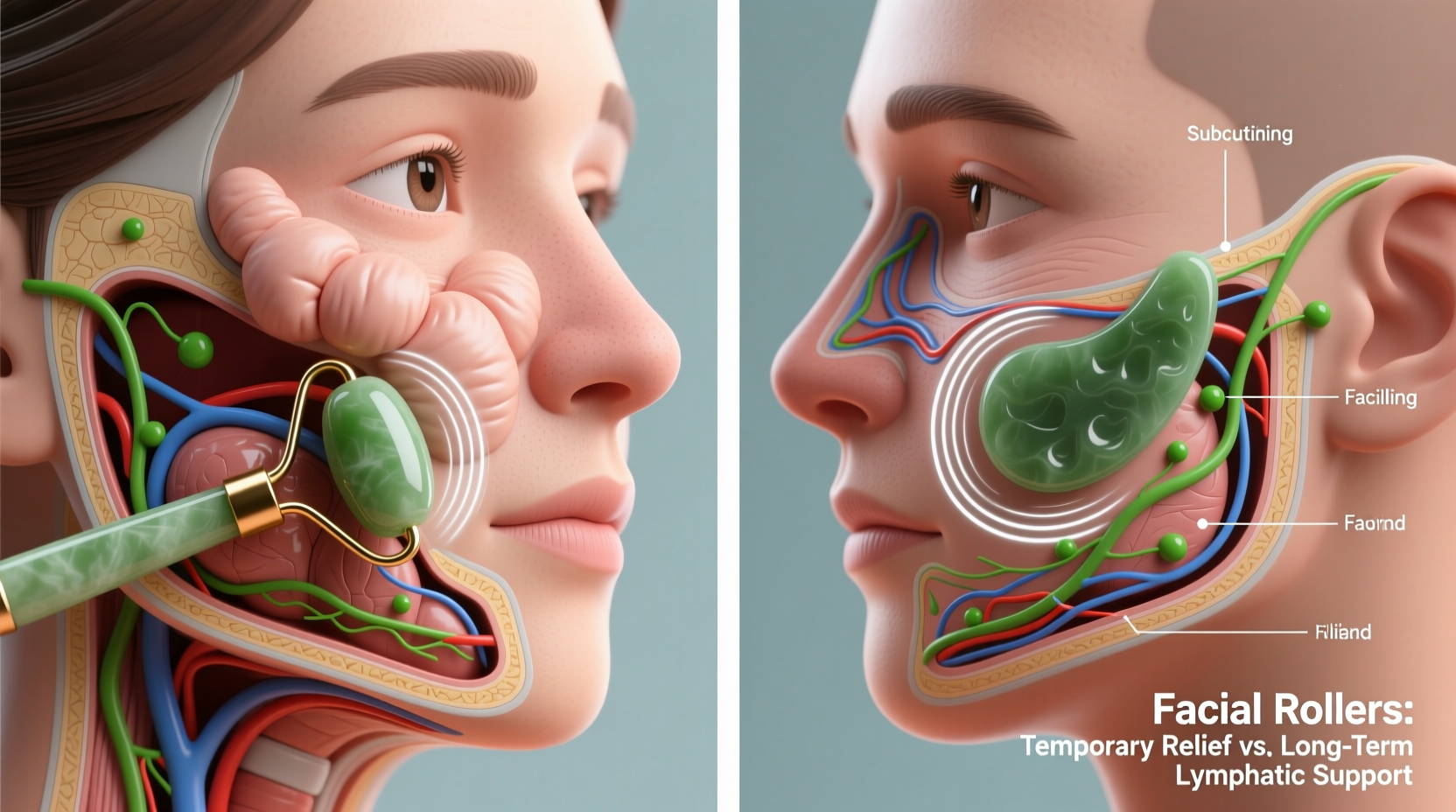
Puffiness, particularly around the eyes and cheeks, often stems from fluid retention in the superficial layers of the skin. Unlike swelling caused by inflammation or infection, everyday puffiness is usually benign and influenced by lifestyle factors such as sleep quality, diet, hydration, and hormonal fluctuations.
The face contains a network of lymphatic vessels that help drain excess fluid and metabolic waste. When circulation slows—due to poor sleep, high sodium intake, or prolonged lying down—fluid can accumulate, especially in the lower eyelids and jawline where skin is thinner and more prone to visible swelling.
Lymphatic drainage is a natural bodily process, but it can be sluggish. This is where manual techniques like facial rolling come in. By applying gentle pressure and directional strokes, facial rollers may stimulate lymph flow, encouraging trapped fluid to move toward lymph nodes for filtration and removal.
“Facial massage, including rolling, can temporarily enhance lymphatic circulation. The effects are immediate but not permanent without consistent use.” — Dr. Lena Patel, Board-Certified Dermatologist
How Facial Rollers Work: Mechanism and Immediate Effects
Facial rollers typically feature a small handle with one or two smooth stones or metal wheels. The larger end targets cheeks, forehead, and jawlines; the smaller end is designed for delicate areas like under the eyes.
When rolled across the skin using upward and outward motions, the tool applies mild mechanical pressure. This action does three things:
- Stimulates microcirculation: Increases blood flow to the skin’s surface, which can impart a healthy glow and support nutrient delivery.
- Encourages lymphatic drainage: Helps redirect stagnant fluid toward lymph nodes near the ears and neck.
- Cools the skin: Most users chill their rollers before use, which causes vasoconstriction—narrowing of blood vessels—that reduces inflammation and tightens the appearance of puffy tissue.
The cooling effect is especially effective upon waking, when overnight fluid redistribution makes puffiness most noticeable. A chilled roller pressed gently under the eyes can constrict capillaries and minimize the look of bags within minutes.
Short-Term vs. Long-Term Benefits: What’s Realistic?
The most honest assessment of facial rollers is that they deliver primarily **temporary aesthetic improvements**. Clinical studies specifically on facial rollers are limited, but research on facial massage and lymphatic drainage supports their role in transient depuffing.
A 2020 study published in *Journal of Cosmetic Dermatology* found that participants who performed self-administered facial massage for 5 minutes daily over 4 weeks reported reduced under-eye puffiness and improved skin firmness. However, researchers noted that results were most pronounced immediately after each session and diminished if the routine was interrupted.
In other words, facial rollers don’t “cure” puffiness—they manage it, much like a good night’s sleep or a diuretic tea might. Their value lies in consistency, not permanence.
That said, regular use may contribute to subtle long-term benefits, including:
- Better product absorption due to increased circulation
- Improved muscle tone from repetitive lifting motions
- Reduced tension in facial muscles, potentially minimizing fine lines over time
But expecting a roller to replace medical treatments for chronic edema, allergies, or genetic under-eye bags is unrealistic.
Best Practices for Effective Facial Rolling
To get the most out of your facial roller—not just for depuffing but for overall skin wellness—it’s essential to use proper technique. Incorrect pressure or direction can stretch delicate skin or push fluid into areas where it pools more easily.
Step-by-Step Guide to Morning Depuffing Routine
- Chill the roller: Place it in the refrigerator for at least 20 minutes before use.
- Cleanse your face: Start with a clean base to avoid pushing dirt into pores.
- Apply a serum or oil: Use a lightweight facial oil or water-based serum to reduce friction.
- Begin at the center of the face: Start under the eyes and roll outward toward the temples.
- Move upward along the cheeks: Use upward strokes from the nose to the hairline.
- Tackle the forehead: Roll from the eyebrows up to the hairline, then side to side.
- Finish along the jawline: Roll from the chin outward toward the ears, then down the neck to encourage fluid drainage.
- Use light pressure: Let the weight of the roller do the work—no need to press hard.
Each session should last 3–5 minutes. Over-rolling can irritate the skin or lead to redness, especially if you have rosacea or sensitive skin.
Do’s and Don’ts of Facial Rolling
| Do’s | Don’ts |
|---|---|
| Use gentle, upward strokes | Press too hard or drag aggressively |
| Store your roller in the fridge | Freeze the roller (can damage skin) |
| Roll after applying a slip product | Roll on dry or irritated skin |
| Clean the roller weekly with mild soap | Share your roller without sanitizing |
| Pair with a consistent skincare routine | Rely solely on rolling for skin health |
Real-World Example: A Week of Consistent Rolling
Sophie, a 34-year-old graphic designer, struggled with morning puffiness exacerbated by late nights and high-stress deadlines. Skeptical but curious, she decided to test a jade roller for one week.
She followed a strict morning routine: cleansing, refrigerated roller use for five minutes, then moisturizer and SPF. She avoided salty foods the night before and prioritized seven hours of sleep.
By day three, Sophie noticed her under-eye area looked less swollen. By day seven, her coworkers commented that she looked “more awake.” However, when she skipped two mornings due to travel, the puffiness returned.
Her takeaway: the roller didn’t change her biology, but it became a valuable tool in managing a recurring cosmetic concern—especially when combined with better sleep and diet.
Expert Insights: What Dermatologists Say
While many dermatologists acknowledge the appeal of facial rollers, they emphasize that results are largely cosmetic and situational.
“Think of facial rolling like a facial workout or a scalp massage—it feels good, looks good temporarily, but won’t transform your skin structure. It’s a complementary practice, not a treatment.” — Dr. Rajiv Bose, Cosmetic Dermatologist
Experts also caution against overhyping natural stone benefits. Claims that jade “balances energy” or rose quartz “promotes love” fall under metaphysical beliefs rather than scientific fact. The real benefit comes from the physical motion and temperature of the tool, not the mineral composition.
That said, the ritualistic aspect of facial rolling shouldn’t be dismissed. Taking a few mindful minutes each morning to care for your skin can reduce stress, which indirectly benefits skin health by lowering cortisol levels—a known contributor to puffiness and breakouts.
FAQ: Common Questions About Facial Rollers and Puffiness
Can facial rollers permanently reduce under-eye bags?
No. If under-eye bags are due to genetics, fat prolapse, or aging tissue laxity, a roller will not provide permanent correction. It may temporarily minimize fluid-related puffiness, but structural issues require medical intervention like fillers or surgery.
How often should I use a facial roller for best results?
Daily use, especially in the morning, yields the most noticeable results. Even 2–3 times per week can help maintain some benefits, but consistency is key. Pair it with a healthy lifestyle for optimal outcomes.
Are metal rollers better than stone ones?
Metal rollers (often made of stainless steel or copper) retain cold longer and offer firmer pressure, making them slightly more effective for depuffing. Stone rollers are gentler and aesthetically pleasing but warm up faster. Choose based on preference and skin sensitivity.
Final Verdict: Temporary Relief with Lasting Ritual Value
Facial rollers do reduce puffiness—but only temporarily. The depuffing effect is real, backed by basic principles of lymphatic drainage and vasoconstriction, yet it fades within hours unless maintained through repeated use.
They are not miracle tools. They won’t tighten sagging skin, erase dark circles, or reverse aging. But when used correctly, they offer a quick, non-invasive way to refresh dull, swollen skin and enhance the effectiveness of your skincare products.
More importantly, facial rolling fosters a daily self-care ritual. In a world of fast-paced living and screen fatigue, taking a few minutes to gently massage your face can be grounding—a moment of pause that benefits both skin and mind.




 浙公网安备
33010002000092号
浙公网安备
33010002000092号 浙B2-20120091-4
Comments
No comments yet. Why don't you start the discussion?