
As holiday decorating trends grow more cinematic, many homeowners are turning to theatrical effects to elevate their indoor Christmas displays. One such tool gaining popularity is the fog machine—long a staple in concerts, haunted houses, and stage productions. When paired with string lights, spotlights, or laser projectors, fog can make light beams dramatically visible in ways that plain air cannot. But does this enhancement come at a cost? Are fog machines safe to use indoors during the holidays, or do they introduce health and safety risks?
The answer isn’t simple. Fog machines can indeed transform ordinary Christmas lighting into something magical—creating ethereal beams that cut through the air like searchlights. However, improper use, poor ventilation, or low-quality fluid can lead to respiratory irritation, slip hazards, or even equipment damage. This article explores both the aesthetic benefits and potential dangers of using fog machines indoors with Christmas lights, offering practical guidance for achieving stunning results without compromising safety.
How Fog Enhances Light Visibility Indoors
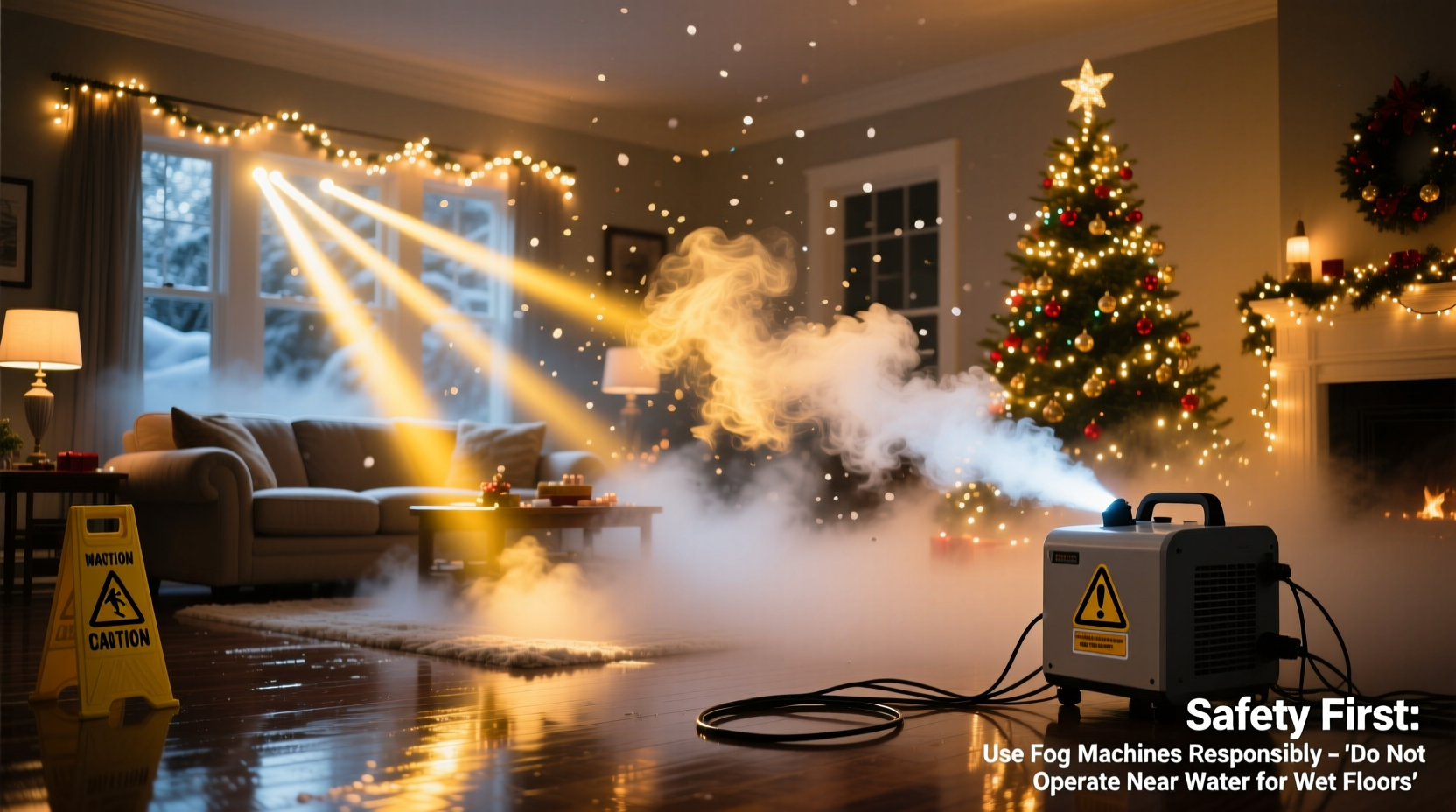
In normal conditions, light travels invisibly through air unless it reflects off particles like dust, smoke, or moisture. This is why you don’t see the beam of a flashlight in a clean room—there’s nothing for the light to scatter against. Fog machines solve this by releasing a fine aerosol mist, typically composed of water and glycol or mineral oil-based fluids, which suspends microscopic droplets in the air.
When Christmas lights shine through this suspended fog, the light scatters off the droplets, making the beam path clearly visible. The effect is especially striking with:
- Cold white or blue-tinted LED strips
- Narrow-beam spotlights or laser projectors
- Dramatic uplighting from floor to ceiling
- Moving head lights or rotating projectors
The result mimics the atmosphere of a winter forest or a snowy night, enhancing the seasonal mood. In professional installations—such as those seen in high-end retail displays or theme parks—fog is often used strategically to amplify lighting depth and dimensionality.
“Fog doesn’t just make light visible—it adds volume and drama. A well-placed beam in fog feels alive, almost three-dimensional.” — Daniel Reeves, Lighting Designer & Theater Technician
Safety Risks of Indoor Fog Machine Use
While the visual payoff is undeniable, indoor fog machine use comes with real concerns. Unlike outdoor settings where fog dissipates quickly, enclosed spaces trap vapor, increasing exposure risk. The primary issues include:
Respiratory Irritation
Most commercial fog fluids are labeled “non-toxic,” but this doesn’t mean they’re harmless when inhaled repeatedly. Glycol-based fogs (especially diethylene glycol) can trigger coughing, wheezing, or shortness of breath in sensitive individuals, including people with asthma, allergies, or COPD. Children and pets may be more vulnerable due to smaller lung capacity.
Poor Air Quality and Ventilation Challenges
Fog machines reduce air clarity and can overwhelm HVAC systems. Without adequate airflow, fog lingers, creating a hazy environment that may impair visibility—particularly dangerous on stairs or near doorways. Over time, this can also contribute to mold growth if moisture accumulates on walls or fabrics.
Slip Hazards and Surface Residue
Fog condenses over time, leaving behind a thin oily film on floors, furniture, and electronics. This residue can make hardwood or tile surfaces slippery, posing a fall risk. It may also attract dust and degrade finishes on wood or delicate materials.
Fire and Electrical Safety
Fog machines require electricity and generate heat. Placing them near flammable decorations—like tinsel, paper garlands, or dried wreaths—can be hazardous. Additionally, combining fog with real candles or exposed heating elements increases fire risk significantly.
Choosing the Right Fog Machine and Fluid
Not all fog machines are created equal—especially for indoor holiday use. Selecting the right equipment is critical to balancing effect and safety.
Look for models marketed as “low-lying” or “event-safe” with adjustable output settings. Smaller units designed for home use (500–1000 watts) are preferable to industrial-grade machines, which produce excessive fog for residential spaces.
Equally important is the fog fluid. Avoid cheap, unlabeled brands. Instead, opt for:
- Water-based or triethylene glycol (TEG) fluids: Less irritating than older glycol blends.
- FDA-compliant or theater-grade fluids: Tested for human exposure in performance environments.
- Scent-free and dye-free formulas: Reduce chemical load and staining risk.
Always check manufacturer guidelines for indoor use. Some fluids explicitly state they are not intended for confined spaces—even if marketed for parties.
Mini Case Study: A Family Living Room Transformation
The Miller family in Portland wanted to create a “winter wonderland” effect in their living room using RGB LED strips and a rotating projector. After testing various setups, they added a mid-range fog machine ($80, 800W) with TEG-based fluid. They programmed the lights to pulse gently and activated the fog machine only during evening viewing periods (20 minutes at a time).
Results were dramatic—the light beams sliced through the room like auroras. However, after two days, their youngest child developed mild congestion. Testing revealed elevated humidity and residual fog on window sills. They adjusted by reducing runtime to 10-minute bursts, opening a nearby window slightly, and wiping surfaces daily. The compromise preserved the visual impact while restoring air quality.
Best Practices for Safe and Effective Use
To enjoy the beauty of fog-enhanced lighting without risking health or safety, follow these evidence-based guidelines.
Step-by-Step Guide: Using Fog Machines Safely with Christmas Lights
- Assess your space: Measure room size and identify ventilation points (windows, doors, vents).
- Choose a low-output machine: Select one rated for rooms of your size (e.g., 500W for 20x20 ft).
- Use high-quality, indoor-safe fluid: Confirm it’s labeled for indoor or theatrical use.
- Position strategically: Place the machine near the floor, pointed upward, away from people and decor.
- Limit operation time: Run in 5–15 minute intervals, allowing fog to clear between uses.
- Monitor air quality: Watch for lingering haze, odors, or breathing discomfort.
- Clean surfaces afterward: Wipe down floors, tables, and electronics to remove residue.
- Store properly: Empty unused fluid, dry the tank, and keep in a cool, dry place.
Checklist: Pre-Use Safety Verification
- ✅ Room has working smoke and carbon monoxide detectors
- ✅ No one in household has respiratory conditions
- ✅ Fog machine is placed on stable, heat-resistant surface
- ✅ At least one window or door can be opened for airflow
- ✅ Decorations are flame-retardant and kept away from unit
- ✅ Pets and children cannot access the machine
- ✅ You have a spill cloth and cleaning supplies ready
Alternatives and Risk Mitigation
If fog machines feel too risky, consider safer alternatives that still enhance light visibility:
- Sheer fabric drapes: Tulle or voile can diffuse light and create soft glows.
- Mirrored surfaces: Reflect and multiply beams without airborne particles.
- Fiber optic trees or curtains: Generate internal light trails safely.
- LED haze fans: New devices simulate beam diffusion using minimal, non-toxic mist.
For those committed to fog, mitigation strategies are essential. Use an air purifier with a HEPA filter during and after operation to capture particulates. Monitor humidity levels with a hygrometer—ideally keeping indoor RH below 60% to prevent condensation.
Do’s and Don’ts Table
| Do | Don't |
|---|---|
| Use fog machines in short bursts (under 15 min) | Run continuously for hours or overnight |
| Ventilate the room before and after use | Seal windows and doors tightly |
| Choose TEG or water-based, indoor-rated fluid | Use unknown or industrial-grade fog juice |
| Keep the machine away from high-traffic areas | Place near stairwells or doorways |
| Clean residue from floors and electronics daily | Ignore oily buildup on surfaces |
FAQ
Can I use a fog machine around pets?
It’s not recommended. Dogs, cats, and birds have sensitive respiratory systems. Even brief exposure to fog can cause coughing or distress. If used, ensure pets are in another room and the area is fully cleared before they return.
Is fog machine residue harmful to electronics?
Prolonged exposure to glycol-based fog can leave conductive residue on circuit boards, potentially causing short circuits. Keep machines away from TVs, sound systems, and computers. Wipe nearby devices with a dry microfiber cloth after use.
Are there health regulations for indoor fog use?
While no federal law bans home fog machine use, OSHA and NIOSH advise limiting occupational exposure to glycol mists. For homes, the same principles apply: minimize duration, maximize ventilation, and avoid repeated daily use.
Conclusion: Balancing Magic and Responsibility
Fog machines can transform indoor Christmas lighting into something truly cinematic—revealing beams that float like winter breath in moonlight. But this magic comes with responsibility. Used carelessly, fog can compromise air quality, endanger health, and damage property.
The key lies in moderation, preparation, and informed choices. Choose the right machine and fluid, limit exposure, ventilate thoroughly, and monitor for adverse reactions. When done right, the combination of fog and light becomes a safe, memorable part of your holiday tradition—one that guests will talk about for years.




 浙公网安备
33010002000092号
浙公网安备
33010002000092号 浙B2-20120091-4
Comments
No comments yet. Why don't you start the discussion?