
For years, beauty enthusiasts have relied on the classic manual eyelash curler—a simple, mechanical tool that lifts lashes with a quick squeeze. But in recent years, heated versions have entered the market, promising longer-lasting curls, smoother results, and even enhanced lash health. With price tags often double or triple those of traditional models, many consumers are left wondering: do heated eyelash curlers actually perform better, or are they just an overpriced trend capitalizing on high-tech appeal?
The answer isn't black and white. It depends on your lash type, makeup routine, sensitivity to heat, and how you define \"better.\" To make an informed decision, it’s essential to understand how each type works, their pros and cons, and what dermatologists and makeup artists say about them.
How Eyelash Curlers Work: The Basics
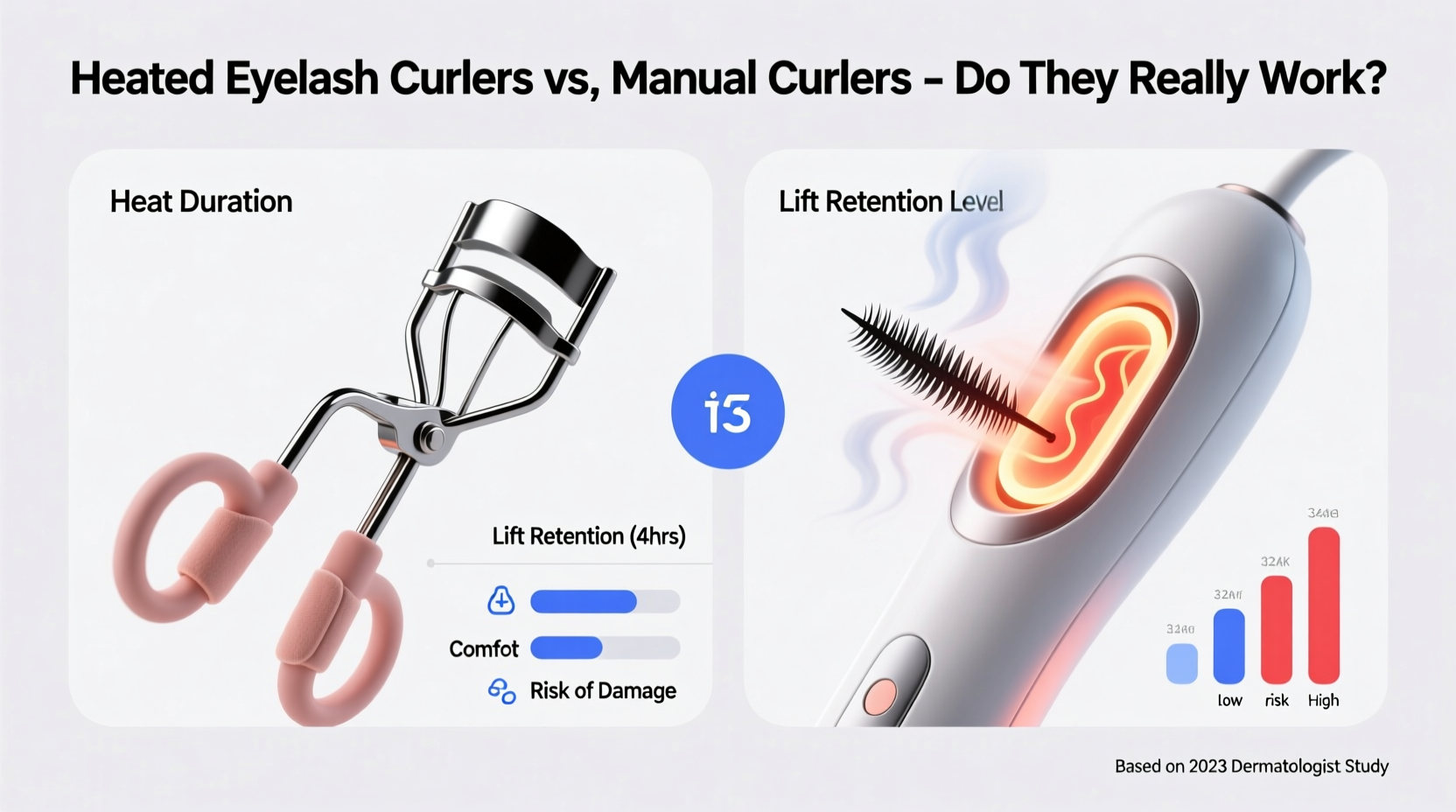
All eyelash curlers aim to reshape the keratin structure in your lashes temporarily, creating a lifted, wide-awake appearance. Manual curlers use physical pressure from two opposing pads—one on the upper arm, one on the lower—to bend the lashes upward. When used correctly, they can deliver an instant lift without damaging lashes.
Heated eyelash curlers function similarly but incorporate warmth—typically between 60°C and 85°C (140°F–185°F)—to soften the keratin proteins in the lashes, making them more malleable. The idea is that heat allows for a deeper, longer-lasting curl while reducing the need for excessive pressure, which could otherwise lead to breakage.
This principle mirrors other hair-styling tools: just as a flat iron reshapes hair more effectively than finger-straightening, heat may enhance curl retention in lashes.
Performance Comparison: Heated vs. Manual
To evaluate whether heated curlers truly outperform manual ones, we must assess key factors: curl longevity, ease of use, safety, and compatibility with different lash types.
| Feature | Manual Curler | Heated Curler |
|---|---|---|
| Curl Longevity | 3–6 hours (often less with oily lids or humidity) | 6–12+ hours (with proper prep and setting) |
| Lash Type Suitability | Best for medium to thick lashes; struggles with straight or stubborn lashes | Better for straight, coarse, or resistant lashes |
| Risk of Damage | Moderate (if overused or misaligned) | Low to moderate (if overheated or used too frequently) |
| Learning Curve | High—requires precise placement to avoid pinching skin | Lower—many have safety guards and auto-shutoff |
| Cost | $8–$25 | $40–$120 |
| Battery/Power Need | None | Rechargeable or USB-powered |
The data shows a clear advantage for heated models in terms of curl hold and usability for difficult lash types. However, this comes at a higher cost and introduces new risks related to heat exposure.
Scientific Insight: What Heat Does to Lashes
Keratin, the primary protein in hair and lashes, responds to heat by temporarily breaking hydrogen bonds, allowing the strand to be reshaped. When cooled, these bonds reform in the new configuration. This is the same mechanism behind blow-drying, curling irons, and flat irons.
In theory, applying controlled heat to lashes should allow for a more stable curl. A 2021 study published in the *International Journal of Trichology* noted that low-heat styling (below 90°C) caused minimal structural damage when applied briefly and infrequently. However, repeated exposure or temperatures above 100°C led to protein degradation, brittleness, and increased breakage.
Most reputable heated eyelash curlers operate within the safe range. Brands like Shiseido, Panasonic, and Tweezerman use ceramic heating elements with thermostats to maintain consistent, safe temperatures. Still, misuse—such as holding the curler too long or using it daily—can negate benefits and harm lashes over time.
“Think of heated lash curlers like any thermal styling tool: effective when used sparingly and correctly, but potentially damaging if overused.” — Dr. Lena Patel, Board-Certified Dermatologist
Real-World Testing: A Mini Case Study
Sophia, a 32-year-old makeup artist with naturally straight, downward-growing lashes, tested both manual and heated curlers over four weeks. She used a drugstore manual model (Revlon) and a mid-range heated version (Panasonic EH-SE60).
Her routine included mascara application and all-day wear (8–10 hours), often in humid conditions.
- Week 1–2 (Manual Only): Lashes curled well initially but began to droop after 3–4 hours. She needed to re-curl midday, risking lash breakage from repeated pressure.
- Week 3–4 (Heated Only): After warming her lashes with a warm towel for 30 seconds, she used the heated curler for 10 seconds per eye. The curl held for over 8 hours, even through light sweating and occasional eye rubbing.
Sophia reported no irritation or lash loss. She did note the heated model required charging and was less travel-friendly. “It’s not magic,” she said, “but for events or long days, it’s worth the extra step.”
Her experience reflects a common pattern: users with stubborn or straight lashes see the most benefit, while those with naturally curly or sensitive lashes may find little added value.
Step-by-Step: How to Use a Heated Eyelash Curler Safely
If you decide to try a heated model, follow this sequence to maximize results and minimize risk:
- Prep Your Lashes: Remove all makeup and ensure lashes are clean and dry. Avoid oils or heavy creams near the lash line.
- Warm Up (Optional): Use a warm (not hot) washcloth on closed eyes for 20–30 seconds to gently loosen keratin bonds.
- Turn On & Preheat: Power on the curler and wait for the indicator light (usually 30–60 seconds).
- Position Carefully: Open your eyes slightly and place the curler at the base of your lashes. Ensure no skin is caught in the clamp.
- Apply Gently: Press and hold for 8–10 seconds. Do not squeeze harder—let the heat do the work.
- Repeat Mid-Lash (Optional): For extra lift, repeat halfway up the lash length with reduced time (5 seconds).
- Apply Mascara: Wait 10 seconds before applying mascara to avoid sticking or clumping.
- Cool Down: Allow lashes to set in the curled position for 30 seconds before blinking heavily.
Common Myths and Misconceptions
Despite growing popularity, several myths persist about heated eyelash curlers:
- Myth 1: “They damage lashes more than manual ones.”
Reality: When used correctly, heated curlers apply less pressure, potentially reducing mechanical stress. The key is avoiding excessive heat duration. - Myth 2: “They replace mascara.”
Reality: They enhance lift but don’t add volume or color. Most users still apply mascara afterward. - Myth 3: “All heated models are the same.”
Reality: Quality varies widely. Cheaper models may lack temperature control, increasing burn risk. - Myth 4: “They promote lash growth.”
Reality: No evidence supports this. Some brands imply heat stimulates follicles, but dermatologists confirm this is unfounded.
Expert Recommendations and Who Should Consider One
Makeup artists and skincare professionals generally agree: heated eyelash curlers are not essential, but they can be valuable tools for specific needs.
“For clients with hooded eyes or very straight lashes, a heated curler can make a visible difference in opening up the face,” says makeup artist Jamal Richards, who works with editorial and bridal clients. “But I always recommend starting with a manual one to master technique first.”
Who might benefit most?
- People with naturally straight, stiff, or downward-growing lashes
- Those with oily eyelids that cause curls to drop quickly
- Individuals preparing for long events (weddings, photoshoots)
- Users who struggle with manual curlers due to arthritis or hand tremors
Who should stick with manual?
- People with thin, sparse, or fragile lashes
- Those using lash serums or undergoing treatments (e.g., chemotherapy)
- Frequent travelers needing compact, battery-free tools
- Budget-conscious buyers seeking basic functionality
Checklist: Choosing the Right Heated Eyelash Curler
Before purchasing, consider these factors:
- ✅ Adjustable temperature settings
- ✅ Auto-shutoff feature (after 1–2 minutes)
- ✅ Ergonomic design that fits your eye shape
- ✅ Ceramic or silicone heating pad (gentler than metal)
- ✅ Reputable brand with safety certifications (e.g., FDA-listed, CE-marked)
- ✅ Positive user reviews focusing on durability and consistency
- ❌ Avoid models with exposed heating coils or no temperature display
FAQ
Can you use a heated eyelash curler every day?
Yes, but not recommended daily. Limit use to 3–4 times per week to prevent cumulative heat damage. Alternate with a manual curler on lighter makeup days.
Are heated eyelash curlers safe for sensitive eyes?
Generally yes, if used properly. However, people with rosacea, blepharitis, or recent eye surgery should consult a doctor first. The warmth may aggravate inflammation in some cases.
Do heated curlers work with false lashes or extensions?
No. Heat can weaken lash glue, causing falsies to fall off or natural lashes to be pulled out prematurely. Use only on natural lashes.
Final Verdict: Gimmick or Game-Changer?
Heated eyelash curlers are not a gimmick—but they’re also not a necessity. They represent a niche innovation that solves a real problem for a specific group: those whose lashes refuse to stay curled. For them, the investment can be justified by improved results, confidence, and time saved on touch-ups.
However, for the average user with average lashes, a high-quality manual curler used correctly may deliver nearly identical results at a fraction of the cost. Mastery of technique—such as curling before mascara, using a warm compress, or layering with waterproof formulas—often matters more than the tool itself.
The real value of heated models lies in consistency and convenience. If you’ve ever struggled with drooping lashes by mid-morning, or if you’re tired of pinching your eyelid with a misaligned clamp, a heated curler could be a worthwhile upgrade. But it’s not a magic wand. It requires care, moderation, and realistic expectations.




 浙公网安备
33010002000092号
浙公网安备
33010002000092号 浙B2-20120091-4
Comments
No comments yet. Why don't you start the discussion?