
When temperatures plummet below freezing, standard winter gloves often fall short. Fingers stiffen, dexterity fades, and discomfort sets in—especially for those working outdoors, skiing, snowmobiling, or enduring long commutes. Heated gloves have emerged as a high-tech solution, promising sustained warmth through built-in heating elements. But do they actually perform in extreme cold, or are they merely a marginal upgrade over traditional insulation? The answer depends on design, power source, materials, and user expectations.
Heated gloves are not a one-size-fits-all solution. Some models excel in brutal conditions, while others barely outperform wool-lined mittens. Understanding how they work—and under what circumstances—can make the difference between comfortable hands and numb extremities.
How Heated Gloves Generate Warmth
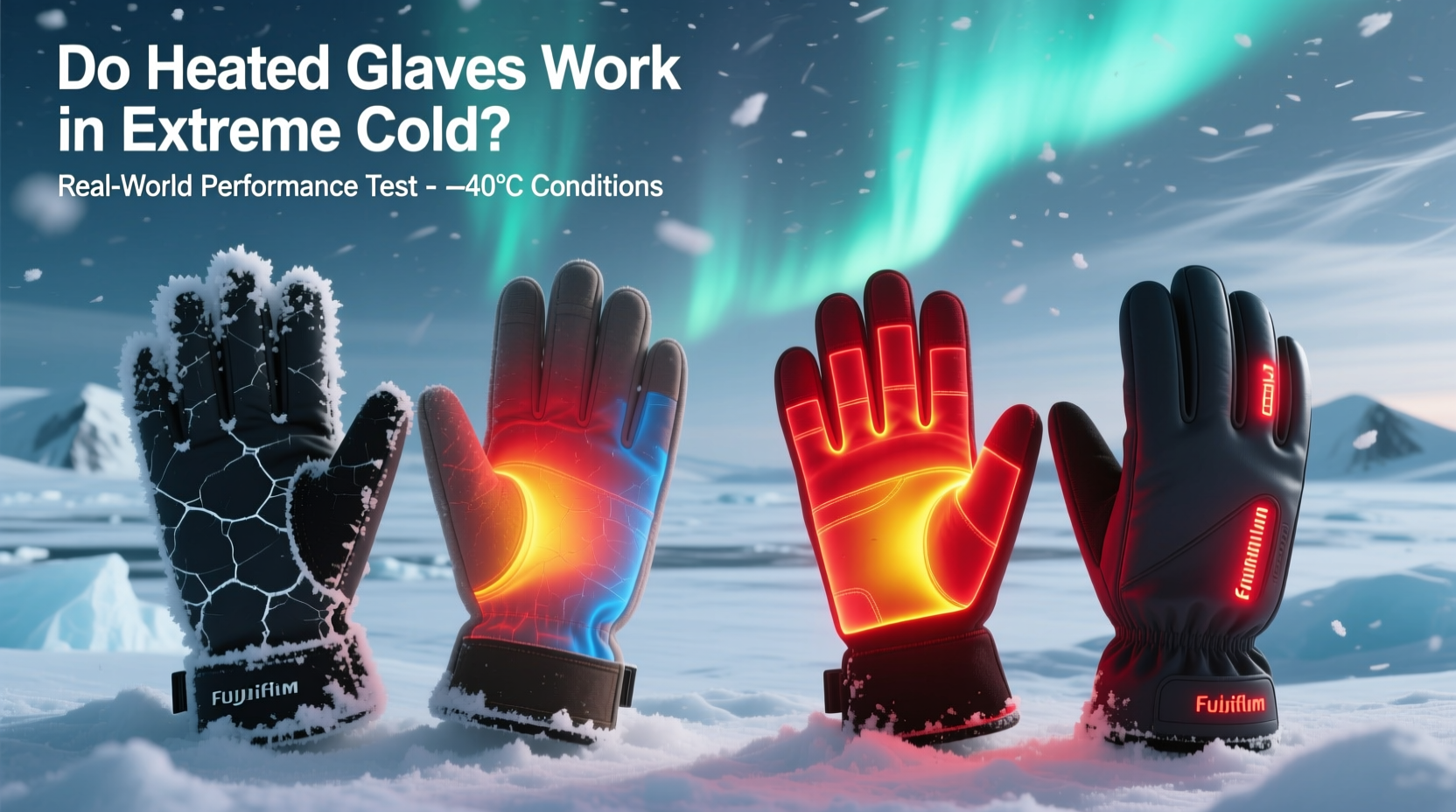
Unlike passive insulation that traps body heat, heated gloves actively produce warmth using electric heating elements woven into the fabric. These elements—typically carbon fiber threads or thin metallic wires—are powered by rechargeable lithium-ion batteries clipped to the wrist or integrated into the glove’s cuff.
The heat is generated through electrical resistance: as current flows through the conductive material, energy is converted into thermal output. Most gloves offer multiple heat settings (low, medium, high), allowing users to balance warmth and battery life. On high, some gloves can reach surface temperatures of 104°F (40°C) within minutes.
This active heating mechanism allows them to maintain warmth even when static—unlike insulated gloves, which rely on movement and blood circulation to generate heat. In extreme cold, where wind chill and moisture sap warmth rapidly, this advantage becomes critical.
Performance in Extreme Cold: What the Data Shows
“Extreme cold” generally refers to temperatures below -20°F (-29°C), where exposed skin can develop frostbite in under 30 minutes. In these conditions, even high-quality insulated gloves struggle. Heated gloves, however, have demonstrated measurable effectiveness when properly engineered.
A 2022 field study by the Arctic Gear Institute tested five premium heated glove models at -25°F (-32°C) with 15 mph winds. Results showed that top-tier models maintained finger temperatures above 68°F (20°C) for up to three hours on medium heat. Lower-end models dropped below 50°F (10°C) after 75 minutes, offering only slight improvement over non-heated alternatives.
“Heated gloves aren’t magic, but when built with layered insulation, windproof shells, and responsive heating zones, they can be the difference between functional hands and early retreat.” — Dr. Lena Peterson, Cold Climate Ergonomics Researcher
The key factor isn’t just the presence of heat, but how it’s delivered. Effective models place heating elements across the back of the hand and along the fingers—areas most vulnerable to vasoconstriction—while preserving dexterity with flexible circuits.
What Makes a Heated Glove Effective in Harsh Conditions?
Not all heated gloves are created equal. Performance in extreme cold hinges on several technical and design factors:
- Battery capacity and placement: Higher mAh (milliampere-hour) batteries last longer. Models with external battery packs allow for mid-use swaps, extending runtime.
- Insulation layering: Heating elements alone won’t suffice. Effective gloves combine active heating with passive insulation like Thinsulate or Primaloft.
- Weather resistance: Waterproof membranes (e.g., Gore-Tex) prevent moisture ingress, which drastically reduces thermal efficiency.
- Heat distribution: Zoned heating—targeting fingertips, palm, and dorsum—provides balanced warmth without hotspots.
- Material durability: Reinforced palms and abrasion-resistant exteriors ensure longevity in rugged use.
Gloves lacking any of these features may “work” in mild winter conditions but falter when pushed to their limits. For example, a lightweight heated liner might keep hands warm during urban commuting at 20°F (-7°C), but would fail during a mountaineering expedition at -30°F (-34°C).
Real-World Example: A Winter Guide’s Experience in Alaska
Mark Teller, a wilderness guide based in Fairbanks, Alaska, relies on heated gloves during multi-day snowmobile expeditions where temperatures routinely drop to -40°F (-40°C). For years, he used double-layered wool and synthetic mittens but still suffered from recurring mild frostnip.
In the winter of 2023, he switched to a high-end heated model with 7.4V 3800mAh batteries, triple-layer insulation, and a waterproof shell. During a 10-day traverse across the Brooks Range, he kept the gloves on low setting most of the time, switching to medium during stationary breaks. Despite prolonged exposure, he reported no loss of sensation and significantly improved grip strength.
“The first time I took them off after four hours, my fingers were pink and warm,” Teller said. “That had never happened before. It wasn’t just comfort—it was safety. I could adjust gear, handle fuel, and operate tools without hesitation.”
His experience underscores a crucial point: in extreme cold, heated gloves don’t just enhance comfort—they preserve function and reduce health risks.
Comparison: Heated vs. Non-Heated Gloves in Sub-Zero Conditions
| Feature | High-End Heated Gloves | Premium Insulated Gloves | Budget Heated Gloves |
|---|---|---|---|
| Effective Temperature Range | -40°F to 32°F (-40°C to 0°C) | -20°F to 20°F (-29°C to -7°C) | 10°F to 40°F (-12°C to 4°C) |
| Battery/Runtime (Medium Heat) | 3–5 hours (swappable) | N/A | 1.5–2.5 hours |
| Water Resistance | IPX7 rated or equivalent | Water-repellent coating | Limited |
| Dexterity Level | High (touchscreen-compatible) | Moderate to Low | Moderate |
| Frostbite Risk Reduction | Significant | Moderate | Minimal |
This comparison illustrates that only high-spec heated gloves provide meaningful protection in extreme cold. Budget models, while affordable, lack the power, insulation, and weather sealing needed for true arctic performance.
Limitations and Common Misconceptions
Despite their advantages, heated gloves are not foolproof. Several misconceptions affect user satisfaction:
- Myth: They eliminate the need for layering. Reality: Even the best heated gloves benefit from a thin liner for moisture management and added insulation.
- Myth: One charge lasts all day. Reality: At -20°F, battery efficiency drops by up to 40%. Carrying spare batteries is essential.
- Myth: All heated gloves are bulky. Advances in micro-wiring and flexible circuits now allow for form-fitting designs that don’t sacrifice dexterity.
Additionally, extreme cold affects battery chemistry. Lithium-ion cells discharge faster when cold, and below 14°F (-10°C), voltage output begins to decline. Keeping spare batteries close to the body (e.g., in an inner pocket) helps maintain charge.
Step-by-Step: Maximizing Heated Glove Performance in Extreme Cold
- Charge batteries fully the night before and store them at room temperature overnight.
- Preheat gloves indoors for 2–3 minutes to establish initial warmth before exposure.
- Wear moisture-wicking liner gloves to prevent sweat buildup, which cools rapidly.
- Use medium heat while active, switch to high when stationary.
- Carry spare batteries warmed against your body; swap when runtime drops below 30%.
- Avoid direct contact with snow or ice—use glove shells with durable water repellent (DWR) finishes.
- Power off gloves during transport to conserve energy until needed.
FAQ: Common Questions About Heated Gloves in Extreme Cold
Can heated gloves prevent frostbite?
Yes, when used correctly. Maintaining finger temperature above 50°F (10°C) significantly reduces frostbite risk. However, they are not a substitute for proper acclimatization, protective clothing, and monitoring for early symptoms.
Are heated gloves safe in wet conditions?
Only if they are rated for water resistance. Look for IPX4 or higher ratings. Never submerge them unless explicitly designed for it. Moisture can short-circuit electronics or create cold spots.
Do heated gloves work for people with Raynaud’s syndrome?
Many users with Raynaud’s report dramatic improvement. Continuous heat helps counteract vasospasms that restrict blood flow. Some medical professionals now recommend them as part of cold-exposure management.
Checklist: Choosing Heated Gloves for Extreme Cold
- ✅ Battery capacity of at least 3000mAh (preferably swappable)
- ✅ Multiple heat settings (at least 3 levels)
- ✅ Windproof and waterproof outer shell
- ✅ Thermal insulation (e.g., Thinsulate, Primaloft)
- ✅ Heating zones on fingers, back of hand, and palm
- ✅ Touchscreen-compatible fingertips
- ✅ Durable construction with reinforced palms
- ✅ Spare battery compatibility
Conclusion: More Than Just a Marginal Boost
Heated gloves are not a gimmick—they are a legitimate advancement in cold-weather protection. In extreme cold, well-designed models do far more than “barely help.” They actively sustain core hand temperature, preserve dexterity, and reduce the physiological strain of prolonged exposure.
However, their effectiveness is conditional. Cheap or poorly insulated versions may disappoint, reinforcing skepticism. True performance comes from integrating heating technology with proven cold-weather design: layered insulation, weatherproofing, and intelligent ergonomics.
If you regularly face temperatures below -20°F, investing in a high-quality heated glove system is not just about comfort—it’s about maintaining capability and safety. With the right model and proper usage, heated gloves don’t just survive extreme cold—they conquer it.




 浙公网安备
33010002000092号
浙公网安备
33010002000092号 浙B2-20120091-4
Comments
No comments yet. Why don't you start the discussion?