
The holiday season, backyard parties, and festive events have long been illuminated by strings of warm white or colorful LED lights. For decades, traditional string lights have defined ambiance—simple, affordable, and accessible. But as immersive technologies advance, a new contender has emerged: the holographic projector. With dazzling 3D light displays that float in mid-air, these devices promise a futuristic alternative to tangled wires and limited patterns. As we approach 2025, the question arises—will holographic projectors truly replace traditional string lights?
The answer isn't a simple yes or no. Instead, it lies in understanding how each technology serves different needs, budgets, and environments. While holographic projectors offer unprecedented visual experiences, string lights still dominate in practicality, affordability, and emotional resonance. This article explores the state of both lighting forms, their strengths and limitations, and whether one will eclipse the other in the near future.
The Rise of Holographic Projector Technology
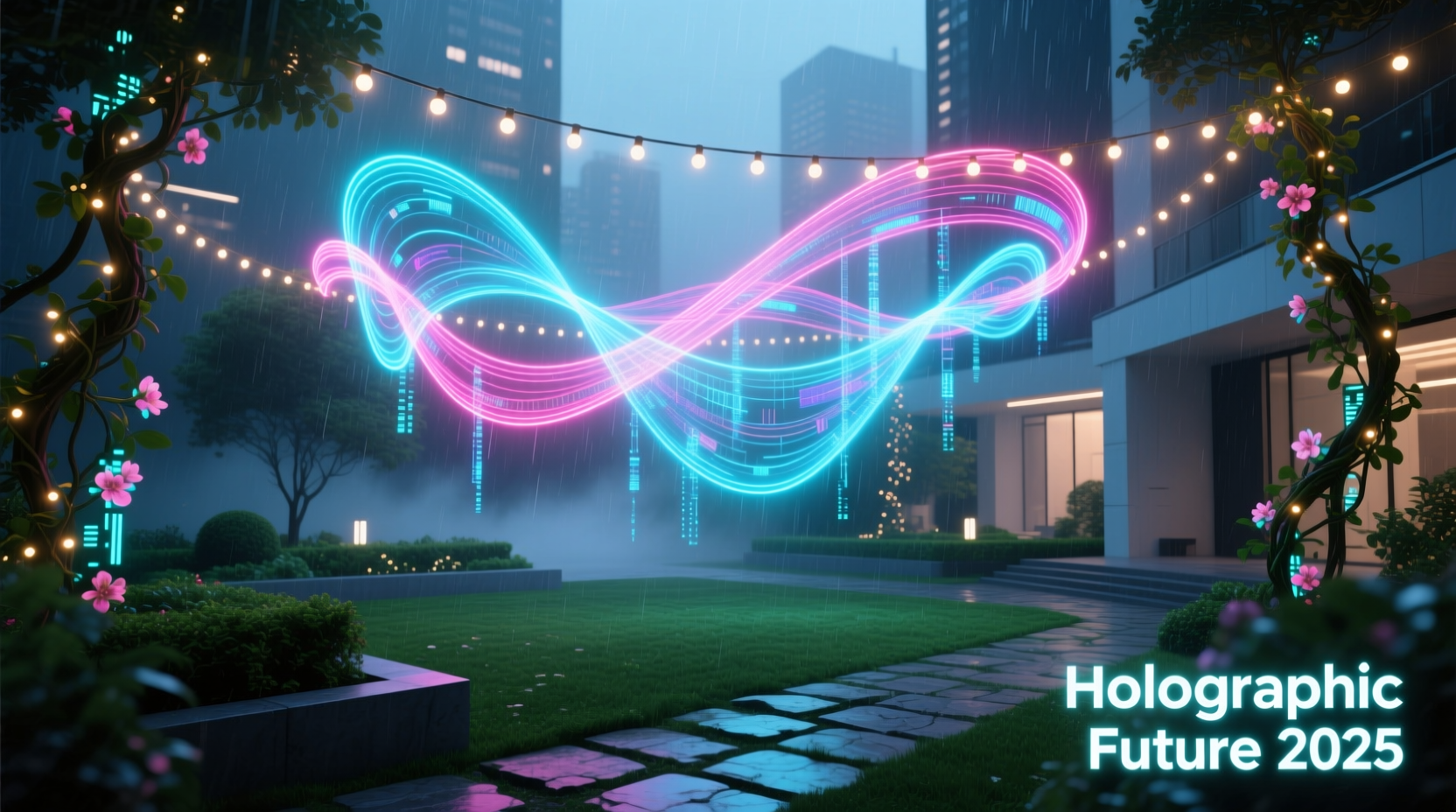
Holographic projectors are no longer confined to science fiction. In recent years, advancements in laser scanning, volumetric display, and augmented reality (AR) projection have brought true 3D light images into homes, retail spaces, and public installations. Unlike standard video projectors that cast flat images on surfaces, holographic systems create depth-perceived visuals that appear to float in space—ideal for dynamic, eye-catching displays.
Companies like Looking Glass Factory, Light Field Lab, and Holoxica are leading the charge in consumer and commercial holography. Their compact desktop units can project animated stars, snowflakes, or geometric shapes without screens or glasses. Some models even allow real-time interaction via motion sensors or smartphone apps. These features make them especially appealing for holiday decor, wedding centerpieces, or themed events where “wow factor” is paramount.
However, widespread adoption remains limited. Most high-quality holographic projectors still cost hundreds, if not thousands, of dollars. They require stable power sources, precise ambient lighting, and often technical know-how to operate effectively. While innovation continues at pace, mainstream integration into everyday decor—especially seasonal lighting—is still evolving.
Why String Lights Remain Relevant in 2025
Despite technological leaps, traditional string lights maintain strong cultural and functional relevance. According to market research from Grand View Research, the global decorative lighting market was valued at over $13 billion in 2023 and is projected to grow steadily through 2030—driven largely by demand for LED string lights during holidays and special events.
Several factors contribute to their enduring popularity:
- Affordability: A quality set of 100 LED string lights costs between $10 and $25.
- Energy efficiency: Modern LEDs consume minimal electricity and last up to 50,000 hours.
- Versatility: Can be draped indoors or outdoors, wrapped around trees, railings, or furniture.
- Emotional appeal: The soft, warm glow evokes nostalgia and comfort—key elements in home decor.
- Easy setup: No calibration, software updates, or Wi-Fi required.
Moreover, string lights come in countless variations—twinkling, steady, color-changing, programmable via app—and many now include solar-powered options for eco-conscious users. Their simplicity makes them ideal for renters, DIY decorators, and large-scale outdoor installations where reliability trumps novelty.
“People don’t just decorate with lights—they create memories. There’s something irreplaceable about hanging lights with family, even if they tangle every time.” — Laura Simmons, Interior Designer & Lighting Consultant
Comparing Technologies: A Practical Breakdown
To assess whether holographic projectors can realistically replace string lights, consider the following comparison across key categories:
| Feature | Traditional String Lights | Holographic Projectors |
|---|---|---|
| Initial Cost | $10–$50 per set | $150–$2,000+ |
| Installation Time | 10–30 minutes (manual draping) | 5–15 minutes (setup + calibration) |
| Outdoor Usability | Yes (weather-resistant models available) | Limited (requires darkness and protection from wind/moisture) |
| Visual Effect | Continuous linear glow, ambient warmth | Floating 3D animations, high-tech appearance |
| Maintenance | Check for broken bulbs; store carefully | Software updates, lens cleaning, firmware checks |
| Lifespan | 3–10 years with proper care | 5+ years (depends on component durability) |
| Customization | Timers, colors, patterns (limited) | Full control over animation, shape, movement, speed |
This table illustrates a fundamental trade-off: string lights win in accessibility and robustness, while holographic projectors excel in creativity and spectacle. Neither fully replaces the other—they serve different niches.
Real-World Adoption: A Mini Case Study
In late 2024, a boutique hotel in Asheville, North Carolina, experimented with replacing its annual rooftop string light display with a series of small holographic projectors. The goal was to modernize its holiday aesthetic and reduce labor costs associated with installation and maintenance.
The team installed five mid-tier holographic units projecting animated snowflakes, pinecones, and floating ornaments above the rooftop lounge. Guests were initially impressed—the 3D effects drew attention on social media, and staff appreciated the quick setup compared to previous years’ wiring challenges.
However, feedback revealed drawbacks. Many guests missed the cozy, enveloping glow of traditional lights. Some found the holograms “cold” or “distracting,” especially when trying to converse in dim lighting. Additionally, the projectors performed poorly on foggy nights due to light diffusion, and one unit failed after exposure to unexpected rain despite being labeled “weather-resistant.”
By January, the hotel reverted to using a hybrid model: holograms for centerpiece displays near the bar, but string lights along railings and pergolas to maintain warmth and continuity. The manager noted, “We learned that innovation shouldn’t sacrifice atmosphere. People come here to relax, not feel like they’re in a tech demo.”
When Holographic Projectors Shine—and When They Don’t
Holographic projectors are best suited for specific applications where impact matters more than immersion:
- Event Centerpieces: Weddings, product launches, or art exhibitions benefit from floating logos or thematic animations.
- Retail Displays: Stores use holograms to attract foot traffic with moving visuals visible from afar.
- Indoor Accent Lighting: Living rooms, bedrooms, or offices where subtle 3D effects enhance mood without overwhelming.
- Interactive Experiences: Children’s rooms, museums, or themed attractions where engagement is key.
Conversely, they fall short in scenarios requiring:
- Broad area illumination
- Outdoor durability in variable weather
- Long-duration passive ambiance
- Multi-generational ease of use
For most households, string lights remain the default choice—not because they’re advanced, but because they work reliably, evoke emotion, and integrate seamlessly into existing routines.
Step-by-Step Guide: Choosing Between Both in 2025
If you're deciding whether to adopt holographic projectors or stick with string lights this year, follow this decision framework:
- Define Your Purpose: Are you aiming for visual impact (e.g., party centerpiece) or ambient warmth (e.g., patio relaxation)?
- Assess Your Environment: Is the space indoors or outdoors? Controlled lighting or exposed to sunlight/weather?
- Set a Budget: Allocate funds based on expected usage. Consider ROI if used commercially.
- Test Before Committing: Rent or buy one holographic unit to evaluate real-world performance.
- Consider Hybrid Use: Combine both technologies—use holograms for focal points and string lights for background glow.
- Plan for Maintenance: Factor in storage, software updates, and potential repair costs for electronics.
This structured approach ensures you make an informed choice aligned with your actual needs—not just the allure of new tech.
Expert Insight: The Future of Decorative Lighting
“The future isn’t about replacement—it’s about layering. We’ll see homes using string lights for foundation ambiance and holograms for moments of surprise. Think of it like audio: you still need background music, but sometimes you want a spotlight solo.” — Dr. Rajiv Mehta, Smart Home Technology Researcher at MIT Media Lab
Dr. Mehta’s perspective reflects a growing consensus among designers and engineers: convergence, not competition, defines the next phase of lighting evolution. As holographic projectors become smaller, cheaper, and more energy-efficient, they won’t eliminate string lights—they’ll complement them.
Frequently Asked Questions
Can holographic projectors work outdoors at night?
Yes, but only in controlled conditions. They require complete darkness, protection from wind and moisture, and a stable surface. Performance degrades significantly in fog, rain, or breezy environments due to light scattering.
Are holographic projectors safe for children and pets?
Most consumer-grade models use low-power lasers or LED-based projection methods that meet international safety standards (IEC 60825). However, direct prolonged exposure to the beam should be avoided. Always check manufacturer guidelines before placing near play areas.
Do string lights consume more energy than holographic projectors?
Generally, no. A full set of LED string lights uses about 4–10 watts. Many holographic projectors consume 15–50 watts depending on brightness and resolution. So ironically, the “high-tech” option may use more power for shorter durations of visual output.
Final Verdict: Coexistence Over Replacement
As we move into 2025, holographic projectors will not replace traditional string lights—at least not in any broad, sweeping sense. Instead, they will carve out specialized roles where visual innovation and interactivity matter most. String lights will continue to dominate in residential, seasonal, and emotionally driven settings due to their unmatched blend of affordability, reliability, and charm.
The real shift isn’t technological displacement—it’s diversification. Consumers now have more tools than ever to craft layered lighting experiences. A backyard gathering might feature string lights along fences for warmth, while a holographic projector casts gentle fireflies above the dining table. A holiday tree could blend physical ornaments with a rotating 3D star projection overhead.
This era of lighting abundance means personal preference, context, and creativity matter more than ever. Rather than asking which technology wins, we should ask how they can work together to elevate our spaces.




 浙公网安备
33010002000092号
浙公网安备
33010002000092号 浙B2-20120091-4
Comments
No comments yet. Why don't you start the discussion?