
Holiday lighting transforms homes into festive displays, but with rising energy costs and growing environmental awareness, many homeowners are reevaluating their choices. Among the most common questions: do icicle lights use more electricity than standard light strands? The answer isn’t as simple as it seems—it depends on bulb type, length, duration of use, and technology. Understanding these factors can help you make informed decisions that balance aesthetics, cost, and efficiency during the holiday season.
Understanding Holiday Light Types and Technology
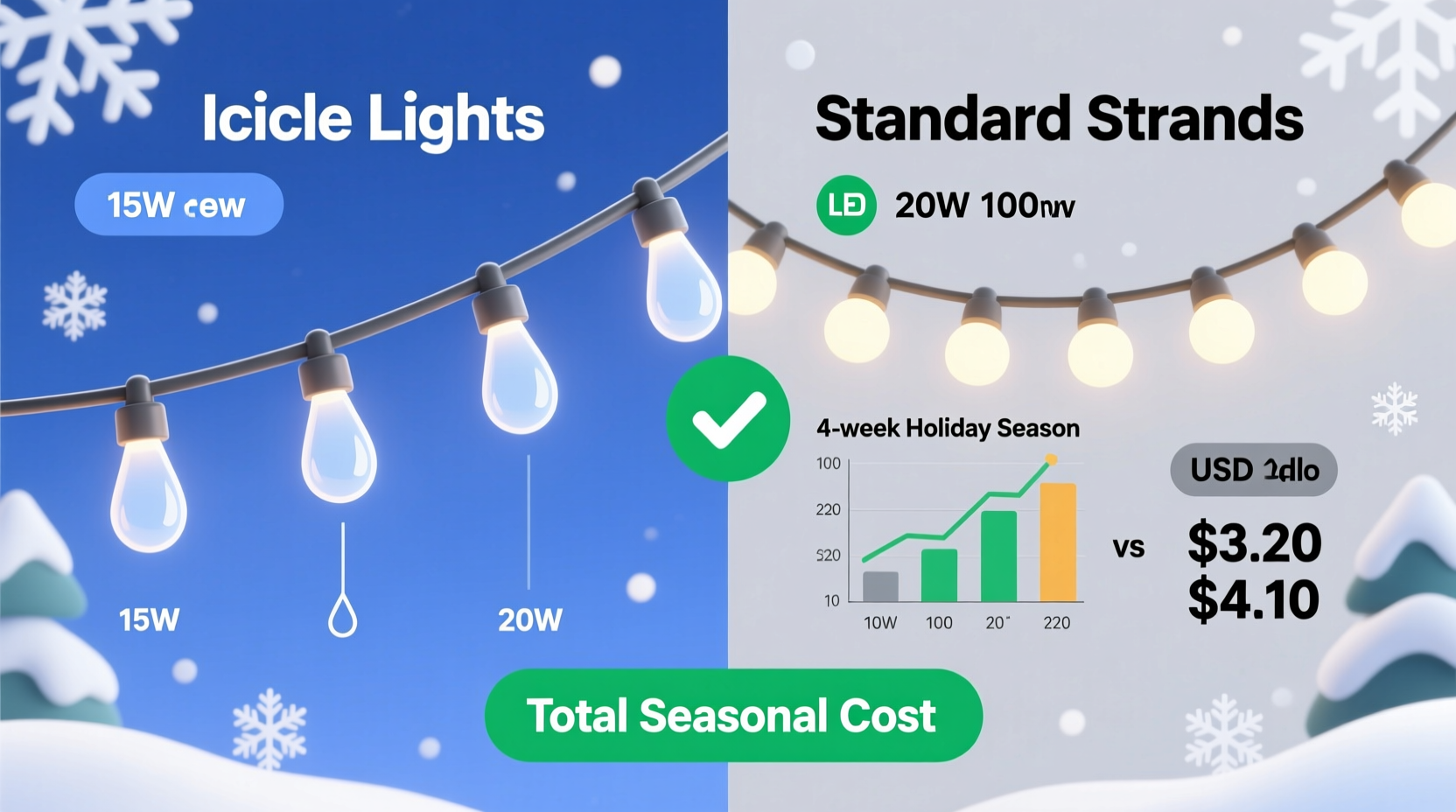
The first step in comparing energy usage is understanding the two main categories of holiday lights: incandescent and LED. These technologies differ significantly in power consumption, lifespan, and overall cost-effectiveness.
Incandescent lights have been the traditional choice for decades. They produce a warm, nostalgic glow but consume far more electricity. A typical incandescent mini light uses about 0.4 to 0.5 watts per bulb. In contrast, LED (light-emitting diode) bulbs use only 0.04 to 0.08 watts each—up to 90% less energy. This dramatic difference makes LEDs the clear winner in energy efficiency.
Icicle lights, often used to mimic hanging ice formations along rooftops and gutters, are typically longer than standard C7 or C9 strands. Their design includes multiple vertical droplets extending from a horizontal base wire, increasing the total number of bulbs per strand. Standard strands, like 50-light or 100-light sets, are usually linear and uniform in layout.
Because icicle lights often contain more bulbs over a greater surface area, they may draw more power—but not necessarily if they’re LED-based. For example, a 100-bulb incandescent strand might use 40–50 watts, while a comparable LED icicle set with 150 bulbs could still use only 7–12 watts.
“LED technology has revolutionized holiday lighting. You can now double the number of bulbs without doubling the energy cost.” — Dr. Alan Reeves, Energy Efficiency Researcher at the National Lighting Institute
Energy Consumption Comparison: Icicle vs. Standard Strands
To determine whether icicle lights truly use more electricity, let’s break down real-world examples using average wattage, daily usage, and seasonal operation.
| Light Type | Bulbs per Strand | Watts per Bulb | Total Watts | Daily kWh (6 hrs) | Seasonal Cost (30 days, $0.15/kWh) |
|---|---|---|---|---|---|
| Standard Incandescent (100-count) | 100 | 0.5 | 50 W | 0.3 kWh | $1.35 |
| Standard LED (100-count) | 100 | 0.07 | 7 W | 0.042 kWh | $0.19 |
| Icicle Lights (Incandescent, 150-count) | 150 | 0.5 | 75 W | 0.45 kWh | $2.03 |
| Icicle Lights (LED, 150-count) | 150 | 0.07 | 10.5 W | 0.063 kWh | $0.28 |
The data shows that while icicle lights often have more bulbs, the impact on electricity use is minimal when using LED technology. An LED icicle strand costs just $0.28 over a 30-day season when used six hours per night—less than a third of the cost of a basic incandescent string. Even with 50% more bulbs, the LED icicle set remains vastly more efficient.
However, if both types are incandescent, then yes—icicle lights generally use more electricity due to higher bulb counts and longer wire runs. That extra visual drama comes at a price: nearly 50% more energy consumption compared to a standard 100-light incandescent strand.
Real-World Example: The Johnson Family’s Holiday Display
The Johnsons decorate their two-story home every December with rooftop icicle lights, tree outlines, and yard displays. In 2022, they used all incandescent lights: 10 strands of incandescent icicle lights (150 bulbs each), 5 standard incandescent strands on the porch railing, and 3 large C7 floodlight strings. Their display ran from 5 PM to 11 PM nightly for 35 days.
Their estimated energy use was 1,890 kWh over the season, costing approximately $283 at $0.15 per kWh. Concerned about the bill, they switched to LED equivalents in 2023. They kept the same number of strands and runtime but upgraded all lights to LED.
In 2023, their total consumption dropped to 256 kWh, reducing their lighting cost to just $38.40—a savings of over $240. The icicle lights alone went from consuming 75 watts each to 10.5 watts, proving that switching to LED negates the disadvantage of higher bulb counts.
This case illustrates a critical point: the type of bulb matters far more than the style of strand. Even elaborate icicle displays can be energy-efficient when powered by modern LED technology.
Factors That Influence Seasonal Electricity Costs
Beyond bulb type and strand length, several other variables affect how much your holiday lights will cost to operate:
- Duration of Use: Running lights for 12 hours a day doubles the cost compared to 6 hours. Using a timer to limit operation to evening hours can cut energy use in half.
- Number of Strands: More strands mean more cumulative wattage. Ten LED icicle strands still use less than one old-style incandescent mega-string, but the total adds up over time.
- Voltage and Circuit Design: Some icicle lights use parallel wiring, allowing individual bulbs to stay lit if one fails. While convenient, this can slightly increase energy draw compared to series-wired strands.
- Outdoor Conditions: Cold weather improves LED efficiency, but snow and ice buildup can strain circuits and cause flickering, leading to inconsistent power draw.
- Transformer and Adapter Losses: Low-quality power adapters or extension cords can waste energy through resistance and heat, especially with long runs.
Additionally, local electricity rates vary widely. In states like California or Massachusetts, where rates exceed $0.30 per kWh, even efficient LED setups can add $50–$75 to a winter bill if used extensively. In contrast, areas with lower rates (e.g., $0.10/kWh) see much smaller impacts.
Step-by-Step Guide to Minimizing Holiday Lighting Costs
Follow this practical sequence to enjoy festive lighting without inflating your electric bill:
- Audit Your Current Setup: Count how many strands you use, note bulb type, and check labels for wattage. Multiply total watts by hours of daily use to estimate consumption.
- Replace Incandescent with LED: Prioritize swapping out older strands, especially high-visibility ones like icicle lights, for LED versions. Look for ENERGY STAR-certified products for guaranteed efficiency.
- Install Timers or Smart Plugs: Set lights to turn on at dusk and off at bedtime (e.g., 5 PM–11 PM). Smart plugs allow remote control and scheduling via smartphone apps.
- Use Solar-Powered Options Where Possible: For garden stakes or low-light areas, solar-powered LEDs charge during the day and illuminate at night with zero grid cost.
- Inspect and Maintain Wiring: Damaged cords or corroded connectors reduce efficiency and pose fire risks. Replace frayed wires and avoid daisy-chaining more than three strands unless rated for it.
- Turn Off When Not Needed: Skip running lights on cloudy days or during travel. A smart plug with geofencing can detect when you’re away and shut off automatically.
- Recycle Old Lights: Many hardware stores offer holiday light recycling programs. Proper disposal reduces environmental impact and frees up storage space.
Checklist: Energy-Smart Holiday Lighting
- ✅ Switch to LED bulbs for all new purchases
- ✅ Use timers or smart outlets for automatic shutoff
- ✅ Limit daily runtime to 6–8 hours
- ✅ Avoid mixing incandescent and LED strands on the same circuit
- ✅ Calculate total wattage before plugging in multiple strands
- ✅ Inspect cords and connections for damage annually
- ✅ Consider motion-sensor lights for walkways to save energy
Frequently Asked Questions
Are LED icicle lights safe to leave on all night?
Yes, LED icicle lights are generally safe to leave on overnight. They generate very little heat, reducing fire risk. However, for maximum safety and efficiency, use a timer to limit operation to necessary hours. Most manufacturers recommend no more than 8–10 hours of continuous use per day.
Can I connect icicle lights to standard light strands?
You can connect them only if they are the same voltage, bulb type, and manufacturer-rated for linking. Mixing LED and incandescent strands on the same circuit can cause uneven current flow, overheating, or failure. Always check the packaging for “connectable” limits—typically three to five strands max.
Do icicle lights really cost more to run than regular strands?
Only if they use incandescent bulbs or significantly more LEDs. Due to their longer design and extra droplets, icicle lights often have more bulbs, but with LED technology, the added cost is negligible. A single LED icicle strand costs less than $0.30 per season under average use, making the style difference almost irrelevant from an energy standpoint.
Conclusion: Make Informed Choices for a Brighter, Cheaper Holiday
The question of whether icicle lights use more electricity than standard strands ultimately hinges on technology, not design. While icicle lights often contain more bulbs and cover more area, modern LED versions negate any meaningful difference in energy consumption. The real culprit behind high holiday bills is outdated incandescent lighting—not the shape of the strand.
By upgrading to LED, using timers, and planning your display efficiently, you can enjoy the elegance of icicle lights without sacrificing energy efficiency or budget control. Whether you prefer the classic look of steady white strands or the cascading charm of icicles, today’s lighting options allow beauty and responsibility to coexist.




 浙公网安备
33010002000092号
浙公网安备
33010002000092号 浙B2-20120091-4
Comments
No comments yet. Why don't you start the discussion?