
Few beauty tools have captured the imagination of skincare enthusiasts quite like the jade roller. With its cool touch, smooth glide, and Instagram-worthy aesthetic, it’s become a staple on vanities from Seoul to Los Angeles. But behind the serene green stone lies a persistent question: do jade rollers actually reduce facial puffiness, or are their effects purely psychological—a well-crafted placebo?
To answer this, we need to separate myth from mechanism. While anecdotal praise abounds, scientific scrutiny is limited. Yet, there's enough physiological insight and dermatological understanding to assess whether this ancient tool delivers real results—or just the illusion of them.
The Science Behind Facial Puffiness
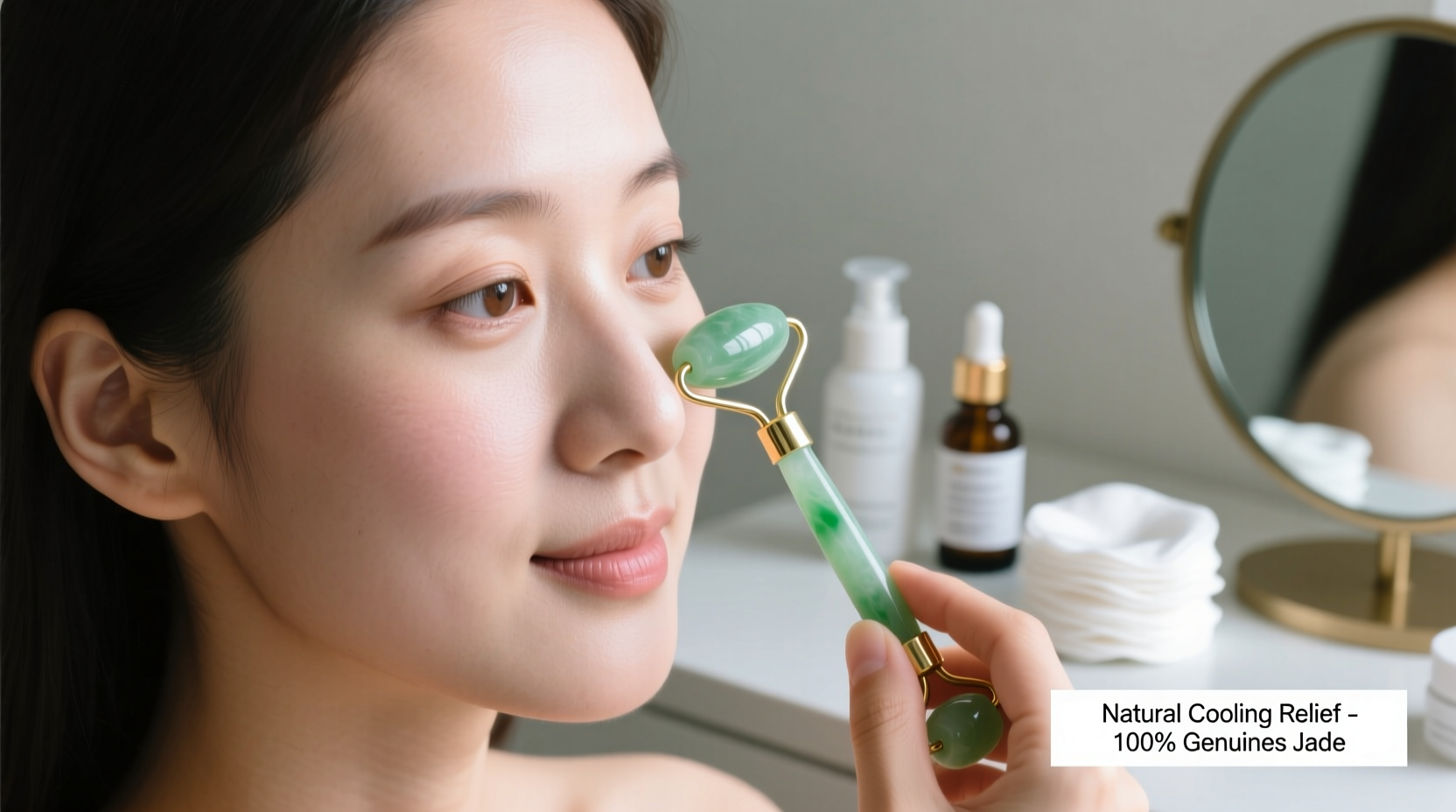
Puffiness, especially around the eyes and cheeks, typically stems from fluid retention in the subcutaneous tissue. This can be triggered by several factors:
- Lack of sleep
- Diet high in sodium
- Allergies or sinus congestion
- Hormonal fluctuations
- Aging-related loss of skin elasticity and lymphatic efficiency
The body's lymphatic system plays a key role in managing this fluid buildup. Unlike the circulatory system, which has the heart as a pump, the lymphatic system relies on muscle movement and manual manipulation to drain excess fluid. This is where techniques like facial massage—and tools such as jade rollers—enter the picture.
“Manual lymphatic drainage is a clinically recognized technique used post-surgery and in treating edema. When applied correctly, gentle upward strokes can support fluid movement out of congested areas.” — Dr. Lena Patel, Board-Certified Dermatologist
How Jade Rollers Work: Mechanism vs. Marketing
Jade rollers are typically double-ended—one larger end for cheeks and forehead, a smaller one for under-eyes and contours. The theory is simple: rolling the cool stone across the face stimulates circulation, encourages lymphatic drainage, and temporarily tightens the skin due to thermal contrast.
The cooling effect comes from storing the roller in the refrigerator before use. Cold temperatures cause vasoconstriction—narrowing of blood vessels—which can reduce swelling and inflammation. This is not unique to jade; any chilled object (like a metal spoon) can produce a similar short-term effect.
But does the material matter? Advocates claim that natural stones like jade or rose quartz possess “energy-balancing” properties. From a scientific standpoint, however, there’s no evidence that jade emits healing vibrations or alters cellular function. The benefit lies not in metaphysics, but in physics: temperature, pressure, and motion.
Evidence: What Does Research Say?
There is minimal peer-reviewed research specifically on jade rollers. However, studies on facial massage and lymphatic drainage offer indirect insights.
A 2018 study published in *Clinical, Cosmetic and Investigational Dermatology* found that participants who performed daily facial massage reported reduced under-eye puffiness and improved skin firmness after four weeks. While the study didn’t use jade rollers per se, the mechanical action was comparable.
Another study from Japan observed increased microcirculation in facial skin following manual massage, suggesting enhanced oxygen delivery and waste removal—both beneficial for reducing dullness and mild swelling.
Still, these improvements were modest and temporary. No long-term structural changes were noted. This aligns with expert opinion: jade rollers may provide a cosmetic lift, but they don’t replace medical treatments for chronic edema or deep tissue issues.
The placebo effect cannot be discounted. Ritual itself has therapeutic value. The act of slowing down, touching your face gently, and engaging in self-care can lower cortisol levels, indirectly improving skin appearance over time. So even if the roller isn't doing much physically, the routine might be.
Placebo or Not? Evaluating Real vs. Perceived Benefits
Let’s break down what jade rollers likely do versus what they’re often credited for:
| Claimed Benefit | Scientifically Plausible? | Notes |
|---|---|---|
| Reduces morning puffiness | Yes | Cooling + light massage promotes temporary fluid movement |
| Tightens sagging skin | No | No evidence of collagen stimulation or lasting firming |
| Improves product absorption | Possibly | Rolling may help distribute serums more evenly |
| Drains toxins | No | \"Toxins\" is a misused term; lymph moves waste, not \"toxins\" in the detox sense |
| Alleviates tension and improves relaxation | Yes | Tactile self-massage reduces stress markers |
The takeaway? Jade rollers aren’t miracle workers, but they’re not useless either. Their impact is subtle, transient, and highly dependent on technique and consistency.
How to Use a Jade Roller Effectively: A Step-by-Step Guide
Many users apply jade rollers haphazardly, diminishing any potential benefit. To maximize results, follow this dermatologist-approved routine:
- Cleanse your face – Start with a clean canvas to avoid pushing dirt into pores.
- Apply a serum or facial oil – This reduces friction and allows smoother gliding.
- Begin with the neck – Use upward motions from collarbone to jawline to open lymphatic pathways.
- Move to the chin and jaw – Roll outward along the jawline toward the ears, applying light pressure.
- Cheeks and nose – Start at the nostrils and roll outward toward the temples.
- Under-eyes – Use the small end. Gently roll from inner corner to outer corner, avoiding tugging.
- Forehead – Roll upward from brows to hairline, then outward to temples.
- Finish with upward sweeps – Repeat each motion 3–5 times, always moving toward lymph nodes (ears and neck).
Duration: Aim for 3–5 minutes total. Use daily, preferably in the morning when puffiness is most noticeable.
Mini Case Study: Morning Routine Transformation
Sophie, a 34-year-old graphic designer in Portland, struggled with persistent under-eye puffiness due to seasonal allergies and late-night screen work. She tried various eye creams with little success. On a friend’s recommendation, she began using a refrigerated jade roller every morning after cleansing.
Within two weeks, Sophie noticed her eyes looked less swollen by midday. She attributed this not just to the roller, but to the ritual: taking five quiet minutes before starting her day helped reduce stress, and she became more consistent with her skincare. Her dermatologist confirmed no underlying condition, noting that “manual drainage, even informal, can make a visible difference in fluid distribution.”
Sophie still uses her roller daily—not because she believes it’s reversing aging, but because it makes her feel grounded and slightly more awake. Her experience illustrates how functional benefits and psychological comfort can coexist.
Expert Recommendations and Best Practices
To get real value from a jade roller, experts emphasize intentionality over mysticism.
“The tool is only as effective as the technique. A jade roller won’t replace a retinoid or sunscreen, but when used properly, it can complement a healthy skincare routine.” — Dr. Alicia Mendez, Cosmetic Dermatologist
Here are actionable best practices:
- Chill it: Cold enhances vasoconstriction and depuffing. Keep it in the fridge, not on the counter.
- Be consistent: Like facial exercises, results build over time with regular use.
- Clean it regularly: Wipe with a soft cloth and mild soap weekly to prevent bacterial buildup.
- Don’t expect miracles: It won’t eliminate bags from genetics or severe allergies.
- Pair with other methods: Combine with cold compresses, low-sodium diets, and allergy management for better outcomes.
Checklist: Optimizing Your Jade Roller Routine
Before you roll, ask yourself:
- ✅ Is my face cleansed and moisturized?
- ✅ Is the roller chilled (not frozen)?
- ✅ Am I using light, upward strokes?
- ✅ Am I moving toward lymph nodes (ears, neck)?
- ✅ Have I cleaned the roller recently?
- ✅ Am I doing this consistently—at least 5x per week?
Frequently Asked Questions
Can I use a jade roller if I have acne or rosacea?
Proceed with caution. If you have active inflammatory acne or broken skin, avoid rolling over affected areas to prevent spreading bacteria or irritation. For rosacea, the cooling effect may soothe redness, but use extremely light pressure. Consult a dermatologist if unsure.
Are jade rollers better than other materials like metal or plastic?
Jade retains cold well and feels luxurious, but stainless steel or amethyst rollers perform similarly. Metal stays colder longer and is easier to sanitize. The material matters less than the technique and temperature.
How long before I see results?
Most users notice an immediate tightening effect that lasts a few hours. For consistent reduction in baseline puffiness, expect 2–4 weeks of daily use. Individual results vary based on lifestyle, skin type, and underlying health.
Conclusion: Real Effects, Manageable Expectations
The truth about jade rollers lies somewhere between wellness hype and clinical skepticism. They don’t restructure facial tissue or permanently erase puffiness. But when used correctly—as part of a broader approach to skin and self-care—they can deliver measurable, albeit temporary, improvements.
Their real power may lie in ritual: a moment of mindfulness, a tactile pause in a fast-moving day. That alone has value. But if you're looking for depuffing, the combination of cold therapy and lymphatic stimulation is physiologically sound, even if the stone isn’t magical.
So yes, jade rollers can reduce puffiness—but not because jade is mystical. Because physics works. And because paying attention to your body, one gentle roll at a time, often leads to better outcomes than chasing quick fixes.




 浙公网安备
33010002000092号
浙公网安备
33010002000092号 浙B2-20120091-4
Comments
No comments yet. Why don't you start the discussion?