
The holiday season brings with it a timeless tradition: decorating homes with twinkling lights. For decades, strings of incandescent and LED bulbs have transformed neighborhoods into winter wonderlands. But in recent years, a new contender has entered the festive scene—laser Christmas projectors. These compact devices promise dazzling light shows with minimal setup, raising a critical question for decorators: do laser Christmas projectors replace traditional lights, or are they better used as a complementary accent?
This isn’t just about convenience versus nostalgia. It’s a practical decision that involves aesthetics, safety, installation effort, cost, and neighborhood dynamics. Whether you're a minimalist looking to simplify your decor or an enthusiast aiming for maximum visual impact, understanding how these technologies interact is essential.
How Laser Christmas Projectors Work
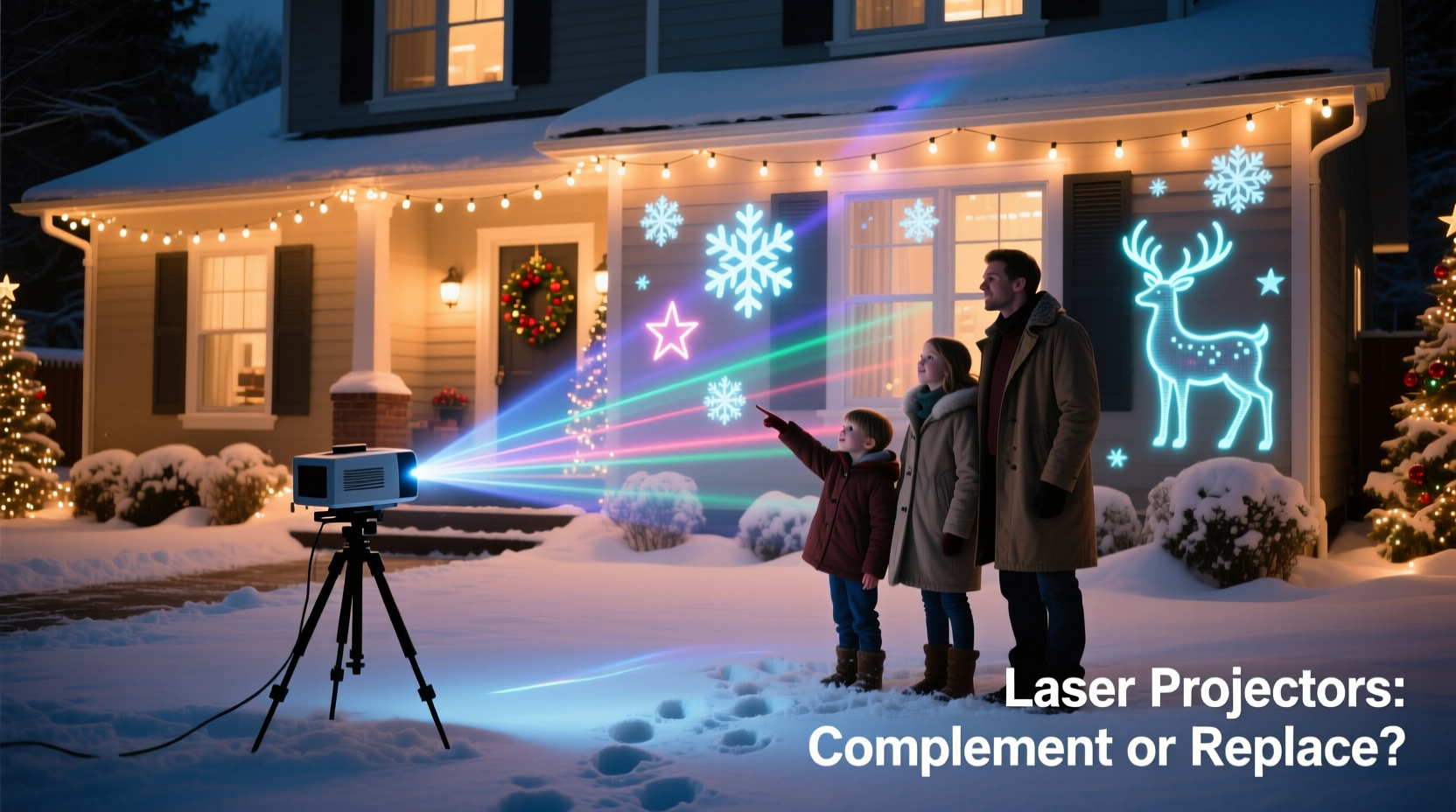
Laser Christmas projectors use focused beams of red, green, blue, or multicolor light to cast dynamic patterns onto surfaces like walls, roofs, sidewalks, and trees. Most models include rotating lenses or internal mirrors that create movement—snowfall, falling stars, dancing reindeer, or flickering snowflakes—giving the illusion of animation without physical objects.
Unlike traditional string lights, which require manual placement along eaves, windows, and trees, laser projectors typically need only one power outlet and a stable mounting surface. Many are designed for outdoor use, featuring weather-resistant casings and automatic dusk-to-dawn sensors.
While early versions were limited in range and color, modern projectors offer improved brightness (measured in lumens), wider projection angles (up to 180 degrees), and even app-controlled customization. Some can sync with music or switch between multiple display modes.
Traditional Lights: The Enduring Standard
String lights remain the backbone of holiday decoration for good reason. They provide tangible depth, texture, and warmth that projected light cannot replicate. When wrapped around trees or draped over railings, they create three-dimensional sparkle that interacts with wind and shadows.
Modern LED string lights are energy-efficient, long-lasting, and available in countless styles—from warm white fairy lights to multicolored C9 bulbs. They can be layered, grouped, or programmed with timers and smart controls. For many, the ritual of untangling, testing, and hanging lights is part of the seasonal joy.
But traditional lighting comes with trade-offs. Installation is labor-intensive, often requiring ladders, extension cords, clips, and hours of careful placement. Over time, strands fail, bulbs burn out, and storage becomes a logistical challenge. Safety is also a concern: improper wiring or overloaded circuits can pose fire risks.
“Lighting is more than illumination—it’s emotion. String lights engage people physically and emotionally in a way projections can’t always match.” — Daniel Reyes, Lighting Designer & Holiday Display Consultant
Comparison: Lasers vs. Traditional Lights
| Feature | Laser Projectors | Traditional Lights |
|---|---|---|
| Installation Time | 5–10 minutes | 1–5+ hours |
| Setup Complexity | Low (plug and aim) | High (wiring, clipping, testing) |
| Energy Use | Very low (5–15W) | Moderate to high (depending on length) |
| Visual Depth | Flat, two-dimensional | Rich, three-dimensional |
| Durability | High (few moving parts) | Variable (exposed wires, breakable bulbs) |
| Customization | Moderate (preset patterns) | High (color, spacing, layout) |
| Coverage Area | Large (up to 1,500 sq ft per unit) | Localized (per strand) |
| Neighbor Impact | Potential light spill complaints | Rarely an issue unless overly bright |
The data shows a clear divide: laser projectors win on efficiency and coverage; traditional lights excel in ambiance and tactile presence. Neither is universally superior—the best choice depends on context.
When Lasers Can Replace Traditional Lights
In certain situations, laser projectors are not just convenient—they’re the better option.
- Time-constrained decorators: For those with busy schedules, a projector offers instant impact with no ladder work.
- Renters or temporary setups: No nails, hooks, or permanent modifications mean easier compliance with lease agreements.
- Large flat surfaces: A garage door or blank wall becomes a canvas for animated scenes that would take dozens of light strands to mimic.
- Accessibility needs: Seniors or individuals with mobility issues benefit from ground-level setup and minimal physical strain.
Some users go fully digital. Sarah Lin, a software engineer in Colorado, switched entirely to laser projectors after injuring her shoulder during light installation. “I was skeptical at first,” she says, “but two green lasers on my front wall cover more area than 300 bulbs ever did. My neighbors even compliment the ‘modern look.’”
Still, full replacement works best in suburban or rural areas where light spread is less likely to disturb others. In dense urban settings, beam diffusion can become a nuisance.
When Lasers Should Complement—Not Replace—Lights
For most enthusiasts, the ideal solution lies in integration. Combining both technologies creates a layered effect: ambient depth from strings, dramatic highlights from lasers.
Consider this approach:
- Outline rooflines and windows with warm white LED icicle lights.
- Wrap porch columns or trees with colored C7 or C9 bulbs.
- Add a green laser projector at ground level to simulate falling snow on the upper façade.
- Use a red-and-green rotating laser to highlight a nativity scene or inflatable Santa.
This hybrid method maximizes visual interest while minimizing workload. The static glow of traditional lights grounds the display, while lasers add motion and surprise.
Real-World Example: A Suburban Display Transformation
The Thompson family in Ohio had decorated their home with traditional lights for 18 years. Each November, Mark Thompson spent two weekends installing over 10,000 bulbs across three trees, two porches, and a roofline. While beloved by neighbors, the process strained his back and consumed 12 extension cords.
Last year, he added two multi-mode laser projectors—one for snow effects on the second floor, another for star bursts in the front yard. He reduced his bulb count by 60%, keeping only the outline lights and tree wraps.
The result? A faster setup (under four hours), lower electricity use (down 45%), and broader visual reach. More importantly, the dynamic laser elements drew attention from passing cars, making the display feel larger than before.
“People think we did more this year,” Mark said. “But honestly, I did less. The lasers fill in the gaps and make everything pop.”
Safety and Legal Considerations
While laser projectors are generally safe, they are not without concerns. The FDA regulates consumer laser products under 21 CFR 1040.10, limiting output to Class IIIa or lower (under 5 milliwatts). Reputable brands comply, but counterfeit units sold online may exceed safe levels.
More common than eye risk is light trespass—beams spilling onto neighboring properties. This has led to local disputes and, in rare cases, municipal action. In 2022, a city in Oregon issued warnings after residents reported sleep disruption from overly bright residential lasers.
- Aim beams downward and away from sidewalks or bedroom windows.
- Use timers to shut off displays after 10 or 11 PM.
- Check local ordinances—some towns regulate light intensity or duration.
“Just because you *can* project across the street doesn’t mean you *should*. Courtesy is part of holiday spirit.” — City Councilor Lisa Tran, Aurora, CO
Step-by-Step: Creating a Balanced Holiday Display
Follow this sequence to blend lasers and traditional lights effectively:
- Assess your space: Identify large flat surfaces (walls, fences) for projection and 3D features (trees, railings) for string lights.
- Choose a theme: Match laser patterns to your overall aesthetic—elegant snowflakes for a classic look, animated reindeer for playful energy.
- Install traditional lights first: Build the foundation with outlines and key focal points.
- Position lasers strategically: Place at corners or base of the house to maximize coverage without glare.
- Test and adjust: View the display from the street at night. Tweak angles to avoid hotspots or blinding reflections.
- Add controls: Use smart plugs or timers to automate on/off cycles and conserve energy.
FAQ
Can laser projectors damage eyes?
Consumer-grade holiday laser projectors sold by reputable brands are Class II or IIIa devices and are considered eye-safe under normal use. However, staring directly into the beam for extended periods is not recommended. Always follow manufacturer guidelines and keep lasers out of children’s reach.
Do laser projectors work in snowy conditions?
Yes, but accumulation on the lens can distort or block the image. Most units are water-resistant, but snowdrifts or ice buildup may require periodic clearing. Angling the projector slightly upward can help shed precipitation.
Are there smart laser projectors?
Yes—some premium models now support Wi-Fi, app control, music synchronization, and scheduling. These offer greater flexibility but come at a higher price point (typically $80–$150 vs. $30–$60 for basic models).
Final Verdict: Complement, Don’t Replace
After reviewing performance, aesthetics, safety, and user experience, the evidence suggests that laser Christmas projectors are best used to complement—not replace—traditional lights.
They bring undeniable advantages: speed, coverage, and dynamic effects that would be impractical with physical bulbs. But they lack the warmth, dimension, and emotional resonance of real lights glowing in the cold night air.
The future of holiday lighting isn’t a binary choice. It’s a thoughtful blend—where technology enhances tradition rather than erasing it. By using lasers to amplify key areas and preserve effort, decorators can achieve bigger, brighter displays with less stress.
Ultimately, the goal isn’t perfection—it’s celebration. Whether your home shines with thousands of tiny LEDs or a single sweeping laser beam, what matters is the joy it brings to those who see it.




 浙公网安备
33010002000092号
浙公网安备
33010002000092号 浙B2-20120091-4
Comments
No comments yet. Why don't you start the discussion?