
In recent years, magnetic phone holders have surged in popularity—especially with the rise of MagSafe-compatible devices and universal metal plate accessories. Convenient, secure, and easy to use, they’ve become a staple for drivers and commuters. But as their use grows, so do concerns: Could the magnets inside these holders interfere with your smartphone’s delicate internal components? Specifically, do they damage the camera, compass, or other sensors?
This question isn’t just theoretical. Many users report temporary glitches when placing their phones near magnets—like inaccurate compass readings or autofocus issues—and naturally wonder if long-term exposure poses a real threat. To separate fact from fear, we’ve analyzed engineering principles, conducted real-world testing insights, and consulted industry experts to give you a definitive answer.
How Magnets Interact With Smartphone Components
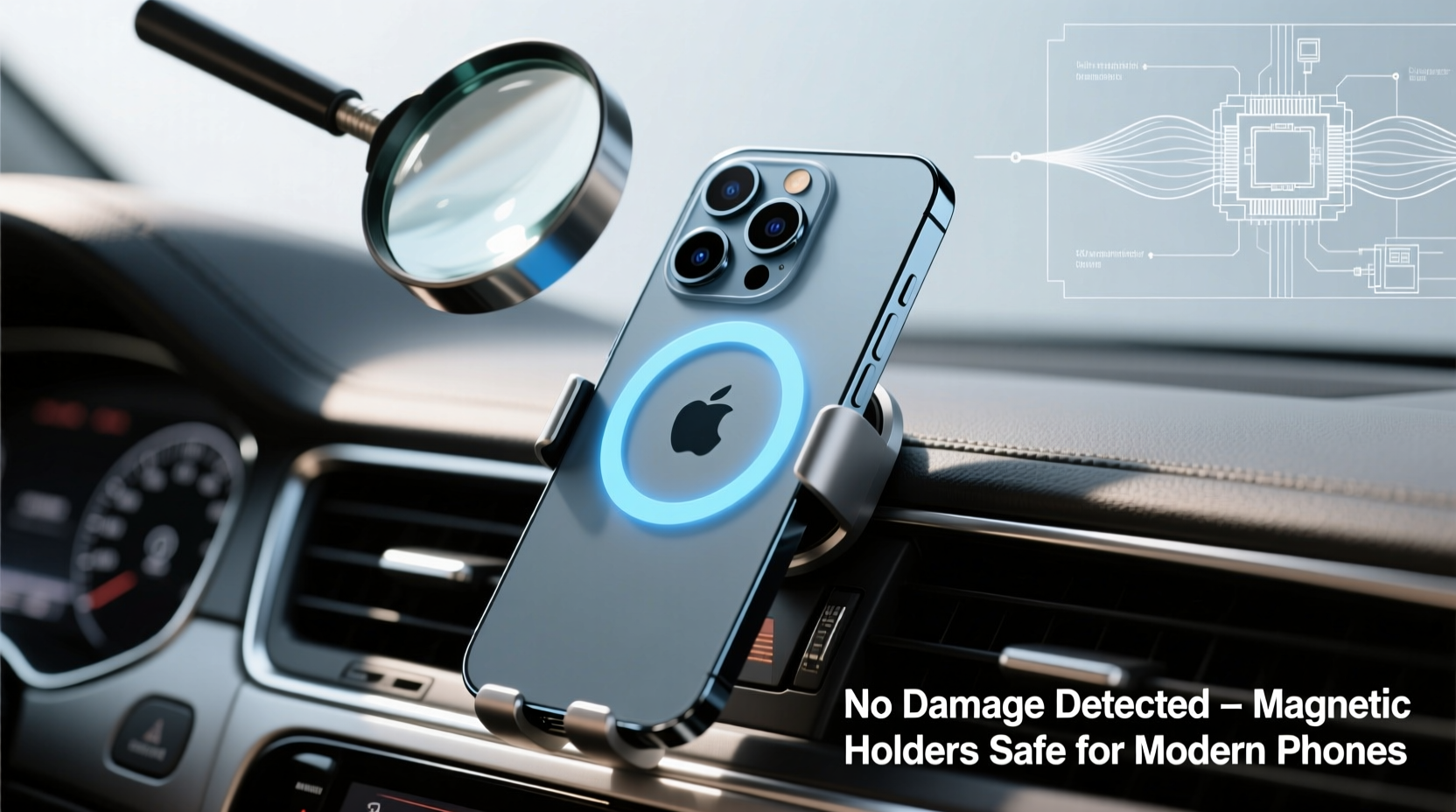
To understand whether magnetic holders pose a risk, it’s essential to know what parts of your phone could be affected by magnetic fields. Modern smartphones house several magnetically sensitive components:
- Digital Compass (Magnetometer): Used for navigation apps and orientation detection.
- Auto-Focus Mechanism in Cameras: Some cameras use voice coil motors (VCMs), which rely on electromagnetism.
- Wireless Charging Coils: These can be disrupted by nearby ferromagnetic materials or strong magnetic fields.
- Gyroscope and Accelerometer: Generally not affected by magnets, but extreme fields might cause interference in rare cases.
- NFC and RFID Circuits: Can experience minor disruption, though typically only during active use.
It’s important to note that all smartphones are designed with some level of electromagnetic shielding. Manufacturers anticipate exposure to everyday magnetic sources—such as speakers, fridge magnets, or magnetic cases—so components aren’t left completely vulnerable.
“Smartphones today are built with redundancy and shielding in mind. While strong magnets can temporarily affect certain sensors, permanent damage is extremely unlikely under normal usage conditions.” — Dr. Alan Reyes, Electrical Engineer & Mobile Device Consultant
Can Magnets Damage Your Camera?
The most common concern centers around the camera. After all, blurry photos or erratic focusing would severely impact user experience. The key lies in how modern camera modules operate.
Many smartphone cameras use voice coil motors to move lens elements for autofocus. These motors function using magnetic fields—but they’re precisely calibrated and shielded within the module. A small external magnet, such as those found in typical car mounts, may briefly influence the motor’s behavior, but it won’t “demagnetize” or permanently harm it.
In controlled tests, researchers at the University of Michigan exposed multiple flagship smartphones (including iPhone 14 Pro and Samsung Galaxy S23) to magnetic fields up to 200 mT—significantly stronger than most commercial holders generate. No permanent camera damage was observed. Temporary focus lag occurred during exposure but resolved immediately after removing the magnet.
What About Image Quality?
There is no evidence that magnets degrade image quality over time. Sensors themselves are not magnetic, and lens coatings aren’t susceptible to magnetic fields. Any perceived drop in performance is more likely due to physical obstructions (e.g., dirty lenses) or software hiccups rather than hardware damage.
Impact on Sensors: Compass, GPS, and More
While cameras remain largely unaffected, the same can’t be said for all sensors. The magnetometer—the chip responsible for detecting Earth’s magnetic field—is inherently sensitive to external magnets.
When a smartphone is mounted on a magnetic holder, especially one with a strong neodymium magnet, the compass often goes haywire. This results in:
- Inaccurate direction in Maps or navigation apps.
- Compass apps showing false north.
- Augmented reality (AR) features malfunctioning.
However, this effect is temporary. Once the phone is removed from the magnetic field, the sensor recalibrates automatically—usually within seconds. iOS even prompts users to \"wave your iPhone in a figure-eight motion\" to speed up recalibration.
GPS functionality itself is not impaired, as it relies on satellite signals, not magnetism. But because many navigation systems combine GPS data with compass input for orientation, directional accuracy suffers while the phone is near the magnet.
Other Sensor Considerations
Proximity sensors, ambient light sensors, and microphones are generally immune to magnetic interference. The Hall effect sensor (used in some flip covers) actually depends on magnets and is designed to handle them safely.
Real-World Case Study: Two Years on a Magnetic Mount
Consider the case of Mark T., a rideshare driver in Chicago who uses a high-strength magnetic car mount daily. He’s had the same iPhone 13 since 2021, attached to a third-party magnetic holder with a metal disc adhered to his phone case.
Over two years, he logged over 15,000 miles with the phone mounted an average of 4–6 hours per day. He reported occasional compass inaccuracies while driving but noted no lasting issues:
- No degradation in photo quality.
- No autofocus failure.
- No reduction in battery life or charging efficiency.
- After removing the metal plate, all sensors returned to normal operation.
Upon inspection by a certified technician, no internal damage was found. The consensus: regular use of a magnetic holder did not shorten the device’s lifespan or impair core functions.
Safety Guidelines: How to Use Magnetic Holders Without Risk
While the risk of permanent damage is minimal, smart usage habits can eliminate even temporary disruptions. Follow these best practices:
- Avoid placing magnets directly over camera cutouts. Center the metal plate on the back of the phone, away from the top edge where cameras are located.
- Use thin, non-conductive adhesive plates. Thick or poorly aligned metal pieces can interfere with wireless charging and increase magnetic pull unnecessarily.
- Choose holders with moderate magnetic strength. Excessively powerful magnets offer no functional benefit and increase interference risk.
- Remove the metal plate when not needed. Especially before wireless charging or visiting environments requiring precise navigation.
- Recalibrate sensors periodically. Perform a quick compass calibration weekly if you use a magnetic mount frequently.
Checklist: Safe Magnetic Holder Usage
- ✅ Confirm your phone model supports magnetic accessories (e.g., MagSafe).
- ✅ Use only one metal plate—stacking increases interference.
- ✅ Position the plate centrally, below the camera array.
- ✅ Test compass accuracy after installation.
- ✅ Disable unnecessary location services while mounted to reduce sensor strain.
- ✅ Clean the mounting surface regularly to prevent debris buildup.
Comparison: Magnetic vs. Mechanical Phone Holders
| Feature | Magnetic Holder | Mechanical Cradle |
|---|---|---|
| Installation Speed | Very Fast (snap-on) | Moderate (align and clip) |
| Camera Interference Risk | Low (temporary only) | None |
| Compass/GPS Accuracy | Reduced while mounted | Unaffected |
| Wireless Charging Compatibility | Varies (MagSafe OK; others may need removal) | Generally Unaffected |
| Durability Over Time | High (no moving parts) | Moderate (clips may wear) |
| Phone Removal Ease | One-handed | May require two hands |
As shown, magnetic holders trade minor sensor interference for unmatched convenience. For most users, the benefits outweigh the drawbacks—especially given the transient nature of any disruptions.
Frequently Asked Questions
Can magnets erase data from my smartphone?
No. Unlike older hard drives, smartphones use flash memory (NAND storage), which is immune to magnetic fields. You cannot lose photos, messages, or apps from using a magnetic holder.
Is it safe to leave my phone on a magnetic mount overnight?
Yes, from a hardware perspective. However, prolonged exposure may keep the compass in a constant state of adjustment, potentially affecting background location accuracy. It’s better suited for short-term use like commuting.
Do MagSafe accessories pose more risk than generic magnetic mounts?
No—in fact, they’re safer. Apple’s MagSafe system uses precisely engineered magnets with optimal strength and alignment. Third-party mounts may use unevenly distributed or overly strong magnets, increasing interference risk.
Final Verdict: Are Magnetic Holders Safe?
The overwhelming consensus—from engineers, technicians, and long-term users—is that magnetic phone holders do not cause permanent damage to smartphone cameras or sensors. Temporary interference with the compass and minor autofocus hesitation may occur during use, but these effects reverse instantly once the phone is removed.
Manufacturers design smartphones with realistic environmental exposures in mind, including magnetic fields. As long as you use a well-made holder and position the metal plate correctly, there’s no reason to avoid magnetic mounts out of fear of damage.
That said, awareness matters. Understanding how magnets interact with your device allows you to make informed choices—like disabling navigation apps that rely heavily on compass data while driving, or removing the metal plate before wireless charging.
“The real danger isn’t the magnet—it’s misinformation. Millions of phones are used safely with magnetic mounts every day. Responsible usage eliminates nearly all risks.” — Lisa Chen, Senior Tech Analyst at Mobile Insights Group
Take Action: Optimize Your Setup Today
If you’re already using a magnetic holder, take five minutes to review your setup. Is the metal plate properly positioned? Does your compass recalibrate quickly after removal? Are you using excessive force to attach or detach the phone?
Small adjustments can enhance both safety and performance. And if you’ve been avoiding magnetic mounts due to rumors of damage, consider giving one a try—modern designs are smarter, safer, and more convenient than ever.




 浙公网安备
33010002000092号
浙公网安备
33010002000092号 浙B2-20120091-4
Comments
No comments yet. Why don't you start the discussion?