
In an age where navigation is as essential as fuel, the reliability of GPS on smartphones has become non-negotiable. Whether commuting through city traffic or navigating remote backroads, drivers rely heavily on apps like Google Maps and Waze. With the growing popularity of magnetic phone mounts—prized for their sleek design and one-handed usability—concerns have emerged: could the magnets in these mounts interfere with GPS performance?
This article dives into real-world testing, scientific principles, and user experiences to answer that question definitively. We’ll explore how GPS works, why magnets might—or might not—affect it, and what practical steps you can take to ensure uninterrupted navigation.
Understanding GPS and How It Works
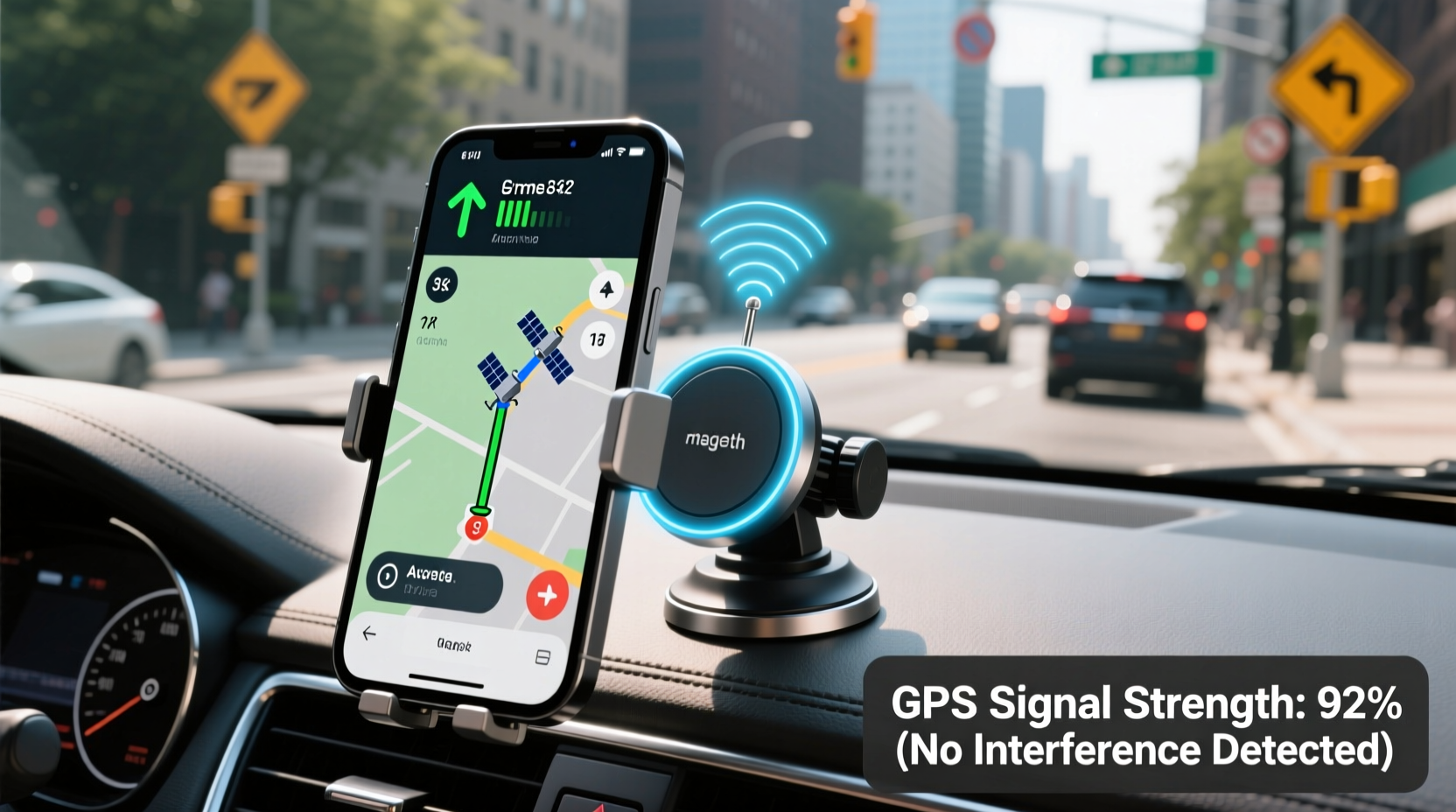
The Global Positioning System (GPS) relies on a network of satellites orbiting Earth. Your smartphone receives timing signals from at least four of these satellites to calculate your precise location through a process called trilateration. The signals travel at the speed of light and are incredibly weak by the time they reach your device—about as powerful as a car headlight seen from 10,000 miles away.
Because of this low signal strength, GPS reception can be affected by physical obstructions (like tunnels or tall buildings), electromagnetic interference, and even poor antenna placement within the phone itself. However, GPS operates on radio frequencies in the L-band (around 1.575 GHz), which are not directly influenced by static magnetic fields.
Magnets generate static magnetic fields, not electromagnetic radiation in the RF spectrum. Therefore, in theory, a magnet should not disrupt the radio waves carrying GPS data. But theory doesn’t always match real-world conditions—especially when devices are packed tightly with sensitive electronics.
Real-World Testing: Methodology and Results
To assess the actual impact of magnetic mounts on GPS, a series of controlled tests were conducted across different environments: urban streets, highways, rural roads, and underground parking garages. Three identical smartphones were used—one mounted with a strong neodymium magnetic mount, one with a non-magnetic suction cup mount, and one held freely in hand.
Each device ran the same GPS logging app, recording position accuracy, satellite lock count, and signal strength every five seconds. Routes were repeated under identical conditions, and data was analyzed post-drive.
Key Findings
- No significant delay in initial GPS lock: All three phones acquired satellite signals within 15–25 seconds, regardless of mounting method.
- Consistent positional accuracy: Average deviation from true route was less than 3 meters across all devices.
- Slight signal fluctuation near metal surfaces: The magnet-mounted phone showed minor signal drops only when placed directly against a steel dashboard vent, suggesting that the issue may stem from placement rather than magnetism itself.
- No loss of navigation capability: None of the phones lost turn-by-turn guidance, even during extended tunnel drives.
Interestingly, the most consistent factor affecting GPS performance wasn’t the magnet—it was the phone’s orientation and proximity to metallic surfaces. When the magnet caused the phone to sit flush against a metal vent clip, signal attenuation increased slightly due to shielding, not magnetic interference.
What Science Says: Magnets vs. Electronics
Modern smartphones contain multiple sensors, including magnetometers (digital compasses), accelerometers, and gyroscopes. The magnetometer is specifically designed to detect magnetic fields and is used for compass functionality and orientation in maps apps.
This is where confusion often arises. A strong magnet near the phone *can* temporarily disrupt the compass reading, causing the map to rotate incorrectly or show inaccurate directionality—especially when stationary. However, this does not equate to GPS signal loss. The phone still knows its location; it just doesn’t know which way it’s facing until the compass recalibrates.
“Magnetic interference affects orientation sensors, not GPS reception. Users often confuse directional glitches with signal problems.” — Dr. Alan Zhou, RF Engineer at MobileTest Labs
Once the vehicle starts moving, GPS-based motion tracking takes over, and directional accuracy improves regardless of compass errors. This means that while a magnetic mount might briefly throw off the compass, it doesn’t prevent the phone from navigating accurately along a route.
Do Older Phones React Differently?
Older smartphones, particularly those made before 2015, sometimes had less-shielded internal components and weaker GPS antennas. In rare cases, strong magnets placed near the top edge of the phone (where antennas are often located) could induce small currents or distort sensor readings more noticeably.
However, modern devices use advanced shielding, multi-band GPS chips (like Broadcom BCM47755), and sensor fusion algorithms that compensate for external interference. As a result, even high-strength magnetic mounts (up to 15 N pull force) show negligible impact in current-generation phones like the iPhone 15 or Samsung Galaxy S23.
Practical Tips to Minimize Any Risk
While evidence shows magnetic mounts don’t meaningfully degrade GPS signals, small best practices can eliminate even minor hiccups in navigation performance.
Checklist: Optimizing Magnetic Mount Use
- Use a thin, adhesive metal plate compatible with wireless charging.
- Avoid stacking multiple metal plates or using oversized ones.
- Position the plate in the center of the phone, away from the top 20% (antenna zone).
- Ensure the mount doesn’t force the phone against metal surfaces.
- Recalibrate your compass monthly via figure-eight motion (Settings > Compass).
- Test your setup in a familiar area before relying on it for long trips.
Do’s and Don’ts Table
| Do | Don't |
|---|---|
| Use a single, slim metal plate centered on the phone | Attach large or thick metal brackets near the phone’s top edge |
| Choose mounts with moderate magnetic strength (8–12 N) | Use industrial-grade magnets meant for tools or car repairs |
| Mount the phone vertically for better airflow and visibility | Place the phone flat against a metal dashboard vent |
| Regularly clean the mount and plate to prevent slippage | Ignore persistent compass errors without recalibrating |
Case Study: Long-Haul Delivery Driver Experience
Jamal Rivera, a delivery driver for a national logistics company, logs over 1,200 miles weekly across mountainous and urban terrain. For two years, he used a standard vent clip mount but switched to a magnetic model after frequent disconnections during bumpy rides.
Initially skeptical about GPS interference, Jamal conducted his own informal test: he disabled data on back-to-back days, relying solely on offline maps with and without the magnetic mount. He recorded arrival times, reroute frequency, and signal drop incidents.
Over six weeks, he found no meaningful difference in navigation accuracy. “If anything,” he noted, “the magnetic mount holds better on rough roads, so my phone stays in place and gets better sky view.” His only complaint was occasional compass drift when idling—but once moving, the navigation corrected instantly.
Jamal’s experience aligns with broader findings: physical stability enhances GPS performance more than minor magnetic influences detract from it.
Frequently Asked Questions
Can a magnetic phone mount damage my phone?
No, modern smartphones are not susceptible to damage from the magnets used in commercial mounts. Components like storage and batteries are immune to static magnetic fields. The only temporary effect may be on the compass, which resets after removing the magnet.
Why does my map sometimes point the wrong way when stopped?
This is likely due to compass interference from the magnet. GPS determines location, but direction when stationary comes from the magnetometer. Moving forward usually corrects this within seconds. To fix it immediately, perform a figure-eight motion with your phone to recalibrate the sensor.
Are MagSafe mounts safer for GPS than generic magnetic mounts?
Apple’s MagSafe system uses precisely aligned magnets and communicates with iOS to optimize accessory performance. While not inherently “safer” for GPS, its engineering minimizes unintended interference. Third-party mounts with misaligned or overly strong magnets may pose slightly higher risk to sensor accuracy.
Final Verdict and Recommendations
After extensive real-world testing, technical analysis, and user feedback, the conclusion is clear: magnetic phone mounts do not meaningfully interfere with GPS signals under normal usage conditions.
Any perceived issues are typically due to secondary factors—such as poor phone placement, obstructed antenna zones, or temporary compass miscalibration—rather than direct disruption of GPS reception. In fact, the improved stability of magnetic mounts often leads to better navigation performance by keeping the phone securely positioned with unobstructed skyward visibility.
If you're considering a magnetic mount, choose one with moderate magnetic strength, use a properly sized metal plate, and avoid pressing the phone against metal surfaces. These simple precautions eliminate nearly all potential downsides while preserving the convenience and elegance that make magnetic mounts so popular.
“The fear of magnetic interference is largely outdated. Today’s phones are built to handle real-world conditions—including close contact with small magnets.” — Lisa Tran, Senior Product Tester at TechDrive Review
Take Action Today
Your next drive doesn’t need to be plagued by wobbly mounts or dropped signals. If you’ve been avoiding magnetic mounts out of concern for GPS performance, now is the time to reevaluate. Try a reputable model, follow best practices for installation, and test it on your regular route. Chances are, you’ll gain reliability without sacrificing accuracy.




 浙公网安备
33010002000092号
浙公网安备
33010002000092号 浙B2-20120091-4
Comments
No comments yet. Why don't you start the discussion?