
In an era where digital distractions dominate daily life, meditation apps have surged in popularity as a convenient solution for managing stress. From Headspace to Calm and Insight Timer, millions turn to guided sessions, breathing exercises, and sleep soundscapes at the tap of a screen. These tools promise mental clarity, emotional balance, and reduced anxiety—all within minutes per day. But as usage grows, so do questions: Are these apps genuinely effective, or are they fostering a new kind of psychological reliance? Can something designed to promote inner peace become another source of dependency?
The answer isn’t binary. Research shows that meditation apps can significantly reduce stress when used appropriately. However, like any tool—especially one embedded in our smartphones—they carry the risk of overuse, habituation, and misplaced expectations. The key lies not in rejecting technology, but in understanding how to use it wisely.
The Science Behind Meditation Apps and Stress Reduction
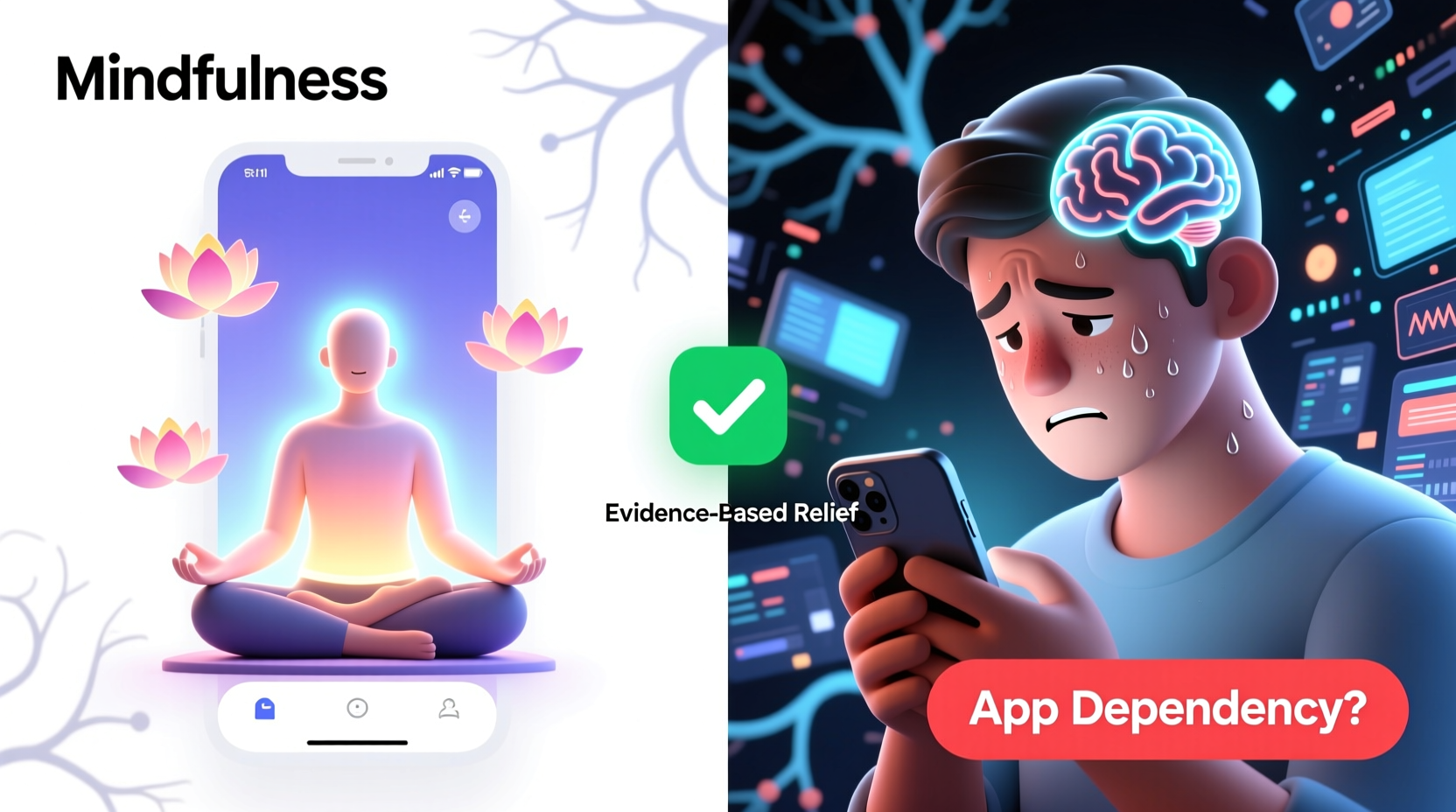
Mindfulness-based interventions have long been studied for their impact on mental health. A 2020 meta-analysis published in JAMA Internal Medicine found that structured mindfulness programs led to moderate reductions in anxiety, depression, and pain. Meditation apps translate these principles into accessible formats, often incorporating evidence-based techniques such as body scans, breath awareness, and loving-kindness meditation.
Neuroimaging studies support this: regular mindfulness practice is associated with decreased activity in the amygdala—the brain’s fear center—and increased connectivity in regions linked to attention and emotional regulation. When users engage consistently with well-designed app content, they may experience measurable shifts in stress reactivity.
For example, a 2021 study from the University of Oxford showed that participants using a mindfulness app for eight weeks reported a 32% reduction in perceived stress levels compared to a control group. Notably, improvements were strongest among those who practiced five days a week for at least ten minutes—a pattern suggesting consistency matters more than duration.
“Digital mindfulness tools aren’t replacements for deep practice, but they can serve as effective entry points—especially for people overwhelmed by traditional meditation settings.” — Dr. Amira Nasser, Clinical Psychologist & Mindfulness Researcher
When Support Becomes Reliance: The Risk of Dependency
While many benefit from app-guided meditation, some begin to rely on them excessively. This dependency manifests in subtle ways: feeling unable to relax without headphones and a voice guiding each breath, checking the app multiple times a day for “quick fixes,” or experiencing guilt after missing a streak. Unlike substance dependence, this form of reliance is behavioral—rooted in habit formation and digital reward loops.
Smartphone apps are engineered to encourage engagement. Streak counters, achievement badges, and personalized recommendations mimic the mechanics of social media and gaming platforms. Over time, users may shift focus from internal awareness to external validation—measuring progress by app metrics rather than subjective well-being.
This raises a critical question: Is the user cultivating self-regulation, or outsourcing it to an algorithm?
Consider Sarah, a 34-year-old project manager in Toronto. After downloading a popular meditation app during a high-pressure work phase, she began meditating daily. Initially, her anxiety dropped, sleep improved, and she felt more centered. But after six months, she noticed discomfort whenever she tried meditating without guidance. Sitting quietly on a park bench without earbuds felt “empty” and unproductive. She had grown dependent on the structure the app provided, losing touch with her own capacity for stillness.
Benefits vs. Risks: A Balanced Comparison
| Aspect | Benefits | Risks |
|---|---|---|
| Accessibility | Available anytime, anywhere; ideal for beginners | May discourage seeking in-person instruction or community practice |
| Structure | Guided sequences help maintain focus and consistency | Over-reliance on external direction weakens self-guided awareness |
| Personalization | Adaptive content based on mood, goals, and usage patterns | Data collection raises privacy concerns; algorithms may reinforce narrow emotional responses |
| Habit Formation | Reminders and streaks boost adherence | Dopamine-driven feedback loops can mimic addictive behaviors |
| Cost | Free tiers offer basic access; subscription models cheaper than therapy | Premium features may pressure users into paid plans despite limited added value |
Building a Healthy Relationship with Meditation Technology
To harness the benefits of meditation apps while avoiding dependency, intentionality is essential. The goal should be empowerment—not convenience. Here’s how to integrate these tools sustainably:
- Set clear intentions: Define why you’re meditating. Is it to reduce stress? Improve focus? Process emotions? Revisit this purpose regularly to stay aligned.
- Limit session frequency: Start with guided meditations, then gradually replace one session per week with silent practice. Increase unguided time over months.
- Vary your methods: Combine app use with walking meditation, journaling, or breathwork outside the app environment.
- Disable notifications: Turn off non-essential alerts to prevent compulsive checking. Schedule specific times for practice instead.
- Track internal changes: Keep a simple log of how you feel before and after sessions—separate from app metrics like streaks or minutes completed.
Mini Case Study: From App User to Independent Practitioner
James, a software developer in Austin, downloaded a meditation app after being diagnosed with mild generalized anxiety. For three months, he followed a structured 10-minute morning routine using guided content. His resting heart rate dropped, and he reported fewer panic episodes at work.
Then, during a weekend camping trip with no phone signal, he attempted to meditate without audio. At first, his mind raced. But by the third attempt, he noticed something unexpected: a deeper sense of presence emerged when there was no voice directing his attention. Inspired, James began alternating between app-guided and silent sits. Within two months, he transitioned to mostly unguided practice, using the app only when traveling or during periods of acute stress.
His journey illustrates a healthy progression—from scaffolding to self-sufficiency.
Expert Recommendations for Sustainable Practice
Dr. Lena Cho, a neuroscientist specializing in contemplative practices, advises users to treat apps as \"on-ramps\" to mindfulness. “The ultimate aim of meditation is autonomy,” she explains. “You shouldn’t need a device to regulate your nervous system. Apps can teach the skills, but real resilience comes from applying them independently.”
She recommends a phased approach:
- Phase 1 (Weeks 1–4): Use guided sessions daily to build familiarity.
- Phase 2 (Weeks 5–8): Alternate guided and unguided sessions (e.g., 3 guided, 2 unguided).
- Phase 3 (After Week 9): Shift to primarily unguided practice, using apps only occasionally for inspiration or variety.
“The most profound moments in meditation happen when there’s no script—just you and your awareness.” — Dr. Lena Cho, Cognitive Neuroscientist
FAQ: Common Questions About Meditation Apps and Dependency
Can meditation apps cause addiction?
While not addictive in the clinical sense, some users develop behavioral dependencies—particularly if the app uses gamification or frequent notifications. Signs include anxiety when unable to access the app, compulsive streak maintenance, or inability to meditate without guidance. Monitoring usage patterns and taking periodic breaks can mitigate these risks.
Are free meditation apps effective?
Many free versions offer high-quality introductory content. Apps like Insight Timer and Smiling Mind provide extensive libraries at no cost. However, premium features often include advanced courses or personalized plans. Effectiveness depends more on consistent use than whether the app is free or paid.
How do I know if I’m becoming too reliant on my meditation app?
Ask yourself: Can I sit quietly without feeling lost or restless? Do I feel guilty missing a session? Am I focusing more on app metrics than actual mental shifts? If yes, consider reducing guided sessions and experimenting with silence. Even five minutes of unguided breathing can rebuild confidence in your own awareness.
Conclusion: Tools, Not Crutches
Meditation apps are neither miracle cures nor hidden traps. They are tools—powerful ones—that reflect how we choose to use them. For many, they provide a vital gateway to stress reduction, emotional resilience, and greater self-awareness. But lasting transformation occurs not through digital prompts, but through the cultivation of inner resources.
The most effective meditation practice is one that eventually transcends the need for external guidance. By using apps intentionally, setting boundaries, and gradually building independence, users can enjoy the benefits of technology without surrendering their autonomy.




 浙公网安备
33010002000092号
浙公网安备
33010002000092号 浙B2-20120091-4
Comments
No comments yet. Why don't you start the discussion?