
Motion sensor Christmas lights bring convenience and energy efficiency to seasonal decorating, but they can also cause unintended discomfort when poorly placed. While the sudden burst of illumination may delight some, others find it startling—especially at night or in quiet settings. The key to enjoying these smart lights without alienating guests lies in thoughtful positioning, sensitivity to context, and understanding human behavior around light and movement. This guide explores how motion-activated lighting affects guest experience, offers data-backed placement strategies, and provides real-world solutions for festive displays that impress rather than interrupt.
Understanding How Motion Sensors Work in Holiday Lighting
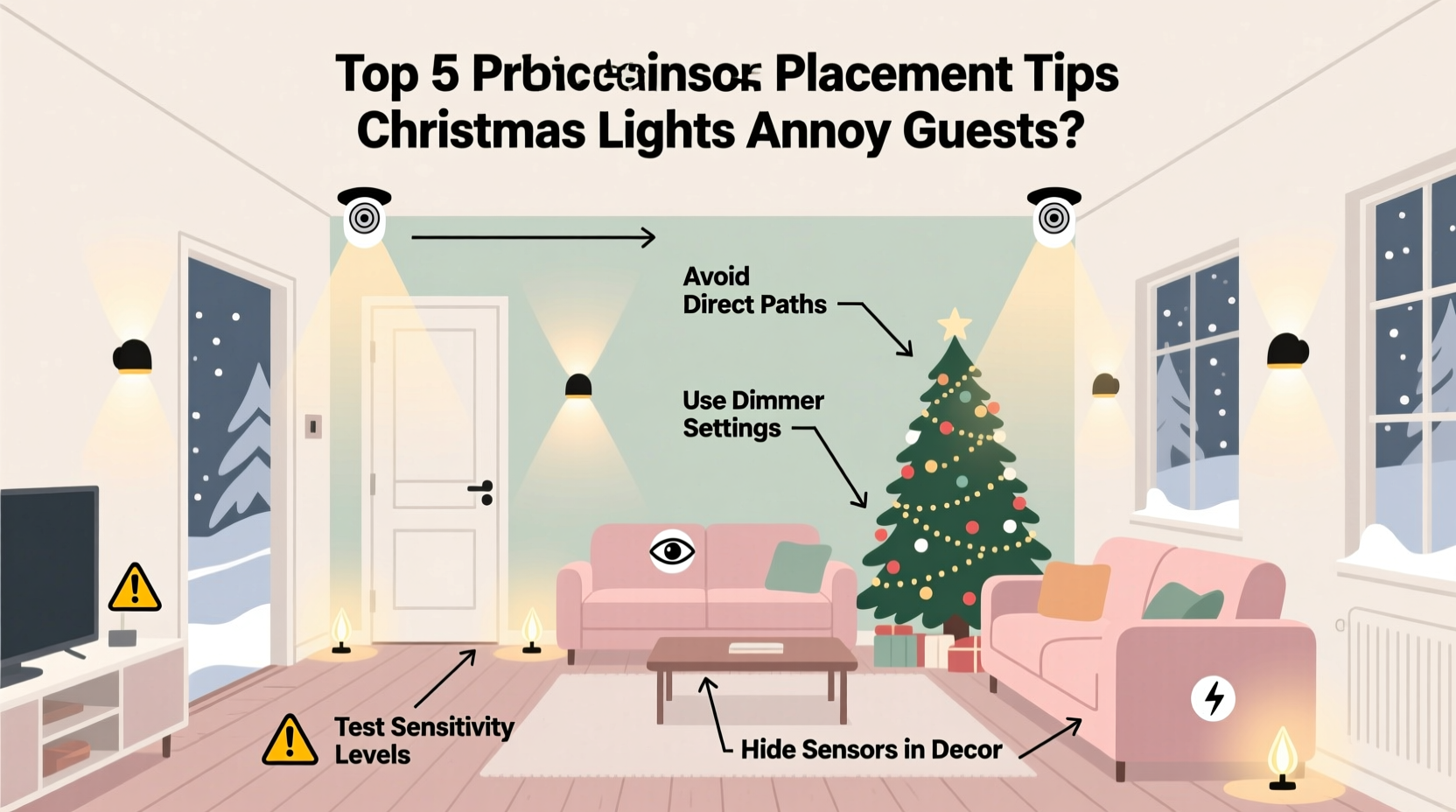
Motion sensor Christmas lights use passive infrared (PIR) technology to detect changes in heat patterns within their field of view. When a warm body—like a person or animal—moves across the detection zone, the circuit triggers the lights to turn on. These systems typically remain active for 15 seconds to several minutes before powering down automatically.
The appeal is clear: reduced electricity usage, enhanced security, and an element of surprise during evening gatherings. However, this same responsiveness can backfire. A guest stepping out onto a dark porch might be startled by a sudden flash of red and green LEDs, especially if the activation is loud (some units include chimes) or overly bright.
According to a 2023 consumer survey by the National Lighting Bureau, nearly 40% of respondents reported feeling “startled” or “uncomfortable” when encountering unexpected motion-activated lighting during social visits. That number rose to 62% among seniors and individuals with sensory sensitivities.
Common Guest Complaints About Motion Sensor Lights
While many homeowners love the automation, guests often express subtle—or not-so-subtle—disapproval. Understanding these concerns helps refine your setup.
- Sudden activation: Lights turning on abruptly can feel jarring, particularly after stepping away from a warmly lit interior into a dark exterior space.
- Over-sensitivity: Sensors detecting movement through windows or beyond walkways may trigger unnecessarily, creating a sense of being watched.
- Brightness overload: High-lumen LED strings in close proximity can be blinding at night, disrupting natural night vision.
- Repetitive cycling: Frequent on-off cycles due to lingering motion (e.g., guests standing near a sensor) create visual noise and annoyance.
- Lack of control: Guests unable to manually override the system may feel disempowered or confused about how to deactivate lights.
“Lighting should support hospitality, not undermine it. Unexpected illumination—even festive—can trigger stress responses similar to being startled in the dark.” — Dr. Lena Torres, Environmental Psychologist, University of Colorado Boulder
Practical Placement Tips to Avoid Annoying Guests
The goal isn’t to eliminate motion sensor lights but to deploy them wisely. Strategic placement balances function, aesthetics, and guest comfort. Consider these principles:
1. Prioritize Approach Paths Over Gathering Areas
Install motion-activated lights along driveways, sidewalks, and entry staircases—zones where visibility enhances safety. Avoid placing sensors directly above seating areas, patios, or near doorbells where people naturally pause.
2. Adjust Sensitivity and Duration Settings
Most modern sensor lights allow customization. Lower sensitivity reduces false triggers from passing cars or wildlife. Set duration between 30–60 seconds: long enough to serve purpose, short enough to avoid persistence.
3. Use Dimmable or Warm-Tone LEDs
Cold white LEDs (5000K+) feel clinical and harsh at night. Opt for warm white (2700K–3000K) or multi-color sets with softer output. Some smart models let you program brightness levels upon activation.
4. Position Sensors at Appropriate Heights
Mount sensors between 6 and 8 feet high, angled slightly downward. This minimizes detection of small animals while capturing human movement effectively. Avoid pointing directly at public sidewalks unless necessary.
5. Combine With Manual Overrides
During parties or open-house events, disable automatic mode via a switch or app. Offer guests a way to activate lights intentionally, preserving ambiance without surprises.
| Placement Zone | Recommended? | Rationale |
|---|---|---|
| Front porch steps | Yes | Improves safety; expected activation point |
| Near backyard fire pit | No | Guests linger here; frequent triggering disrupts mood |
| Side driveway | Yes | Low foot traffic; useful for late arrivals |
| Window-facing eaves | Use caution | May reflect inside, disturbing indoor ambiance |
| Garage overhang | Yes | Functional area; less social interaction |
Step-by-Step Guide to Optimizing Your Setup
Follow this timeline to audit and improve your current motion sensor Christmas lighting configuration.
- Week 1: Map Existing Installations
Walk around your property and note every location with motion-activated lights. Document model type, detection range, and typical activation triggers. - Week 2: Observe During Evening Hours
Spend two evenings watching how lights respond to normal activity—pets, wind-blown branches, passing pedestrians. Identify nuisance triggers. - Week 3: Adjust Settings
Reduce sensitivity, shorten duration, and reposition any units causing excessive or mistargeted activation. Replace overly bright strings with warmer alternatives if needed. - Week 4: Host a Test Visit
Invite a friend over after dark without warning them about the lights. Observe their reaction as they approach. Ask for honest feedback afterward. - Ongoing: Seasonal Review
Before installing lights each year, revisit your plan. Technology improves—consider upgrading to Wi-Fi-enabled models with scheduling and geofencing features.
Mini Case Study: The Johnson Family’s Front Yard Fix
The Johnsons in suburban Minneapolis installed new motion-sensor net lights across their front bushes in December 2022. Initially thrilled, they soon noticed neighbors avoiding eye contact and guests hesitating at the gate.
After one guest mentioned being “blinded by reindeer flashes,” they investigated. Their sensors were set to maximum range and sensitivity, covering not only the walkway but also part of the sidewalk. Every passerby triggered a 2-minute light show.
They adjusted the angle inward, lowered sensitivity, and switched to a warm multicolor setting. They also added a manual override switch by the door. Feedback improved immediately. “Now it feels welcoming instead of aggressive,” said neighbor Diane M.
This case illustrates how minor technical tweaks can transform perception—from intrusive to inviting.
Checklist: Guest-Friendly Motion Light Setup
Use this checklist before finalizing your holiday display:
- ✅ Sensors cover only intended pathways (entryways, stairs)
- ✅ Detection range does not extend into public spaces
- ✅ Brightness is warm and moderate (not blinding)
- ✅ Activation duration is under 90 seconds
- ✅ Manual override option available (switch or app)
- ✅ No direct line-of-sight from seating or relaxation zones
- ✅ Tested during low-light conditions with neutral observers
- ✅ Signs or verbal notice given during large events (“Lights turn on when you move!”)
Expert Insight: Balancing Tech and Tradition
As homes become smarter, the line between innovation and intrusion grows thinner. Experts emphasize intentionality.
“The best holiday lighting feels effortless. If your guests are commenting on the tech instead of the cheer, something’s off. Automation should disappear into the experience.” — Marcus Lee, Smart Home Designer & Author of *Festive by Design*
Lee recommends treating motion sensors like background music: present, but not dominant. He suggests using them primarily for utility (path lighting, security) and reserving decorative displays for static or timed sequences.
Frequently Asked Questions
Can I keep motion sensor lights on during a party?
You can, but it’s generally better to disable automatic mode during large gatherings. Constant triggering creates visual fatigue. Use a timer or manual switch to control when lights are active. Many hosts choose to run them only during arrival and departure windows.
Are there motion lights designed specifically for holidays?
Yes. Brands like Philips Hue, Govee, and Luminara offer holiday-themed smart lights with customizable motion responses. Some even sync with music or change colors based on detected movement speed—ideal for playful effects without discomfort.
How do I explain the lights to guests without sounding defensive?
Be proactive and lighthearted. Say something like, “Our lights have a mind of their own—watch out, they might jumpscare you!” This acknowledges the quirk while diffusing tension. For sensitive guests, offer advance notice: “Just so you know, the path lights turn on when you walk by.”
Final Thoughts: Hospitality First, Technology Second
Motion sensor Christmas lights aren’t inherently annoying—but their impact depends entirely on implementation. When deployed with empathy and awareness, they enhance safety, conserve energy, and add a touch of magic. When misused, they disrupt peace and make guests feel like intruders in someone else’s automated world.
The most memorable holiday experiences come from warmth, not wattage. By prioritizing guest comfort, adjusting settings thoughtfully, and testing real-world interactions, you can enjoy the benefits of smart lighting without sacrificing hospitality.




 浙公网安备
33010002000092号
浙公网安备
33010002000092号 浙B2-20120091-4
Comments
No comments yet. Why don't you start the discussion?