
The holiday season brings joy, celebration, and an unmistakable glow from festive decorations. Among the most popular are Christmas lights — but as energy costs rise and home security becomes a growing concern, many homeowners are rethinking traditional setups. One increasingly popular solution? Motion sensor Christmas lights. These intelligent lighting systems don’t just sparkle on command; they respond to activity, offering both efficiency and protection. But do they really save power and improve security? The answer is a resounding yes — when used strategically.
Motion sensor Christmas lights operate differently than standard string lights. Instead of staying illuminated for hours on end, they activate only when movement is detected within a set range. This behavior reduces electricity consumption significantly and introduces a layer of unpredictability that deters potential intruders. Beyond convenience, these lights represent a shift toward smarter, more sustainable holiday decorating.
How Motion Sensor Lights Work
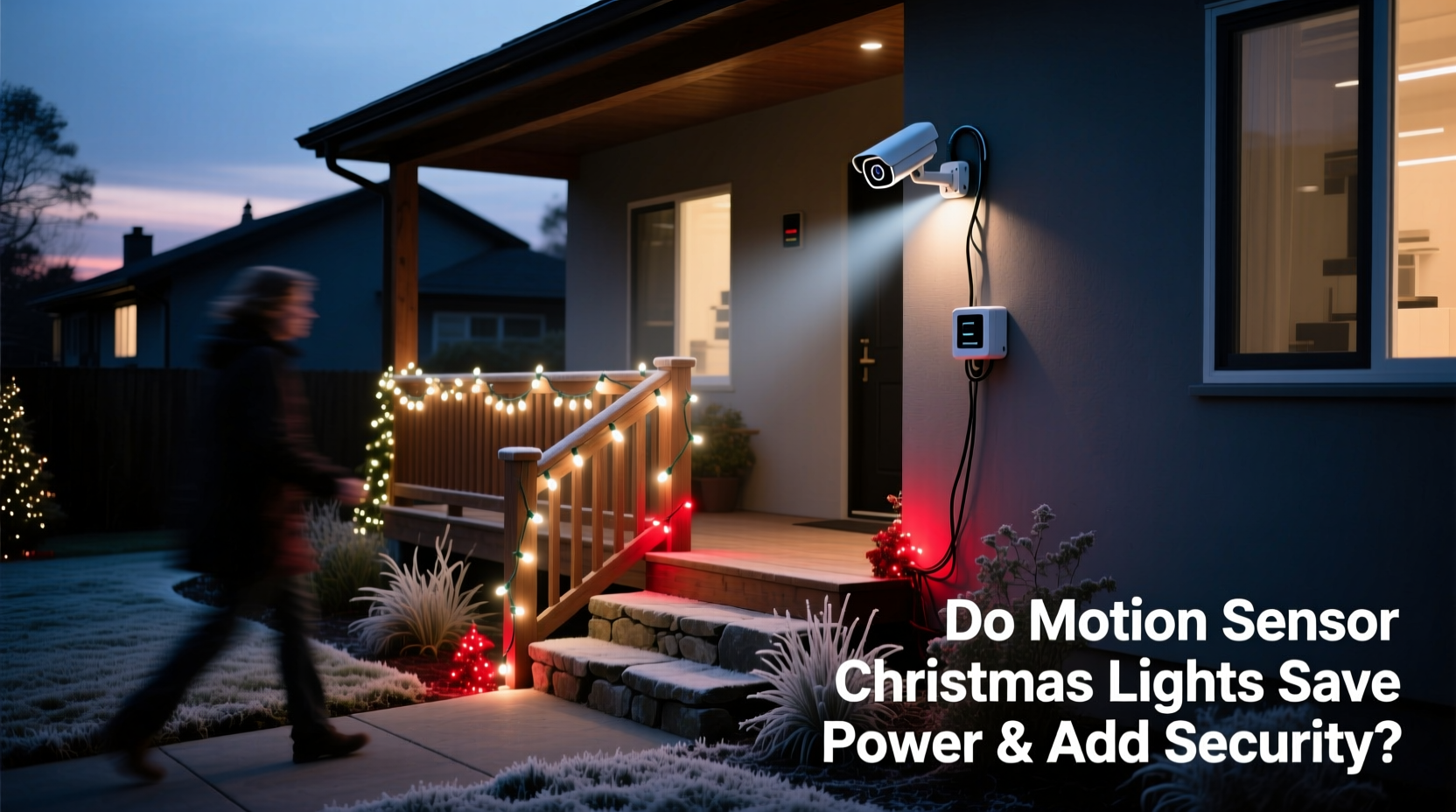
Motion sensor Christmas lights are equipped with passive infrared (PIR) sensors that detect changes in heat patterns caused by moving objects — typically people or animals. When the sensor identifies a heat signature in motion, it triggers the lights to turn on. After a preset period of inactivity (usually 15 seconds to several minutes), the lights automatically shut off.
This technology isn't new — it's been widely used in outdoor security lighting for decades — but its integration into decorative lighting has opened up fresh possibilities. Modern versions often include adjustable sensitivity, time delay settings, and even daylight detection to prevent activation during daylight hours.
Unlike timers, which turn lights on and off at fixed intervals, motion-activated systems respond dynamically to real-time conditions. This means your porch doesn’t stay lit all night if no one passes by, yet still illuminates the moment someone approaches — creating a welcoming effect while conserving energy.
Energy Savings: Do They Really Use Less Power?
Yes — motion sensor Christmas lights can reduce energy usage by up to 70% compared to continuously running displays. Consider this: a typical incandescent light strand consumes about 40 watts per 100 bulbs. If left on for eight hours each night over a 30-day season, that’s nearly 10 kilowatt-hours (kWh). Multiply that across multiple strands, and the cost adds up quickly.
In contrast, LED-based motion sensor lights use far less power — as little as 5–10 watts for a full string — and only operate intermittently. If activated just five times per evening for two minutes each, total runtime drops to under 15 minutes per night. Over a month, this could result in less than 0.5 kWh of consumption for the same strand.
A study by the U.S. Department of Energy found that widespread adoption of smart lighting controls, including occupancy sensors, could cut residential lighting energy use by 20–30%. While focused on indoor applications, the principle applies equally to seasonal outdoor lighting.
| Light Type | Wattage (per 100 bulbs) | Daily Runtime | Monthly Energy Use | Estimated Cost @ $0.15/kWh |
|---|---|---|---|---|
| Traditional Incandescent | 40W | 8 hours | 9.6 kWh | $1.44 |
| LED (Always On) | 10W | 8 hours | 2.4 kWh | $0.36 |
| LED with Motion Sensor | 10W | 15 min/day avg | 0.075 kWh | $0.01 |
The numbers speak clearly: switching to motion-activated LED lights slashes both environmental impact and utility bills. Even homes with modest displays can save $5–$15 per season simply by reducing idle runtime.
“Smart lighting isn’t just about automation — it’s about intentionality. Turning lights on only when needed maximizes value while minimizing waste.” — Dr. Lena Torres, Energy Efficiency Researcher at the National Renewable Energy Lab
Security Benefits: More Than Just Decoration
Beyond energy savings, motion sensor Christmas lights contribute meaningfully to home security. Burglars often target homes during the winter months when nights are long and neighborhoods are dark. A well-lit exterior disrupts their ability to operate unseen, and unpredictable lighting patterns increase perceived risk.
Unlike steady illumination, which can become background noise, sudden activation draws attention. When motion lights flash on as someone approaches your front steps, it signals that the property is monitored — even if it’s “just” holiday decor. This psychological deterrent is powerful: according to a University of North Carolina study, 60% of convicted burglars said they actively avoid homes with visible exterior lighting.
Moreover, motion-triggered lights improve visibility for residents and neighbors. Whether you're arriving home late or checking on a pet, having instant illumination enhances situational awareness. Some models integrate with smart home systems, sending alerts to your phone when motion is detected — turning festive lights into functional surveillance tools.
It's important to note that not all motion sensors are created equal. Range, field of view, and sensitivity settings affect performance. For optimal coverage, install lights at corners, entry points, and along pathways where intruders might approach unseen.
Real-World Example: The Johnson Family Experience
The Johnsons live in a suburban neighborhood in Ohio where holiday decorating is a community tradition. In 2022, they installed standard LED Christmas lights across their roofline and trees, leaving them on from 5 PM to 11 PM nightly. Their electric bill rose by $42 during December.
In 2023, they switched to motion-activated LED strings with dusk-to-dawn sensors. The lights remained off until triggered by foot traffic or vehicles. Neighbors noticed the dynamic display — lights flaring to life as cars passed — and commented on how \"alive\" the house felt.
More importantly, one night in mid-December, the garage-side lights activated at 2:17 AM. No family member was outside, but the sudden glow startled a man attempting to open a side gate. He fled before reaching the house. The next morning, the Johnsons reviewed footage from a neighbor’s security camera (shared via a local watch group) and confirmed the incident.
Their December bill increased by only $9. The combination of reduced runtime and enhanced vigilance made the upgrade worthwhile in both economic and safety terms.
Choosing the Right Motion Sensor Lights
Not all motion sensor Christmas lights deliver the same results. To get the most value, consider these key factors before purchasing:
- Light Source: Always choose LED. They last longer, run cooler, and consume less power than incandescent options.
- Sensor Range: Look for models with a detection range of 20–30 feet for effective coverage.
- Adjustable Settings: The ability to control duration (how long lights stay on) and sensitivity prevents nuisance triggers from pets or wind-blown debris.
- Weather Resistance: Ensure lights are rated for outdoor use (IP44 or higher) to withstand snow, rain, and temperature swings.
- Power Source: Options include plug-in, battery-operated, and solar-powered. Plug-in offers reliability; solar requires sunlight but eliminates cords.
Step-by-Step Guide: Installing Motion Sensor Christmas Lights
- Plan Your Layout: Identify high-traffic zones, entry points, and dark areas needing illumination. Prioritize locations near doors, walkways, and driveways.
- Select Compatible Lights: Choose weatherproof, LED-based strings with motion sensors. Verify voltage and plug type match your outlets.
- Test Before Mounting: Plug in the lights to confirm sensor function and adjust settings (duration, sensitivity) while accessible.
- Install Securely: Use insulated clips or hooks to fasten wires. Avoid nails or staples that can damage insulation.
- Position Sensors Correctly: Angle sensors toward expected paths of movement. Keep them clear of obstructions like tree branches.
- Monitor and Adjust: Observe performance over several nights. Fine-tune timing and sensitivity to balance responsiveness and battery life (if applicable).
Common Mistakes to Avoid
- Overloading Circuits: Plugging too many strings into one outlet can trip breakers or create fire hazards. Follow manufacturer guidelines for maximum load.
- Poor Sensor Placement: Mounting sensors too high, too low, or facing reflective surfaces (like windows) leads to missed triggers or false alarms.
- Ignoring Maintenance: Dust, snow, or cobwebs can block sensors. Clean lenses gently with a soft cloth every few weeks.
- Using Non-Dimmable LEDs with Timers: Some older controllers cause flickering. Use compatible products designed for intermittent operation.
Frequently Asked Questions
Can motion sensor Christmas lights be used year-round?
Absolutely. Many models are designed for permanent outdoor installation and can serve as general security lighting after the holidays. Simply store controllers or disable seasonal effects when not needed.
Do motion sensors work in cold weather?
Yes, most modern PIR sensors function reliably in temperatures as low as -20°F (-29°C). However, extreme cold may slightly reduce battery efficiency in wireless models. Using lithium batteries instead of alkaline improves winter performance.
Are there privacy concerns with motion-activated lights?
Limited. Unlike cameras, motion lights don’t record or transmit data. However, overly bright or frequent activation may disturb neighbors. Adjust brightness and duration to maintain courtesy.
Action Plan: Maximize Savings and Security
To fully benefit from motion sensor Christmas lights, follow this checklist:
- ✔ Replace old incandescent strings with LED motion-activated alternatives
- ✔ Install lights at primary access points: front door, back patio, garage entrance
- ✔ Set activation duration between 30 seconds and 2 minutes for optimal balance
- ✔ Pair with timers or smart plugs for scheduled on/off windows (e.g., 4 PM – midnight)
- ✔ Inspect monthly for debris, loose connections, or damaged wires
- ✔ Share system details with household members so they understand why lights behave dynamically
Consider integrating your setup with other smart devices. For instance, linking motion lights to a doorbell camera allows you to see who triggered the lights remotely. Some platforms even let you customize color patterns — turning a security alert into a cheerful greeting.
Final Thoughts: Smart Holidays Start with Smarter Lighting
Motion sensor Christmas lights are more than a novelty — they’re a practical upgrade that aligns holiday cheer with modern priorities: energy conservation, cost control, and personal safety. By illuminating only when necessary, they reduce waste without sacrificing ambiance. And by responding to movement, they transform passive decoration into active defense.
As smart home technology becomes more accessible, the line between festive and functional continues to blur. Today’s motion-activated lights offer brightness, beauty, and brains — proving that sustainability and security can shine brightly during the most wonderful time of the year.




 浙公网安备
33010002000092号
浙公网安备
33010002000092号 浙B2-20120091-4
Comments
No comments yet. Why don't you start the discussion?