
In an age where open offices, city noise, and household distractions are constant companions, many turn to noise canceling headphones as a sanctuary for concentration. But is their benefit purely about blocking sound—or do they genuinely enhance cognitive performance and sustained attention? The answer isn’t as simple as “yes” or “no.” While these devices undeniably reduce auditory interference, their impact on focus depends on context, individual working styles, and the nature of the task at hand. Understanding how active noise cancellation (ANC) interacts with human cognition reveals a more nuanced picture: isolation can be a tool for focus, but only when used wisely.
The Science Behind Noise Cancellation and Cognitive Load
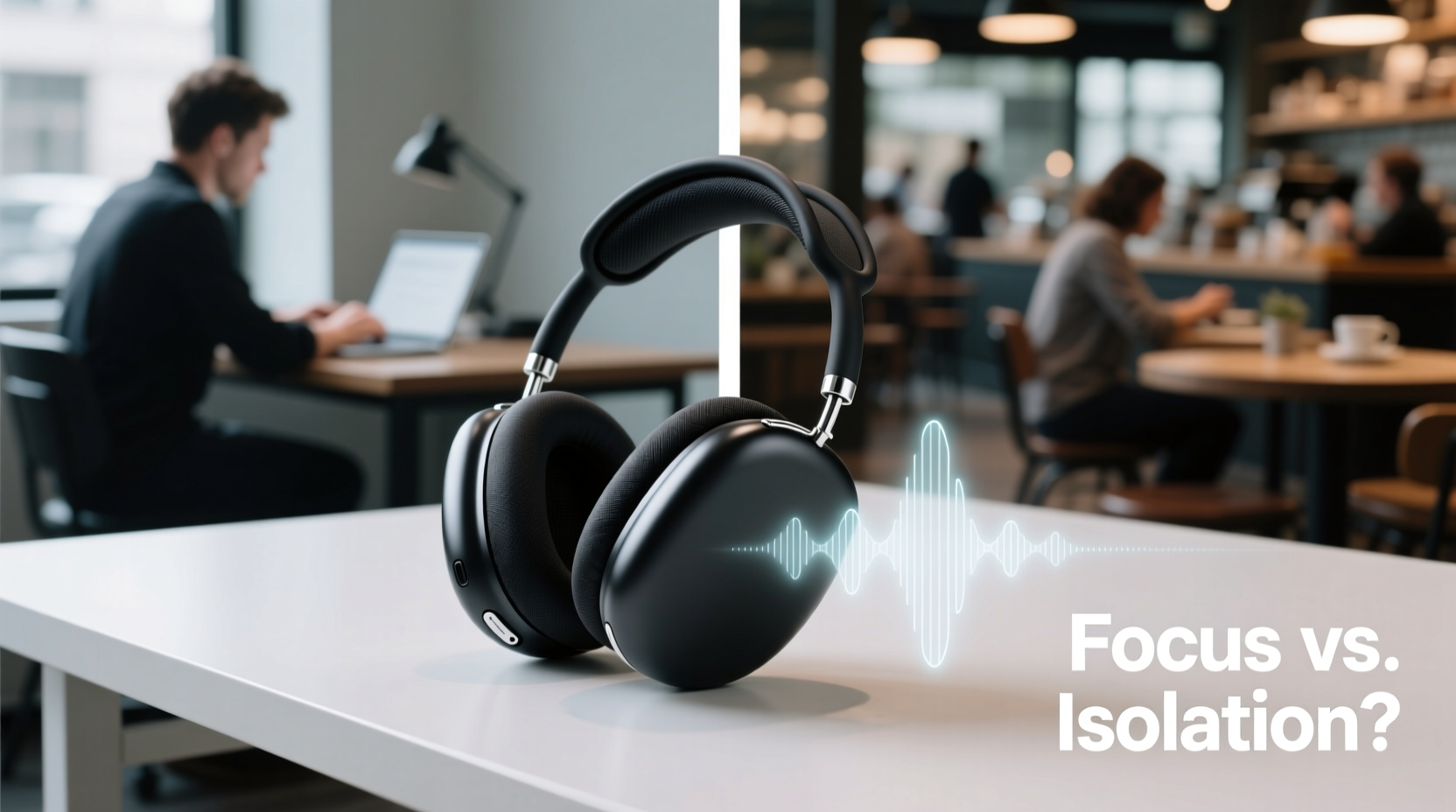
Noise canceling headphones use microphones to detect ambient sounds and generate inverse sound waves that cancel out incoming noise—particularly effective against low-frequency, consistent sounds like airplane engines, HVAC systems, or traffic hum. This technology reduces what psychologists call “extraneous cognitive load,” the mental strain caused by processing irrelevant stimuli. When your brain isn’t busy filtering out background chatter or repetitive mechanical noise, it has more bandwidth available for tasks requiring attention, memory, and decision-making.
A 2020 study published in the Journal of Environmental Psychology found that participants exposed to moderate office noise performed worse on reading comprehension and problem-solving tasks than those in quiet environments or those using ANC headphones. The improvement wasn’t due to complete silence—but rather the reduction of unpredictable auditory interruptions that disrupt flow states.
“Reducing environmental unpredictability allows the prefrontal cortex to operate more efficiently. ANC headphones aren't magic—they're cognitive filters.” — Dr. Lena Patel, Cognitive Neuroscientist, MIT Media Lab
However, not all noise is harmful. Some people thrive with certain types of background sound, such as lo-fi beats or café ambiance, which provide rhythmic stimulation without demanding attention. In these cases, total isolation may backfire, leading to over-focus fatigue or sensory deprivation that hampers creativity.
Focus vs. Isolation: Understanding the Difference
It’s crucial to distinguish between focus—a state of directed mental effort—and isolation, which is simply the absence of external input. ANC headphones excel at the latter, but whether they support the former depends on several factors:
- Task type: Deep work tasks (e.g., coding, writing, analysis) benefit from reduced distractions. Creative brainstorming may suffer under total silence.
- User sensitivity: People with ADHD or high sensory processing sensitivity often report dramatic improvements in concentration with ANC.
- Environmental context: In noisy urban settings or shared living spaces, ANC provides necessary control over one’s auditory environment.
- Prolonged use: Extended isolation can lead to mental fatigue or disconnection from real-time cues (e.g., alarms, conversations).
When Noise Cancellation Enhances Focus: Real-World Applications
Consider Sarah, a freelance software developer working remotely from a Brooklyn apartment above a busy bodega. Her mornings were plagued by delivery trucks, street vendors, and neighborly chatter. After investing in a pair of premium ANC headphones, she noticed a measurable shift: her first productive hour began earlier, debugging sessions shortened by 20%, and she felt less mentally drained by midday.
Sarah didn’t just gain silence—she gained predictability. Knowing her auditory space was controlled allowed her to enter flow faster and stay there longer. She still took breaks without headphones, letting ambient sound reset her sensory system, but during core work hours, ANC became part of her cognitive toolkit.
This mirrors findings from remote worker surveys conducted by FlexJobs in 2023: 68% of respondents reported improved concentration with noise-canceling devices, particularly those living in high-density urban areas. For hybrid workers splitting time between home and co-working spaces, ANC provided consistency across environments—a key factor in maintaining routine and mental stamina.
Limitations and Potential Downsides of Over-Isolation
While beneficial in many scenarios, relying too heavily on noise canceling headphones carries risks:
- Sensory deprivation fatigue: Prolonged auditory isolation can cause headaches, dizziness, or increased anxiety in some users.
- Reduced situational awareness: Wearing ANC while walking, cycling, or navigating public spaces increases safety risks.
- Dependency formation: Some users find it difficult to concentrate without ANC, even in naturally quiet settings.
- Muted emotional cues: Human voices carry tone and nuance. Constant filtering may dull social responsiveness over time.
Moreover, ANC is least effective against sudden, high-frequency noises—like a door slamming or a child crying—which can be more jarring when they break through an otherwise silent bubble. This contrast effect can actually increase distraction compared to a consistently noisy environment.
Optimizing ANC Use for Maximum Focus: A Step-by-Step Guide
To harness the benefits of noise canceling headphones without falling into the trap of over-isolation, follow this practical sequence:
- Assess your environment: Identify the dominant noise types (constant hum, intermittent speech, sudden sounds). ANC works best on continuous low-frequency noise.
- Define your work mode: Match headphone use to task demands. Use ANC for analytical or detail-oriented work; skip it during creative ideation or collaborative planning.
- Set usage limits: Limit continuous ANC use to 90-minute intervals. Follow each session with a 15–20 minute break without headphones.
- Layer with intentional audio: Pair ANC with focus-enhancing soundscapes—binaural beats, pink noise, or instrumental music—to maintain gentle stimulation.
- Monitor physical feedback: If you experience pressure in the ears, headaches, or disorientation, disable ANC and reassess fit and duration.
- Practice situational switching: Develop the habit of toggling ANC on/off based on need, rather than leaving it on by default.
Do’s and Don’ts of Using Noise Canceling Headphones for Productivity
| Do | Don’t |
|---|---|
| Use ANC during deep work sessions requiring uninterrupted attention | Wear them all day long without breaks |
| Combine with low-volume focus music or white noise | Turn volume up excessively to compensate for residual noise |
| Choose models with transparency or ambient modes for flexibility | Rely solely on ANC in unsafe environments (e.g., streets, gyms) |
| Adjust settings based on location (e.g., flight vs. library) | Assume higher price equals better focus support |
| Take regular auditory breaks to reset sensory processing | Ignore signs of ear fatigue or mental fogginess |
Expert Recommendations and Emerging Trends
Leading audiologists and workplace psychologists now advocate for “adaptive listening”—a balanced approach that treats noise control as dynamic, not static. Modern headphones from brands like Sony, Bose, and Sennheiser now include intelligent features such as:
- Auto-ANC adjustment based on surroundings
- Transparency modes that amplify specific frequencies (e.g., human voice)
- Biometric feedback integration (e.g., heart rate monitoring to suggest breaks)
“The future isn’t total silence—it’s smart sound management. We’re moving toward headphones that adapt to both environment and cognitive state.” — Dr. Marcus Lin, Audio Ergonomics Researcher, Stanford University
Some enterprise tools are even integrating ANC data with productivity platforms. For example, a calendar app might automatically enable focus mode on your headphones when a deep work block begins, syncing with ambient lighting and phone notifications for a holistic concentration environment.
FAQ
Can noise canceling headphones improve focus for people with ADHD?
Yes, many individuals with ADHD report significant improvements in concentration when using ANC headphones. By minimizing distracting background noise, these devices reduce sensory overload, making it easier to initiate and sustain attention on tasks. However, results vary—some prefer mild auditory stimulation (e.g., focus playlists) over complete silence.
Are expensive noise canceling headphones worth it for productivity?
Higher-priced models often offer superior ANC performance, comfort for long wear, and additional features like transparency mode and adaptive controls. If you work in consistently noisy environments or spend hours daily in focused work, the investment can pay off in reduced fatigue and improved output. However, mid-range options (e.g., $150–$250) now deliver strong performance for most users.
Do noise canceling headphones cause ear pressure or discomfort?
Some users report a sensation of “ear pressure,” often described as similar to ascending in an airplane. This is caused by the active sound wave manipulation inside the earcup. Most people acclimate within a few uses, but if discomfort persists, consider over-ear models with looser seals or switch to open-back alternatives during non-focused periods.
Final Thoughts: Tools, Not Crutches
Noise canceling headphones don’t inherently make you more focused—they create conditions that make focus easier. Like a well-lit desk or an ergonomic chair, they are environmental supports, not cognitive enhancers. Their true value lies in giving you agency over your auditory space, especially in worlds increasingly filled with uninvited noise.
But like any powerful tool, they require mindful use. Used strategically, they can unlock hours of productive work, reduce mental clutter, and restore a sense of calm in chaotic settings. Used compulsively, they risk fostering dependency, reducing awareness, and disconnecting you from the subtle rhythms of life that inspire creativity and connection.




 浙公网安备
33010002000092号
浙公网安备
33010002000092号 浙B2-20120091-4
Comments
No comments yet. Why don't you start the discussion?