
When a cat slips out an open door or wanders off during a quiet evening, the panic sets in fast. Unlike dogs, cats are masters of stealth, often vanishing without a trace. In those anxious moments, many owners turn to technology—specifically, pet tracking collars—hoping for a digital lifeline. But do these devices actually deliver when it matters most? The answer isn’t a simple yes or no. It depends on the type of tracker, the environment, and how prepared you are before disaster strikes.
Pet tracking collars have evolved significantly over the past decade, offering everything from Bluetooth proximity alerts to real-time GPS location updates. While they can be powerful tools, their effectiveness varies widely based on circumstances. Understanding how each system works—and knowing their limitations—is essential for any cat owner considering one.
How Pet Tracking Collars Work: GPS vs. Bluetooth
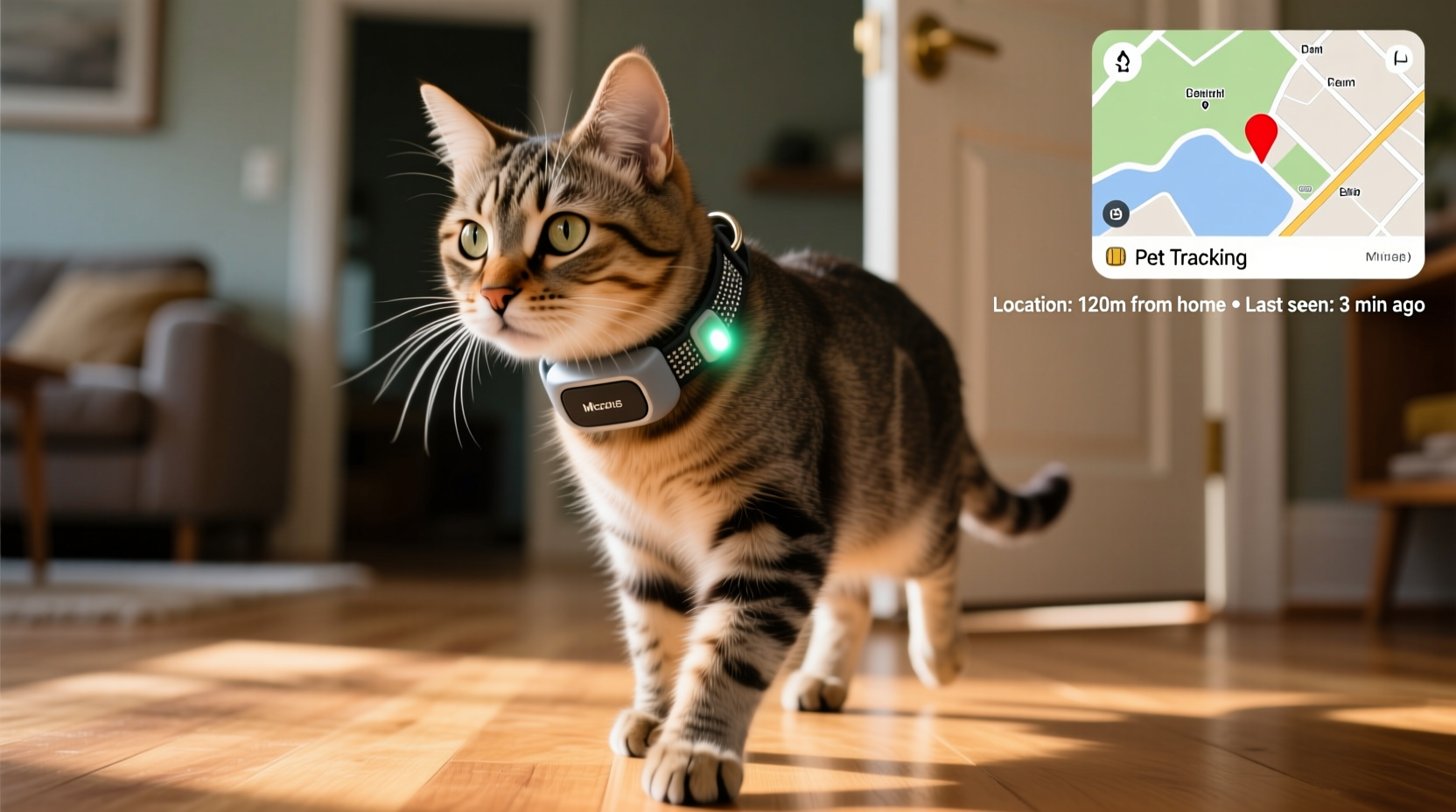
There are two primary types of pet tracking collars: GPS-based and Bluetooth-based. Each has distinct strengths and weaknesses, especially when applied to cats, who tend to travel differently than dogs.
GPS Trackers use satellite signals and cellular networks to provide real-time location data. These devices typically require a subscription service and offer features like geofencing (alerts when your cat leaves a designated area) and live tracking via smartphone apps. Because they rely on network connectivity, GPS trackers work best in urban and suburban areas with reliable cell coverage.
Bluetooth Trackers, such as those modeled after Apple AirTags or Tile, operate within short ranges—usually up to 100–300 feet. They don’t provide real-time location but instead help locate a nearby pet by triggering a sound or showing direction through signal strength on your phone. These trackers depend on being within range of your device or crowdsourced location networks, like Apple’s Find My network.
Real-World Effectiveness: What Works and What Doesn’t
The performance of pet tracking collars hinges on several factors: battery life, signal reliability, cat behavior, and terrain. A tracker may work flawlessly in theory but fail under real-world stress.
In rural or wooded areas, GPS signals can weaken, and cellular coverage may drop out entirely. If your cat ventures into dense forest or crawls beneath a shed, even a strong GPS signal might not penetrate. Similarly, Bluetooth trackers are nearly useless if your cat is more than a few hundred feet away—rendering them ineffective for long-range recovery.
One major issue with GPS trackers is battery life. Most models last between 2 to 7 days on a single charge, depending on usage. If your cat disappears on day six and the tracker dies overnight, you lose all location history. High-frequency tracking drains power faster, so some owners reduce update intervals to extend battery life—only to miss critical movement data.
Additionally, cats are agile and prone to losing collars. Even breakaway collars designed for safety can come loose during climbs or escapes. If the tracker detaches, it becomes useless unless it falls in a visible or accessible spot.
“Trackers are helpful, but they’re only one piece of the puzzle. I’ve seen recovered cats thanks to GPS, but just as often, traditional methods like flyers and neighbor outreach succeed where tech fails.” — Dr. Lena Patel, Veterinarian and Feline Behavior Specialist
Case Study: How a GPS Tracker Helped Recover a Missing Cat
Samantha, a resident of Portland, Oregon, had always let her 3-year-old tabby, Milo, enjoy supervised outdoor time. One rainy evening, the screen door slipped shut behind him, and he didn’t return. Panicked, she activated the GPS tracker attached to his rugged breakaway collar—a model with live tracking and geofence alerts.
Within two hours, the app showed Milo moving rapidly eastward, then stopping near a commercial park about a mile away. The signal remained active for the next 12 hours, updating every 15 minutes. Samantha contacted local animal control and shared the coordinates. A shelter worker spotted Milo hiding under a delivery truck and safely captured him.
In this case, the GPS tracker worked perfectly—because the device stayed on, the battery held, and the location was accessible. But it also succeeded because Samantha acted quickly, used the data effectively, and collaborated with local services.
Contrast this with another case: James in rural Pennsylvania lost his cat, Luna, who vanished into thick woods. His Bluetooth tracker never registered a signal beyond the backyard. Despite daily searches, Luna wasn’t found until three weeks later—by a neighbor who recognized her from a flyer and called James directly.
These stories illustrate a crucial point: technology enhances recovery odds but doesn’t guarantee success. Context determines whether a tracker delivers results.
Choosing the Right Tracker: A Practical Checklist
Selecting a pet tracking collar requires careful consideration. Use this checklist to evaluate options before purchasing:
- Weight & Comfort: The tracker should weigh less than 3% of your cat’s body weight and fit securely on a breakaway collar.
- Battery Life: Look for at least 5–7 days of active use; longer is better for peace of mind.
- Update Frequency: Real-time tracking (every 2–5 minutes) is ideal, but adjustable settings help conserve battery.
- Network Coverage: Ensure the provider has strong cellular coverage in your region.
- Water Resistance: Essential for outdoor cats exposed to rain or damp environments.
- App Usability: The companion app should be intuitive, with clear maps and alert functions.
- Subscription Cost: Monthly fees range from $5 to $15—factor this into long-term ownership.
- Crowd Network Support: For Bluetooth tags, choose models integrated with large networks (e.g., Apple Find My).
Comparison Table: GPS vs. Bluetooth Trackers for Cats
| Feature | GPS Tracker | Bluetooth Tracker |
|---|---|---|
| Range | Global (with cellular coverage) | Up to 300 feet |
| Real-Time Location | Yes | No (proximity only) |
| Battery Life | 2–14 days | 1–2 years (replaceable) |
| Subscription Required | Yes ($5–$15/month) | No (one-time purchase) |
| Works Offline | Limited (stores some data) | No |
| Best For | Outdoor/explorer cats, rural or suburban homes | Indoor cats, quick local searches |
| Relies On | Satellite + Cellular Network | Smartphone proximity or crowd network |
What to Do Immediately After Your Cat Goes Missing
Even the best tracker is only effective if used correctly—and sometimes, you’ll need to act before the device provides answers. Follow this step-by-step timeline to maximize recovery chances:
- Stay Calm and Search Nearby (First 30 Minutes): Cats often hide close to home—under porches, in garages, or bushes. Call softly and listen for meows.
- Check the Tracker App (If Equipped): Open the app immediately. Look for recent locations, movement patterns, or geofence alerts.
- Notify Neighbors (Within 1 Hour): Knock on doors, share a photo, and ask people to check sheds, cars, and crawl spaces.
- Set Up Motion-Camera Alerts (First 2 Hours): If you have outdoor cameras, review footage and set alerts for movement.
- Distribute Flyers and Post Online (Within 4 Hours): Include a clear photo, last seen location, and contact info. Post on Nextdoor, Facebook Lost Pets, and PawBoost.
- Contact Shelters and Vets (Same Day): Visit or call local shelters daily. Provide your cat’s description and microchip number.
- Continue Daily Searches (Days 1–7): Go out at dawn and dusk—the times cats are most active. Bring treats and a familiar blanket.
- Re-evaluate Tracker Data (Ongoing): If the tracker shows movement, follow up immediately. If it stops, treat it as potentially damaged or out of range.
Time is critical. Studies show that 75% of lost cats are found within 500 meters of home, and most recoveries happen within the first 72 hours. Acting fast increases your odds significantly.
Frequently Asked Questions
Can a GPS tracker work if my cat is inside a building?
GPS signals struggle indoors, especially in basements or metal structures. Some trackers switch to Wi-Fi or cellular triangulation indoors, but accuracy drops. You may see a general location but not an exact room.
Are Bluetooth trackers worth it for indoor cats?
Yes—especially if your cat rarely goes outside. If they escape, a Bluetooth tag can help locate them in a nearby yard, garage, or alley. Their long battery life and low cost make them a smart backup tool.
What happens if the tracker falls off?
This is a real risk. To minimize loss, ensure the collar fits snugly (two fingers should fit underneath) and use a high-quality breakaway design. Pair the tracker with a microchip so shelters can identify your cat even if the collar is gone.
Conclusion: Technology Helps, But Preparedness Wins
Pet tracking collars can be invaluable when your cat goes missing—but they’re not foolproof. GPS devices offer real-time insights but depend on battery life, network coverage, and proper use. Bluetooth trackers are affordable and durable but limited by range. Neither replaces fundamental precautions like microchipping, ID tags, and community engagement.
The most effective strategy combines technology with proactive habits. Choose a reliable tracker suited to your cat’s lifestyle, test it regularly, and integrate it into a broader safety plan. Know where your local shelters are, keep updated photos on hand, and build relationships with neighbors who can help in a crisis.
Ultimately, the best tracker is the one that works *before* your cat disappears. Don’t wait for an emergency to find out yours isn’t charged, out of range, or lost in the couch cushions. Equip your cat today, stay vigilant, and increase the odds of a safe return—no matter where they roam.




 浙公网安备
33010002000092号
浙公网安备
33010002000092号 浙B2-20120091-4
Comments
No comments yet. Why don't you start the discussion?