
Slouching has become a modern epidemic. Hours spent hunched over laptops, smartphones, and steering wheels have led to widespread postural issues—rounded shoulders, forward head posture, and chronic upper back tension. In response, posture corrector shirts have surged in popularity, promising effortless alignment and instant relief. But do they deliver lasting benefits, or could they be doing more harm than good by weakening the very muscles they aim to support?
This article dives deep into the biomechanics, clinical research, and real-world outcomes behind posture corrector shirts. We’ll examine how they work, whether they strengthen or undermine muscle function, and what alternatives exist for building sustainable postural strength.
How Posture Corrector Shirts Work
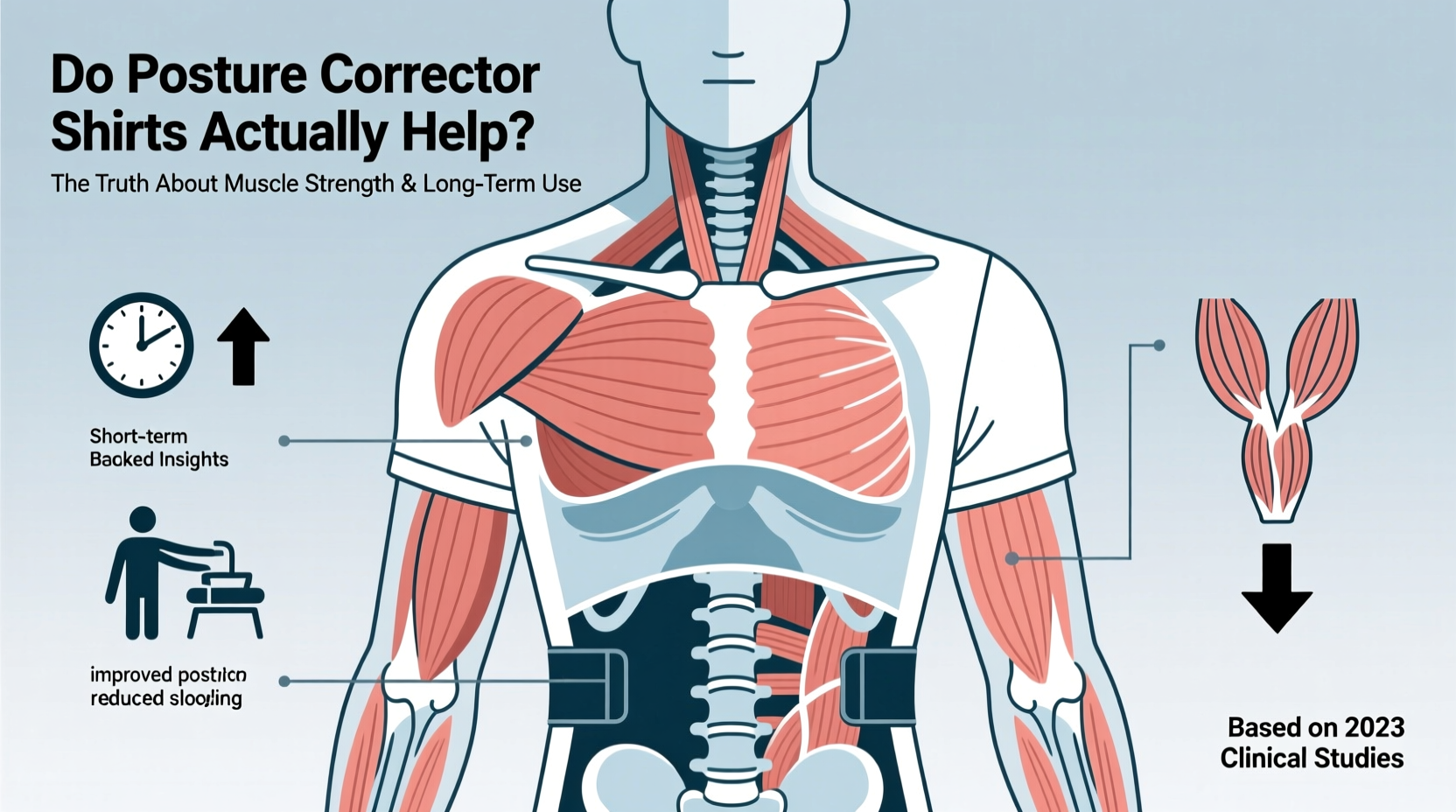
Posture corrector shirts are compression garments embedded with reinforced panels or elastic bands designed to pull the shoulders back and align the spine. Unlike traditional braces that fasten externally, these shirts integrate corrective elements into everyday wear—often resembling athletic or undershirt styles.
The mechanism is simple: by applying constant, gentle resistance to rounded shoulders, the shirt encourages a retracted scapular position. This mimics ideal posture, reducing strain on the neck and upper back. For many users, the immediate effect is noticeable—a lifted chest, open shoulders, and reduced slumping.
However, this mechanical correction raises an important question: does the body adapt by learning better posture, or does it become dependent on external support?
The Muscle Weakness Debate: Support vs. Dependency
The core concern about posture corrector shirts centers on muscle atrophy. Skeptics argue that when a garment consistently performs the job of postural muscles—particularly the rhomboids, lower trapezius, and deep cervical flexors—the body may downregulate those muscles due to reduced activation.
This phenomenon, known as muscle inhibition, occurs when external support reduces neuromuscular demand. Over time, if the muscles aren’t actively engaged, they can weaken, creating a dependency cycle: worse natural posture → greater reliance on the shirt → further weakening.
Dr. Lena Patel, a physical therapist specializing in spinal health, explains:
“Passive support without active engagement is like using a walking boot for a sprained ankle indefinitely. Some support is helpful initially, but long-term use without rehab leads to weakness. The same applies to posture garments.” — Dr. Lena Patel, DPT, Orthopedic Rehabilitation Specialist
Yet, proponents argue that these shirts serve as biofeedback tools. By providing constant tactile feedback, they help users recognize poor posture and retrain movement patterns—similar to how athletes use resistance bands to reinforce proper form.
When They Help: Short-Term Benefits
- Immediate pain relief: Reduces strain on overworked upper trapezius and levator scapulae muscles.
- Postural awareness: Acts as a reminder to sit or stand tall, especially during prolonged desk work.
- Rehabilitation aid: Can be used temporarily after injury or surgery under professional guidance.
- Confidence boost: Improved posture often correlates with increased self-perception and energy levels.
When They Harm: Risks of Long-Term Use
- Muscle disuse: Reduced activation of postural stabilizers may lead to weakening.
- Compensatory strain: Over-correction can shift stress to the lower back or cause shoulder impingement.
- Skin irritation: Prolonged wear of tight fabric may cause chafing or restricted circulation.
- False confidence: Users may believe they’ve “fixed” posture without addressing root causes like weak core or poor ergonomics.
Comparing Posture Support Options
| Support Type | Mechanism | Best For | Risks | Recommended Duration |
|---|---|---|---|---|
| Posture Corrector Shirt | Compression + elastic bands | Daily wear, mild slouching | Muscle inhibition, over-reliance | 2–4 hours/day, short-term |
| Traditional Brace (clamshell) | Rigid straps pulling shoulders back | Acute correction, rehab phase | Discomfort, skin irritation | 1–2 hours/day, medically supervised |
| Kinesiology Tape | Sensory feedback, light support | Athletes, transitional training | Short-lived effect, skin sensitivity | Up to 5 days per application |
| No External Aid (Active Training) | Muscle strengthening & neuromuscular control | Long-term improvement | Requires consistency and effort | Indefinite (lifestyle-based) |
Building Sustainable Posture: A Step-by-Step Guide
Relying solely on a shirt won’t fix posture. Lasting change requires active training. Follow this progressive timeline to develop true postural resilience.
- Week 1–2: Awareness & Assessment
- Use a posture shirt 2–3 hours daily as a reminder.
- Take front/side photos to assess shoulder alignment and head position.
- Set hourly phone alerts to check posture.
- Week 3–4: Introduce Strengthening Exercises
- Perform rows with resistance bands (3 sets of 12, 3x/week).
- Add prone Y-T-W raises to activate lower traps and rhomboids.
- Incorporate chin tucks to address forward head posture.
- Week 5–8: Reduce Garment Dependence
- Wear the shirt only during high-risk periods (e.g., long meetings).
- Practice wall angels daily (3 sets of 10).
- Engage in yoga or Pilates to improve core stability and spinal mobility.
- Month 3+: Maintain with Active Habits
- Discontinue regular shirt use.
- Focus on ergonomic setup: monitor at eye level, feet flat, elbows at 90°.
- Continue strength training 2–3 times weekly.
Real-World Example: Office Worker’s Posture Journey
Mark, a 34-year-old software developer, began experiencing neck pain and fatigue after years of remote work. He purchased a popular posture shirt after seeing online ads claiming “perfect posture in seconds.” Initially, he felt taller and more alert. However, after wearing it 8 hours a day for six weeks, he noticed increased discomfort once he removed it. His shoulders felt “heavy,” and his usual desk posture seemed worse than before.
He consulted a physiotherapist who diagnosed weakened scapular retractors and poor thoracic mobility. Mark was advised to stop daily use of the shirt and begin a targeted exercise program. Over three months, he transitioned from passive support to active control. Today, he wears the shirt only occasionally during long coding sessions—as a reminder, not a crutch.
“It’s not about forcing my body into shape,” Mark says. “It’s about teaching it to hold itself there.”
Expert Recommendations: What Professionals Say
Clinical guidelines from the American Physical Therapy Association emphasize active rehabilitation over passive devices. While temporary use of supportive garments can be beneficial, long-term solutions must include neuromuscular re-education.
“The goal isn’t to create dependency on a shirt. It’s to retrain the nervous system to default to better alignment. That only happens through repetition, feedback, and strength.” — Dr. James Wu, PhD, Biomechanics Researcher, University of Colorado
Experts agree: posture corrector shirts can play a role in early intervention but should never replace exercise, ergonomic adjustments, or professional assessment—especially if pain persists.
Checklist: Using Posture Shirts Safely and Effectively
- ✅ Use only during waking hours, not while sleeping.
- ✅ Limit initial wear to 1–2 hours per day.
- ✅ Combine with posture-awareness breaks every 30–60 minutes.
- ✅ Begin a strength program targeting upper back and core muscles.
- ✅ Avoid if you experience numbness, tingling, or increased pain.
- ✅ Consult a physical therapist if you have chronic pain or structural issues.
- ✅ Reassess posture monthly—track progress with photos or mirrors.
Frequently Asked Questions
Can posture shirts fix kyphosis or scoliosis?
No. While they may temporarily improve appearance, they cannot correct structural spinal conditions like kyphosis or scoliosis. These require medical evaluation and targeted treatment such as bracing, physical therapy, or in severe cases, surgery. Relying on a shirt may delay proper diagnosis.
Are posture shirts safe for daily use?
Short-term, limited daily use (2–4 hours) is generally safe for most people. However, full-day or continuous use increases the risk of muscle inhibition and compensatory strain. They should be viewed as training aids, not permanent solutions.
How long does it take to see real posture improvement?
With consistent effort—including strength training, ergonomic adjustments, and mindful posture habits—noticeable changes typically appear within 6–12 weeks. True neuromuscular reprogramming can take 3–6 months. Progress varies based on starting point, lifestyle, and adherence.
Conclusion: Empower Your Posture, Don’t Enslave It
Posture corrector shirts are neither miracle cures nor outright harmful. Their value depends entirely on how they’re used. As passive tools, they risk weakening muscles if worn excessively without complementary training. But as biofeedback devices, they can jumpstart awareness and support early-stage postural retraining.
The key lies in intentionality. Use the shirt not to force your body into submission, but to educate it. Pair every hour of wear with minutes of active exercise. Replace dependency with empowerment. True posture correction isn’t about holding yourself up—it’s about building the strength and awareness to stay upright naturally.




 浙公网安备
33010002000092号
浙公网安备
33010002000092号 浙B2-20120091-4
Comments
No comments yet. Why don't you start the discussion?