
In an age where desk jobs dominate and screen time continues to rise, back pain has become a common complaint. Many turn to posture correctors—brace-like garments designed to pull the shoulders back and align the spine—as a quick fix. But do these devices truly relieve pain, or do they risk creating physical dependency while masking deeper issues? The answer isn’t simple. While some users report short-term relief, experts warn that long-term reliance without addressing root causes can do more harm than good.
How Posture Correctors Work
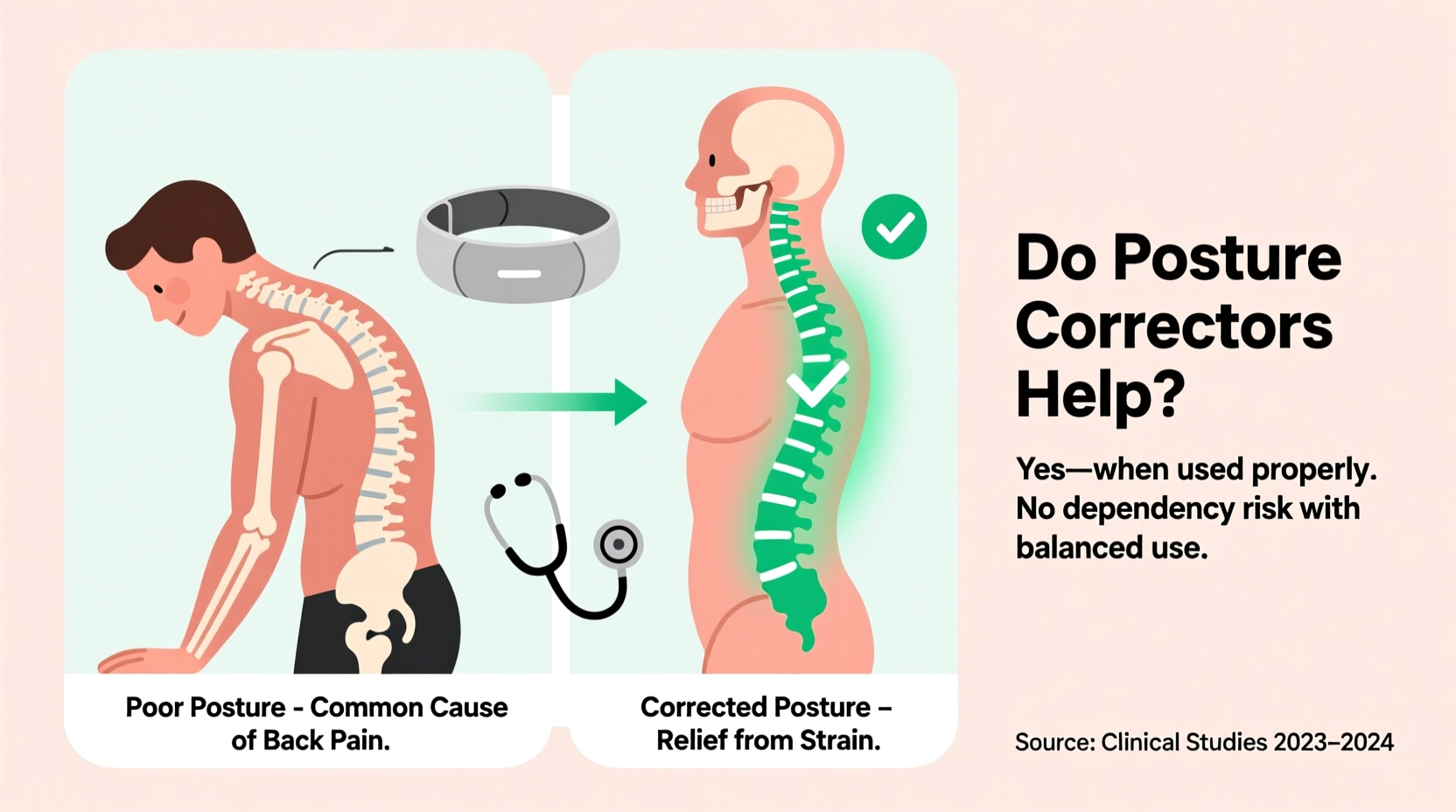
Posture correctors typically consist of adjustable straps worn over the shoulders and around the torso. They function by mechanically pulling the shoulders into external rotation and retracting the scapulae, forcing the upper back into a less slouched position. This mimics ideal spinal alignment and may provide immediate sensory feedback that something feels “better” or “straighter.”
The psychological effect is often strong: wearers feel taller, more confident, and temporarily free from the nagging ache between the shoulder blades. However, this mechanical correction doesn’t equate to muscular correction. The device acts like training wheels—it holds you upright but doesn’t teach your body how to stay there on its own.
“Posture correctors can be useful as a biofeedback tool, but they are not a treatment. Real postural improvement comes from neuromuscular re-education, not passive restraint.” — Dr. Lena Torres, Physical Therapist and Spine Specialist
Without active engagement of core and postural muscles, the benefits are fleeting. Once the brace comes off, poor habits return unless behavioral and physiological changes have been made.
The Short-Term Benefits: Pain Relief and Awareness
For individuals experiencing mild upper back or neck discomfort due to prolonged sitting, posture correctors can offer symptomatic relief. By reducing forward head posture and rounded shoulders, they decrease strain on the cervical and thoracic spine. This temporary reduction in mechanical stress may alleviate muscle tension and referred pain.
Additionally, these devices serve as constant reminders. When worn during work hours, they prompt users to notice when they start slumping—even after removal, some people retain improved awareness of their posture.
Some clinical studies support limited use. A 2020 pilot study published in the Journal of Physical Therapy Science found that participants using a posture corrector for two weeks reported reduced upper trapezius muscle fatigue and improved self-perceived posture. However, the study noted no significant strength gains and emphasized the need for concurrent exercise.
The Risks of Dependency and Muscle Atrophy
The central concern with regular or prolonged use of posture correctors is muscle disuse. The human body adapts quickly: if an external device consistently performs the job of postural stabilization, the supporting musculature—particularly the rhomboids, lower trapezius, and deep neck flexors—can weaken over time.
This phenomenon, known as muscle inhibition, occurs when neural signals to certain muscles diminish due to lack of activation. Just as a cast immobilizes a limb and leads to atrophy, relying on a brace daily can lead to functional weakness. Over months, this may result in increased dependence: the user needs the device just to sit comfortably, creating a cycle that’s difficult to break.
Moreover, improper fit or overcorrection can cause new problems. Some users report discomfort, skin irritation, restricted breathing, or even nerve compression from tight straps digging into the brachial plexus. One case involved a 34-year-old office worker who developed numbness in her hands after wearing a corrective brace for six hours daily over three weeks—an issue resolved only after discontinuation and physical therapy.
Real Example: The Desk Worker’s Dilemma
Mark, a software developer in his early 30s, began experiencing chronic mid-back pain after transitioning to remote work. He bought a popular online posture corrector and wore it for up to eight hours a day. Initially, he felt better—his posture looked improved, and his pain decreased. But within two months, he noticed he couldn’t sit upright without it. His shoulders ached more than ever when the brace was off. A visit to a physiotherapist revealed significant weakening in his scapular stabilizers. Mark had unknowingly trained his body to rely on the device instead of strengthening his own muscles.
His recovery required a structured program of postural exercises, ergonomic adjustments, and gradual weaning from the brace. It took nearly three months to regain baseline stability—but with lasting results.
What Works Better Than a Brace?
Sustainable posture improvement stems from three pillars: education, movement, and environment. Devices may assist briefly, but lasting change requires active participation.
1. Strengthen Key Muscles
Focused exercises that activate weak postural muscles are far more effective than passive bracing. Key movements include:
- Prone Y-T-W-L raises: Build endurance in the lower trapezius and serratus anterior.
- Banded rows: Improve scapular retraction strength.
- Chin tucks: Counteract forward head posture by engaging deep neck flexors.
- Planks and bird-dogs: Enhance core stability, which supports spinal alignment.
Aim for 3–4 sessions per week, starting light and increasing resistance gradually.
2. Optimize Your Workspace
Poor ergonomics undermine even the best intentions. Ensure your workstation supports neutral posture:
- Monitor top at or slightly below eye level.
- Elbows bent at 90°, wrists neutral while typing.
- Feet flat on the floor (or on a footrest).
- Lower back supported; consider a lumbar roll.
- Take a microbreak every 30 minutes to stand or stretch.
3. Practice Mindful Movement
Incorporate activities that promote body awareness and mobility. Yoga, Pilates, and tai chi emphasize spinal alignment, breath control, and muscular balance. Even walking with attention to posture—shoulders relaxed, head stacked over spine—can reinforce healthy patterns.
Comparison: Posture Corrector vs. Active Postural Training
| Factor | Posture Corrector (Passive) | Active Postural Training |
|---|---|---|
| Immediate Effect | Yes – visual and sensory improvement | No – requires practice |
| Muscle Engagement | Reduced – promotes disuse | Increased – builds strength |
| Long-Term Results | Poor without additional intervention | Strong and sustainable |
| Risk of Dependency | High with frequent use | None |
| Cost Over Time | One-time purchase, but may need replacement | Low (bodyweight exercises, minimal equipment) |
| Best For | Short-term cueing or acute flare-ups | Chronic issues, prevention, performance |
When (and How) to Use a Posture Corrector Wisely
Used strategically, posture correctors aren’t inherently harmful. The key is integration, not isolation. Think of them as a mirror—not a solution.
Step-by-Step Guide: Safe Integration of a Posture Corrector
- Assess your posture first: Take a side-profile photo standing naturally. Note head position, shoulder rounding, and spinal curves.
- Select a well-fitted model: Avoid overly tight or rigid designs. Adjustable fabric braces are generally safer than plastic-reinforced ones.
- Limited wear schedule: Start with 30–60 minutes once a day during focused tasks (e.g., morning work session).
- Pair with exercises: Wear the brace during or immediately before a set of posture-specific strength moves to reinforce proper alignment.
- Gradually reduce usage: After 2–3 weeks, cut back to 2–3 times per week as your body learns the new pattern.
- Discontinue once independent: If you can maintain improved posture unaided for several days, stop using the device.
This method leverages the corrector as a biofeedback tool rather than a crutch. Over time, your nervous system begins to associate the “correct” feeling with muscle activation, making the transition to independence smoother.
FAQ: Common Questions About Posture Correctors
Can posture correctors fix kyphosis or scoliosis?
No. Structural spinal conditions like Scheuermann’s kyphosis or idiopathic scoliosis require medical evaluation and targeted interventions such as physical therapy, bracing under supervision, or in severe cases, surgery. Off-the-shelf posture correctors do not alter spinal curvature and may worsen asymmetry in scoliosis if improperly used.
Are posture correctors safe for long-term use?
No. Long-term daily use increases the risk of muscle atrophy, joint stiffness, and dependency. They should be considered transitional aids, not permanent solutions. Continuous use beyond 4–6 weeks without progress toward muscle-driven posture indicates a need for professional assessment.
Do doctors recommend posture correctors?
Most healthcare providers do not prescribe them outright. Some physical therapists may recommend short-term use as part of a broader rehabilitation plan, but only alongside exercise and education. The American Physical Therapy Association emphasizes active care over passive devices for musculoskeletal health.
Action Plan: Building Lasting Posture Without Crutches
If you're serious about reducing back pain and improving posture, follow this 6-week checklist:
“Your posture is a reflection of your habits, not your hardware.” — Dr. Rajiv Mehta, Orthopedic Rehabilitation Specialist
- Week 1–2: Assess workspace ergonomics; begin daily chin tucks and scapular squeezes (3 sets of 10).
- Week 3–4: Add prone Y-T-W raises and banded rows; take hourly posture breaks.
- Week 5–6: Incorporate planks (20–30 seconds) and thoracic mobility drills; discontinue brace if used.
- Ongoing: Practice mindfulness during sitting; schedule monthly posture self-checks.
Conclusion: Strength Over Support
Posture correctors may offer temporary comfort, but they don’t solve the underlying problem: weak muscles, poor movement habits, and sedentary lifestyles. Relying on a brace without building intrinsic strength risks creating dependency and delaying real recovery. True postural resilience comes from consistent effort—small, daily investments in movement, awareness, and environment.
Instead of seeking a quick fix, commit to becoming your own support system. Strengthen your back, retrain your habits, and redesign your surroundings. The goal isn’t to wear better gear—it’s to move better, breathe easier, and live with less pain, one aligned moment at a time.




 浙公网安备
33010002000092号
浙公网安备
33010002000092号 浙B2-20120091-4
Comments
No comments yet. Why don't you start the discussion?