
In an age where desk jobs dominate and screen time is at an all-time high, slouching has become second nature. The rise of hunched shoulders, forward head posture, and chronic back pain has fueled a booming market for posture correctors—brace-like devices designed to pull your shoulders back and align your spine. But do they actually fix poor posture, or are they merely a band-aid solution? This article explores the effectiveness of posture correctors, backed by medical insights, user experiences, and practical alternatives.
The Science Behind Posture Correctors
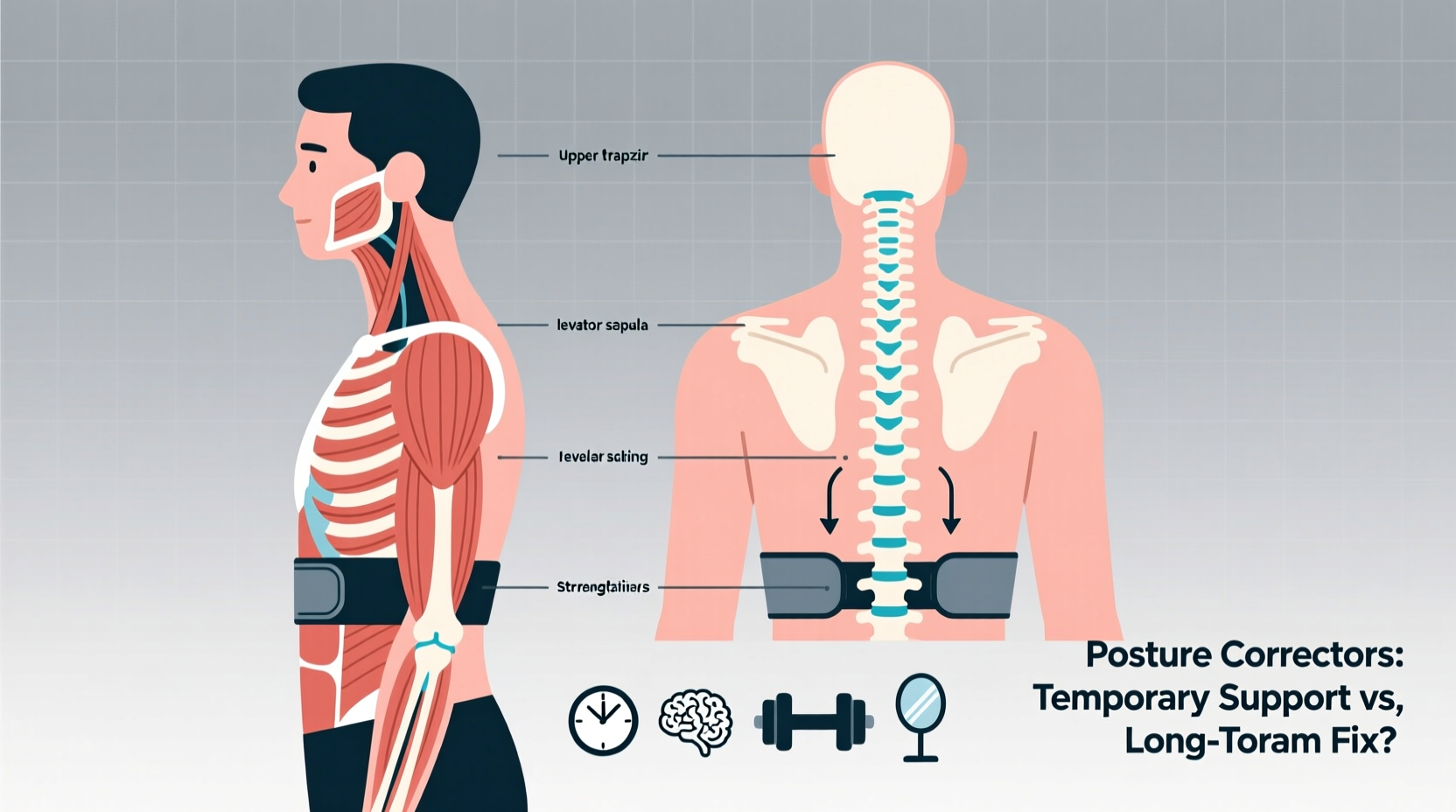
Posture correctors operate on a simple mechanical principle: they apply gentle pressure to pull the shoulders back and prevent slouching. Most designs resemble a vest, brace, or strap system that wraps around the upper torso, anchoring the shoulders in a more neutral position. The idea is that consistent use trains the body to maintain better alignment over time.
However, the human body isn’t shaped by mechanics alone—it’s governed by neuromuscular patterns. Poor posture often stems from muscle imbalances: tight chest muscles, weak upper back and core muscles, and prolonged sitting habits. While a posture corrector can physically reposition the body, it doesn’t inherently strengthen the muscles responsible for maintaining good posture.
“Bracing can provide short-term relief and awareness, but without active engagement of postural muscles, the effect is superficial.” — Dr. Rebecca Lang, Physical Therapist and Spine Specialist
Studies on posture correctors show mixed results. A 2019 study published in the Journal of Physical Therapy Science found that participants wearing a posture corrector for four weeks reported reduced upper back pain and improved shoulder positioning. However, these improvements were not sustained after discontinuing use, suggesting a dependency on the device rather than lasting change.
Benefits and Limitations of Posture Braces
Posture correctors aren't entirely ineffective—they offer specific advantages when used appropriately. Understanding both sides helps determine whether they’re worth incorporating into your routine.
Benefits
- Immediate postural feedback: Helps users recognize when they're slouching.
- Pain reduction: Can alleviate discomfort from rounded shoulders and neck strain.
- Habit formation: Acts as a reminder to sit or stand upright, especially during long work hours.
- Confidence boost: Improved posture often leads to perceived confidence and better breathing.
Limitations
- Muscle dependency: Prolonged use may weaken postural muscles due to lack of activation.
- No long-term correction: Without exercise and behavioral changes, posture returns to baseline.
- Discomfort and skin irritation: Some users report chafing, restricted movement, or breathing difficulty.
- One-size-fits-all design: May not accommodate individual anatomical differences.
Real-World Example: Office Worker Transformation
Mark, a 34-year-old software developer, began experiencing chronic neck pain and fatigue after transitioning to remote work. He spent up to 10 hours a day hunched over his laptop. After trying ergonomic chairs and standing desks with limited success, he purchased a popular posture corrector online.
For the first two weeks, Mark wore the brace daily while working. He noticed immediate improvements—less stiffness, clearer breathing, and fewer headaches. Encouraged, he continued using it full-time for six weeks. But when he tried going without it, his old posture returned within hours. His physical therapist explained that Mark had relied too heavily on the brace instead of strengthening his scapular stabilizers.
After adjusting his approach—using the brace only for 30–60 minutes a day while doing targeted exercises—Mark gradually built muscle endurance. Within three months, he no longer needed the device and maintained improved posture through consistent movement and awareness.
This case illustrates a critical point: posture correctors work best when integrated into a broader strategy, not as standalone solutions.
What Actually Fixes Posture Long-Term?
Sustainable posture improvement comes not from external devices, but from internal strength, awareness, and habit modification. Here’s what experts recommend for lasting change.
Step-by-Step Guide to Building Natural Posture
- Assess Your Current Posture: Stand sideways in front of a mirror. Ideally, your ear, shoulder, hip, knee, and ankle should align vertically. Note any forward head tilt or rounded shoulders.
- Strengthen Key Muscle Groups: Focus on the rhomboids, lower trapezius, deep neck flexors, and core. Exercises like rows, scapular retractions, chin tucks, and planks are effective.
- Stretch Tight Muscles: Regularly stretch the chest (pectoralis), hip flexors, and anterior neck to counteract sitting-induced shortening.
- Practice Postural Awareness: Set hourly reminders to check your posture. Use apps or smartwatches with posture alerts.
- Optimize Your Workspace: Position your monitor at eye level, keep elbows at 90 degrees, and use a chair with lumbar support.
- Incorporate Movement Breaks: Stand, stretch, or walk every 30–60 minutes to reset muscular tension.
- Use a Posture Corrector Strategically: Limit use to 30–90 minutes per day during initial training phases. Avoid sleeping or exercising in it.
Checklist: Building Sustainable Posture Habits
- ✅ Perform chin tucks and shoulder blade squeezes daily
- ✅ Do 3 sets of 10 resistance band rows, 3x per week
- ✅ Stretch chest muscles against a doorframe for 30 seconds, 3x daily
- ✅ Adjust workstation to promote neutral spine alignment
- ✅ Use a posture corrector only as a reminder, not a replacement for muscle engagement
- ✅ Schedule movement breaks every hour
- ✅ Track progress monthly with photos or posture assessments
Comparison: Posture Correctors vs. Active Postural Training
| Aspect | Posture Correctors (Passive) | Active Postural Training |
|---|---|---|
| Effectiveness (Short Term) | High – immediate alignment improvement | Moderate – requires consistency |
| Effectiveness (Long Term) | Low – effects fade after stopping use | High – builds muscle memory and strength |
| Muscle Engagement | Minimal – relies on external support | High – activates stabilizing muscles |
| Risk of Dependency | High – possible weakening of postural muscles | None – promotes independence |
| Cost Over Time | Medium – one-time purchase ($30–$100) | Low – minimal equipment needed |
| Best For | Short-term relief, awareness training | Permanent correction, injury prevention |
Frequently Asked Questions
Can posture correctors fix kyphosis or scoliosis?
No. While mild postural kyphosis (rounded upper back) may improve with corrective strategies, structural conditions like Scheuermann’s kyphosis or scoliosis require medical evaluation and treatment such as physical therapy, bracing under supervision, or in severe cases, surgery. Off-the-shelf posture correctors are not designed or approved to treat these conditions.
How many hours a day should I wear a posture corrector?
Experts recommend starting with 15–30 minutes per day and gradually increasing to no more than 2–4 hours. Extended wear can lead to muscle atrophy and discomfort. Never wear one while sleeping or during intense physical activity.
Are there risks to using posture correctors?
Yes. Overuse can cause muscle weakness, skin irritation, restricted breathing, or even nerve compression. Some users report increased pain if the device forces the body into an unnatural position. Always consult a healthcare provider before use if you have pre-existing spine or respiratory conditions.
Expert Insight: What Medical Professionals Say
“The biggest misconception is that posture is purely about how you hold yourself. It’s really about movement quality, muscle balance, and joint mobility. A brace might make you look better for a few hours, but real change happens in the gym, at your desk, and through daily habits.” — Dr. Alan Zhou, Orthopedic Rehabilitation Specialist
Physical therapists consistently emphasize that passive tools like posture correctors should be secondary to active rehabilitation. Neuromuscular re-education—training the brain and body to adopt better alignment naturally—is far more effective than relying on external support.
Conclusion: Tools, Not Solutions
So, do posture correctors actually work? The answer is nuanced. They can be useful tools for raising awareness and providing short-term relief from poor posture-related discomfort. However, they are not a cure. Relying on them without addressing the root causes—muscle imbalances, sedentary behavior, and poor ergonomics—leads to temporary fixes at best, and potential harm at worst.
True postural improvement comes from consistent effort: strengthening weak muscles, releasing tight ones, moving frequently, and cultivating mindfulness throughout the day. If you choose to use a posture corrector, do so strategically—as a cue to engage your own musculature, not as a substitute for it.




 浙公网安备
33010002000092号
浙公网安备
33010002000092号 浙B2-20120091-4
Comments
No comments yet. Why don't you start the discussion?