
In an era dominated by desk jobs, smartphones, and prolonged screen time, slouching has become a near-universal habit. As more people seek relief from chronic back pain, neck strain, and poor spinal alignment, posture correctors have surged in popularity. These wearable devices—ranging from simple shoulder straps to full upper-back braces—promise to \"train\" the body into better alignment. But do they actually fix slouching, or are they merely creating physical dependency while masking deeper issues?
The answer isn’t straightforward. While posture correctors can offer short-term relief and awareness, relying on them without addressing root causes may lead to muscle atrophy, reduced proprioception, and long-term reliance. Understanding how these devices work—and when they help versus hinder—is essential for making informed decisions about spinal health.
How Posture Correctors Work: The Mechanics Behind the Promise
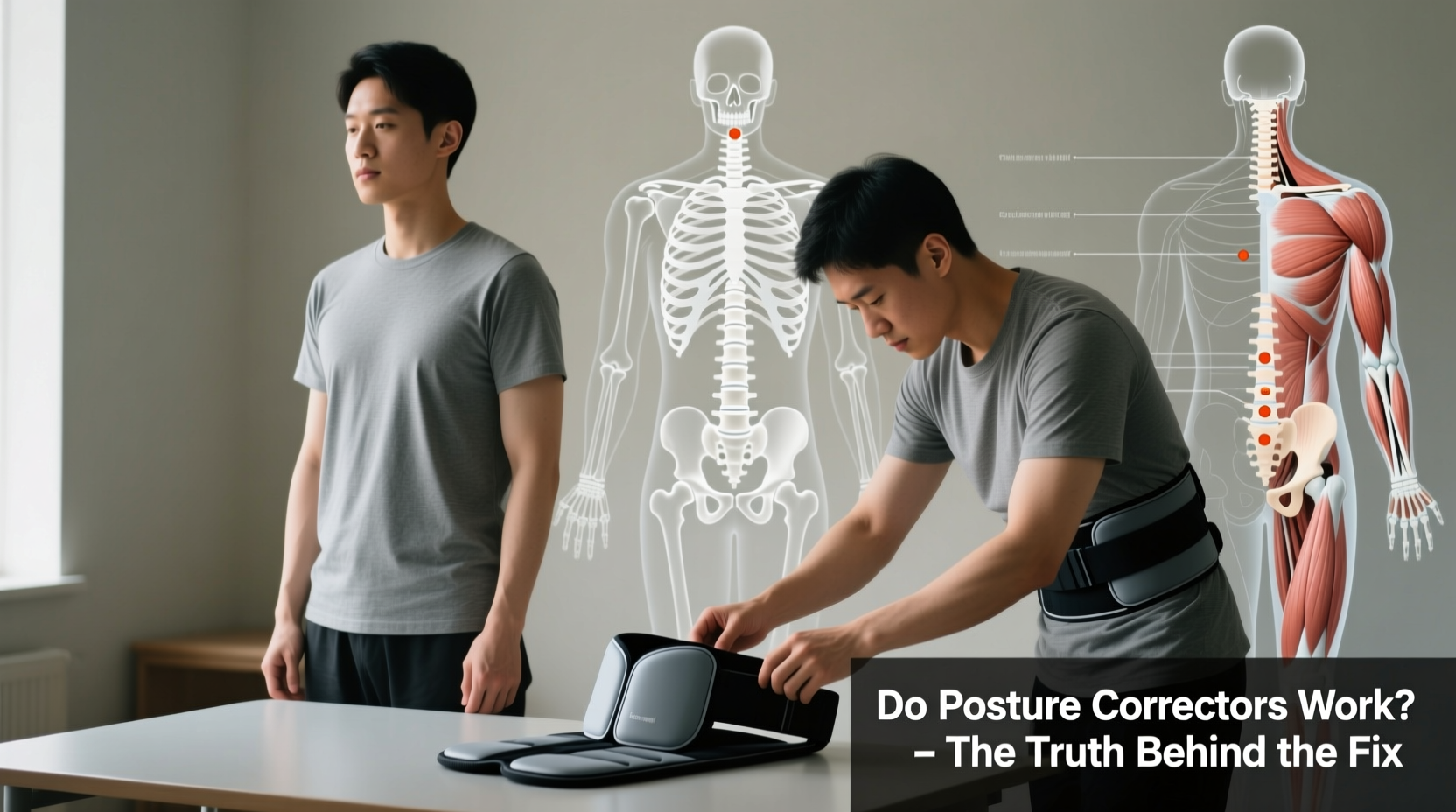
Posture correctors operate on a basic biomechanical principle: mechanical feedback. Most models use elastic bands, rigid supports, or adjustable straps that pull the shoulders back and lift the chest, forcing the spine into a more neutral position. This immediate correction gives users a sensation of standing taller and feeling less fatigued.
Manufacturers often claim that consistent use “trains” muscles to maintain proper posture over time. The idea is similar to orthodontics: just as braces gradually shift teeth into alignment, posture correctors supposedly retrain postural muscles through repetition and reinforcement.
However, this analogy has limitations. Teeth don’t actively move on their own; muscles do. And unlike passive structures, muscles adapt quickly to external support—sometimes by disengaging entirely.
The Short-Term Benefits: Awareness and Symptom Relief
There’s no denying that many users report positive experiences with posture correctors—at least initially. Common benefits include:
- Reduced upper back and neck tension
- Increased awareness of slouching habits
- Improved breathing due to expanded chest cavity
- Temporary reduction in forward head posture
For individuals who spend hours hunched over laptops or phones, the sudden realignment provided by a brace can feel liberating. It interrupts habitual patterns and forces attention toward body positioning—a concept known in neuroscience as proprioceptive recalibration.
Dr. Lena Torres, a physical therapist specializing in ergonomic rehabilitation, explains:
“A posture corrector can serve as a biofeedback tool. When used sparingly, it helps patients recognize what ‘good posture’ feels like—something many have forgotten after years of sedentary work.”
This awareness phase is crucial. Many people don’t realize they’re slouching until discomfort sets in. A brief period of guided correction can reset sensory perception and lay the groundwork for behavioral change.
The Dependency Dilemma: When Support Becomes a Crutch
While short-term use may boost awareness, long-term reliance poses significant risks. Muscles adapt rapidly to external support. When a posture corrector consistently holds the shoulders back, the rhomboids, lower trapezius, and deep cervical flexors—the very muscles responsible for maintaining upright posture—begin to weaken from underuse.
This phenomenon, known as muscle inhibition, mirrors what happens when someone wears a back brace too long after injury: the supported area becomes weaker, not stronger. Over time, the body learns to depend on the device rather than activate its own stabilizing systems.
A 2021 study published in the *Journal of Bodywork and Movement Therapies* found that participants who wore posture braces daily for six weeks showed no measurable improvement in postural endurance compared to controls—and some exhibited decreased activation in key postural muscles.
Worse, dependency can create a cycle: poor posture leads to discomfort → user wears a brace → symptoms improve temporarily → muscles weaken → person feels worse without the brace → increased usage. Breaking this loop requires intentional effort beyond wearing a strap.
Signs You Might Be Dependent on a Posture Corrector
- You feel physically unstable or “collapsed” when not wearing it.
- Your back or shoulders ache more without the device than before you started using it.
- You’ve been using it daily for over 4–6 weeks without incorporating strength exercises.
- You avoid social situations where wearing the brace would be visible.
- You find yourself tightening the straps progressively to achieve the same effect.
Beyond the Brace: Building Sustainable Postural Strength
If posture correctors alone aren’t the solution, what is? The key lies in active rehabilitation—strengthening the musculoskeletal system to naturally support proper alignment. Unlike passive devices, targeted exercises build neuromuscular control, endurance, and joint stability.
Consider the analogy of learning to ride a bike. Training wheels provide initial balance, but true proficiency comes from practice, coordination, and core engagement. Similarly, lasting posture improvement requires movement, not immobilization.
Step-by-Step Guide: Transitioning from Passive to Active Posture Training
- Phase 1: Awareness (Weeks 1–2)
Use the posture corrector for no more than 20–30 minutes per day. Focus on how your body feels when aligned. Take mental notes: Where is the tension? How does your head sit over your shoulders? - Phase 2: Integration (Weeks 3–4)
Begin daily exercises targeting postural muscles. Use the brace only during one session to reinforce proper form, then remove it and repeat without support. - Phase 3: Independence (Weeks 5+)
Discontinue regular use of the corrector. Rely solely on muscle memory and routine strengthening. Reintroduce the brace only occasionally as a “check-in” tool.
Essential Exercises for Long-Term Postural Health
- Chin Tucks: Counteracts forward head posture. Perform 3 sets of 10 daily.
- Prone Y-T-W Raises: Activates lower traps and rhomboids. Lie face down on a bench or bed, arms extended in Y, T, and W positions, lifting arms slightly off the surface.
- Wall Angels: Improves thoracic mobility and scapular control. Stand with back against a wall, arms bent at 90 degrees, and slowly slide arms up and down without losing contact.
- Dead Bugs: Builds core stability, which supports spinal alignment. Lie on your back, extend opposite arm and leg while keeping lower back pressed to the floor.
- Thoracic Spine Rotations: Loosens stiff upper backs caused by sitting. Use a foam roller or seated twist stretches.
Real-World Example: From Chronic Slouching to Natural Alignment
Meet Daniel, a 34-year-old software developer who began experiencing persistent neck pain and headaches after transitioning to remote work. He purchased a popular posture corrector online and wore it for 4–6 hours daily during his first month. Initially, his pain decreased, and he felt more confident in video meetings.
But by week eight, he noticed new problems: his mid-back felt weak, and he couldn’t sit comfortably without the brace. Concerned, he consulted a physical therapist. After an assessment, she advised him to stop daily use immediately and begin a structured exercise program focused on scapular stabilization and core engagement.
Over the next three months, Daniel followed a regimen of daily chin tucks, wall angels, and prone Y raises. He also adjusted his workstation: raising his monitor to eye level, using a standing desk intermittently, and taking movement breaks every hour.
Today, Daniel no longer uses a posture corrector. His pain has resolved, and he reports feeling “more aware of his body than ever before.” His experience underscores a critical truth: tools are most effective when they support active change, not replace it.
Comparative Analysis: Posture Correctors vs. Active Rehabilitation
| Factor | Posture Correctors (Passive) | Active Rehabilitation (Exercise-Based) |
|---|---|---|
| Immediate Symptom Relief | High | Moderate to Low |
| Long-Term Effectiveness | Low (risk of dependency) | High (builds sustainable strength) |
| Muscle Engagement | Reduces natural activation | Enhances neuromuscular control |
| Cost Over Time | $30–$100 (device cost) | Minimal (bodyweight exercises) |
| Best For | Short-term awareness, acute discomfort | Prevention, long-term correction |
Frequently Asked Questions
Can posture correctors make my posture worse?
Yes—if used excessively. Long-term wear can lead to muscle weakening, especially in the mid-back and deep neck flexors. Over-correction may also cause excessive arching of the lower back or shoulder strain if the device pulls too tightly.
How long should I wear a posture corrector?
No more than 20–30 minutes at a time, and only for short durations (2–4 weeks). Think of it as a “posture mirror”—a tool to show you what good alignment feels like, not a permanent fixture.
Are there any safe alternatives to posture correctors?
Absolutely. Ergonomic workspace adjustments, regular stretching, strength training, and mindfulness practices like yoga or Pilates are safer, more effective long-term strategies. Wearable tech like posture sensors (e.g., Upright GO) can also provide gentle reminders without physical restriction.
Expert Insight: What Professionals Recommend
According to Dr. Marcus Lin, a board-certified orthopedic specialist:
“We see patients all the time who come in with weakened postural muscles after months of brace use. My advice? Use it like a teaching aid—not a crutch. Pair it with exercises, or you’re just postponing the problem.”
Likewise, certified personal trainer and corrective exercise specialist Naomi Reed emphasizes functional movement:
“True posture correction happens through dynamic stability, not static holding. You wouldn’t expect to get strong by watching someone else lift weights. Why expect a strap to fix what only movement can heal?”
Checklist: Building a Sustainable Posture Plan
- ☐ Assess your current posture in a mirror or via photo
- ☐ Limit posture corrector use to 20–30 minutes/day, max 4 weeks
- ☐ Perform chin tucks and wall angels daily (3 sets of 10)
- ☐ Strengthen lower trapezius and serratus anterior with prone Y-T-W raises
- ☐ Adjust workstation: eyes level with top third of monitor, elbows at 90°
- ☐ Take movement breaks every 30–60 minutes
- ☐ Incorporate core stability exercises (e.g., dead bugs, bird-dogs)
- ☐ Evaluate progress monthly—can you stand tall without assistance?
Conclusion: Empower Your Body, Don’t Restrain It
Posture correctors are neither miracle cures nor inherently harmful. Their value depends entirely on how they’re used. As a short-term awareness tool, they can help reconnect you with proper alignment. But as a long-term solution, they fall short—often doing more harm than good by discouraging muscular responsibility.
The human body is designed for movement, not immobilization. Lasting postural improvement comes not from strapping yourself into place, but from rebuilding strength, restoring mobility, and cultivating mindful habits throughout the day.
Instead of asking whether a device can fix your slouch, ask what you can do to empower your body to stand tall on its own. Start with one exercise today. Adjust your chair. Take a walk. These small actions compound into real, lasting change—far beyond what any strap can offer.




 浙公网安备
33010002000092号
浙公网安备
33010002000092号 浙B2-20120091-4
Comments
No comments yet. Why don't you start the discussion?