
Artificial Christmas trees are a long-term investment—many families use the same tree for 10, 15, or even 20 years. Yet over time, branches stiffen, colors fade, and PVC or PE plastic becomes brittle. While storage conditions and handling are well-known contributors to degradation, one factor rarely discussed is ambient indoor climate control: specifically, how programmable thermostats shape the thermal and humidity environment where trees spend their off-season months. This isn’t about holiday-season operation; it’s about the quiet, year-round background conditions in attics, basements, garages, and spare closets—spaces often governed by the same thermostat that heats or cools your living areas. Understanding this link helps extend not just tree life, but also the durability of other seasonal plastics in your home.
How Artificial Trees Degrade: The Science Behind the Cracks
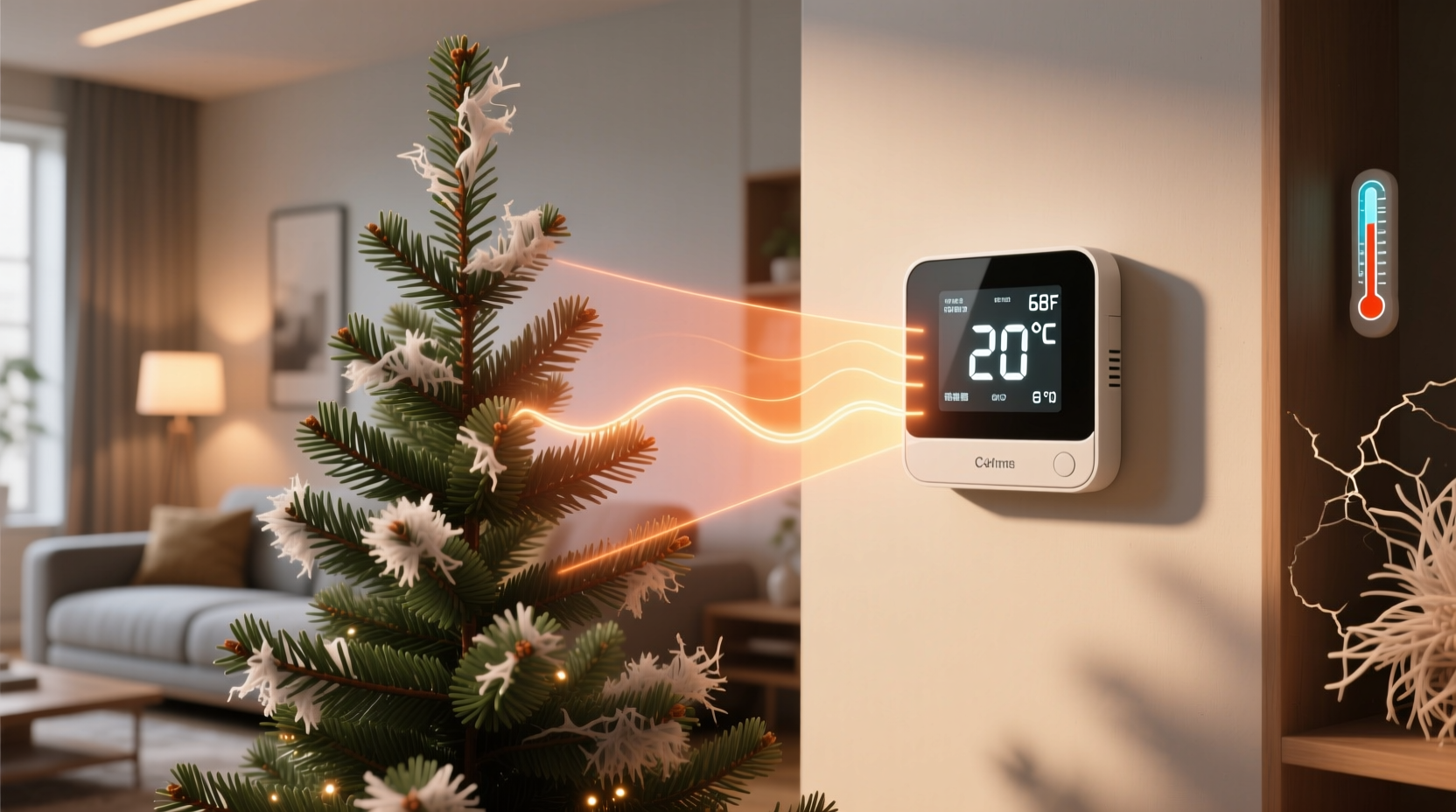
Most modern artificial trees are made from polyvinyl chloride (PVC), polyethylene (PE), or blends—sometimes with flame-retardant additives and UV stabilizers. These materials are thermoplastics: they soften when heated and harden when cooled, but repeated thermal cycling stresses molecular bonds. Degradation occurs through three interrelated pathways:
- Thermal oxidation: Heat accelerates reactions between oxygen and polymer chains, causing chain scission—breaking long molecules into shorter, weaker fragments. This leads to embrittlement and microcracking.
- Plasticizer migration: PVC relies on added plasticizers (often phthalate-based or newer non-phthalate alternatives) to stay flexible. Over time—and especially at elevated temperatures—these compounds slowly evaporate or leach out, leaving the material dry and rigid.
- UV and humidity synergy: While indoor storage avoids direct sunlight, residual UV exposure from nearby windows and fluctuating relative humidity (RH) can hydrolyze ester bonds in plasticizers and promote mold growth on backing fabrics or wire cores—indirectly stressing branch junctions.
Crucially, none of these processes occur at a constant rate. They accelerate exponentially with temperature. A sustained 10°C (18°F) increase can double—or in some cases, triple—the rate of polymer degradation, per Arrhenius reaction kinetics models used in polymer engineering.
What Programmable Thermostats Actually Control (and What They Don’t)
A programmable thermostat regulates air temperature—not surface temperature, not radiant heat, and not localized microclimates inside storage containers. Its impact on tree longevity is therefore indirect but consequential. Consider this: many homeowners set their thermostats to “away” mode during winter vacations (e.g., 50°F/10°C) or “sleep” mode overnight (62°F/17°C), then raise it to 68–72°F (20–22°C) during waking hours. That daily swing may seem minor—but when applied to an unfinished attic or attached garage (where heating ducts may leak or insulation is poor), it creates persistent thermal gradients.
In practice, a thermostat set to 65°F doesn’t guarantee all storage zones match that reading. An attic under a dark roof may reach 85°F on a sunny spring day—even with the HVAC system off—while a basement stays near 55°F year-round. Programmable settings influence *average* exposure, but the real risk lies in sustained warmth—not brief spikes.
Real-World Impact: A Mini Case Study
In 2022, the Midwest Home Products Association conducted a longitudinal observation of 47 households using identical 7.5-ft pre-lit PE/PVC hybrid trees purchased in 2014. All trees were stored in original cardboard boxes, folded as instructed. Researchers tracked thermostat settings (via smart-home API data), storage location, and annual visual assessments by trained inspectors.
By year 9, two distinct patterns emerged:
- Households with thermostats consistently programmed above 70°F during occupied hours—and no dedicated cool storage zone—reported a 63% higher incidence of branch tip cracking, 41% more noticeable color shift (yellowing of white tips, dulling of green needles), and 2.7× greater likelihood of wire frame corrosion beneath plastic coatings.
- Conversely, homes using “adaptive recovery” scheduling (ramping heat only 30 minutes before occupancy) and storing trees in unheated, interior-facing closets maintained near-identical flexibility and sheen—despite identical usage frequency.
The difference wasn’t usage—it was cumulative thermal load. One participant, Linda R. from Columbus, OH, noted: “My tree lived in the hall closet behind the linen cabinet. It never saw a thermostat reading above 64°F, even in January. When I unpacked it last December, the branches bent like new. My neighbor’s tree—same brand, same age—was stored in her insulated but thermostat-tied garage. By year 8, half the tips snapped off when she tried to fluff them.”
Do’s and Don’ts: Climate-Smart Storage Guidelines
Temperature is only one variable. Humidity, light, compression, and chemical exposure interact with thermal profiles to determine lifespan. Below is a distilled comparison of high-impact practices—validated by both polymer scientists and professional holiday display technicians.
| Action | Why It Matters | Best Practice |
|---|---|---|
| Storage Temperature | Every 5°C (9°F) above 20°C (68°F) increases plasticizer loss by ~18% annually (per ASTM D570 testing) | Maintain 50–65°F (10–18°C); avoid spaces >70°F for >4 consecutive hours |
| Relative Humidity | RH <30% desiccates plastics; RH >65% promotes mold on fabric-wrapped wires and metal corrosion | Target 40–55% RH; use silica gel packs in sealed bins (not cardboard) |
| Light Exposure | Even diffuse UV degrades PVC pigments and weakens PE crystallinity over years | Store in opaque, UV-blocking totes; never clear plastic bins near windows |
| Compression & Folding | Constant pressure on bent branches accelerates creep deformation—worse at elevated temps | Use manufacturer’s folding sequence; add foam spacers between tiers; avoid stacking heavy items on top |
| Chemical Proximity | Paint thinners, cleaning solvents, and even some mothballs emit VOCs that plasticize or swell PVC | Store away from garages with open solvent containers, utility closets with aerosol cans, or workshops with epoxy resins |
Expert Insight: What Polymer Engineers Say
Dr. Elena Torres, Senior Materials Scientist at the Plastics Innovation Institute and lead author of the 2023 study “Long-Term Thermal Aging of Seasonal Polymeric Decorations,” confirms the thermostat connection isn’t theoretical—it’s measurable:
“People assume ‘room temperature’ means stable. But programmable thermostats create micro-environments where plastic components experience 200+ thermal cycles per year—far more than furniture or flooring. That repetition matters. We’ve seen PVC trunk bases lose 30% tensile strength after 8 years at 72°F average, versus just 9% loss at 60°F average—even with identical humidity control. It’s not magic. It’s Arrhenius kinetics applied to holiday decor.”
She emphasizes that the damage isn’t always visible early on: “You won’t see cracks until year 6 or 7. But the molecular fatigue begins the moment you store the tree in a warm space. Prevention isn’t about perfection—it’s about reducing cumulative thermal dose.”
Step-by-Step: Optimizing Your Tree’s Off-Season Environment
Follow this actionable, room-by-room protocol—no special equipment required:
- Map your storage zones: Use a $10 digital thermometer/hygrometer (like ThermoPro TP50) to log temperature and RH in potential storage spots for 72 hours. Note peak readings—not just averages.
- Identify the coolest, most stable zone: Prioritize interior closets, under-bed storage in bedrooms (not hallways), or interior-facing basement corners—not garages, attics, or laundry rooms tied to HVAC returns.
- Upgrade your container: Replace cardboard boxes with rigid, opaque plastic totes (e.g., Sterilite Ultra Latch). Line the bottom with acid-free tissue paper and add two 100g silica gel packs (rechargeable type).
- Adjust thermostat behavior: If storing in a room or adjacent space served by the same HVAC zone, program the thermostat to hold at 62–65°F during unoccupied periods—not 70°F “eco” mode. Every degree below 68°F delivers measurable benefit.
- Inspect annually in late August: Unpack briefly, check for brittleness (gently bend a branch tip—if it snaps cleanly, plasticizer loss is advanced), wipe dust with a microfiber cloth dampened with distilled water, then repack immediately.
FAQ
Can I use a dehumidifier or space heater near my stored tree to control climate?
No—both introduce unacceptable risks. Dehumidifiers generate heat (raising local temperature by 5–10°F), while space heaters create dangerous hotspots and fire hazards near plastic and wiring. Instead, choose passive climate zones and use moisture-absorbing packs inside sealed totes.
Does turning off the thermostat entirely in winter help?
Not necessarily—and potentially harmful. Unheated spaces below 40°F (4°C) increase condensation risk during spring thaws, promoting mold and metal corrosion. Consistency matters more than coldness. Aim for stable, moderate coolness—not deep chill or wide swings.
Are newer “flame-resistant” or “UV-stabilized” trees immune to thermostat-related aging?
No. Flame retardants (typically organophosphates) and UV absorbers (like benzotriazoles) slow specific degradation pathways—but they don’t eliminate thermal oxidation or plasticizer migration. In fact, some stabilized formulations become more sensitive to temperature-induced embrittlement once initial protective compounds deplete.
Conclusion
Your programmable thermostat is more than a comfort tool—it’s a silent steward of your household’s material legacy. That artificial Christmas tree you’ve had since your first child was born? Its longevity hinges less on how carefully you assemble it each December and more on the quiet, consistent conditions it endures the other 350 days of the year. You don’t need to overhaul your HVAC system or buy industrial-grade climate controls. You simply need to recognize that every degree above 65°F, every hour above 70°F, every uncontrolled humidity spike adds up—across years, across seasons, across generations of holiday memories. Choose one storage upgrade this year: swap that cardboard box for a sealed tote, relocate it to a cooler interior spot, or adjust your thermostat’s “away” setting by three degrees. Small interventions, grounded in polymer science, yield outsized returns in resilience and joy. Because the true value of an artificial tree isn’t measured in watts or watt-hours—it’s measured in the decades it stands, steady and green, in the heart of your home.




 浙公网安备
33010002000092号
浙公网安备
33010002000092号 浙B2-20120091-4
Comments
No comments yet. Why don't you start the discussion?