
As holiday decorating evolves with technology, many homeowners are turning to projection Christmas lights as a modern alternative to traditional string lights. These compact projectors promise dazzling light displays with minimal setup—just plug in, aim, and enjoy. But do they truly replace the need for physical strings of Christmas lights? For some, yes. For others, not quite. The answer depends on your goals, property layout, and aesthetic expectations. This article dives deep into how projection lights compare to physical strings, where each excels, and whether one can fully take the place of the other in today’s festive landscape.
How Projection Christmas Lights Work
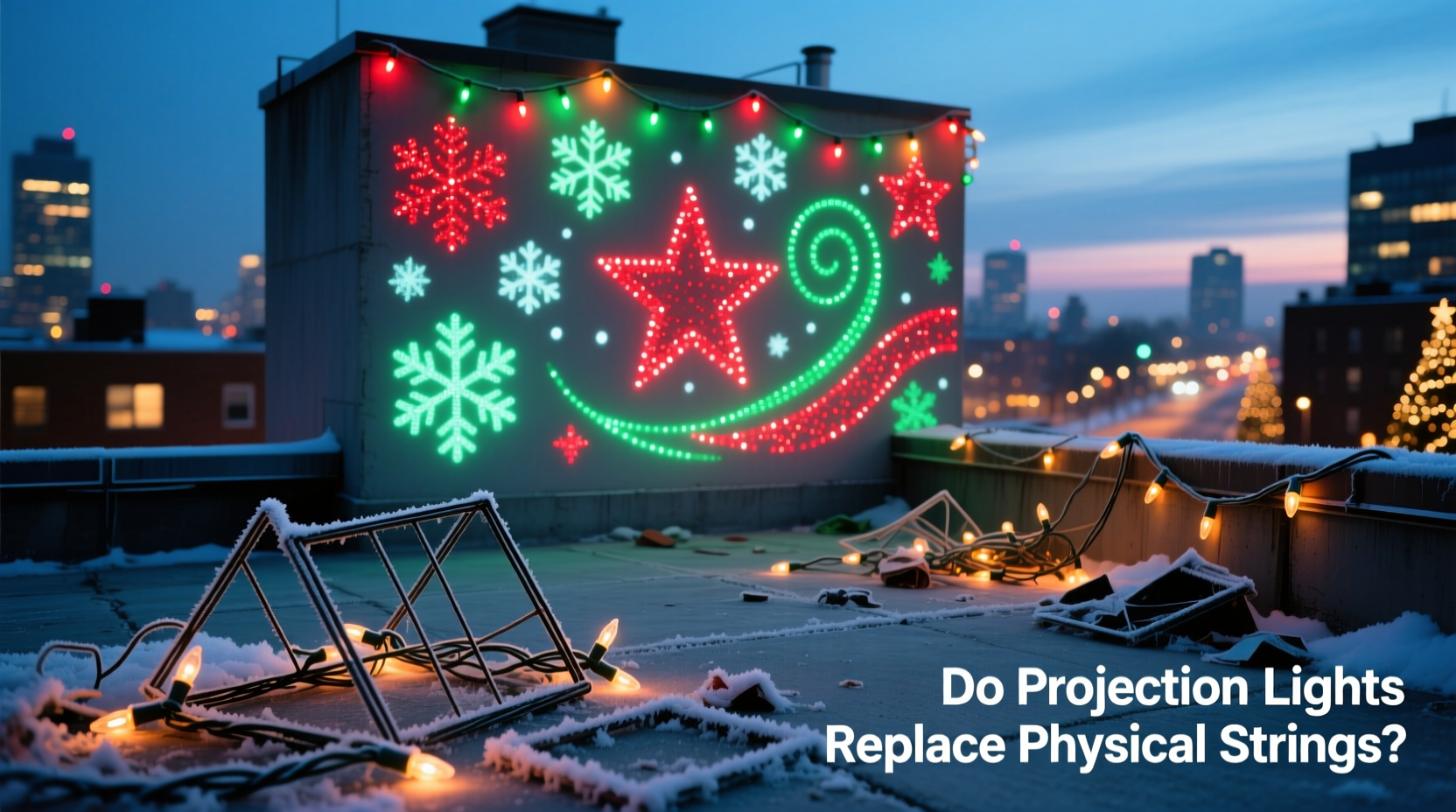
Projection Christmas lights use LED-based projectors that emit patterns of light onto surfaces like walls, fences, or driveways. Most models come with built-in designs such as snowflakes, stars, falling snow, or clusters of multicolored dots meant to mimic the look of string lights. Some advanced versions offer rotating lenses or remote controls to switch between effects. They typically require only a standard outdoor electrical outlet and can cover areas up to 30 feet wide and 20 feet high, depending on the model.
The appeal lies in simplicity: no climbing ladders, wrapping eaves, or untangling wires. Setup often takes under five minutes. Many projectors are also designed for durability, with weather-resistant casings rated for rain, snow, and temperature extremes.
Advantages of Projection Lights Over Physical Strings
Projection lights offer several compelling benefits that make them attractive, especially for those seeking convenience without sacrificing visual impact.
- Time-saving installation: No more hours spent draping lights across gutters or windows. A projector can be set up in minutes.
- No ladder required: Ideal for seniors or anyone uncomfortable with heights. Place the unit on the ground and point it upward.
- Reduced wear and tear: Since there’s no handling of fragile bulbs or wires, you avoid breakage and storage issues year after year.
- Energy efficiency: Most projectors use between 7–15 watts—far less than even a modest string of 100 LED lights (which may draw 4–8 watts per strand, but multiply quickly).
- Versatility: Switch between multiple lighting themes without changing hardware. One projector can simulate icicles, twinkling stars, or classic C9 bulbs.
“Projection lighting is revolutionizing seasonal decor by making professional-level displays accessible to everyone, regardless of physical ability or time constraints.” — Marcus Lin, Smart Home Lighting Consultant
Where Physical String Lights Still Outperform
Despite their advantages, projection lights have limitations that keep physical string lights relevant—and often superior—for certain applications.
First, projections rely heavily on surface quality. Light-colored, smooth walls reflect well; dark brick, textured stucco, or heavily shaded areas diminish visibility. In some cases, the projected pattern becomes distorted or fades into invisibility.
Second, depth and dimension are absent. Traditional lights wrap around rooflines, trees, and railings, creating a three-dimensional glow. Projections are flat—they sit on the surface rather than enveloping space. This makes them feel less immersive, particularly when viewed up close.
Third, ambient competition matters. In urban or well-lit neighborhoods, projector brightness can get washed out by streetlights or neighbor displays. Physical LEDs maintain consistent luminance regardless of background light.
Real Example: A Suburban Home Comparison
Consider two homes on the same block in Denver, Colorado. The first uses four projection units to cast green-and-white snowflake patterns and simulated string lights across its front facade. Setup took 12 minutes. The effect is bright and noticeable from the street, drawing compliments during evening walks.
The second home uses over 1,200 feet of LED string lights—wrapped around eaves, trees, porch columns, and walkway posts. Installation required two weekends and a team of three. While more labor-intensive, the result is a rich, layered display that sparkles from every angle, even inside the house through lit windows.
During a community vote for “Best Holiday House,” the second home won decisively. Residents cited the warmth, texture, and craftsmanship as key differentiators. The projector-only home was praised for innovation—but described as “impressive from afar, forgettable up close.”
Can Projections Fully Replace Physical Strings? A Balanced View
The short answer: not entirely. For renters, elderly individuals, or those with limited mobility, projection lights can serve as a complete replacement. They deliver festive cheer with unmatched ease.
However, for homeowners aiming for a premium, immersive experience, projections work best as a complement—not a substitute. Used together, the two methods enhance each other. For example, projectors can fill large blank walls while physical strings highlight architectural details.
Another consideration is longevity. While projectors last several seasons, their internal optics and fans may degrade faster than simple LED strings, which can endure a decade or more with proper storage.
Checklist: Should You Switch to Projection Lights?
- ✅ Do you want a fast, tool-free setup?
- ✅ Are you decorating a flat, light-colored exterior wall?
- ✅ Is safety (no ladders) a top priority?
- ✅ Are you okay with a two-dimensional appearance?
- ✅ Do you live in a brightly lit area where projection visibility may be low?
- ✅ Are you willing to accept potential heat buildup or fan noise from the unit?
- ✅ Do you plan to combine projections with some physical lights for depth?
If you answered “yes” to items 1–4 and “no” to 5–6, projection lights could be a strong fit. If you value realism and detail, consider keeping physical strings for key features.
Comparison Table: Projection vs. Physical Lights
| Feature | Projection Lights | Physical String Lights |
|---|---|---|
| Setup Time | 5–10 minutes | 1–6+ hours |
| Ladder Required | No | Yes |
| 3D Effect | None | High |
| Surface Dependency | High (needs light, flat walls) | Low |
| Energy Use (per unit/strand) | 7–15 watts | 4–10 watts per 100 bulbs |
| Durability | Moderate (moving parts, fans) | High (if stored properly) |
| Customization | Multiple built-in patterns | Color, bulb type, spacing control |
| Best For | Renters, quick setups, flat facades | Homeowners, detailed displays, curb appeal |
Step-by-Step: Creating a Hybrid Lighting Display
A growing trend among decorators is combining both technologies to achieve maximum impact with reasonable effort. Here’s how to do it effectively:
- Assess your home’s architecture: Identify large flat surfaces (good for projection) and dimensional features like roofs, trees, or porches (ideal for strings).
- Start with projections: Place one or two units to cover broad areas like the front wall or garage door. Choose warm white or color-matching effects.
- Add physical strings strategically: Wrap eaves, columns, and tree trunks with mini lights or rope lights to create depth.
- Sync colors and timers: Use smart plugs or synchronized projectors to ensure all lights turn on/off together.
- Test at night: Walk around the property to evaluate balance. Adjust projector angles or add accent lights where needed.
- Secure cords and units: Use outdoor-rated clips and stakes to prevent tripping hazards or wind displacement.
Frequently Asked Questions
Can projection lights work on brick or stone houses?
They can, but effectiveness varies. Light-colored brick may reflect adequately, but dark or deeply textured masonry absorbs light and distorts patterns. For best results, test one unit before committing to multiple purchases. Consider using projections on lighter sections and physical lights on darker areas.
Do projection Christmas lights attract bugs?
Like any outdoor light source, they can attract insects—especially if they emit UV or blue-heavy spectra. Most modern projectors use warm white LEDs, which are less attractive to bugs than cool white or fluorescent sources. To minimize this, avoid placing units near entryways or seating areas.
Are there smart projection lights with app control?
Yes, several brands now offer Wi-Fi-enabled models that allow scheduling, color changes, and pattern selection via smartphone apps. Some integrate with Alexa or Google Assistant for voice control. While more expensive, they provide greater customization and automation for tech-savvy users.
Conclusion: A Tool, Not a Total Replacement
Projection Christmas lights are an innovative addition to the decorator’s toolkit—but they don’t eliminate the need for physical strings. They excel in speed, safety, and simplicity, making them ideal for specific situations and users. Yet, they lack the tactile richness, depth, and versatility of traditional lighting.
The future of holiday decorating likely isn’t an either/or choice, but a blend of both. By understanding the strengths and limits of each, you can design a display that balances convenience with charm, effort with elegance. Whether you’re a minimalist seeking a quick sparkle or a dedicated enthusiast crafting a winter wonderland, there’s room for both technologies in a thoughtful, impactful holiday setup.




 浙公网安备
33010002000092号
浙公网安备
33010002000092号 浙B2-20120091-4
Comments
No comments yet. Why don't you start the discussion?