
Puzzle games have surged in popularity over the past two decades, thanks to the rise of smartphones and digital platforms. From classic crosswords and Sudoku to modern brain-training apps like Lumosity and Peak, millions engage with puzzles daily. But behind the entertainment lies a pressing question: Are these activities genuinely enhancing memory and cognitive function, or are they merely enjoyable distractions with fleeting mental stimulation?
The answer isn't binary. Research suggests that while puzzle games can support certain aspects of memory and thinking skills, their long-term impact depends on how they're used, what type of puzzles are played, and individual cognitive goals. This article explores the science behind puzzle engagement, separates fact from marketing hype, and offers practical guidance for using puzzles effectively to support memory and mental agility.
The Cognitive Science Behind Puzzle Games
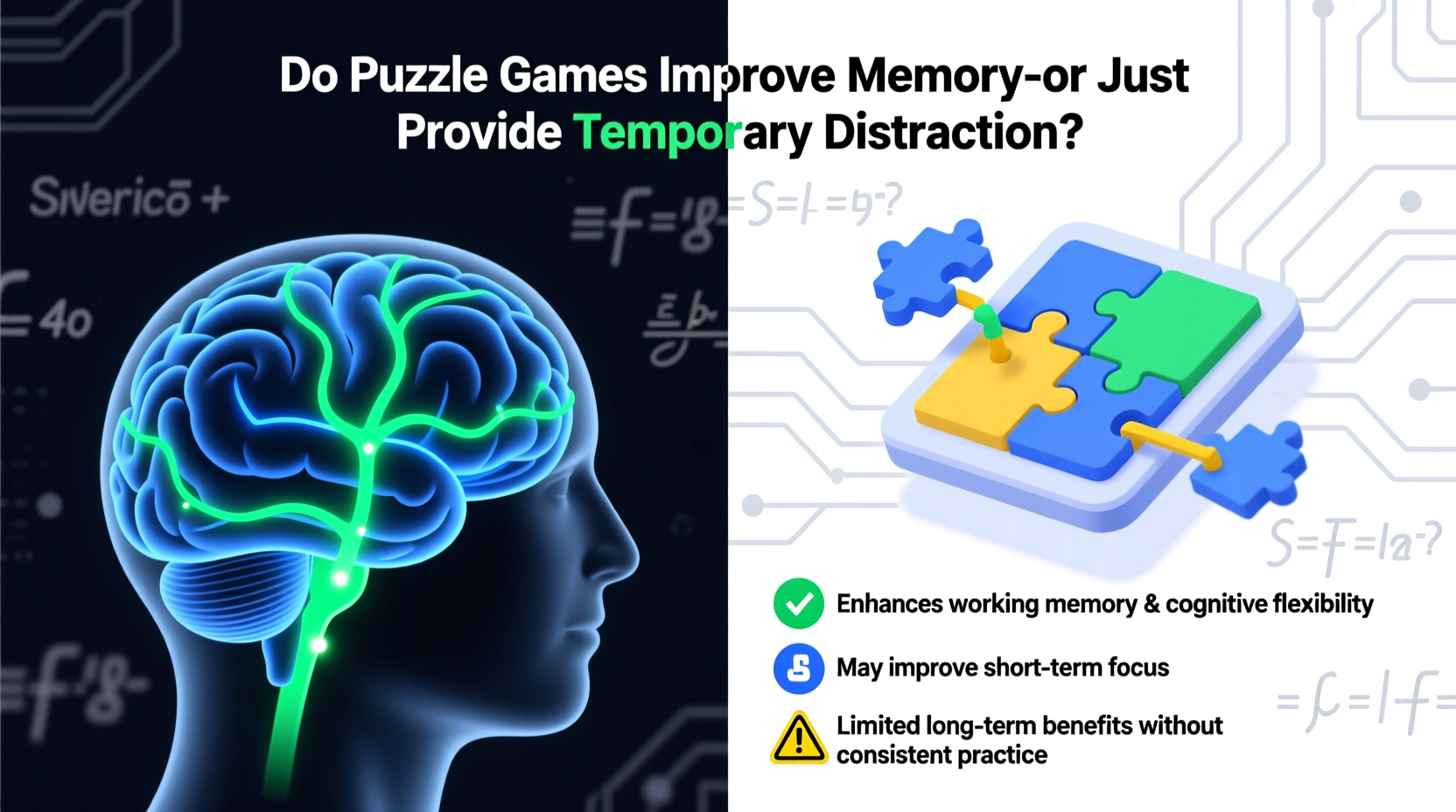
At their core, puzzle games challenge the brain to recognize patterns, recall information, solve problems, and make decisions under constraints. These tasks activate regions associated with working memory, attention, executive function, and processing speed—key components of overall cognitive performance.
Neuroimaging studies have shown that engaging in mentally stimulating activities like puzzles increases activity in the prefrontal cortex and hippocampus—areas critical for memory formation and retrieval. A 2019 study published in Frontiers in Aging Neuroscience found that older adults who regularly engaged in crossword puzzles and number games demonstrated better episodic memory and slower cognitive decline over time compared to non-participants.
However, increased brain activity doesn’t automatically equate to lasting improvement. The concept of “transfer” is crucial here—whether skills learned in one context (e.g., solving a Sudoku grid) translate into broader cognitive abilities (e.g., remembering names or following complex instructions).
“Puzzles can sharpen specific mental processes, but true cognitive resilience comes from varied, real-world challenges.” — Dr. Laura Mitchell, Cognitive Neuroscientist, University of Edinburgh
How Puzzles Support Memory: Specific Mechanisms
Not all memory is the same. Psychologists distinguish between different types: working memory (holding information temporarily), short-term memory, and long-term memory. Puzzles primarily influence working and procedural memory—the kind involved in learning sequences and rules.
- Working Memory Enhancement: Games like Sudoku require players to hold multiple numbers in mind while testing possible placements. This constant manipulation strengthens neural circuits responsible for temporary information retention.
- Pattern Recognition: Crossword clues often rely on linguistic associations, idioms, and wordplay. Regular exposure improves semantic memory—the network of meanings and concepts stored in long-term memory.
- Attention Control: Jigsaw puzzles and logic grids demand sustained focus, reducing mind-wandering and improving concentration—a skill closely linked to memory encoding.
- Procedural Learning: Repeated puzzle-solving reinforces problem-solving routines, making similar future tasks faster and more efficient.
A longitudinal study by the University of Exeter followed over 19,000 participants aged 50 and above and concluded that daily puzzle users scored significantly higher on tests measuring reasoning, verbal ability, and attention. On average, their cognitive age was equivalent to someone eight years younger than non-puzzle users.
Limitations: When Puzzles Fall Short
Despite promising findings, critics argue that many puzzle games offer limited transfer to everyday cognitive functioning. Just because someone excels at spotting hidden words doesn’t mean they’ll remember where they parked their car any better.
The phenomenon known as \"narrow transfer\" explains this gap. Most improvements remain confined to the specific task practiced. For example, getting faster at matching tiles in a mobile game may not enhance your ability to learn new languages or navigate unfamiliar cities.
Furthermore, commercial brain-training apps often exaggerate their benefits. In 2016, the U.S. Federal Trade Commission fined Lumos Labs $2 million for deceptive advertising, citing unsupported claims that its Lumosity program could prevent Alzheimer’s disease and improve academic performance.
Another concern is passive repetition. Solving the same level of crossword every morning without increasing difficulty provides diminishing returns. Like physical exercise, cognitive training requires progressive overload to yield growth.
| Aspect | Benefit of Puzzles | Common Misconception |
|---|---|---|
| Memory Improvement | Strengthens working memory and recall speed in trained tasks | Will prevent dementia or reverse memory loss |
| Cognitive Speed | Improves processing speed within familiar domains | Translates directly to better job performance |
| Mental Engagement | Reduces boredom and promotes active thinking | Replaces need for social interaction or physical activity |
| Accessibility | Easy to start, low-cost, available anywhere | All apps are scientifically validated |
Maximizing Benefits: A Strategic Approach to Puzzle Play
To move beyond temporary distraction and cultivate meaningful cognitive gains, puzzle engagement should be intentional and integrated into a broader brain-healthy lifestyle. Consider the following step-by-step approach:
- Choose Diverse Puzzle Types: Rotate between verbal (crosswords, anagrams), numerical (Sudoku, Kakuro), spatial (jigsaws, Tetris-style games), and logical puzzles (riddles, escape room challenges). Variety prevents adaptation and engages different neural networks.
- Increase Difficulty Gradually: Once a puzzle becomes easy, upgrade to a harder version. If you finish weekday crosswords effortlessly, try Sunday editions or cryptic puzzles.
- Set Time Limits: Introduce mild pressure by timing yourself. This simulates real-life conditions where quick recall matters.
- Reflect After Completion: Ask: What strategy worked? Where did I get stuck? How can I apply this insight elsewhere? Reflection deepens learning.
- Combine with Other Stimuli: Pair puzzle sessions with music, walking, or conversation to enrich the cognitive environment.
Real Example: Maria’s Cognitive Routine
Maria, a 67-year-old retired teacher, began experiencing mild forgetfulness—missing appointments and struggling to recall names. Concerned about her cognitive health, she started doing the daily crossword and a Sudoku puzzle each morning. After three months, she noticed slight improvements in focus but still felt mentally sluggish.
On her doctor’s advice, she diversified: she added jigsaw puzzles (working on spatial memory), enrolled in a weekly trivia night (social + recall practice), and began learning basic Spanish using flashcards. Six months later, Maria reported sharper recall, especially during conversations, and greater confidence in managing daily tasks.
Her success wasn’t due to puzzles alone—but to using them as part of a multifaceted cognitive regimen.
Checklist: Building a Brain-Healthy Puzzle Habit
Use this checklist to ensure your puzzle routine supports long-term memory and cognition:
- ✅ Play at least two different types of puzzles weekly
- ✅ Increase difficulty when current level feels too easy
- ✅ Limit repetitive gameplay (avoid grinding the same app level)
- ✅ Engage socially—solve puzzles with friends or join a club
- ✅ Track progress—not just completion, but speed, accuracy, and strategies used
- ✅ Balance screen-based puzzles with physical ones (paper crosswords, wooden puzzles)
- ✅ Pair puzzle time with other healthy habits: hydration, light exercise, good sleep
“Cognitive reserve isn’t built through isolated drills. It grows from lifelong engagement—with ideas, people, and challenges.” — Dr. Alan Torres, Neuropsychologist, Johns Hopkins Medicine
Frequently Asked Questions
Can puzzle games prevent Alzheimer’s disease?
No single activity can prevent Alzheimer’s, but research shows that regular engagement in mentally stimulating activities may delay symptom onset. A 2020 meta-analysis in Neurology found that individuals who frequently participated in puzzles and reading had a 23% lower risk of developing mild cognitive impairment. However, genetics, cardiovascular health, and lifestyle factors play larger roles.
Are digital puzzle apps better than traditional paper puzzles?
Each has advantages. Digital apps offer adaptive difficulty, instant feedback, and tracking features. Paper puzzles reduce screen fatigue, encourage deeper focus, and involve tactile processing. For optimal benefit, use both formats to diversify sensory input.
How much time should I spend on puzzles each day?
There’s no universal rule, but 15–30 minutes of focused puzzle-solving daily is sufficient for most adults. Quality matters more than quantity. Extended sessions without breaks can lead to mental fatigue and diminished returns.
Conclusion: Beyond Distraction Toward Deliberate Growth
Puzzle games are neither miracle cures nor mere time-wasters—they are tools. Like a scalpel or a dumbbell, their effectiveness depends on how they’re used. When approached passively, puzzles offer little more than momentary entertainment. But when integrated into a thoughtful cognitive fitness plan, they contribute meaningfully to memory, attention, and mental flexibility.
The key lies in intentionality: varying challenge types, seeking novelty, reflecting on performance, and combining mental workouts with physical health and social connection. Memory isn’t improved in isolation; it thrives in an ecosystem of engagement.
If you’ve been treating puzzles as background noise during coffee breaks, consider reimagining them as deliberate exercises for the mind. Choose one new challenge this week—try a logic grid, learn a puzzle genre you’ve never attempted, or solve one with a friend. Small shifts in how you play can lead to lasting changes in how you think.




 浙公网安备
33010002000092号
浙公网安备
33010002000092号 浙B2-20120091-4
Comments
No comments yet. Why don't you start the discussion?