
The scent of a freshly cut Christmas tree is one of the most iconic hallmarks of the holiday season. For many, it’s not truly Christmas until that crisp, earthy aroma fills the air. But what if you don’t have space for a live tree, or suffer from allergies? Enter scent diffusers infused with pine essential oil—a popular alternative promising to deliver that beloved evergreen fragrance. But do they truly capture the essence of a real tree? The answer isn't simply yes or no—it depends on chemistry, memory, and expectation.
Scent is deeply tied to emotion and memory. The human olfactory system connects directly to the limbic system, the brain’s emotional control center. That means a single whiff of pine can instantly transport someone back to childhood Christmases, snowy mornings, or family gatherings. When attempting to recreate such powerful associations, even subtle differences in scent profile matter. This article examines how closely pine essential oil diffusers come to mimicking real Christmas trees, what factors influence their authenticity, and how to maximize their impact for a more genuine experience.
The Chemistry of Pine: What Makes a Tree Smell Like Christmas
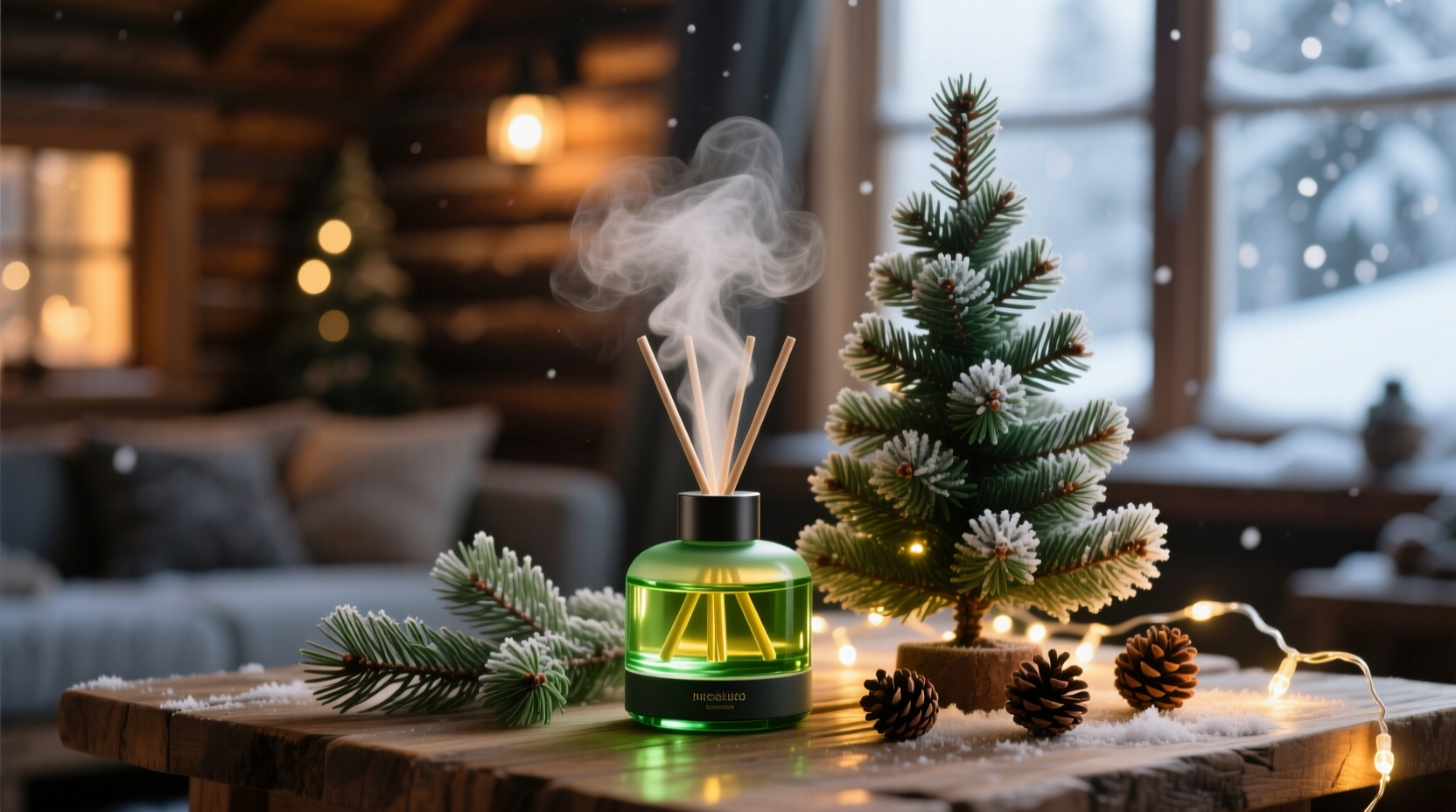
A real Christmas tree—whether Fraser fir, balsam, Douglas fir, or Scotch pine—emits its characteristic fragrance through volatile organic compounds (VOCs) released by its needles, bark, and sap. These compounds include terpenes like alpha-pinene, beta-pinene, limonene, and myrcene. Each species has a unique blend, which explains why some trees smell sharper and citrusy while others are deeper and woodsy.
Alpha-pinene, for example, is responsible for the crisp, clean “pine forest” note. Limonene adds a hint of citrus brightness, often noticed when handling fresh needles. Myrcene contributes an earthy, slightly herbal undertone. Together, these create a complex, evolving scent that changes throughout the day depending on temperature, humidity, and needle moisture.
In contrast, most pine essential oils used in diffusers are distilled primarily from *Pinus sylvestris* (Scotch pine) or sometimes *Abies alba* (silver fir). While they contain high concentrations of alpha- and beta-pinene, they often lack the full spectrum of minor terpenes and esters present in a living tree. Additionally, the distillation process itself alters the chemical balance—heat and pressure can degrade delicate aromatic molecules, resulting in a more one-dimensional scent.
“Essential oils capture the dominant notes of a plant, but rarely the full olfactory fingerprint. A live tree emits hundreds of compounds; an oil might represent just a handful.” — Dr. Lena Torres, Aroma Chemist at the Institute for Sensory Research
Sensory Realism: How Close Do Diffusers Get?
Digital scent technology and modern diffusers have improved dramatically. Ultrasonic and nebulizing diffusers disperse micro-fine mists that carry fragrance evenly through a room. But dispersion is only half the battle—accuracy is the other.
While pine essential oil can evoke the general idea of a Christmas tree, most users report it lacks the “greenness” and resinous depth of a real one. Instead, it often leans medicinal or overly sharp, especially in high concentrations. This is partly due to purity issues—some commercial oils are diluted with carrier oils or synthetic additives that distort the natural scent.
Moreover, a real tree’s aroma isn’t constant. It intensifies when needles are crushed, after watering, or during warm daylight hours. It also mixes with other ambient scents—wood floors, candles, baking spices—creating a dynamic olfactory environment. A diffuser, by comparison, emits a steady, unchanging stream of fragrance, which the brain quickly adapts to through olfactory fatigue.
One way to bridge this gap is layering. Using pine oil alongside complementary scents like cedarwood, orange (for limonene-like brightness), or even a touch of frankincense (to mimic sap) can build a more multidimensional aroma. Some premium fragrance blends already do this, combining essential oils to simulate a forest rather than a single-note pine.
Comparison: Real Tree vs. Pine Oil Diffuser
| Feature | Real Christmas Tree | Pine Essential Oil Diffuser |
|---|---|---|
| Scent Complexity | High – 50+ VOCs interacting dynamically | Moderate – 3–5 dominant terpenes |
| Scent Longevity | 4–6 weeks (with proper care) | As long as oil supply lasts |
| Natural Variation | Changes with time, temperature, handling | Consistent output |
| Allergen Risk | Potential (pollen, mold on sap) | Low (if using pure oil) |
| Environmental Impact | Biodegradable, supports forestry | Depends on sourcing and packaging |
| Sensory Immersion | Full: visual, tactile, aromatic | Aromatic only |
Enhancing the Illusion: Tips for a More Authentic Experience
You don’t need a live tree to enjoy a convincing holiday scent—but optimizing your diffuser setup can make a significant difference. Consider the following strategies to get closer to that fresh-cut tree feeling.
Use a Scent Layering Approach
Relying solely on pine oil limits realism. Combine it with other natural essential oils to build complexity:
- Cedarwood: Adds warmth and woody depth, simulating trunk and branches.
- Orange or Grapefruit: Introduces citrus top notes similar to limonene in fresh needles.
- Fir Needle or Spruce: Closer to true Christmas tree species than generic pine oil.
- Vanilla (in small amounts): Softens sharp edges and evokes cozy indoor memories.
Try a blend ratio of 3 parts pine, 2 parts fir, 1 part orange, and 1 part cedarwood. Adjust based on your preference—some find a drop of clove or cinnamon enhances the festive feel without overpowering.
Simulate Natural Scent Patterns
Instead of running your diffuser continuously, program it to release bursts during key times—morning, evening, or when guests arrive. This mimics the intermittent scent release of a real tree and prevents olfactory burnout.
Incorporate Tactile Cues
Scent doesn’t work in isolation. Pair your diffuser with visual and textural elements: pinecones in a bowl, garlands of faux greenery, or even a sprig of real pine placed nearby. Touching real needles—even briefly—can prime your nose to interpret the diffused scent more accurately.
Mini Case Study: The Apartment Holiday Makeover
Sophie, a graphic designer in Chicago, lives in a small apartment where a real tree isn’t feasible. Last year, she tried a pine essential oil diffuser alone and found it underwhelming—“It smelled like cleaning supplies,” she said. Disappointed, she almost gave up on the idea.
This year, she took a layered approach. She purchased a high-quality silver fir essential oil and blended it with wild orange and cedarwood. She set her diffuser on a timer to run for 30 minutes each morning and evening. She also hung a dried eucalyptus and pinecone wreath by the door and lit a beeswax candle with a hint of balsam.
The result? “It finally felt like Christmas,” she shared. “The scent wasn’t identical to a tree, but it triggered the same warmth and nostalgia. My roommate even commented, ‘Smells like we’re in a cabin.’ That was the goal.”
Sophie’s experience illustrates that while replication may be imperfect, recreation—evoking the feeling of a Christmas tree—is entirely possible with thoughtful design.
Checklist: Maximizing Your Pine Diffuser’s Realism
- Choose a high-quality, 100% pure pine or fir essential oil from a reputable brand.
- Combine with complementary oils (citrus, cedar, spruce) to add complexity.
- Use a nebulizing or ultrasonic diffuser for fine, even mist dispersion.
- Run the diffuser intermittently, not continuously, to avoid scent fatigue.
- Place near airflow (vents, doorways) or mild heat sources for better diffusion.
- Add physical pine elements—pinecones, small branches, or garlands—for multisensory reinforcement.
- Keep the area clean—dust and lingering odors can distort the scent experience.
FAQ: Common Questions About Pine Oils and Christmas Tree Scents
Can pine essential oil fully replace a real Christmas tree’s smell?
No single oil can perfectly replicate the full chemical and sensory complexity of a living tree. However, with blending and environmental enhancements, it can evoke a very close approximation—especially when combined with memories and expectations.
Is pine essential oil safe around pets?
Pine oil can be toxic to cats and some birds due to their sensitive livers. Dogs may tolerate low concentrations, but it’s best to use diffusers in well-ventilated areas and avoid prolonged exposure. Consider pet-safe alternatives like fir or spruce, or opt for non-oil-based fragrance systems if pets are present.
Why does my pine diffuser smell medicinal?
This is common with low-grade or oxidized pine oil. Over time, terpenes break down and develop sharper, camphorous notes. Store oils in dark glass bottles, away from heat and light, and replace them every 12–18 months. Try a different species like balsam fir or Douglas fir for a softer, sweeter profile.
Step-by-Step Guide: Creating a Realistic Christmas Tree Scent at Home
- Step 1: Select Your Base Oil – Choose fir needle, silver fir, or Scotch pine essential oil. Avoid “fragrance oils” labeled as pine unless they specify natural ingredients.
- Step 2: Build a Blend – In a small glass bottle, mix:
- 30 drops fir or pine oil
- 15 drops cedarwood oil
- 10 drops sweet orange oil
- 5 drops vanilla essential oil or extract (optional, for warmth)
- Step 3: Test the Scent – Add 5–6 drops of the blend to your diffuser. Run for 15 minutes and assess. Adjust ratios if too sharp or too sweet.
- Step 4: Set a Schedule – Use a timer to diffuse for 30 minutes in the morning and again in the evening. This preserves oil and maintains scent novelty.
- Step 5: Enhance the Environment – Place pinecones, a small wreath, or a bowl of cinnamon sticks nearby. Open windows briefly each day to reset your nose.
- Step 6: Refresh Weekly – Clean your diffuser weekly to prevent oil buildup, which can alter scent quality.
Conclusion: Capturing More Than Just a Scent
A scent diffuser with pine essential oil won’t perfectly duplicate the aroma of a real Christmas tree—at least not in chemical fidelity. But perfection isn’t always the goal. For many, the holiday spirit isn’t about botanical accuracy; it’s about emotional resonance. And here, pine diffusers can succeed brilliantly when used thoughtfully.
By understanding the limitations of essential oils and working creatively within them—layering scents, engaging multiple senses, and aligning with memory—you can craft an atmosphere that feels authentically festive. Whether you're avoiding allergens, saving space, or simply prefer a low-maintenance option, a well-designed aromatic setup can deliver the warmth, nostalgia, and joy associated with that unmistakable evergreen fragrance.




 浙公网安备
33010002000092号
浙公网安备
33010002000092号 浙B2-20120091-4
Comments
No comments yet. Why don't you start the discussion?