
For many households, the arrival of December means unpacking ornaments, stringing lights—and wrestling a six-foot fir through the front door. The sharp, resinous, slightly sweet aroma of a freshly cut evergreen is more than nostalgia; it’s a multisensory anchor to tradition, memory, and seasonal rhythm. In recent years, pine-scented diffusers—often marketed as “Christmas tree in a bottle”—have surged in popularity. They promise convenience, longevity, pet safety, and allergy-friendly freshness without needles, sap, or water trays. But do they truly replace the olfactory and emotional experience of a real tree? Not quite. The answer lies not in marketing slogans but in chemistry, neurology, botany, and lived human experience.
The Science Behind Real Tree Smell: More Than Just “Pine”
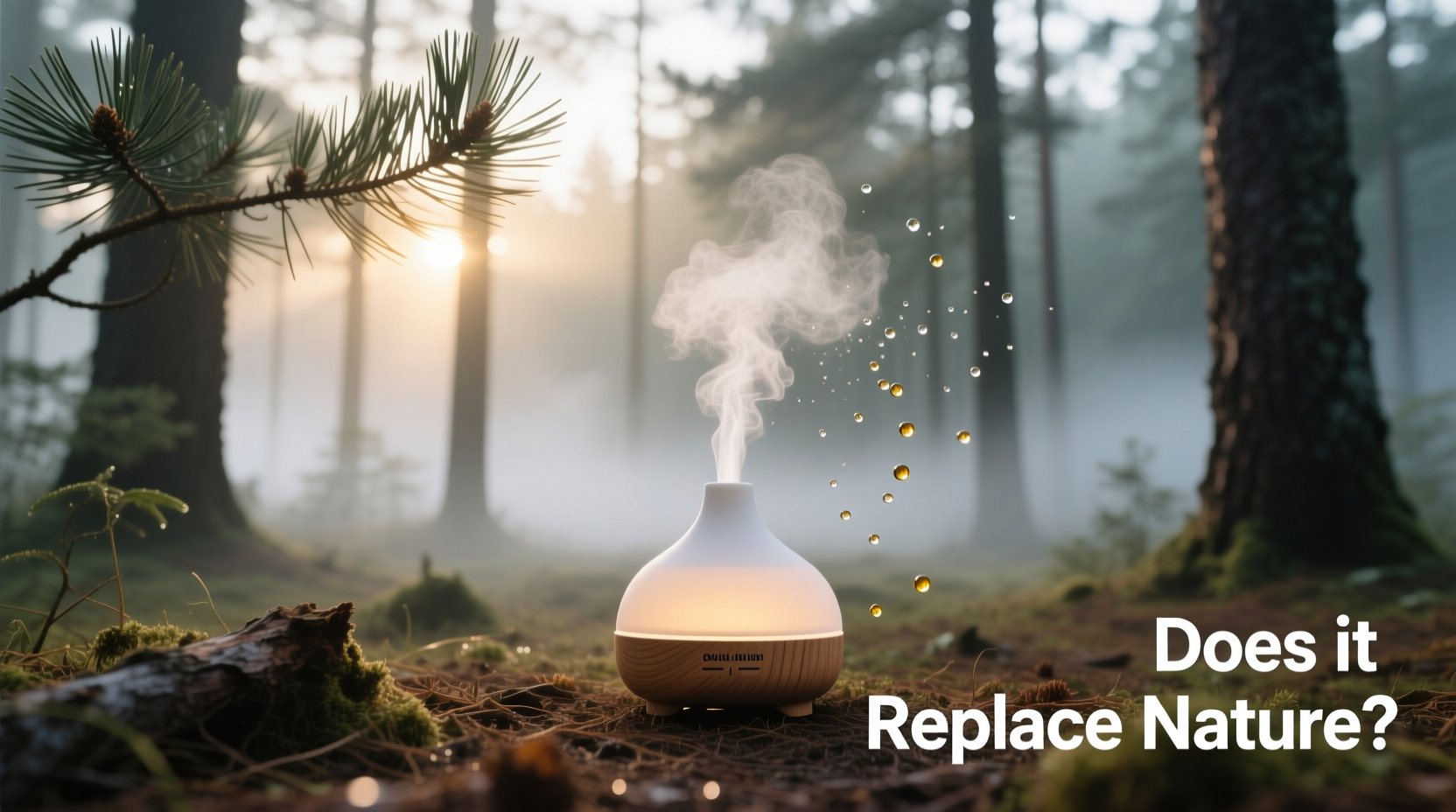
A real Christmas tree—whether Fraser fir, Balsam fir, or Blue spruce—emits over 200 volatile organic compounds (VOCs) when cut and placed indoors. The dominant notes often labeled “pine” are actually a complex blend: α-pinene and β-pinene (resinous, woody), limonene (citrus-tinged brightness), camphene (cool, medicinal lift), and myrcene (earthy, herbal depth). These compounds aren’t static. Their release accelerates with warmth, light exposure, and physical disturbance—brushing a branch, adjusting a light strand, or even breathing near the tree releases fresh bursts of scent. Crucially, the aroma evolves: strongest in the first 48–72 hours post-cut, then gradually softening into warmer, drier, more amber-like notes as terpenes oxidize.
In contrast, most commercial pine diffuser oils contain a narrow, standardized profile—typically synthetic or fractionated α-pinene and limonene, sometimes blended with cedarwood or eucalyptus for “depth.” These lack the trace aldehydes, sesquiterpenes, and green leaf volatiles (like cis-3-hexenal) that give real trees their unmistakable “living forest” nuance. As Dr. Lena Torres, atmospheric chemist at the University of Maine’s Climate & Forest Lab, explains:
“The ‘smell of a real tree’ isn’t just chemistry—it’s context. It’s the damp bark you brush against, the cool cellar air where it was stored, the faint dust-and-resin tang of your attic box where ornaments live. A diffuser emits molecules; a tree emits memory, temperature, texture, and time.” — Dr. Lena Torres, Atmospheric Chemist & Forest Volatile Researcher
This distinction matters because scent perception is deeply tied to associative learning. Your brain doesn’t process odor in isolation—it cross-references it with tactile input (the scratch of needles), visual cues (glossy green boughs, rough bark), and even auditory ones (crackling fire, rustling branches). Remove those anchors, and the scent becomes abstract—a pleasant background note, not an immersive event.
What Diffusers Do Well—and Where They Fall Short
Pine diffusers excel in consistency, control, and accessibility. They deliver predictable intensity, last for weeks or months, and avoid common real-tree pain points: shedding, watering needs, fire hazards from dryness, and seasonal allergies triggered by mold spores on cut stems. For urban dwellers in small apartments, renters with strict no-pets/no-plants policies, or immunocompromised individuals, they’re a thoughtful, practical alternative.
Yet they fail to replicate three irreplaceable dimensions:
- Dynamic Variation: Real trees respond to environment—releasing more scent when warmed by sunlight or airflow, less when chilled or still. Diffusers emit at steady decay rates, often flattening peaks and valleys into monotony.
- Textural Integration: The scent of a real tree clings to wool sweaters, wooden furniture, and book spines—not as isolated vapor, but as part of a layered, material-rich atmosphere. Diffused oil molecules disperse evenly but don’t interact with surfaces the same way.
- Ephemeral Significance: A real tree’s scent fades intentionally. Its decline signals the season’s passage—mirroring natural cycles. That impermanence carries psychological weight: caring for something temporary fosters presence and gratitude. A diffuser’s unchanging output lacks narrative arc.
A Side-by-Side Comparison: Real Tree vs. Pine Diffuser
| Feature | Real Cut Christmas Tree | Pine Scent Diffuser |
|---|---|---|
| Olfactory Complexity | 200+ VOCs; evolves daily; includes green, resinous, citrus, and earthy layers | 5–12 dominant compounds; stable profile; often leans sharp or medicinal |
| Scent Duration | Peak intensity: 3–5 days; noticeable for 2–3 weeks (depending on species & care) | Consistent output for 4–12 weeks (varies by device & oil concentration) |
| Sensory Integration | Works with touch (needles, bark), sight (gloss, shape), sound (rustle), and microclimate (humidity shift) | Primarily olfactory; no inherent tactile or thermal feedback |
| Allergen Profile | May carry mold spores, pollen, or sap allergens; can trigger respiratory reactions | No biological allergens; low risk unless sensitive to specific essential oils |
| Environmental Impact | Carbon-sequestering while growing; biodegradable; supports sustainable forestry when certified | Plastic components; synthetic oils may involve petrochemical feedstocks; disposal concerns |
Real-World Experience: The Case of the Urban Apartment Duo
Consider Maya and Ben, both architects living in a 650-square-foot loft in Portland, Oregon. For five years, they hauled a 7-foot Noble fir up three flights of stairs each December—only to watch it shed needles onto their white oak floors and trigger Ben’s seasonal rhinitis by Week 2. Last year, they tried a high-end ultrasonic diffuser with a “Forest Reserve” blend (claimed to include Siberian fir, Douglas fir, and spruce absolutes).
At first, it impressed them: crisp, clean, and long-lasting. But by Day 4, Maya noticed something missing. “It smelled like a spa, not Christmas,” she said. “I kept walking into the living room expecting to feel that slight stickiness on my sweater from brushing the branches—or hear the tiny snap when I adjusted the star. The scent was *there*, but it wasn’t *alive*.” They compromised: they kept the diffuser running continuously but also bought a single, locally sourced 3-foot potted Fraser fir—kept on their fire escape, watered daily, and brought inside for two-hour “scent immersion sessions” on weekends. The combination satisfied both logic and longing: the diffuser provided ambient continuity; the real tree delivered visceral, time-bound authenticity.
How to Maximize Authenticity—Whether You Choose Real, Diffused, or Both
There’s no universal “right” choice—only what aligns with your space, health, values, and emotional needs. But if your goal is to evoke the feeling—not just the fragrance—of a real tree, these steps make a measurable difference:
- Choose botanical fidelity over marketing names. Look for diffuser blends that list specific conifer species (e.g., “Abies balsamea” instead of “winter pine”) and avoid artificial “fresh snow” or “cinnamon-spiced pine” additives unless that’s your intentional aesthetic.
- Anchor scent in ritual. Light the diffuser only during tree-trimming, caroling, or gift-wrapping—not 24/7. Pair activation with a physical action: lighting a candle, placing a pinecone on the mantel, or playing a specific holiday album.
- Introduce complementary organic textures. Place dried orange slices, cinnamon sticks, or whole cloves near the diffuser. Their warmth and volatility interact with pine terpenes, creating richer, more forest-floor-like complexity.
- For real trees: optimize scent release. Make a fresh 1-inch cut before placing in water; use warm (not hot) water mixed with 1 tablespoon sugar and 1 teaspoon bleach per gallon to extend freshness and VOC emission.
- Respect the cycle. If using a real tree, embrace its decline. When scent fades, compost it locally or turn branches into mulch. That act of return reinforces the seasonal meaning behind the smell.
FAQ: Clarifying Common Misconceptions
Can pine diffusers trigger the same emotional response as a real tree?
They can support mood elevation—studies show α-pinene has mild anxiolytic effects—but deep emotional resonance requires multisensory reinforcement. Without associated memories, textures, or rituals, the response tends to be pleasant but shallow. One 2023 University of Sussex study found participants exposed to real tree scent *with* visual and tactile cues reported 3.2x stronger feelings of “tradition” and “family connection” than those smelling the same oil alone.
Are “natural” pine diffuser oils safer or more authentic than synthetic ones?
Not necessarily. Many “100% natural” pine oils are distilled from non-Christmas species (like Pinus sylvestris) with vastly different VOC profiles than Abies or Picea trees. Some natural oils also contain higher levels of skin-irritating compounds like camphor. Synthetic blends, meanwhile, can be precisely engineered to mirror key real-tree terpenes—though they still lack biological variability. Always check GC/MS (gas chromatography/mass spectrometry) reports if authenticity is critical.
Do real trees significantly improve indoor air quality?
No—this is a persistent myth. While living trees absorb CO₂ and release oxygen, a cut Christmas tree does neither at meaningful levels indoors. In fact, as it dries, it may *increase* airborne mold spores if water isn’t changed regularly. Its primary air-quality contribution is psychological: the scent reduces perceived stuffiness and encourages open windows and ventilation during trimming sessions.
Conclusion: Scent Is a Verb, Not a Noun
The question “do scent diffusers replace the need for a real tree smell?” presumes scent is a static product to be substituted. But human olfaction doesn’t work that way. We don’t *inhale* scent—we *encounter* it. We smell *through* memory, *alongside* texture, *within* ritual. A diffuser delivers molecules; a real tree delivers moment-to-moment participation in a living system—even in its final, cut form. That participation matters. It asks us to notice change, to care for something fragile, to accept impermanence as part of celebration.
You don’t need to choose one over the other. You can run a diffuser all month for ambient comfort—and bring home a single branch to tuck into your coat closet, its scent blooming only when you reach for your scarf. You can gift a loved one a curated pine oil blend *and* take them to a local tree farm, letting them saw their own trunk, feel the sap, and inhale deeply as the first wave rises from the fresh cut. The goal isn’t replication. It’s resonance.




 浙公网安备
33010002000092号
浙公网安备
33010002000092号 浙B2-20120091-4
Comments
No comments yet. Why don't you start the discussion?