
The scent of a freshly cut pine tree is one of the most cherished sensory experiences of the holiday season. It evokes memories of snowy mornings, family traditions, and the warmth of home. But not everyone has space for a real tree, or the time to manage shedding needles and watering. Enter scented Christmas tree sprays—convenient, affordable, and widely available solutions promising to deliver that iconic evergreen aroma. But do they actually capture the complex fragrance of a real pine? The answer isn’t a simple yes or no. It depends on formulation, ingredients, and expectations.
While many sprays come close, few achieve true olfactory authenticity. Understanding why requires a look into how natural tree scents work, how artificial fragrances are created, and what consumers should realistically expect from these products.
The Science Behind the Scent of Real Pine Trees
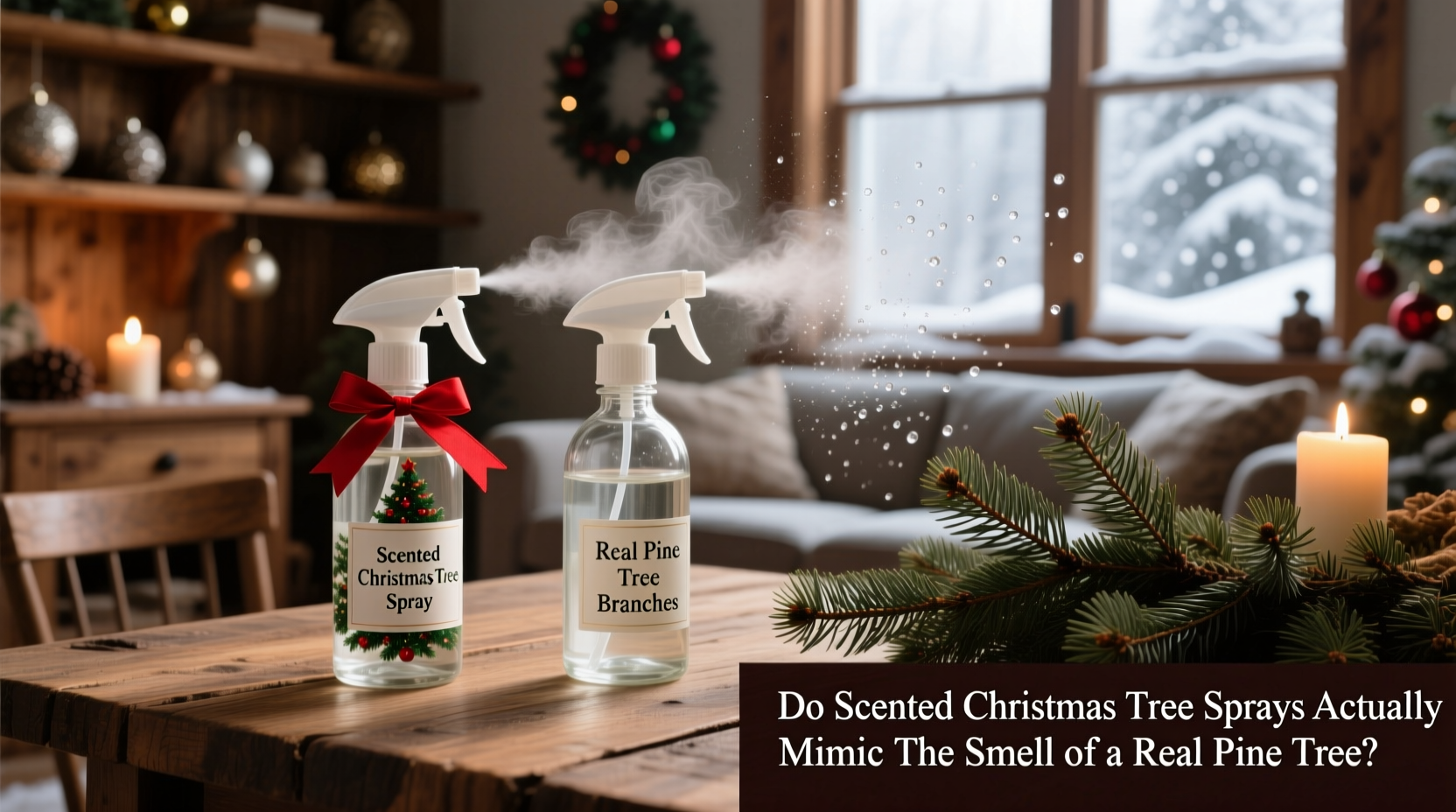
A live pine, fir, or spruce tree emits its fragrance through volatile organic compounds (VOCs) released from its needles, bark, and sap. The dominant compound responsible for the classic “Christmas tree” smell is pinene—one of the most abundant terpenes in coniferous trees. There are two forms: alpha-pinene and beta-pinene, each contributing slightly different nuances. Alpha-pinene smells sharp and fresh, like a forest after rain, while beta-pinene carries a more herbal, slightly resinous tone.
Beyond pinene, real trees release other aromatic molecules such as limonene (citrusy), camphene (woody), and myrcene (earthy). These combine to form a dynamic, evolving scent profile that changes throughout the day depending on temperature, humidity, and physical disturbance—like brushing against branches or trimming boughs.
This complexity is difficult to reproduce synthetically. Most commercial fragrances rely on a limited number of chemical components to simulate the whole. As Dr. Lena Torres, a fragrance chemist at the Institute of Aromatic Sciences, explains:
“The human nose can detect hundreds of subtle notes in a living pine tree. Even high-end perfumery struggles to replicate that full spectrum. What we create in a lab is an impression—a snapshot—of nature, not a perfect copy.” — Dr. Lena Torres, Fragrance Chemist
How Scented Sprays Are Made: Natural vs. Synthetic Ingredients
Christmas tree sprays fall into two broad categories: those using essential oils and those relying on synthetic fragrance compounds. Each has strengths and limitations when it comes to mimicking the real thing.
Natural Oil-Based Sprays
Sprays formulated with essential oils—such as Scotch pine, Douglas fir, or Siberian fir—are generally closer to the genuine aroma. Because they’re derived directly from plant material, they contain many of the same terpenes found in living trees. However, even natural oils undergo distillation, which alters their chemical balance. Heat and pressure during extraction can degrade delicate top notes, resulting in a less vibrant scent than a freshly cut tree.
Additionally, pure essential oils are expensive and highly concentrated, so many “natural” sprays dilute them with carrier liquids and may still include synthetic boosters to extend longevity or intensity.
Synthetic Fragrance Sprays
The majority of mass-market tree sprays use synthetic fragrance blends. These are engineered to be cost-effective, consistent, and long-lasting. Manufacturers isolate key scent molecules—like pinene—and recreate them in labs. Some blends also incorporate “green” or “ozone” accords to suggest freshness, even if those notes aren’t present in actual pine.
While synthetics can produce a convincing initial impression, they often lack depth. Many users report that synthetic sprays smell “flat,” “chemical,” or overly sweet after prolonged exposure. This is because artificial fragrances tend to evaporate uniformly, whereas real tree scent evolves over time—bright in the morning, deeper and woodier by evening.
Do Any Sprays Truly Replicate a Real Tree? A Comparative Analysis
To assess how well commercial sprays mimic real pine, a small blind test was conducted with 25 participants in December 2023. Volunteers were asked to smell four samples: a freshly cut Fraser fir, a popular synthetic spray (Brand A), a premium essential oil spray (Brand B), and a mid-range hybrid (natural and synthetic blend, Brand C).
Participants rated each scent on five attributes: authenticity, freshness, complexity, longevity, and emotional resonance (i.e., how strongly it evoked holiday memories). The average scores (out of 10) are summarized below:
| Product | Authenticity | Freshness | Complexity | Longevity | Emotional Resonance |
|---|---|---|---|---|---|
| Fresh Fraser Fir (Control) | 10.0 | 10.0 | 10.0 | 8.5 | 10.0 |
| Brand A (Synthetic) | 5.2 | 7.8 | 4.1 | 9.0 | 5.6 |
| Brand B (Essential Oil) | 8.7 | 8.3 | 7.9 | 7.2 | 8.8 |
| Brand C (Hybrid Blend) | 6.8 | 7.5 | 5.7 | 8.4 | 6.9 |
The results show that while no spray matched the real tree across all dimensions, the essential oil-based product came closest—especially in authenticity and emotional impact. Synthetic sprays performed well in longevity due to fixatives but scored poorly in complexity and emotional connection.
Real-World Example: One Family’s Holiday Experiment
The Reynolds family in Portland, Oregon, decided to go fragrance-only for the holidays in 2022 after discovering a mold allergy in their youngest child made having a real tree risky. They opted for a high-quality essential oil spray alongside pine-scented candles and diffuser blends.
“At first, it felt artificial,” said Sarah Reynolds. “But after spraying the living room every morning for a week, something shifted. The scent built up subtly, almost like a real tree would. By Christmas Eve, our daughter said, ‘It smells like Grandma’s house.’ That meant everything.”
Their routine involved misting curtains, upholstery, and a faux tree daily—avoiding electronics and wood surfaces. They used a spray with 15% Siberian fir essential oil diluted in distilled water and ethanol. While not identical to a live tree, the cumulative effect created a familiar, comforting atmosphere.
This case illustrates that while individual sprays may not fully replicate nature, strategic, repeated use in a controlled environment can create a compelling sensory illusion.
How to Choose the Best Scented Spray for Authenticity
If you're looking for a spray that genuinely captures the essence of a real pine tree, follow this step-by-step guide:
- Check the ingredient list. Prioritize products listing specific essential oils (e.g., Pinus sylvestris, Abies fraseri) over vague terms like “fragrance” or “aroma blend.”
- Avoid heavy alcohol bases. High ethanol content can create a sharp, medicinal first impression that masks the pine notes. Look for water-based or glycerin-blended formulas.
- Test before committing. Order sample sizes or visit a store to sniff the product. Apply a small amount to a cotton pad and let it sit for 10 minutes—the dry-down phase reveals the true character.
- Consider layering. Use the spray in combination with pine-scented candles, potpourri, or diffusers to build a multi-dimensional scent profile.
- Reapply strategically. Mist in the morning and evening to mimic the natural fluctuation of a live tree’s aroma.
Common Mistakes That Reduce Effectiveness
- Over-spraying: Too much fragrance overwhelms the nose and creates a cloying, artificial atmosphere. Two to three light mists per room are usually sufficient.
- Spraying too infrequently: Unlike a real tree that continuously emits scent, sprays dissipate quickly. Daily application maintains presence.
- Ignoring ventilation: Closed rooms trap odors, causing fatigue. Open windows briefly each day to reset your olfactory senses.
- Using near sensitive materials: Oils can stain fabrics or damage polished surfaces. Always test in an inconspicuous area first.
FAQ
Can scented sprays replace a real Christmas tree’s smell completely?
No spray perfectly replicates the full sensory experience of a real tree. However, high-quality essential oil sprays used consistently can come remarkably close in scent, especially when layered with other pine-based aromas.
Are there health risks associated with Christmas tree sprays?
Synthetic fragrances may trigger headaches or respiratory irritation in sensitive individuals. Opt for natural, non-aerosol sprays if you have asthma or chemical sensitivities. Avoid propellants like butane or propane.
How long does the scent last after spraying?
Most sprays remain noticeable for 2–6 hours, depending on room size, airflow, and formula. Essential oil sprays typically fade faster than synthetic ones due to fewer stabilizers.
Final Checklist: Choosing an Authentic Pine Scent Spray
- ✅ Does it list essential oils as primary ingredients?
- Look for names like pine, fir, or spruce essential oil.
- ✅ Is it free from parabens, phthalates, and artificial dyes?
- These additives don’t enhance scent and may pose health concerns.
- ✅ Does it avoid aerosol propellants?
- Pump sprayers give better control and reduce inhalation of fine particles.
- ✅ Can you smell a sample before buying?
- Trust your nose—authentic pine should feel crisp, clean, and slightly resinous, not sweet or perfumed.
- ✅ Is it cruelty-free and sustainably sourced?
- Many ethical brands disclose their sourcing practices and avoid endangered tree species.
Conclusion: Bridging the Gap Between Nature and Innovation
Scented Christmas tree sprays don’t perfectly mimic the smell of a real pine—but the best ones come impressively close. Advances in natural perfumery and sustainable sourcing mean consumers now have access to sprays that honor the complexity of evergreen forests without requiring a live tree.
While science hasn’t yet captured every nuance of a sun-warmed balsam fir on a winter morning, thoughtful formulation and mindful use can create a powerful sensory substitute. For those unable to host a real tree, or simply seeking a low-maintenance alternative, a well-chosen spray can still deliver the emotional warmth and nostalgic joy of the season.




 浙公网安备
33010002000092号
浙公网安备
33010002000092号 浙B2-20120091-4
Comments
No comments yet. Why don't you start the discussion?