
Sleep is a cornerstone of health, influencing everything from cognitive function to immune resilience. As awareness grows, so does the demand for tools that monitor sleep quality. In recent years, both smartphone-based sleep tracking apps and wearable devices have surged in popularity. While both promise insights into sleep duration, stages, and disturbances, their accuracy varies significantly. Understanding these differences is crucial for anyone relying on sleep data to improve rest and overall well-being.
Unlike clinical sleep studies conducted in labs using polysomnography (PSG)—the gold standard—consumer-grade tools use indirect methods to estimate sleep patterns. The core question remains: can a phone app lying on your nightstand deliver data as trustworthy as a wrist-worn device equipped with advanced sensors? The answer depends on the technology used, how data is collected, and the intended purpose of the tracking.
How Sleep Tracking Works: The Basics
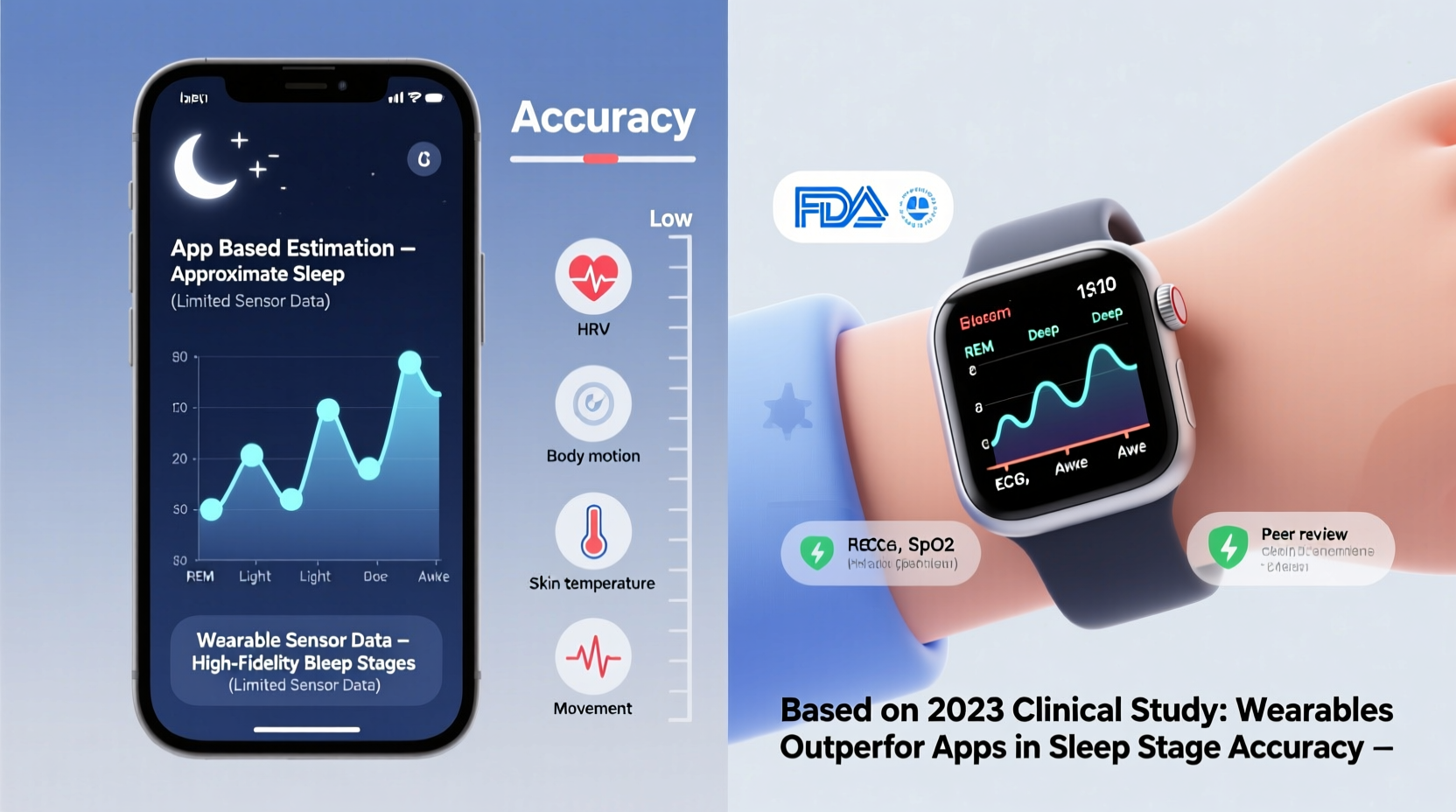
Sleep tracking relies on detecting movement, sound, and physiological signals to infer when you fall asleep, wake up, and transition between sleep stages such as light, deep, and REM sleep. However, consumer devices don’t measure brain activity directly like PSG equipment. Instead, they use proxies:
- Accelerometers: Detect body movement to estimate sleep vs. wake states.
- Microphones: Record ambient noise and snoring patterns (common in apps).
- Heart rate sensors: Found in wearables, used to detect changes associated with sleep cycles.
- SpO2 sensors: Measure blood oxygen levels, useful for spotting potential sleep apnea events.
Sleep tracking apps typically rely on your phone’s microphone and accelerometer. Placed on the mattress or bedside table, they analyze vibrations and sounds to guess when you’re asleep. Wearables, on the other hand, use optical heart rate monitors and motion sensors worn directly on the body, offering more consistent contact and richer biometric input.
Accuracy Comparison: Apps vs. Wearables
Multiple studies have evaluated the reliability of consumer sleep trackers against PSG. The consensus is clear: while neither matches clinical precision, wearables consistently outperform standalone apps in measuring total sleep time and sleep stages.
A 2020 review published in *Sleep Medicine Reviews* analyzed 33 studies comparing consumer devices to PSG. It found that wrist-worn trackers like Fitbit, Garmin, and Apple Watch demonstrated moderate-to-high agreement in detecting sleep onset and duration, particularly in healthy adults. In contrast, smartphone apps showed greater variability due to inconsistent sensor placement and environmental interference.
The primary weakness of phone-based apps lies in their reliance on motion detection through the mattress. If you share a bed, your partner’s movements may be misinterpreted as your own. Similarly, lying still while awake—such as reading in bed—can be falsely recorded as sleep. Wearables, being attached to the body, are less prone to such contextual errors.
“While no consumer device replaces a sleep lab, wearables offer clinically meaningful approximations—especially for tracking trends over time.” — Dr. Rebecca Robbins, Sleep Scientist, Harvard Medical School
Detailed Breakdown: Key Metrics Compared
To understand where each technology excels or falls short, let’s examine performance across four critical metrics:
| Metric | Sleep Tracking Apps | Wearable Devices |
|---|---|---|
| Sleep Onset Detection | Moderate; affected by bed sharing and non-sleep stillness | High; uses heart rate variability and movement trends |
| Total Sleep Time | Fair; often overestimates due to lack of biometrics | Good; correlates closely with self-reported sleep logs |
| Sleep Stage Estimation | Poor; based on movement/sound only, no physiological data | Moderate; uses HRV and actigraphy, though REM/deep split is approximate |
| Disturbance & Snoring Detection | Strong; microphone captures audio events effectively | Limited; most wearables lack microphones for sound analysis |
| Consistency Across Nights | Low; sensitive to phone placement and environment | High; consistent skin contact ensures stable readings |
This comparison reveals a trade-off: apps excel at capturing environmental factors like snoring or room noise, while wearables provide superior insight into physiological patterns. Neither offers perfect stage-level accuracy, but wearables are more reliable for longitudinal tracking of sleep efficiency and consistency.
Real-World Example: Sarah’s Sleep Journey
Sarah, a 38-year-old project manager, struggled with fatigue despite sleeping seven hours nightly. She first tried a popular free sleep app that used her phone’s microphone and claimed she was getting adequate deep sleep. Skeptical, she borrowed a friend’s fitness tracker for a week. The wearable revealed she spent only 15% of her sleep in deep stages—well below the recommended 18–22%—and detected frequent nighttime awakenings not captured by the app.
Armed with this more detailed data, Sarah consulted a sleep specialist. Further evaluation uncovered mild obstructive sleep apnea. With treatment, her deep sleep improved, and daytime energy returned. Her experience underscores a key limitation of apps: without biometric validation, users may receive reassuring but misleading feedback.
When Accuracy Matters: Clinical vs. Lifestyle Use
The importance of accuracy depends on your goals. For general wellness tracking—like improving bedtime routines or reducing screen time before bed—both apps and wearables can be helpful. They raise awareness and encourage healthier habits. However, if you suspect a sleep disorder such as insomnia, sleep apnea, or restless leg syndrome, consumer tools should not replace medical diagnosis.
Wearables have begun bridging this gap. Some FDA-cleared devices, like the Oura Ring and certain Fitbit models, are being used in clinical research and telehealth programs to monitor sleep trends in patients with chronic conditions. These devices undergo rigorous validation and offer higher sensor fidelity than typical smartphone apps.
In contrast, most sleep apps are developed with minimal regulatory oversight. Their algorithms are often proprietary and untested in diverse populations. One study found that several top-rated apps overestimated sleep duration by up to 60 minutes per night compared to PSG—a significant margin for someone managing shift work or recovery from illness.
Step-by-Step Guide: Choosing the Right Tool for Your Needs
Selecting between a sleep app and a wearable should be based on your specific objectives. Follow this decision framework:
- Define your goal: Are you exploring general sleep patterns, addressing fatigue, or investigating a suspected disorder?
- Evaluate your budget: Wearables range from $100–$300+, while many apps are free or low-cost.
- Assess comfort preferences: Do you mind wearing a device to bed? If not, a wearable is likely more accurate.
- Check features: Need snore recording? An app may suffice. Want heart rate trends or SpO2? Choose a wearable.
- Consider long-term use: Wearables integrate with fitness data and provide trend analysis over months, making them ideal for sustained tracking.
- Validate when necessary: If data suggests poor sleep quality or disruptions, consult a healthcare provider regardless of device type.
This structured approach ensures you invest time and money wisely, avoiding frustration from unreliable data.
Expert Recommendations and Best Practices
Sleep specialists emphasize that consistency matters more than precision when using consumer trackers. “Even if a device isn’t perfectly accurate, seeing the same pattern night after night—like frequent awakenings or late bedtimes—can reveal real issues,” says Dr. Michael Breus, a clinical psychologist specializing in sleep.
To maximize the value of any sleep tracker:
- Use it consistently for at least two weeks to establish a baseline.
- Pair data with a sleep diary noting caffeine, stress, or alcohol intake.
- Avoid obsessing over nightly fluctuations; focus on weekly averages.
- Re-calibrate expectations: natural variation in sleep stages is normal.
“The best sleep tracker is one you use reliably—and one that helps you make better choices, not one that stresses you out.” — Dr. Natalie Dautovich, National Sleep Foundation Envoy
FAQ
Can sleep apps detect sleep apnea?
No consumer app can diagnose sleep apnea. Some apps may detect loud snoring or breathing interruptions, which could prompt further investigation. However, only a clinical sleep study can confirm apnea. Certain wearables with SpO2 sensors can flag potential episodes and are increasingly used as screening tools, but they are not diagnostic.
Are expensive wearables more accurate?
Generally, yes. Higher-end devices like the Oura Ring, Whoop Strap, or Apple Watch Series 9 use advanced sensors and validated algorithms. They also undergo more rigorous testing. However, even premium wearables have limitations in distinguishing REM from light sleep. Price improves consistency and feature depth, but not perfection.
Do I need a wearable if I already use a sleep app?
If you're satisfied with general insights and don’t experience symptoms like daytime fatigue or loud snoring, an app may be sufficient. But if you want actionable health data, especially related to heart rate, recovery, or sleep quality trends, upgrading to a wearable will provide more reliable and comprehensive information.
Final Thoughts: Data Quality Shapes Health Outcomes
Sleep tracking has democratized access to personal health insights, empowering millions to take control of their rest. However, not all tools are created equal. While smartphone apps offer convenience and unique features like audio recording, they lag behind wearables in accuracy, especially for critical metrics like sleep staging and duration.
Wearables, despite their cost and the need to wear them nightly, deliver more consistent, physiologically grounded data. For individuals serious about understanding their sleep health—particularly those with symptoms or chronic conditions—wearables are the superior choice.
Ultimately, the best tool is one that fits seamlessly into your routine and provides meaningful, trustworthy feedback. Whether you start with an app or invest in a wearable, remember that data is only valuable when it leads to informed action: earlier bedtimes, reduced stress, or timely medical consultation.




 浙公网安备
33010002000092号
浙公网安备
33010002000092号 浙B2-20120091-4
Comments
No comments yet. Why don't you start the discussion?