
In an era where indoor air quality significantly impacts health, sleep, and productivity, smart air purifiers have become common fixtures in homes. Marketed as intelligent devices that “adapt” to your environment, many consumers assume these units continuously monitor and respond to airborne pollutants. But how accurate is that claim? Do smart air purifiers actually detect pollution in real time, or are they simply running on pre-set schedules with minimal responsiveness? The answer isn’t straightforward — it depends heavily on the model, sensors used, and software intelligence behind the device.
While some high-end models offer robust real-time detection using advanced sensors, others rely more on automation than actual environmental awareness. Understanding the difference can help you make a smarter purchase and ensure your air purifier delivers genuine value rather than just digital convenience.
How Smart Air Purifiers Are Supposed to Work
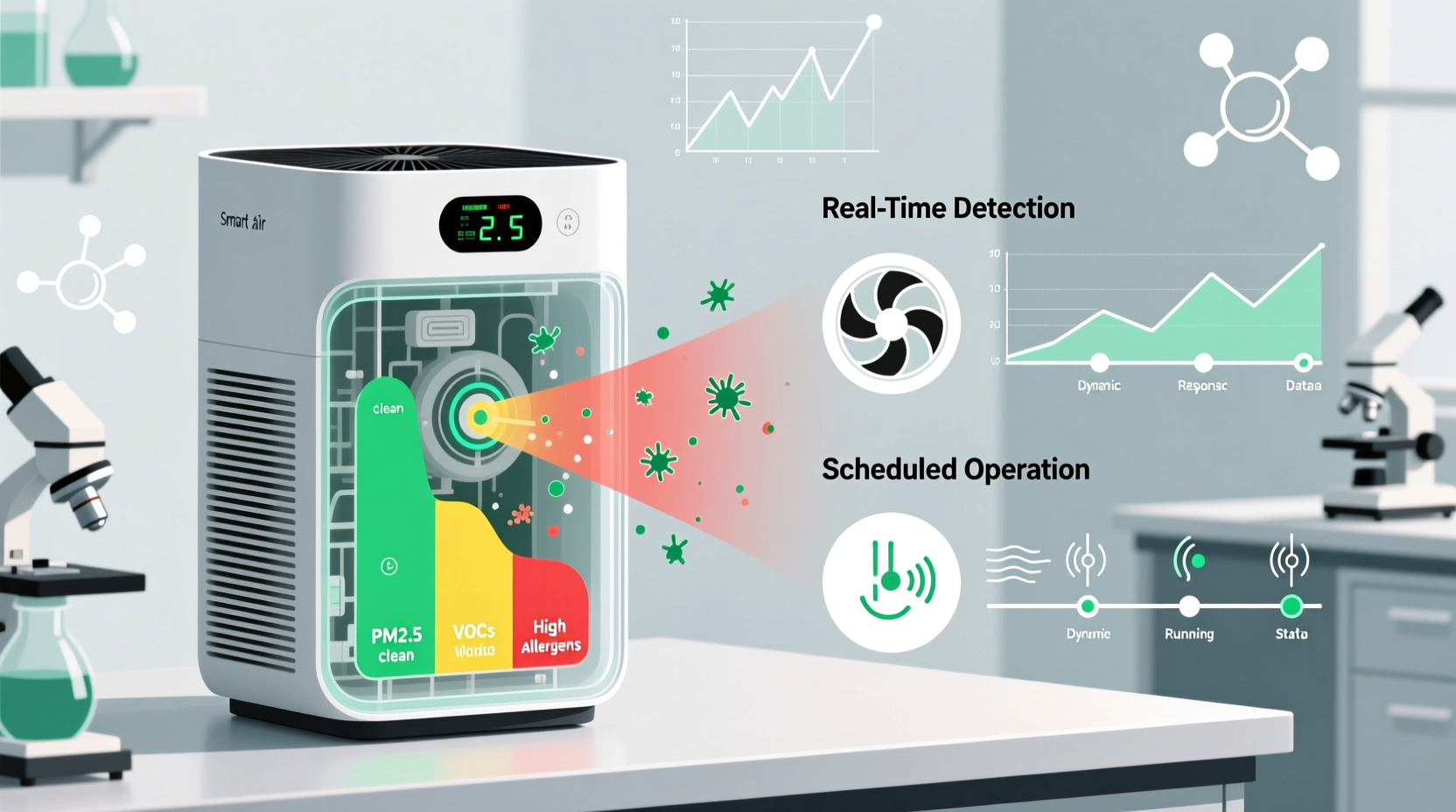
The promise of a “smart” air purifier goes beyond turning on at 7 p.m. every day. True intelligence involves sensing changes in air quality and adjusting fan speed, filtration cycles, and alerts accordingly. This requires three core components:
- Environmental Sensors: Devices must include hardware capable of detecting particulate matter (PM2.5), volatile organic compounds (VOCs), humidity, and sometimes carbon dioxide (CO₂) or formaldehyde.
- Data Processing: Raw sensor data must be interpreted by onboard processors or cloud-based algorithms to determine air quality levels.
- Adaptive Response: Based on analysis, the purifier should automatically increase fan speed during pollution spikes or reduce noise when air is clean.
When all three elements function well, the result is a responsive system that maintains optimal indoor air without user intervention. However, not all manufacturers prioritize sensor accuracy over marketing appeal.
Sensor Technology: What’s Inside Your Purifier?
To assess whether a smart air purifier genuinely detects pollution, you need to understand the types of sensors used. Not all sensors are created equal, and misleading terminology like “air quality sensor” often masks limited capabilities.
Particulate Matter (PM2.5) Sensors
These use laser scattering technology to count microscopic particles in the air. A laser beam passes through an air chamber; when particles cross the beam, they scatter light, which a photodetector measures. This method is relatively accurate and widely used in reputable brands like Dyson, Coway, and Blueair.
VOC and Gas Sensors
Volatile Organic Compounds — emitted from cleaning products, paints, furniture, and cooking — are harder to detect. Many budget purifiers use low-cost metal oxide (MOX) sensors, which react broadly to gases but lack specificity and degrade over time. Higher-end models may use electrochemical or photoionization detectors, offering better precision and longevity.
Humidity and Temperature Sensors
While not directly related to pollution, these sensors help contextualize readings. High humidity can promote mold growth, affecting perceived air quality. Some purifiers integrate this data to adjust operation modes.
Common Sensor Limitations
- Calibration Drift: Sensors can lose accuracy after months of use, especially MOX types.
- Placement Sensitivity: If the intake is blocked or located near a wall, readings may not reflect room-wide conditions.
- Limited Range: Most consumer-grade sensors detect only a subset of pollutants (e.g., ignoring allergens like pollen or pet dander).
“Many so-called ‘smart’ purifiers have sensors that serve more as marketing tools than functional components. Real detection requires calibrated, multi-sensor arrays.” — Dr. Lena Patel, Environmental Health Researcher at MIT
Real Detection vs. Scheduled Operation: A Comparative Breakdown
To clarify the distinction between reactive and scheduled purifiers, consider the following comparison:
| Feature | Smart Detection Model | Schedule-Based Model |
|---|---|---|
| Pollution Sensing | Yes – uses PM2.5, VOC, and humidity sensors | No – operates independently of air conditions |
| Automatic Mode | Adjusts fan speed based on real-time data | Fan speed fixed per schedule |
| User Alerts | Sends phone notifications when AQI exceeds safe levels | Rarely includes air quality alerts |
| Energy Efficiency | High – runs only when needed | Lower – runs regardless of necessity |
| Price Range | $200–$700 | $80–$200 |
| App Integration | Detailed air quality graphs and historical trends | Basic on/off scheduling |
This table illustrates a critical trade-off: lower-cost models emphasize convenience through timers and remote control, while premium models invest in actual environmental feedback loops. If your primary goal is energy savings and quiet nighttime operation, scheduling suffices. But if you’re concerned about asthma triggers, wildfire smoke, or chemical off-gassing, real detection becomes essential.
Case Study: Wildfire Season in California Homes
During the 2023 wildfire season, several households in Sacramento tested two types of air purifiers side by side: one with advanced particle sensing (Dyson Pure Cool TP04), and another budget model relying solely on timer settings (generic brand X).
The Dyson unit detected rising PM2.5 levels within 12 minutes of smoke entering the home, automatically switching to max fan speed and sending a mobile alert. Indoor particulate levels were reduced by 78% within 45 minutes.
In contrast, the scheduled purifier ran only from 8 p.m. to 8 a.m., missing the afternoon smoke surge entirely. Residents reported throat irritation and worsened allergy symptoms despite having a functioning device.
This example highlights a crucial point: during unpredictable pollution events, scheduled operation offers little protection. Only sensor-driven models provide timely intervention.
How to Verify If Your Purifier Actually Detects Pollution
Not all manufacturers are transparent about their sensor capabilities. Here’s a step-by-step guide to evaluating whether your smart air purifier is truly responsive:
- Check the Specifications: Look for explicit mentions of PM2.5 laser sensors and VOC detection. Avoid vague terms like “air quality monitoring” without technical details.
- Observe Behavior During Pollution Events: Light a candle or cook bacon (temporarily). Watch if the purifier increases fan speed within minutes.
- Review the App Data: Does the companion app show fluctuating AQI (Air Quality Index) values? Static or delayed graphs suggest poor sensor integration.
- Test Alert Functionality: Trigger a known pollutant and confirm whether push notifications fire promptly.
- Compare Manual vs. Auto Mode: Run the purifier in manual low mode, then introduce dust. If it doesn’t auto-adjust, the sensor either isn’t working or isn’t linked to motor control.
What to Look for When Buying a Truly Smart Air Purifier
If real-time detection matters to you, focus on these key features before purchasing:
- Laser Particle Sensor: Ensures accurate PM2.5 measurement.
- Dedicated VOC Sensor: Prefer electrochemical over metal oxide.
- Auto Mode with Hysteresis Logic: Prevents rapid cycling between speeds.
- Transparent Calibration Process: Some models allow recalibration or self-diagnostics.
- Third-Party Certifications: AHAM Verifide® and CARB compliance add credibility.
Brands like IQAir, Winix with PlasmaWave, Levoit Core 400S, and Blueair Blue Pure 311i Max are known for reliable sensor performance and meaningful automation. Conversely, many Amazon Basics or no-name “WiFi-enabled” purifiers offer little more than app-controlled switches with placebo-grade sensors.
Checklist: Choosing a Purifier That Actually Detects Pollution
- ✅ Confirmed laser-based PM2.5 sensor (not inferred from filter life)
- ✅ Real-time VOC detection with identifiable sensor type
- ✅ Auto mode visibly responds to sudden air changes
- ✅ Companion app displays live AQI and historical trends
- ✅ Independent reviews confirm sensor reliability
- ✅ Device supports firmware updates for sensor calibration
Frequently Asked Questions
Can smart air purifiers detect viruses or bacteria?
No consumer-grade air purifier can detect individual viruses or bacteria in real time. They capture such particles via HEPA filters, but sensors typically only measure particulates (PM2.5), VOCs, or humidity. Pathogen removal is mechanical, not sensory.
Why does my air purifier show “good” air quality even when I’m cooking?
This may indicate a slow sensor response, poor placement (e.g., far from kitchen), or reliance on outdated data. Some VOC sensors take up to 10 minutes to register strong odors. Consider relocating the unit closer to pollution sources or upgrading to a faster-response model.
Do I need WiFi for pollution detection?
No. WiFi enables remote monitoring and alerts but isn’t required for local sensing. Many non-connected purifiers have excellent built-in sensors. However, apps enhance visibility into long-term air trends and historical exposure.
Conclusion: Intelligence Matters — Choose Wisely
Smart air purifiers vary dramatically in their ability to detect pollution. While some operate like simple fans with timers, others leverage precise sensors and adaptive logic to maintain healthier indoor environments. The difference lies not in connectivity, but in the presence of accurate, responsive detection systems.
If you live in areas prone to wildfires, suffer from allergies, or want true peace of mind, prioritize models with proven sensor technology over flashy app features. Real intelligence means reacting to the air you breathe — not just following a clock.




 浙公网安备
33010002000092号
浙公网安备
33010002000092号 浙B2-20120091-4
Comments
No comments yet. Why don't you start the discussion?