
As holiday traditions blend with modern technology, smart Christmas lights have become a popular way to add flair, automation, and color to seasonal décor. These Wi-Fi-enabled string lights can be controlled via smartphone apps, synced to music, or programmed with festive schedules. But as convenience rises, so do concerns: could something as seemingly harmless as twinkling holiday lights expose your home network to hackers?
The short answer is yes — under certain conditions, smart Christmas lights can increase your home’s vulnerability to cyber threats. While they are not inherently dangerous, their integration into your network creates an additional access point that, if unsecured, may be exploited by malicious actors. Understanding how this risk unfolds — and how to mitigate it — is essential for anyone using smart home devices during the holidays.
How Smart Christmas Lights Work — And Why That Matters
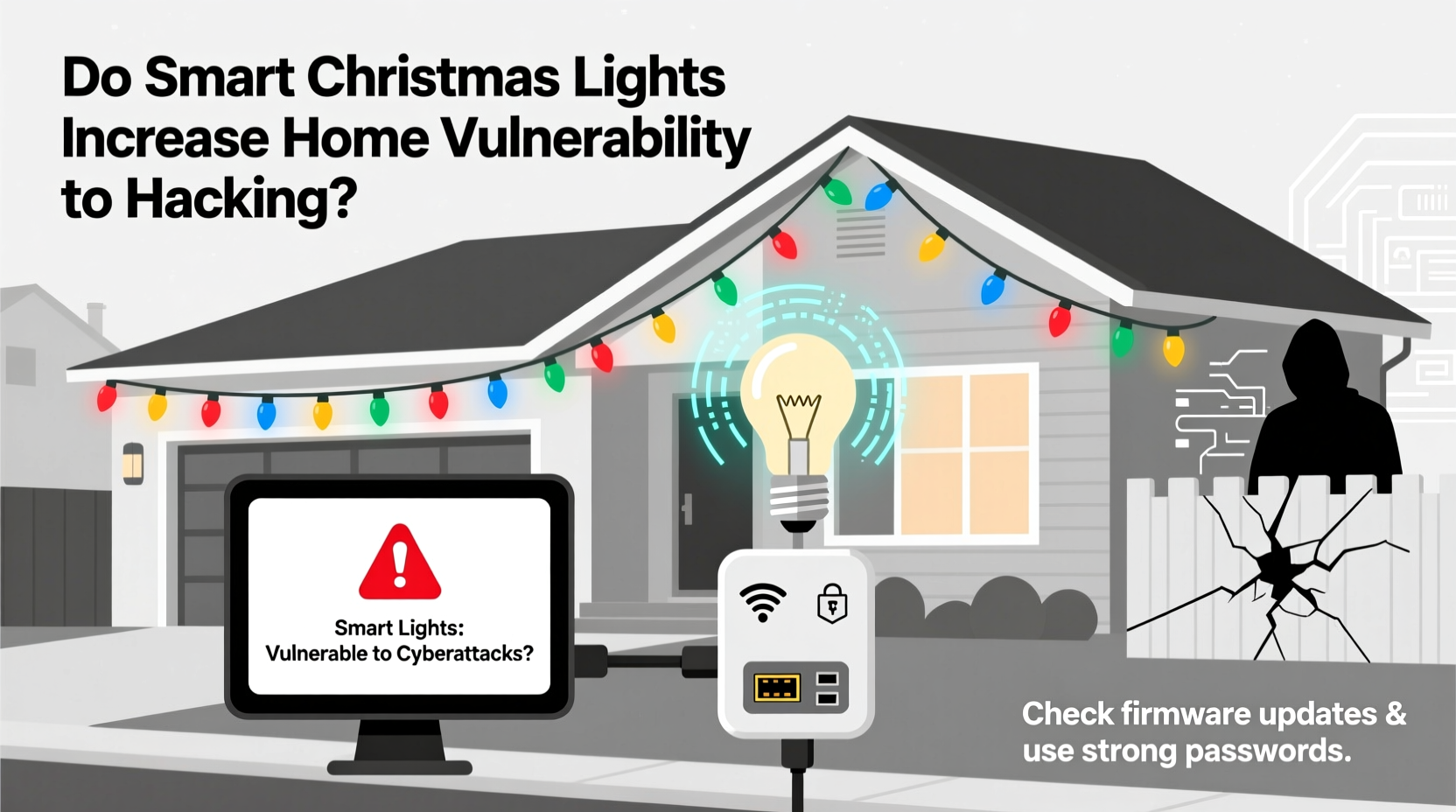
Smart Christmas lights connect to your home Wi-Fi network, allowing remote control through companion apps on smartphones or tablets. Some models integrate with voice assistants like Amazon Alexa or Google Assistant, enabling hands-free operation. Behind the scenes, these lights communicate with cloud-based servers hosted by the manufacturer, which store user preferences, firmware updates, and device authentication data.
This connectivity is what introduces potential security vulnerabilities. Any device that accesses your network becomes part of your digital ecosystem. If poorly secured — through weak passwords, outdated firmware, or insecure app design — it can serve as a backdoor into your broader network, potentially exposing other connected devices like computers, security cameras, or smart thermostats.
Security researchers have demonstrated in lab environments that compromised smart lighting systems can be used as entry points to pivot toward more sensitive devices. In one 2022 study conducted by the cybersecurity firm Kaspersky, researchers simulated an attack where a hacked smart light was used to intercept local network traffic, eventually gaining access to a connected laptop through a known router vulnerability.
“Internet of Things (IoT) devices often lack robust security by design. A single weak link, like holiday lights, can undermine an entire network.” — Dr. Lena Petrova, IoT Security Researcher at MITRE Corporation
Common Vulnerabilities in Smart Holiday Lighting Systems
Not all smart lights pose the same level of risk. The danger depends largely on the brand, software practices, and user behavior. However, several recurring weaknesses make some models more susceptible to exploitation:
- Insecure mobile apps: Many third-party smart light apps request excessive permissions or transmit data without encryption, making them prone to man-in-the-middle attacks.
- Lack of firmware updates: Budget brands often release devices with no mechanism for automatic or manual firmware updates, leaving known bugs unpatched indefinitely.
- Default credentials: Some lights come with default login credentials (e.g., admin/admin) that users fail to change, creating easy targets for brute-force attacks.
- Unencrypted communication: Data sent between the app and the light — or between the light and the cloud — may not be properly encrypted, allowing interception.
- Weak network segmentation: Most home networks treat all devices equally. If a light shares the same subnet as personal computers, a breach can spread quickly.
Real-World Example: The \"Festive Hack\" Experiment
In December 2021, a team of ethical hackers from the University of Colorado Boulder conducted a controlled experiment dubbed “Operation Festive Hack” to assess the risks posed by consumer-grade smart Christmas lights. They purchased five popular models from online retailers, ranging from well-known tech brands to generic imports.
Using publicly available tools like Wireshark and Shodan, they scanned for open ports and unsecured communications. Two of the five models transmitted login tokens in plain text. One model used a hardcoded password embedded in its firmware, which could be extracted with basic reverse-engineering techniques.
The team then simulated a phishing attack targeting the companion app. By mimicking the official update server, they delivered a fake firmware patch to one device. Once installed, the malicious update gave them remote shell access to the test network. From there, they accessed a connected smart speaker and retrieved voice command logs.
While this was a lab simulation, it illustrated a realistic threat model: a low-cost, poorly secured smart light acting as a stepping stone into a home network. No physical access was required — everything was done remotely over the internet.
Protecting Your Network: A Step-by-Step Security Guide
You don’t need to abandon smart lights to stay safe. With proper precautions, you can enjoy the benefits of modern holiday décor while minimizing risk. Follow this step-by-step approach to secure your setup:
- Choose reputable brands: Opt for smart lights from established manufacturers like Philips Hue, LIFX, or Nanoleaf, which prioritize security and issue regular updates.
- Update firmware immediately: After setup, check the app for available firmware updates and install them. Enable automatic updates if available.
- Change default settings: Rename the device and change any default passwords or PINs provided in the manual.
- Use strong Wi-Fi passwords: Ensure your home network uses WPA3 encryption and a complex, unique password.
- Isolate devices on a guest network: Configure your router to place smart lights and other IoT devices on a separate guest network, limiting access to critical devices.
- Review app permissions: On your smartphone, restrict location, microphone, and contact access for the lighting app unless absolutely necessary.
- Turn off when not in use: Use scheduling features to power down lights during extended absences or overnight, reducing exposure time.
- Monitor network activity: Use tools like Fing or GlassWire to detect unusual device behavior, such as unexpected outbound connections.
Smart Light Security: Do’s and Don’ts
| Do | Don't |
|---|---|
| Buy from brands with clear privacy policies and update histories | Purchase unknown brands with no reviews or support documentation |
| Place IoT devices on a segmented network | Connect smart lights directly to your primary home network |
| Regularly check for firmware updates (monthly during use) | Assume the device is “set and forget” after installation |
| Disable remote access if not needed | Leave cloud connectivity enabled unnecessarily |
| Delete the app and reset the device after the season ends | Leave devices active and connected year-round without oversight |
Expert Insight: What Cybersecurity Professionals Recommend
Cybersecurity experts agree that the risk from smart Christmas lights is not in the lights themselves, but in how they’re deployed within a larger digital environment. The core issue lies in the broader trend of connecting low-security devices to high-value networks.
“The average home now has over 20 connected devices. Each one is a potential vector. Smart lights aren’t the most dangerous, but they’re often the least protected.” — Mark Riggins, Senior Analyst at SANS Institute
Experts emphasize the importance of network hygiene. Just as you wouldn’t leave your front door unlocked during vacation, you shouldn’t leave unsecured IoT devices running on your network indefinitely. Simple measures like network segmentation and timely updates dramatically reduce risk.
Frequently Asked Questions
Can hackers really take over my house through Christmas lights?
Direct takeover is unlikely, but possible in theory. A compromised light could act as a gateway to other devices if your network lacks segmentation. While full system control is rare, hackers could intercept data, launch denial-of-service attacks, or spy on network activity.
Are Bluetooth-only smart lights safer than Wi-Fi models?
Generally, yes. Bluetooth operates over short range and doesn’t connect directly to the internet, reducing remote attack potential. However, Bluetooth still has vulnerabilities — especially with older versions — so pairing should occur in secure environments.
Should I disconnect my smart lights after the holidays?
Yes. Unplugging and resetting the device removes it from your network and prevents background data collection. Store them with instructions and consider labeling them for future security updates.
Final Checklist Before You Plug In
- ☐ Research the brand’s security track record
- ☐ Verify firmware is up to date
- ☐ Change default names and passwords
- ☐ Connect only to a guest or IoT network
- ☐ Disable unused features (e.g., remote access)
- ☐ Monitor device behavior for anomalies
- ☐ Reset and unplug after the season ends
Conclusion: Enjoy the Glow Without the Risk
Smart Christmas lights bring joy, creativity, and convenience to the holiday season. They don’t need to be feared — but they do require thoughtful handling. Like any connected device, they reflect the state of your overall digital security habits.
The key is awareness and action. By choosing trusted products, isolating devices, and maintaining good network hygiene, you can enjoy dazzling displays without compromising your home’s safety. Cybersecurity isn’t about eliminating technology — it’s about using it wisely.
This holiday season, let your lights shine brightly, but keep your network even brighter. A few minutes of setup today can prevent headaches tomorrow. Stay festive, stay informed, and stay secure.




 浙公网安备
33010002000092号
浙公网安备
33010002000092号 浙B2-20120091-4
Comments
No comments yet. Why don't you start the discussion?