
Every holiday season, millions of homes light up with dazzling Christmas displays. While festive cheer is in full swing, so are concerns about electrical safety, energy consumption, and convenience. Traditional plug-in timers and manual switches have long been the standard for managing holiday lighting, but smart plugs are rapidly changing the game. These compact devices offer remote control, scheduling, energy monitoring, and enhanced safety features—making them a compelling upgrade for any household. But do they truly make your Christmas lights safer and more efficient? The answer is yes—but only when used correctly and paired with the right setup.
How Smart Plugs Work with Holiday Lighting
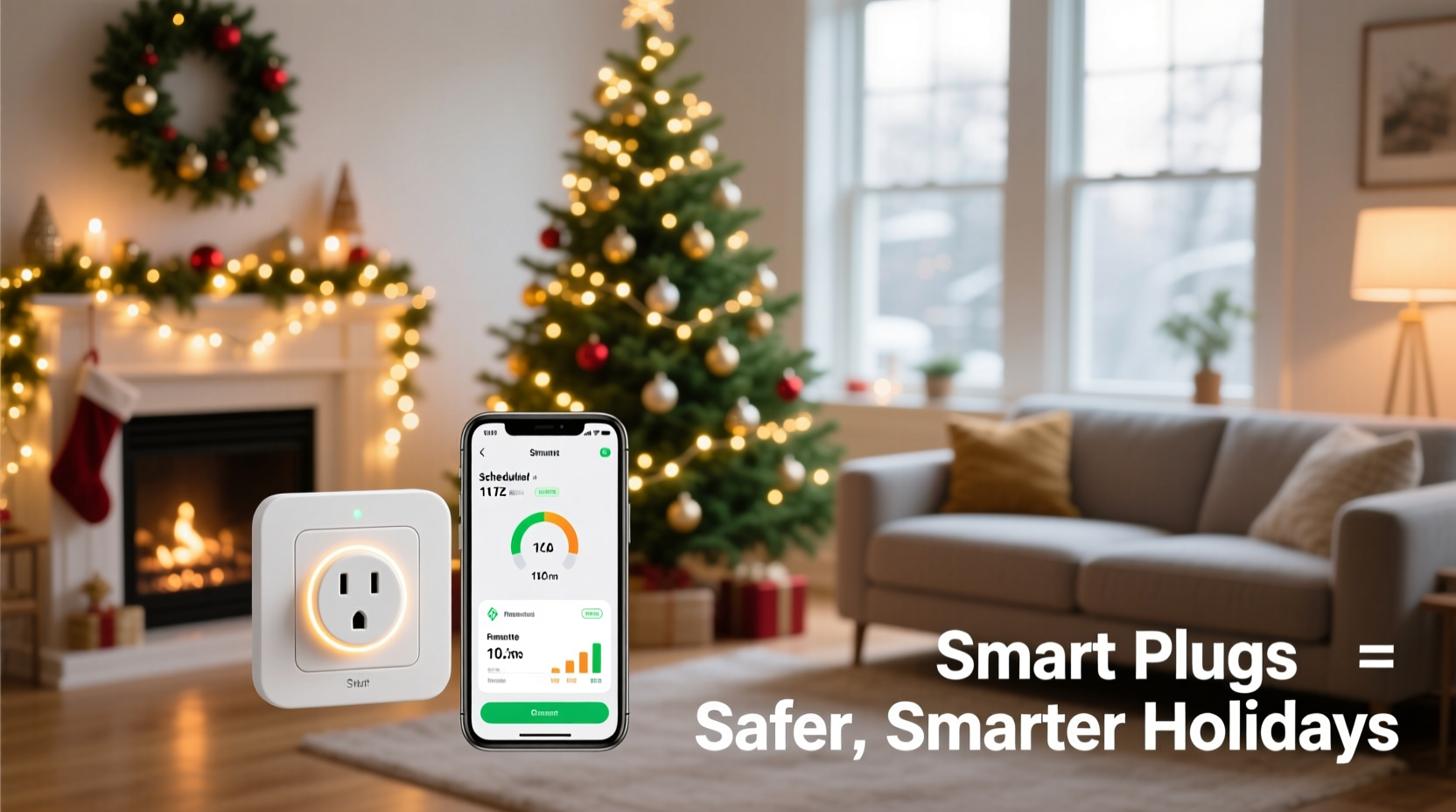
A smart plug is a Wi-Fi or Bluetooth-enabled device that sits between your wall outlet and an appliance—in this case, your Christmas lights. Once connected to your home network, it allows you to control power remotely via a smartphone app, voice assistant (like Alexa or Google Assistant), or automated routines. Most models support scheduling, real-time energy tracking, and integration with smart home ecosystems.
For Christmas lights, this means you can turn them on or off from anywhere, set precise display hours, and even create dynamic lighting effects like gradual fade-ins or color cycling if using smart bulbs. Unlike mechanical timers, which can drift or fail over time, smart plugs offer digital precision and reliability. They also eliminate the need to physically access outlets, especially helpful for hard-to-reach outdoor installations.
The real advantage lies in automation. You no longer have to remember to switch off your lights before bed or worry about leaving them running all night. With a smart plug, your lights follow a consistent schedule—even if you're away on vacation.
Safety Benefits of Using Smart Plugs for Christmas Lights
Electrical fires spike during the holiday season. According to the National Fire Protection Association (NFPA), U.S. fire departments respond to nearly 1,600 home fires each year caused by Christmas trees and decorative lighting. Many of these incidents stem from overheating, damaged cords, or lights left unattended for extended periods. Smart plugs introduce multiple layers of protection that reduce these risks significantly.
First, automatic shutoff prevents lights from running indefinitely. A common hazard occurs when people forget to turn off their displays overnight or while traveling. Overheated transformers or frayed wires can ignite nearby materials after prolonged use. With a smart plug, you can program lights to operate only during specific hours—say, 4 PM to 11 PM—ensuring they never stay on too long.
Second, many modern smart plugs include built-in surge protection and temperature monitoring. If the device detects abnormal current draw or excessive heat, it may shut off automatically or send an alert to your phone. This early warning system can prevent small issues from escalating into dangerous situations.
Third, remote access adds peace of mind. If you’re unsure whether you turned off the lights before leaving home, a quick tap on your phone confirms status and allows immediate action. No more turning around mid-commute to double-check.
“Smart technology gives homeowners proactive control over potential hazards. Being able to cut power remotely reduces exposure to risk dramatically.” — Dr. Alan Reeves, Electrical Safety Consultant at NFPA
Energy Efficiency and Cost Savings
Beyond safety, smart plugs enhance efficiency by minimizing unnecessary energy use. Traditional incandescent Christmas lights consume significant power—some strands use as much as 100 watts per hour. Running such lights for six hours daily over a month can add several dollars to your electric bill. Multiply that across multiple strands, and costs rise quickly.
Smart plugs help optimize usage through precise scheduling and real-time feedback. For example, you can avoid turning lights on during daylight hours or limit operation to peak viewing times. Some advanced models even learn your habits and suggest optimal schedules based on historical data.
Additionally, certain smart plugs provide detailed energy reports, showing exactly how many kilowatt-hours your lights consume. This transparency empowers users to make informed decisions—like switching to LED strings, which use up to 90% less energy than traditional bulbs.
| Light Type | Wattage per 100 Bulbs | Estimated Monthly Cost (6 hrs/day) |
|---|---|---|
| Incandescent Mini Lights | 40W | $2.88 |
| LED Mini Lights | 4.8W | $0.35 |
| Multicolor C7 Bulbs (25-count) | 175W | $7.56 |
| LED C7 Equivalent | 17.5W | $0.76 |
When paired with LEDs, smart plugs maximize both efficiency and longevity. Since LEDs generate less heat and draw minimal current, they place less strain on the plug and wiring, further reducing fire risk.
Step-by-Step Guide to Setting Up Smart Plugs for Christmas Lights
Getting started with a smart plug is straightforward, but proper setup ensures safety and performance. Follow this timeline to integrate one into your holiday lighting routine:
- Choose the Right Smart Plug: Select a model rated for outdoor use if placing outside. Look for IP44 or higher water resistance and ensure compatibility with your smart home platform (e.g., Apple HomeKit, Google Home, Amazon Alexa).
- Inspect Your Lights: Check for frayed wires, cracked sockets, or signs of overheating. Replace damaged sets immediately. Never use indoor-rated lights outdoors.
- Calculate Total Load: Add up the wattage of all light strings connected to one plug. Stay under 80% of the plug’s maximum capacity to prevent overload.
- Install the Plug: Plug the smart device into a grounded outdoor outlet (preferably GFCI-protected). Use a weatherproof cover to shield the connection from rain and snow.
- Connect to Wi-Fi: Download the manufacturer’s app, create an account, and follow pairing instructions. Ensure strong signal strength near the installation point.
- Set a Schedule: Program on/off times aligned with dusk and dawn or family routines. Consider enabling geofencing so lights activate only when someone is home.
- Test Remotely: From another location, verify you can turn the lights on and off via the app. Confirm notifications work for power events or connectivity loss.
- Monitor Performance: After a few days, review energy usage in the app. Adjust timing or brightness if needed.
Real-World Example: The Johnson Family’s Safer Holiday Display
The Johnsons live in a suburban neighborhood known for its elaborate holiday decorations. In past years, their front yard featured over 20,000 lights powered by five extension cords and three basic timers. One December, a timer malfunctioned, leaving the display running 24/7 for nearly a week. By the time they noticed, two transformer boxes had melted, and their electricity bill spiked by $65.
Determined to prevent future issues, they upgraded to four outdoor-rated smart plugs from a reputable brand. Each zone—roofline, tree, lawn figures, and pathway—was assigned its own plug with individual scheduling. They programmed all lights to turn on at 5 PM and off at 10:30 PM, syncing with local sunset times.
Midway through the season, they went on vacation. Using the app, they monitored power usage daily and received an alert when one plug detected a brief surge—likely due to a squirrel chewing near the cord. They remotely disconnected the circuit and arranged for a neighbor to inspect it. Damage was minor, but without the smart plug’s alert, it could have led to a fire.
At the end of the season, the app showed a 38% reduction in energy use compared to the previous year. More importantly, the family felt confident their display was secure, even when they weren’t home.
Common Mistakes to Avoid
- Overloading the Plug: Daisychaining too many high-wattage strings exceeds safe limits and risks overheating.
- Using Indoor Plugs Outdoors: Standard smart plugs aren’t sealed against moisture and can short-circuit.
- Ignoring Firmware Updates: Manufacturers often release security patches and feature improvements—keep devices updated.
- Skipping GFCI Protection: Outdoor circuits should always be on ground-fault circuit interrupter (GFCI) outlets to prevent electrocution.
- Setting Static Schedules Year-Round: Sunset times change; use dynamic scheduling or seasonal adjustments to maintain efficiency.
Frequently Asked Questions
Can I use a smart plug with any type of Christmas lights?
Yes, as long as the total wattage doesn’t exceed the plug’s rating and the lights don’t require special controllers (like some animated projectors). Note that smart plugs control power only—they won’t adjust patterns on programmable LED strips unless those strips are also smart-enabled.
Are smart plugs vulnerable to hacking?
All internet-connected devices carry some risk, but reputable brands use encryption and two-factor authentication. To minimize exposure, use strong passwords, enable multi-factor login, keep firmware updated, and isolate smart devices on a separate Wi-Fi network if possible.
Do smart plugs work during a power outage?
Most reset after a blackout and resume normal operation once power returns, but schedules may need reconfirmation. Some models retain settings and restart automatically; check product specifications for details.
Checklist: Preparing Your Smart Plug for Holiday Use
- ☐ Verify smart plug is rated for outdoor use (if applicable)
- ☐ Confirm compatibility with your smartphone and voice assistant
- ☐ Test Wi-Fi signal strength at the installation site
- ☐ Inspect all light strings for damage
- ☐ Calculate combined wattage of connected devices
- ☐ Install in a GFCI-protected outlet with weatherproof cover
- ☐ Set up app notifications for power events
- ☐ Program a daily on/off schedule
- ☐ Label each plug in the app for easy identification
- ☐ Perform a remote test before finalizing setup
Conclusion: A Smarter, Safer Way to Celebrate
Smart plugs represent a meaningful upgrade for anyone who decorates with Christmas lights. They deliver tangible benefits in safety, efficiency, and convenience—reducing fire risks, cutting energy waste, and eliminating guesswork. When paired with modern LED lighting and sound electrical practices, they form part of a responsible, sustainable holiday tradition.
The initial investment pays off quickly in avoided repair costs, lower utility bills, and peace of mind. As smart home technology becomes more accessible, there’s never been a better time to bring intelligence to your seasonal setup.




 浙公网安备
33010002000092号
浙公网安备
33010002000092号 浙B2-20120091-4
Comments
No comments yet. Why don't you start the discussion?