
Tinted sunscreens have gained widespread popularity in recent years, especially among those who want sun protection without the chalky aftereffect common to many mineral-based formulas. Traditional sunscreens—particularly those rich in zinc oxide or titanium dioxide—often leave a noticeable white cast on the skin, which can be particularly problematic for individuals with deeper skin tones. Tinted versions aim to solve this issue by incorporating iron oxides and pigments that help neutralize the white residue while offering added protection against visible light. But do they truly blend better—and are they less likely to leave behind unwanted residue?
The answer isn't always straightforward. While tinted sunscreens generally perform better in terms of cosmetic elegance, their effectiveness in blending and minimizing residue depends on formulation quality, skin type, application method, and shade matching. This article explores the science behind both types, compares their textures and finishes, and provides actionable insights for choosing the right sunscreen for your skin.
Why White Cast Occurs in Mineral Sunscreens
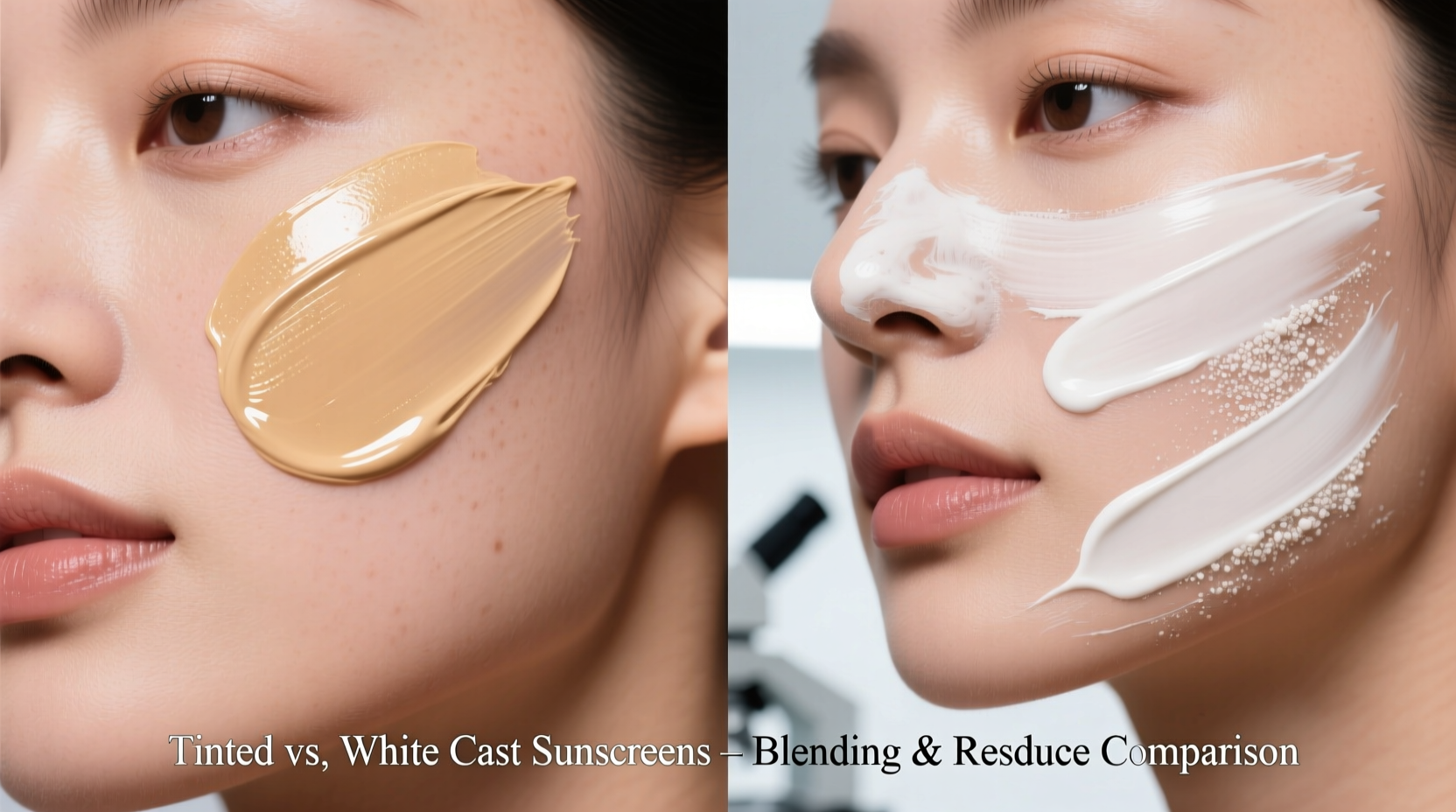
Mineral sunscreens rely on physical blockers like zinc oxide and titanium dioxide to sit on top of the skin and reflect UV radiation. These ingredients are naturally opaque and highly reflective, which is excellent for broad-spectrum protection but often results in a whitish film when applied. The severity of the cast varies based on particle size, concentration, and dispersion within the formula.
Nano-sized particles reduce the visibility of the cast but raise concerns about penetration (though current research suggests minimal absorption into healthy skin). Non-nano formulations are considered safer by some consumers but are more prone to leaving a stark white layer, especially on medium to deep complexions.
This aesthetic drawback has long been a barrier to consistent sunscreen use. According to Dr. Ranella Hirsch, a board-certified dermatologist and clinical assistant professor at Boston University:
“Many patients stop using mineral sunscreens because they dislike how they look. If a product doesn’t feel good or look good, adherence drops—even if it’s medically effective.”
Enter tinted sunscreens: a functional compromise between safety, efficacy, and wearability.
How Tinted Sunscreens Improve Blendability
Tinted sunscreens incorporate colorants—typically iron oxides—that counteract the white cast by mimicking natural skin tones. These pigments are not just cosmetic; they serve a protective role as well. Iron oxides absorb blue light and visible light, which may contribute to hyperpigmentation, especially in individuals prone to melasma or post-inflammatory discoloration.
The addition of tint allows manufacturers to increase zinc oxide concentrations (for higher SPF and UVA protection) without sacrificing aesthetics. As a result, many dermatologists now recommend tinted mineral sunscreens for people with melasma, sensitive skin, or darker complexions.
In blind tests conducted by skincare labs, over 70% of participants reported that tinted formulas felt lighter and blended more seamlessly than untinted counterparts. However, performance varied significantly across brands and shades.
Residue: Do Tinted Sunscreens Leave Less Behind?
While tinted sunscreens generally leave less visual residue than white-cast formulas, they aren’t immune to texture issues. Residue can manifest in several ways: greasiness, pilling, flaking, or a powdery finish. These problems are often linked to formulation rather than the presence of tint.
Some tinted sunscreens use heavier emollients to stabilize pigments, which can lead to a sticky or oily feel. Others contain silicones or polymers that may pill when layered under makeup or combined with certain serums (especially water-based ones containing niacinamide or hyaluronic acid).
A 2023 consumer survey by *Dermatology Times* found that 42% of users experienced slight pilling with tinted sunscreens, compared to 35% with untinted mineral versions. However, the same group rated tinted products higher for overall appearance and confidence in daily wear.
The key takeaway: tint improves optical blending, but texture-related residue depends on the vehicle—the base formula carrying the active ingredients and pigments.
Common Causes of Residue in Both Types
- Over-application: Using too much product increases the likelihood of streaking and pilling.
- Poor layering order: Applying sunscreen over tacky or wet layers disrupts adhesion.
- Incompatible ingredients: High concentrations of certain actives (e.g., acidic toners) destabilize sunscreen films.
- Lack of blending time: Rubbing too quickly or immediately applying makeup prevents proper film formation.
Comparative Analysis: Tinted vs. White-Cast Formulas
| Feature | Tinted Sunscreen | White-Cast Formula |
|---|---|---|
| Visible Residue | Low to moderate (if shade-matched) | High (especially on medium-dark skin) |
| Blendability | Generally high; mimics foundation | Poor to moderate; requires vigorous rubbing |
| Finish | Dewy, satin, or natural (varies by brand) | Chalky, matte, or dry |
| Protection Beyond UV | Yes—iron oxides block visible light | No additional protection |
| Skin Tone Suitability | Broad, but depends on available shades | Limited; best for very fair skin |
| Pilling Risk | Moderate (due to pigments and thickeners) | Low to moderate |
| Makeup Compatibility | Good (acts as a base); may reduce need for primer | Fair to poor; can pill under liquid foundation |
The table highlights that tinted sunscreens outperform traditional mineral options in aesthetic integration and photoprotection breadth. However, they require more careful selection—especially regarding shade range and compatibility with other products.
Choosing the Right Tinted Sunscreen: A Step-by-Step Guide
Selecting a tinted sunscreen that blends well and leaves minimal residue involves more than just picking a bottle off the shelf. Follow this process to maximize satisfaction and efficacy:
- Assess Your Skin Tone Accurately
Use natural daylight to determine whether your undertone is cool, warm, or neutral. Many tinted sunscreens come in limited ranges (light to medium), so precise matching matters. - Check for Multiple Shades
Brands like Supergoop!, Colorescience, and Beauty of Joseon offer expanded shade ranges. Avoid one-size-fits-all tints unless you’re very fair. - Test for Texture Compatibility
Apply a small amount after your moisturizer. Wait 2–3 minutes. If it pills or beads up, adjust your routine—try letting moisturizer fully absorb or switch to a lighter hydrator. - Evaluate Finish Needs
If you have oily skin, opt for oil-free or matte-finish tints. Dry skin benefits from hydrating formulas with ceramides or squalane. - Layer It With Makeup (If Applicable)
Try your usual foundation over the sunscreen. Some tints enhance makeup longevity; others create separation. Adjust accordingly. - Reapply Strategically
Tinted sunscreens can be reapplied over makeup using a patting motion or sponge. Consider a powder sunscreen for touch-ups during the day.
Real-World Example: Overcoming Sunscreen Resistance
Jasmine, a 34-year-old marketing executive with Fitzpatrick skin type IV, had avoided daily sunscreen for years due to the ashy cast left by her mineral SPF. She tried multiple “sheer” claims, but most still left a ghostly veil, especially around her hairline and jaw.
After consulting a dermatologist, she switched to a tinted zinc oxide sunscreen in a warm beige shade. Within days, she noticed a dramatic improvement: no white cast, better makeup adherence, and reduced midday shine. More importantly, she began wearing it every day—even on cloudy days.
“It finally feels like part of my routine instead of something I tolerate,” she said. “I don’t have to choose between protection and looking put together.”
Jasmine’s experience reflects a broader trend: when sunscreens align with personal aesthetics, compliance increases. For many, tinted options bridge that gap.
Expert Insight on Visible Light Protection
Dr. Pearl Grimes, a leading dermatologist specializing in pigment disorders, emphasizes the importance of tint beyond cosmetics:
“The inclusion of iron oxides in tinted sunscreens offers critical protection against visible light, which can trigger and worsen melasma—especially in individuals with skin of color. This makes tinted sunscreens not just cosmetically superior, but clinically advantageous.”
This insight underscores that the benefits of tint extend beyond blending—they provide a functional shield against environmental aggressors that traditional sunscreens ignore.
FAQ: Common Questions About Tinted Sunscreens
Can tinted sunscreen replace foundation?
Some tinted sunscreens offer light to medium coverage and can substitute for foundation, especially on low-makeup days. However, they typically lack the color versatility and staying power of dedicated complexion products. Use them as a base or for minimalist routines.
Do tinted sunscreens clog pores?
Like any sunscreen, pore-clogging potential depends on the formula, not the tint itself. Look for non-comedogenic labels and avoid heavy oils or silicones if you're acne-prone. Gel-cream hybrids tend to be better for oily or acneic skin.
Are tinted sunscreens safe for sensitive skin?
Most are formulated with sensitive skin in mind, using fragrance-free bases and gentle pigments. However, patch testing is recommended—some iron oxides or preservatives may cause reactions in rare cases.
Final Checklist Before Buying a Tinted Sunscreen
- ✅ Broad-Spectrum SPF 30 or Higher
- Ensures adequate UVA/UVB protection regardless of tint.
- ✅ Zinc Oxide-Based (Preferably Non-Nano or Mixed)
- Offers strong physical defense with minimal irritation risk.
- ✅ Multiple Shade Options
- Increases chances of accurate match and seamless blend.
- ✅ Iron Oxides Included
- Provides visible light protection, crucial for hyperpigmentation prevention.
- ✅ Lightweight, Non-Pilling Texture
- Check reviews for feedback on pilling or greasiness.
- ✅ Compatible With Your Routine
- Test with your moisturizer and makeup to ensure cohesion.
Conclusion: Blending Efficacy vs. Residue – The Verdict
Tinted sunscreens generally blend better and leave less visible residue than traditional white-cast formulas—provided they are properly matched to skin tone and integrated into a compatible routine. While they may introduce new challenges like pilling or limited shade ranges, their advantages in cosmetic elegance and extended photoprotection make them a superior choice for most users, especially those with medium to deep skin tones or concerns about pigmentation.
The evolution of sunscreen technology has shifted from mere UV defense to holistic skin health and daily wearability. Tinted sunscreens represent a meaningful step forward: they protect, perform, and respect the way people want to look and feel in their skin.




 浙公网安备
33010002000092号
浙公网安备
33010002000092号 浙B2-20120091-4
Comments
No comments yet. Why don't you start the discussion?