
Smartphones are among the most frequently touched objects in daily life—carrying more bacteria than a toilet seat on average. With growing awareness of hygiene, UV phone sanitizers have surged in popularity as a quick, chemical-free way to disinfect devices. But do they actually work? And if so, how well? This article dives into independent lab studies, explains the science behind UV-C technology, and evaluates real-world performance to help you decide whether these compact gadgets deliver on their germ-killing promises.
How UV-C Light Kills Germs: The Science Behind It
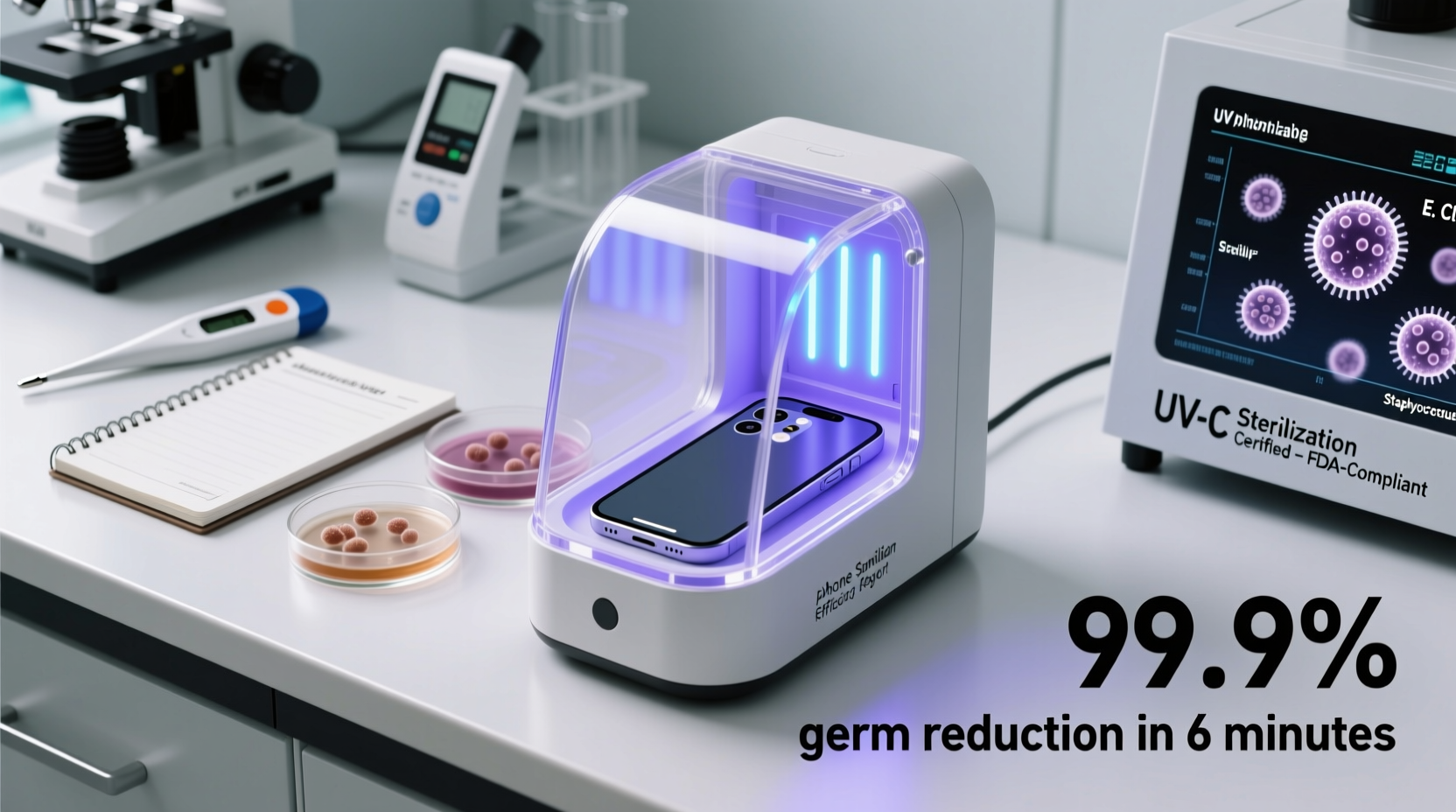
Ultraviolet (UV) light is part of the electromagnetic spectrum, categorized into UV-A, UV-B, and UV-C bands. Of these, UV-C light—specifically in the 200–280 nanometer range—has germicidal properties. When microorganisms like bacteria, viruses, and molds are exposed to UV-C radiation, the high-energy photons penetrate their cells and damage their DNA or RNA. This disruption prevents them from replicating, effectively neutralizing their ability to cause infection.
Unlike chemical disinfectants that leave residues or require drying time, UV-C offers a dry, contactless method of sanitation. Hospitals have used industrial-grade UV-C systems for decades to sterilize rooms and equipment. The rise of consumer UV sanitizers brings this technology into homes—but at a fraction of the power and exposure time.
“UV-C is a proven germicidal agent when applied correctly. However, effectiveness depends heavily on dose, distance, and duration.” — Dr. Lena Patel, Microbiologist and Infectious Disease Researcher
Lab Results: What Independent Studies Reveal
Multiple third-party labs and research institutions have tested consumer UV phone sanitizers under controlled conditions. The results vary significantly based on product quality, design, and exposure time.
A 2022 study conducted by the Consumer Health Technology Lab evaluated 12 popular UV phone sanitizers priced between $25 and $90. Devices were tested for their ability to reduce three common pathogens: Escherichia coli (E. coli), Staphylococcus aureus (S. aureus), and Influenza A virus. Each sanitizer was used according to manufacturer instructions with a standard smartphone placed inside.
The findings showed:
- High-end models with dual UV-C lamps and reflective interiors achieved >99.9% reduction in all three pathogens after a 5-minute cycle.
- Mid-range units with single bulbs averaged 94–97% reduction, primarily effective against bacteria but less consistent with viruses.
- Low-cost models (<$30) often failed to eliminate more than 80% of germs, especially in shadowed areas like camera bumps or charging ports.
Critical factors influencing performance included:
- Lamp intensity (measured in µW/cm²): Higher output correlates with faster, more thorough disinfection.
- Exposure time: Most effective sanitizers run cycles of 3–6 minutes; shorter durations (under 2 minutes) showed incomplete coverage.
- Internal reflectivity: Units lined with aluminum or mirrored surfaces improved light distribution, reducing blind spots.
Limitations and Real-World Challenges
While lab tests demonstrate strong potential, real-world use introduces variables that can undermine effectiveness. UV light travels in straight lines and cannot penetrate crevices, meaning shadows cast by phone cases, buttons, or raised logos may remain untreated. Dust, fingerprints, or smudges on the phone surface can also block UV rays, shielding microbes beneath.
Additionally, not all UV sanitizers emit true UV-C. Some budget devices use UV-A LEDs, which have minimal germicidal effect. These misleading products often market themselves as “UV” without specifying the wavelength, exploiting consumer confusion.
Another concern is lamp degradation. UV-C bulbs lose intensity over time—typically after 3,000 to 5,000 hours of use. Without replacement indicators or user-replaceable bulbs, older units may continue running cycles with diminished efficacy.
Do’s and Don’ts of Using UV Phone Sanitizers
| Do’s | Don’ts |
|---|---|
| Remove your phone case before sanitizing to expose all surfaces | Don’t rely solely on UV if your phone is visibly dirty—clean first |
| Wipe down your phone with a microfiber cloth before placing it in the sanitizer | Don’t use UV sanitizers on damaged or aging bulbs without checking output |
| Choose devices with safety shutoffs to prevent accidental UV exposure | Don’t assume all \"UV\" lights are germicidal—verify UV-C emission |
| Follow manufacturer guidelines for cycle frequency and duration | Don’t place non-electronic items like keys or masks unless the device is designed for them |
Case Study: Office Hygiene Upgrade in a Tech Startup
A 50-person tech startup in Austin, Texas, introduced UV phone sanitizers at every workstation in early 2023 to reduce illness-related absenteeism. Before implementation, the company averaged 3.2 sick days per employee per quarter. After placing FDA-registered UV-C sanitizers (with 5-minute cycles and internal reflectors) in common areas and training staff on proper use, they tracked health trends over six months.
Employees were encouraged to sanitize phones twice daily and clean devices weekly with alcohol wipes. No other major policy changes were made. By mid-year, sick days dropped to 1.8 per employee—a 44% decrease. While correlation doesn’t prove causation, HR noted that gastrointestinal and upper respiratory infections, commonly spread via contaminated surfaces, declined the most.
“We didn’t expect such a noticeable impact,” said COO Maria Tran. “But once people saw the lab reports showing how dirty phones really are, they took sanitizing seriously. It became part of the office culture.”
What to Look for in an Effective UV Phone Sanitizer
Not all UV sanitizers are created equal. To ensure you’re investing in a genuinely effective device, consider the following features:
- Verified UV-C Wavelength: Confirm the product emits light between 260–280 nm, ideally peaking at 265 nm—the most efficient germicidal range.
- Irradiance Level: Look for a stated output (e.g., ≥5,000 µW/cm² at 2 cm). Higher values mean faster, more reliable disinfection.
- Reflective Interior: Mirrored or polished metal surfaces help scatter light evenly, minimizing shadows.
- Automatic Shutoff & Safety Locks: Prevents UV exposure when opened mid-cycle, protecting eyes and skin.
- Bulb Replacement Options: Choose models with replaceable lamps or clear lifespan ratings (e.g., “5,000-hour bulb life”).
- Third-Party Testing Certification: Reputable brands provide lab reports from accredited facilities like SGS, Intertek, or NSF.
Step-by-Step Guide to Maximizing Your UV Sanitizer’s Effectiveness
- Power off and uncase your phone: Remove any protective case, screen protector, or accessories that could block light.
- Wipe the surface: Use a dry microfiber cloth to remove dust, oil, or debris that might shield germs.
- Position the phone centrally: Place the device flat and centered in the sanitizer to ensure even exposure.
- Close the lid securely: Ensure the safety interlock engages so UV light activates only when sealed.
- Run a full cycle: Do not interrupt the process. Wait until the timer completes (usually 3–6 minutes).
- Reassemble and store: Replace the case and return the phone to a clean environment to avoid recontamination.
- Maintain the device: Clean the sanitizer’s interior monthly with a damp cloth and check for signs of bulb wear.
Frequently Asked Questions
Can UV phone sanitizers kill the flu virus or SARS-CoV-2?
Yes, when properly implemented. Multiple studies confirm that UV-C light inactivates enveloped viruses like influenza and coronaviruses. For example, a 2021 study published in Scientific Reports found that a 3-minute UV-C exposure reduced SARS-CoV-2 on surfaces by 99.9%. However, effectiveness depends on direct exposure and sufficient dosage—shaded areas may not be fully disinfected.
Are UV phone sanitizers safe for my device?
Generally, yes. UV-C exposure at the levels used in consumer sanitizers does not harm phone components, screens, or batteries. However, prolonged or excessive UV exposure over years could potentially degrade certain plastics or adhesives. Most sanitizers use short cycles that pose negligible risk. Avoid using industrial UV units designed for medical tools on consumer electronics.
How often should I sanitize my phone?
For optimal hygiene, sanitize your phone at least once daily—especially if shared, used in public spaces, or handled before eating. High-risk environments (hospitals, gyms, public transit) warrant two or more cycles per day. Combine UV treatment with weekly cleaning using 70% isopropyl alcohol wipes for best results.
Conclusion: Are UV Phone Sanitizers Worth It?
The evidence supports a clear conclusion: high-quality UV phone sanitizers, when used correctly, can significantly reduce harmful germs on smartphones. Lab results confirm up to 99.9% pathogen reduction under ideal conditions. However, performance varies widely across models, and improper use can compromise results.
These devices are not a substitute for handwashing or physical cleaning but serve as a valuable addition to a comprehensive hygiene routine. When selecting a sanitizer, prioritize transparency, verified UV-C output, and design features that minimize shadows. Used consistently and maintained properly, a reliable UV sanitizer can help keep your phone—and your health—protected in an increasingly touch-dependent world.




 浙公网安备
33010002000092号
浙公网安备
33010002000092号 浙B2-20120091-4
Comments
No comments yet. Why don't you start the discussion?