
For many people struggling with anxiety, sleep issues, or sensory processing challenges, weighted blankets have become a go-to tool for relief. Marketed as a drug-free way to calm the nervous system, these heavy coverings apply gentle pressure across the body—similar to a hug or deep touch therapy. But with rising popularity comes skepticism: Are weighted blankets truly effective, or are they just another wellness trend riding on the placebo effect?
This article dives into the science behind deep pressure stimulation, reviews clinical studies, examines anecdotal reports, and separates fact from hype. Whether you're considering buying one or simply curious about their legitimacy, here’s what you need to know.
The Science of Deep Pressure Stimulation
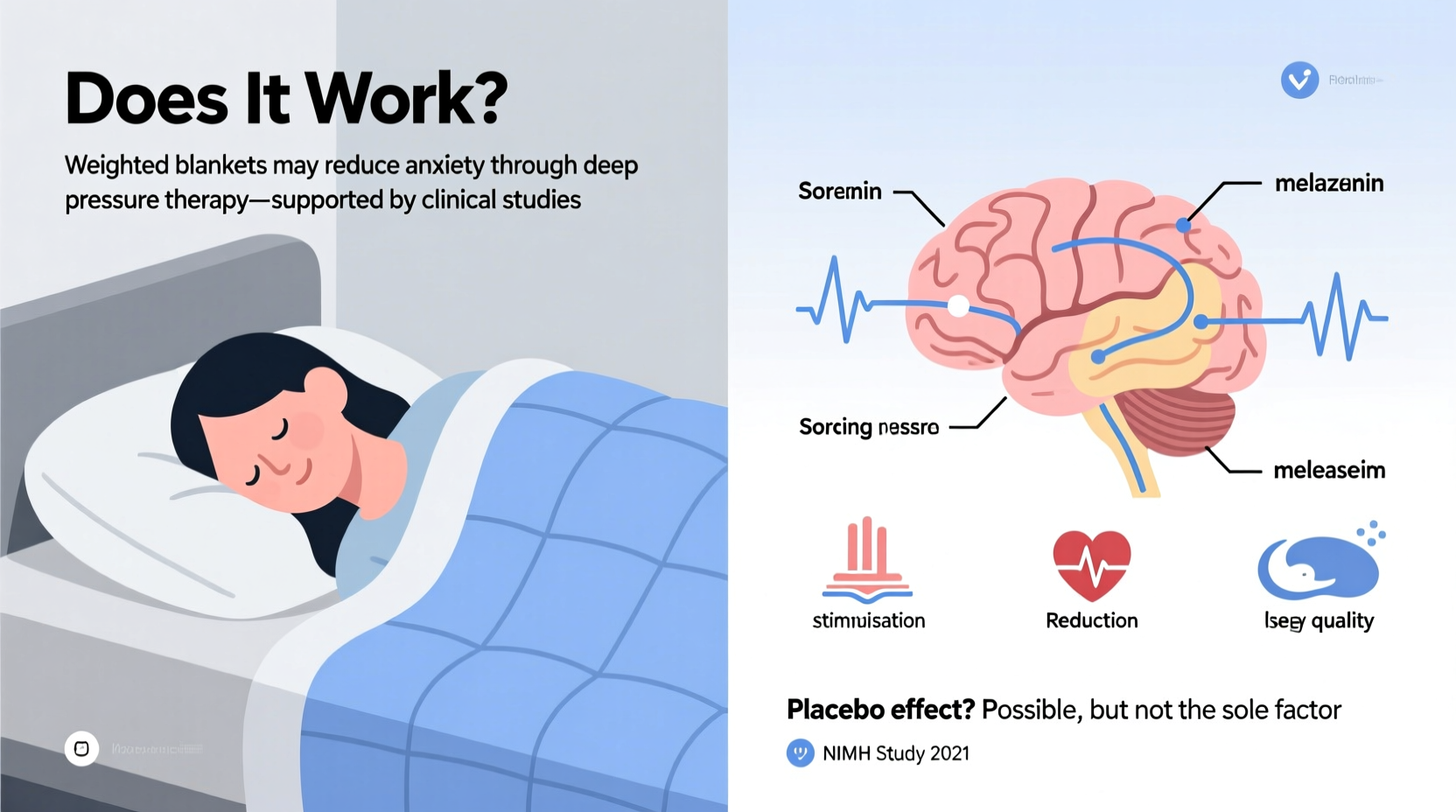
At the core of the weighted blanket’s proposed benefit is a concept called deep pressure stimulation (DPS). DPS refers to the application of firm but gentle pressure over large areas of the body. This type of tactile input has long been used in occupational therapy, particularly for individuals with autism, ADHD, or sensory processing disorders.
Research suggests that DPS can influence the autonomic nervous system—the part responsible for regulating stress responses. When the body receives consistent, distributed pressure, it may trigger a parasympathetic response, shifting from “fight-or-flight” to “rest-and-digest.”
A 2020 study published in Journal of Clinical Sleep Medicine found that adults using a 30-pound weighted blanket experienced significantly lower physiological markers of anxiety, including reduced heart rate and cortisol levels. The researchers concluded that DPS could modulate arousal states, promoting relaxation without sedation.
“Deep pressure isn’t just comforting—it’s neurologically grounding. It can dampen hyperarousal in the amygdala, which plays a key role in fear and anxiety processing.” — Dr. Rebecca Turner, Neuroscientist and Sleep Researcher
How Weighted Blankets Work: Physiology Over Placebo?
While placebo effects are powerful—especially in subjective experiences like anxiety—it’s important to distinguish between psychological belief and measurable biological changes. In the case of weighted blankets, several mechanisms suggest real physiological impact:
- Increased serotonin and melatonin production: DPS may stimulate the release of serotonin, a mood-regulating neurotransmitter. Serotonin is a precursor to melatonin, the hormone that regulates sleep-wake cycles. This dual boost can improve both mood and sleep quality.
- Reduced cortisol levels: Cortisol, often called the stress hormone, tends to decrease when the body feels safe and grounded. Multiple small-scale studies have observed cortisol reductions during and after DPS exposure.
- Activation of the proprioceptive system: This sensory system detects body position and movement. Weighted input enhances proprioception, helping the brain feel more “anchored,” which can reduce feelings of restlessness or dissociation.
These changes aren’t purely perceptual—they’re detectable through blood tests, heart rate variability (HRV), and EEG readings. That said, individual responses vary widely based on sensitivity, weight preference, and underlying conditions.
Evidence vs. Anecdote: What Do Studies Say?
The scientific community remains cautious but increasingly open to the therapeutic potential of weighted blankets. While large-scale, double-blind trials are still limited, existing research offers promising insights.
A 2015 study in the American Journal of Occupational Therapy tested 32 adults exposed to anxiety-inducing situations. Half used a 30-lb weighted blanket; the other half used a light control blanket. Results showed that 63% of participants in the weighted group reported lower anxiety levels, supported by lower pulse rates. Only 4% of the control group reported similar improvements.
Another 2021 randomized controlled trial involving 120 participants with generalized anxiety disorder found that those using weighted blankets for four weeks reported a 25% greater reduction in self-rated anxiety scores compared to the control group. While subjective, the consistency of results across multiple studies suggests an effect beyond mere expectation.
However, critics point out limitations: small sample sizes, reliance on self-reporting, and lack of blinding (participants usually know if they’re using a heavy blanket). These factors do leave room for placebo influence.
Placebo Effect: Can Belief Alone Create Relief?
The placebo effect is not “fake.” It reflects the brain’s ability to generate real physiological changes based on expectation and context. If someone believes a weighted blanket will calm them, their brain may release endorphins or downregulate stress signals—just as if they’d taken medication.
In this sense, even if part of the benefit is psychological, it doesn’t diminish the outcome. As Dr. Paul Zachary, a cognitive psychologist, explains:
“If a person sleeps better, feels calmer, and functions more effectively because they believe in the tool they’re using, that’s a valid therapeutic result—whether it’s 100% biochemical or 50% belief-driven.”
Still, the presence of measurable biomarkers—like lowered heart rate and cortisol—suggests that the effect extends beyond belief. The most accurate conclusion may be that weighted blankets offer a combination of physiological and psychological benefits.
Real-World Use: A Mini Case Study
Sarah, a 34-year-old graphic designer from Portland, had struggled with generalized anxiety for years. She tried meditation, therapy, and medication, but still found herself lying awake at night, overwhelmed by racing thoughts. After reading about weighted blankets, she purchased a 15-pound model (10% of her body weight) made with glass beads for even distribution.
Within three nights, she noticed a difference. “It wasn’t magic,” she says, “but I felt heavier—like my body was being held down gently. My mind didn’t feel so floaty and chaotic.” Over two months, her sleep duration increased from 5.5 to 7 hours per night, and her morning anxiety scores dropped by nearly half on a 10-point scale.
She later participated in a university-led sleep study where her HRV was monitored. Data showed a 22% increase in parasympathetic tone during the first 30 minutes of sleep when using the blanket, compared to baseline. While Sarah acknowledges that her belief in the product played a role, the objective data gave her confidence that something tangible was happening.
Who Benefits Most from Weighted Blankets?
Not everyone responds the same way to weighted blankets. Certain groups tend to report higher satisfaction rates:
- Individuals with anxiety disorders or high stress levels
- People with insomnia or restless leg syndrome
- Those on the autism spectrum or with sensory processing differences
- ADHD patients who struggle with mental hyperactivity
- Anyone seeking non-pharmaceutical support for relaxation
Conversely, some people find the sensation claustrophobic or overheating, especially with poorly designed blankets. Proper material choice (e.g., breathable cotton, bamboo, or moisture-wicking fabric) is crucial for comfort and sustained use.
Checklist: Choosing an Effective Weighted Blanket
- Weight: Aim for 10% of your body weight, plus 1–2 pounds if desired.
- Filling: Glass beads distribute weight more evenly than plastic pellets.
- Fabric: Opt for breathable materials like cotton, bamboo, or microfiber.
- Size: Should cover your body without hanging off the bed excessively.
- Removable cover: Makes cleaning easier and extends lifespan.
- Temperature regulation: Look for cooling technology if you sleep hot.
- Certifications: Check for OEKO-TEX or CertiPUR-US labels for safety.
Common Misconceptions and Pitfalls
Despite growing acceptance, several myths persist about weighted blankets:
| Misconception | Reality |
|---|---|
| They work instantly for everyone. | Adaptation takes time. Some users need 3–7 nights to adjust to the pressure. |
| Heavier is always better. | Excessive weight can restrict breathing and increase anxiety. Follow the 10% rule. |
| They replace therapy or medication. | They are best used as a complementary tool, not a standalone treatment. |
| All weighted blankets are the same. | Quality varies widely in terms of weight distribution, fabric, and durability. |
| Kids can safely use adult-sized blankets. | Children under 50 lbs should only use pediatric-specific models under supervision. |
Step-by-Step Guide to Using a Weighted Blanket Effectively
To maximize benefits and minimize discomfort, follow this practical timeline:
- Week 1: Test and Adjust
Select the right weight and size. Use it during relaxation activities (reading, watching TV) before bedtime to acclimate. - Week 2: Introduce at Bedtime
Use the blanket while falling asleep. Keep bedroom cool (65–68°F) to prevent overheating. - Week 3: Monitor Response
Track sleep quality, anxiety levels, and physical comfort in a journal or app. - Week 4: Evaluate and Refine
Decide whether to continue, switch weights, or combine with other techniques like mindfulness or white noise.
Consistency matters. Like any therapeutic tool, occasional use yields inconsistent results. For best outcomes, integrate the blanket into a broader self-care routine.
Frequently Asked Questions
Can weighted blankets be dangerous?
For healthy adults, weighted blankets are generally safe when used correctly. However, they should not be used by infants, toddlers, or individuals with obstructive sleep apnea, respiratory issues, or circulatory problems without medical approval. Always ensure the user can remove the blanket independently.
Is there a difference between weighted blankets for anxiety vs. sleep?
Not significantly. The calming effect of deep pressure helps with both. However, blankets marketed for sleep often emphasize cooling features, while anxiety-focused ones may highlight portability or lap-weight designs for daytime use.
How long does it take to see results?
Some people feel calmer within minutes. Others take several days to adjust. Clinical studies typically measure outcomes over 2–4 weeks. Patience and regular use are key.
Conclusion: More Than Just Placebo?
The question isn’t whether weighted blankets work—but how and for whom. While the placebo effect undoubtedly contributes, dismissing their value overlooks growing evidence of physiological changes induced by deep pressure stimulation. From reduced cortisol to improved sleep architecture, the data supports a genuine, measurable impact.
That doesn’t mean they’re a cure-all. Individual results depend on proper selection, realistic expectations, and integration into a holistic wellness strategy. But for many, the sensation of being gently held through the night provides a rare sense of safety in an anxious world—one that no pill or app can fully replicate.




 浙公网安备
33010002000092号
浙公网安备
33010002000092号 浙B2-20120091-4
Comments
No comments yet. Why don't you start the discussion?