
In a world increasingly obsessed with minimalism, clean aesthetics, and seamless technology integration, the idea of a \"wireless charging tree\" sounds like something pulled from a sci-fi movie. Sleek branches cradling your devices as they charge—no cords, no clutter, just elegant functionality. But beyond the concept art and viral social media clips, do these devices actually exist? And more importantly, can they realistically serve as a primary charging solution in everyday life?
The short answer is yes—wireless charging trees do exist. They’re not botanical marvels powered by photosynthesis, but rather cleverly designed multi-device wireless chargers shaped like abstract or minimalist trees. However, their existence doesn’t automatically equate to practicality. To understand whether they belong on your nightstand, office desk, or living room shelf, it’s essential to examine their design, performance, usability, and place within the broader landscape of wireless power technology.
What Is a Wireless Charging Tree?
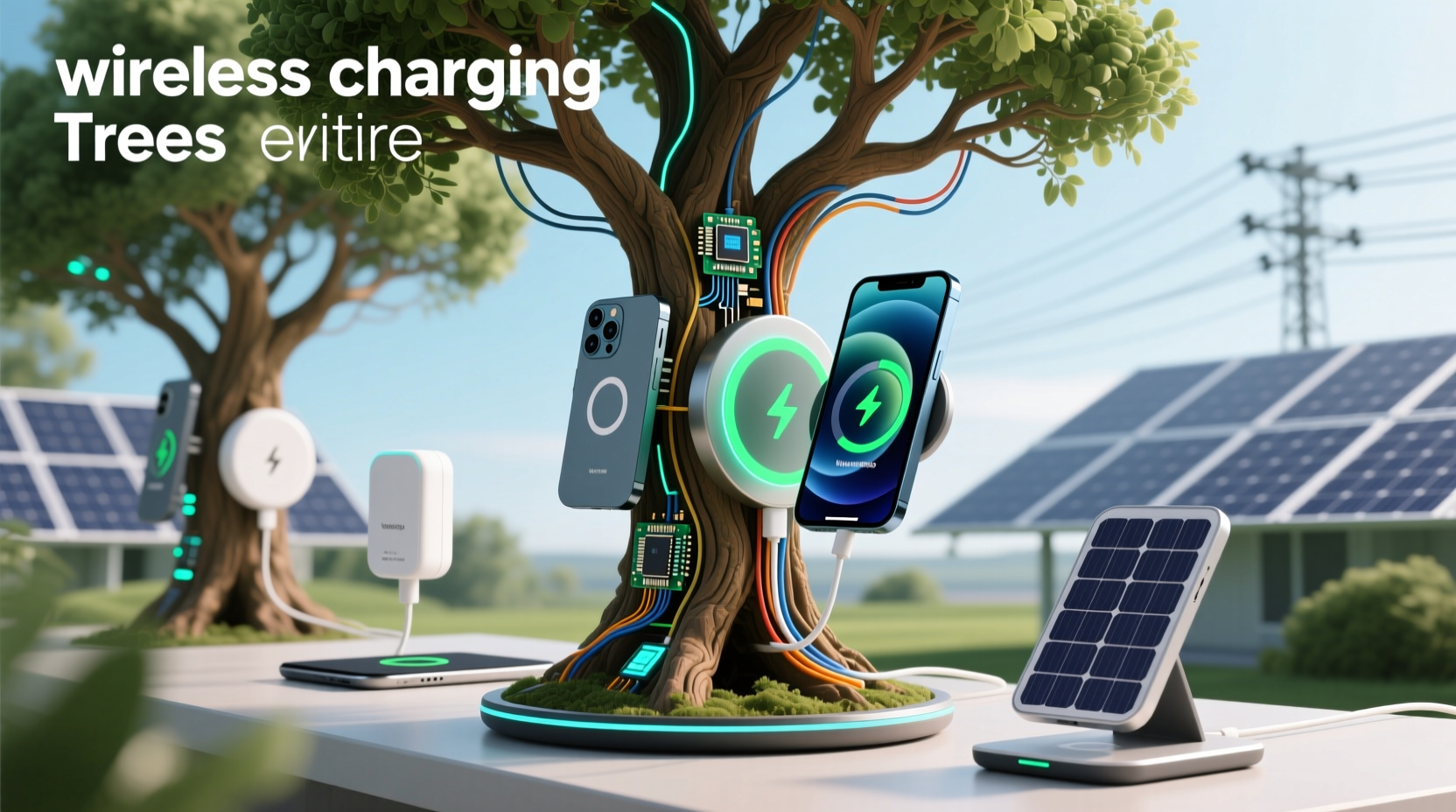
A wireless charging tree is a decorative yet functional charging station that mimics the form of a tree, typically with a central trunk and multiple arms or “branches” ending in wireless charging pads. Each branch holds a device—usually a smartphone, earbuds, or smartwatch—and charges it via Qi or Qi2 wireless standards. These units are often crafted from wood, metal, or high-quality plastic, emphasizing both aesthetic appeal and utility.
Unlike traditional charging docks or power strips, which prioritize function over form, wireless charging trees aim to blend into home or office environments as lifestyle accessories. Some models even integrate ambient lighting or Bluetooth speakers, enhancing their role as multifunctional decor.
While not literally alive, the term “charging tree” has stuck due to its evocative imagery—devices “growing” on a central structure, drawing energy like leaves absorbing sunlight.
How Do Wireless Charging Trees Work?
These devices operate using the same electromagnetic induction principle as standard wireless chargers. A coil inside each charging pad generates an alternating electromagnetic field, which induces a current in a corresponding coil within the compatible device, thereby transferring energy without physical connectors.
Most wireless charging trees connect to a single power source via one cable, distributing electricity internally to each branch. Advanced models include intelligent power distribution, ensuring that higher-wattage devices (like smartphones) receive priority when multiple gadgets are charging simultaneously.
Key technical features commonly found in modern models include:
- Qi or Qi2 certification for universal compatibility
- Individual charging pads rated between 5W and 15W
- Overheat protection and foreign object detection (FOD)
- Non-slip silicone surfaces to keep devices in place
- Integrated USB-C or USB-A ports for hybrid charging options
Despite their artistic form, these units adhere to strict electrical safety standards. Reputable brands undergo certifications such as FCC, CE, and RoHS compliance to ensure reliability and user safety.
Are They Practical for Daily Use? A Real-World Evaluation
The allure of a wireless charging tree lies in its promise of order and elegance. But does it deliver in practice? Let’s break down the pros and cons based on real-world usage scenarios.
Advantages
- Cable-Free Convenience: Eliminates tangled cords, especially beneficial in shared spaces like nightstands or work desks.
- Aesthetic Integration: Designed to complement modern interiors, some models resemble art pieces more than electronics.
- Multi-Device Support: Charges phones, watches, and earbuds simultaneously—ideal for users with full Apple or Samsung ecosystems.
- Reduced Port Wear: Minimizes wear and tear on device charging ports caused by repeated plugging and unplugging.
- Easy Access: Devices remain visible and accessible while charging, reducing the chance of misplacement.
Limitations
- Slower Charging Speeds: Most wireless charging trees offer 7.5W–10W per pad, significantly slower than wired fast charging (up to 25W+ on many phones).
- Precise Placement Required: Devices must be aligned correctly on each pad; slight shifts can interrupt charging.
- Heat Build-Up: Prolonged wireless charging generates heat, potentially affecting battery longevity over time.
- Higher Cost: Premium designs can cost $100–$250, far exceeding basic multi-port chargers.
- Size and Footprint: Taller models may not fit in compact spaces or under cabinets.
“Wireless charging trees excel in environments where design and convenience matter more than speed. They’re ideal for secondary charging stations, not replacements for high-performance wired setups.” — Daniel Reeves, Consumer Electronics Analyst at TechInsight Weekly
Comparison: Wireless Charging Tree vs. Traditional Solutions
| Feature | Wireless Charging Tree | Multi-Port Wall Charger + Cables | Dock & Stand Combo |
|---|---|---|---|
| Charging Speed | Slow to moderate (5–10W) | Fast (18–30W+) | Moderate (wired or 7.5W wireless) |
| Cable Management | Excellent (cordless) | Poor (multiple cables) | Fair (some cables exposed) |
| Device Compatibility | Qi/Qi2 only | Universal (USB-C/Lightning) | Varies by model |
| Aesthetic Appeal | High (design-focused) | Low (utilitarian) | Moderate |
| Price Range | $80–$250 | $20–$60 | $40–$120 |
| Best For | Nightstand, lounge, gift | Office, travel, speed needs | Desk, bedside table |
This comparison reveals that wireless charging trees occupy a niche: they’re best suited for users who value aesthetics and simplicity over raw performance. They thrive in low-pressure charging environments—like overnight bedside charging—where speed is less critical.
Real Example: Life with a Charging Tree for One Week
Sarah, a graphic designer living in Portland, decided to replace her cluttered nightstand setup with a walnut-finished wireless charging tree. Her previous arrangement included a tangle of three cables—one for her iPhone, one for AirPods, and another for her Apple Watch dock.
After setting up the charging tree, she noticed immediate improvements in visual cleanliness. Each evening, she placed her phone face-up on the largest branch, slipped her AirPods case onto a smaller pad, and rested her Apple Watch on a dedicated curved perch. The unit also featured soft LED lighting, which she used as a dim nightlight.
However, after a few days, Sarah realized her iPhone took nearly two hours longer to reach full charge compared to her old 20W wall charger. On mornings when she needed a quick top-up before leaving, she reverted to wired charging. She also found that if her phone shifted slightly during the night, charging would stop entirely—a frustration absent with cables.
Ultimately, Sarah kept the charging tree but repositioned it as a secondary, relaxation-focused station. She now uses it primarily on weekends or when hosting guests, appreciating its calming presence. For weekday efficiency, she returns to a hybrid approach: wired charging for speed, and the tree for evenings when she wants to unwind without digital chaos.
Step-by-Step: How to Choose and Set Up a Wireless Charging Tree
- Assess Your Device Ecosystem: List all devices you plan to charge. Ensure they support Qi or Qi2 wireless charging. Note any special requirements (e.g., MagSafe alignment for iPhones).
- Determine Charging Needs: Decide whether you prioritize speed, capacity, or design. If you frequently need fast charging, consider a hybrid model with wired ports.
- Measure Your Space: Check available surface area. Most trees range from 8 to 14 inches in height and require stable, flat surfaces away from moisture.
- Check Power Output: Look for models offering at least 10W per pad if you own newer smartphones. Avoid units with unbranded or uncertified chips.
- Select a Style That Fits Your Decor: Choose materials—wood, metal, matte plastic—that match your interior. Neutral tones integrate better than flashy colors.
- Install and Test: Plug in the unit, place each device gently on its pad, and confirm charging begins (look for indicator lights or on-screen notifications).
- Establish a Routine: Make it a habit to place devices on the tree each evening. Keep the area dust-free to maintain sensor accuracy.
Expert Recommendations and Future Outlook
Industry experts agree that while wireless charging trees are not revolutionary in terms of technology, they represent an important shift toward human-centered design in consumer electronics.
“The future of charging isn’t just about watts or efficiency—it’s about how seamlessly power integrates into our lives. Products like charging trees reflect a growing demand for tech that feels natural, not intrusive.” — Dr. Lena Park, Human-Computer Interaction Researcher, MIT Media Lab
Looking ahead, advancements in resonant wireless charging could enable true “room-scale” power delivery, eliminating the need for contact-based pads altogether. Companies like WiTricity and Energous are experimenting with mid-range wireless transmission, which could one day make charging trees obsolete—not because they failed, but because they paved the way for even greater convenience.
Until then, current models serve as transitional objects: beautiful placeholders in the journey toward truly cordless living.
FAQ
Can I charge non-Qi devices on a wireless charging tree?
No. Only devices with built-in Qi or Qi2 wireless charging capability can be charged. This includes most modern smartphones (iPhone 8 and later, Samsung Galaxy S series, Google Pixel), wireless earbuds cases, and smartwatches with compatible receivers.
Do wireless charging trees damage phone batteries?
Not directly, but frequent overheating during extended wireless charging can accelerate long-term battery degradation. Modern phones have thermal management systems, but it’s still advisable to avoid prolonged charging at high temperatures. Removing the phone once fully charged helps preserve battery health.
Are there wireless charging trees with MagSafe support?
Yes. Some premium models, particularly those marketed for iPhone users, feature MagSafe-compatible coils with magnetic alignment to ensure optimal contact and faster 15W charging. Look for explicit “MagSafe-certified” labeling when purchasing.
Final Thoughts: Beauty Meets Function—With Caveats
Wireless charging trees are more than novelty items—they are tangible expressions of a desire for cleaner, quieter technology. They exist, they work, and for the right user, they can enhance daily routines by reducing visual noise and simplifying device management.
But practicality depends on context. They are not replacements for high-speed charging solutions. They won’t save you time in the morning rush. And they come at a premium price for what remains, fundamentally, a slower charging method.
Yet, in the quiet moments—when you place your phone down at night, when your space reflects calm and intention—these devices deliver value beyond watts and volts. They offer peace of mind, organization, and a small victory against digital clutter.




 浙公网安备
33010002000092号
浙公网安备
33010002000092号 浙B2-20120091-4
Comments
No comments yet. Why don't you start the discussion?