
Christmas light displays have evolved from simple string lights wrapped around eaves into immersive, multi-sensory experiences. In recent years, homeowners and professional decorators alike have begun incorporating fog machines to elevate their seasonal setups. The ethereal mist can transform a standard display into something resembling a winter wonderland—or a haunted house from November to January. But where’s the line between enhancement and overkill? Is a fog machine a tasteful addition or an unnecessary spectacle that distracts from the true spirit of the season?
The answer isn’t black and white. Fog machines can amplify visual impact, deepen color saturation, and add depth to lighting effects—but only when used thoughtfully. Misused, they risk creating confusion, obstructing views, or even irritating neighbors. This article explores how fog interacts with light, weighs its artistic benefits against practical drawbacks, and provides actionable guidance for those considering whether to add this atmospheric effect to their holiday display.
The Science Behind Fog and Light
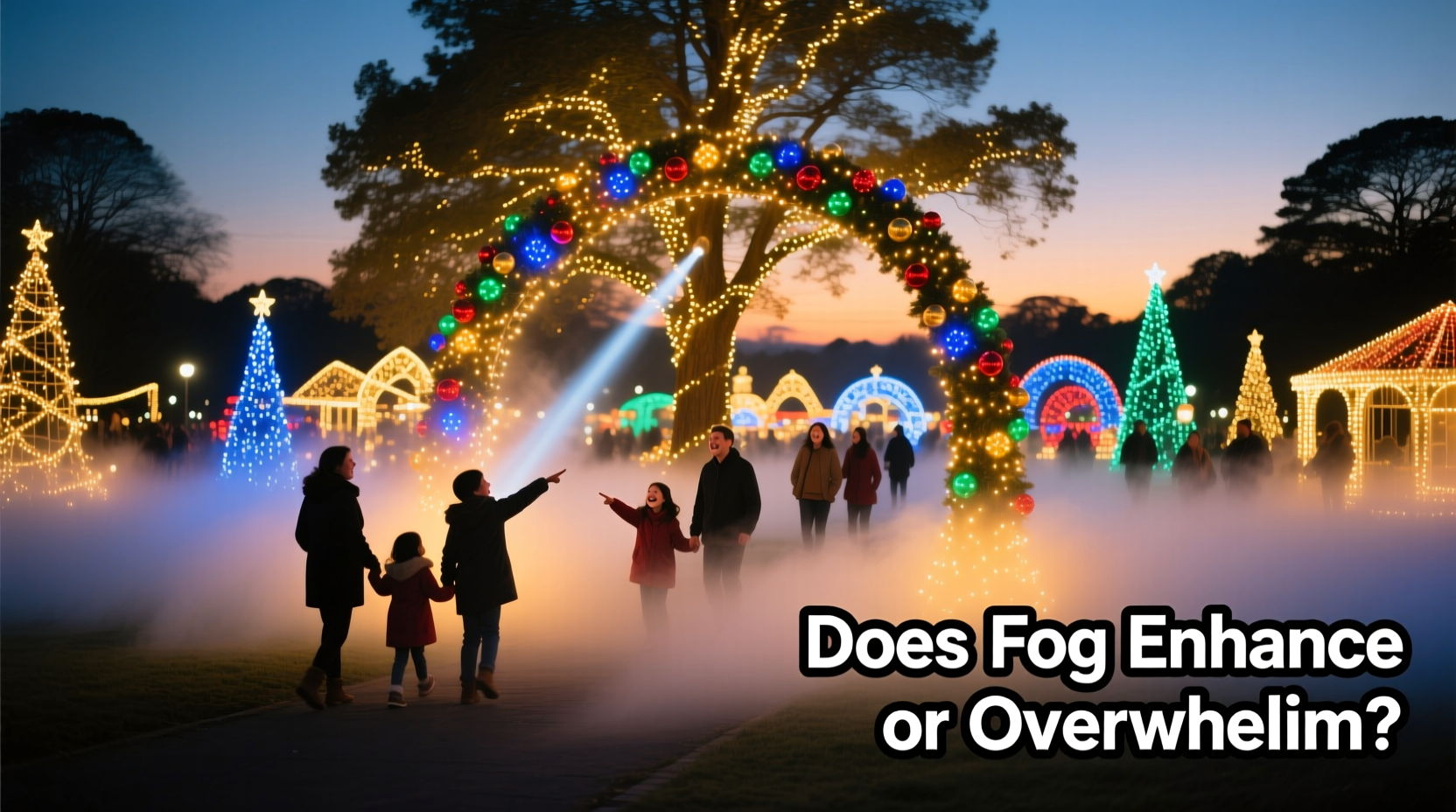
Fog machines work by heating a glycol- or water-based fluid until it vaporizes, producing a dense, low-lying mist. When this fog is introduced into a lit environment, it scatters light rays, making beams visible in ways they wouldn’t be in clear air. This phenomenon—called the Tyndall effect—is why laser shows and stage performances rely on fog to make light paths tangible.
In the context of Christmas lights, fog can:
- Highlight individual strands or patterns by diffusing glow
- Create depth and dimension, especially in layered displays
- Enhance colored lighting, making hues appear richer and more saturated
- Add motion and atmosphere, mimicking natural winter conditions
Outdoor use presents unique challenges. Unlike indoor venues, open yards lack containment, so fog disperses quickly unless temperatures are low and wind is minimal. Most fog machines perform best when ambient temperatures are below 50°F (10°C), which aligns well with typical winter nights in many regions.
“Fog doesn’t just add atmosphere—it reveals light. What was invisible becomes dramatic. But like any tool, it must serve the design, not dominate it.” — Marcus Lin, Lighting Designer & Theme Park Exhibit Consultant
When Fog Enhances: Creative Applications That Work
Used strategically, fog can turn a good display into a memorable one. Consider these effective applications:
Creating Depth in Layered Displays
If your setup includes multiple planes—foreground figures, mid-range trees, background inflatables—fog can separate these layers visually. A thin veil of mist softens distant elements while keeping foreground objects crisp, mimicking natural depth perception.
Highlighting Laser or Projector Effects
Laser projectors that cast snowflakes or stars across rooftops become significantly more dramatic when fog makes the beams visible. Without fog, these effects may appear faint or underwhelming, especially in suburban areas with ambient light pollution.
Mimicking Natural Winter Ambiance
In regions where snow is rare, fog can evoke a chilly, frosty mood. Paired with cool-white LEDs and subtle blue tints, the effect suggests a quiet, snowy night—even if the ground is bare.
When Fog Goes Too Far: Common Pitfalls
Not every yard benefits from fog. Overuse or poor placement can undermine the display’s charm. Here are common missteps:
- Obstructing visibility: Thick fog can obscure decorations entirely, defeating the purpose of a light show.
- Drifting onto sidewalks or roads: Fog spilling into public spaces may impair pedestrian or vehicle visibility, raising safety concerns.
- Offensive odors: Low-quality fog fluids can emit a burnt or chemical smell, especially after prolonged use.
- Excessive noise: Some fog machines have loud fans or pumps that disrupt the tranquil mood of a holiday scene.
- Neighbor complaints: Constant fog output may be seen as theatrical, disruptive, or even associated with suspicious activity (e.g., mistaken for smoke).
A real-world example illustrates this balance. In Naperville, Illinois, a homeowner installed a 10-minute synchronized light and music show featuring reindeer animations, strobe effects, and a heavy fog component. While initially popular, complaints arose when the fog drifted across the street, covering a neighbor’s driveway and porch. After discussions with local officials and mediation, the owner adjusted the machine’s angle, reduced output duration, and switched to a biodegradable fluid. The revised display maintained its magic without infringing on others’ space.
Mini Case Study: The Frostvale Family Display
The Frostvale family in Portland, Oregon, runs an annual drive-through holiday display benefiting a local children’s charity. In 2022, they introduced fog near their centerpiece—a 12-foot illuminated tree surrounded by glowing deer silhouettes. Initially, they used two high-output machines running continuously. Visitors reported difficulty seeing the sculptures, and the fog pooled heavily on the lawn, creating slippery conditions.
For 2023, they redesigned the effect: fog now activates in 30-second bursts timed with musical crescendos. Machines are elevated slightly and aimed downward, using chilled trays to keep fog low but contained. Feedback improved dramatically—guests described the experience as “cinematic” rather than “overwhelming.”
Best Practices: A Step-by-Step Guide to Using Fog Responsibly
If you’re considering adding fog to your Christmas lights, follow this timeline to ensure a safe, effective, and neighbor-friendly result.
- Assess Your Space (Week 1)
Walk your yard at night. Note proximity to sidewalks, streets, and neighboring homes. Identify prevailing wind direction. Avoid placing fog machines where drift could cause issues. - Choose the Right Equipment (Week 2)
Select a cold-mist or low-lying fog machine designed for outdoor use. Look for models with remote control or timer functions to regulate output. - Test Fluid Quality (Week 3)
Purchase a small batch of premium, odorless fog fluid. Run a short test in your yard. Check for smell, residue, and dissipation time. Avoid off-brand fluids that may clog machines or stain surfaces. - Conduct a Dry Run (Week 4)
Set up the machine and lights together without fog. Then activate fog in short bursts. Observe how light interacts with mist. Adjust positioning to highlight key features without obscuring them. - Engage Neighbors Early (Ongoing)
Inform nearby residents of your plans. Offer a private preview. Address concerns proactively—many will appreciate the gesture and may even enjoy the display more knowing it was considerate. - Monitor and Adapt (Throughout Season)
Check weather conditions nightly. Turn off fog during windy or rainy nights. Clean the machine regularly to prevent buildup and maintain performance.
Do’s and Don’ts: Fog Machine Etiquette
| Do | Don't |
|---|---|
| Use fog in short bursts aligned with music or light sequences | Run fog machines continuously for hours |
| Position machines away from public walkways | Place fog units near sidewalks or driveways |
| Invest in odorless, non-toxic fog fluid | Use old or unknown-brand fluids that may smell or irritate |
| Check local ordinances—some towns restrict fog or haze effects | Assume all decorative effects are permitted everywhere |
| Pair fog with cooler color temperatures (blues, whites) for winter feel | Combine fog with red/green strobes, which can resemble emergency signals |
Frequently Asked Questions
Can fog machines damage my lights or decorations?
Generally, no. Most modern Christmas lights are weather-resistant and unaffected by brief exposure to fog. However, avoid directing fog nozzles directly at electrical connections or power strips. Moisture buildup over time could pose risks, so position machines to disperse mist sideways or upward, not straight at equipment.
Are fog machines safe for pets and people?
Yes, when using certified, non-toxic fluids. Reputable brands comply with ASTM or EU safety standards. That said, some individuals with asthma or sensitivities may react to airborne particles. If you know neighbors have respiratory conditions, err on the side of caution and limit usage or skip fog altogether.
How much does it cost to run a fog machine during the holidays?
Operating costs depend on machine size and runtime. A standard residential unit uses about $0.10–$0.25 worth of fluid per hour. If run for two hours nightly over 30 days, expect to spend $6–$15 in fluid. Electricity use is minimal—comparable to a small fan. Budget for potential maintenance, such as cleaning coils or replacing wicks annually.
Checklist: Preparing Your Fog Machine for Holiday Use
- ☐ Purchase high-quality, odorless fog fluid
- ☐ Test machine functionality before installation
- ☐ Position unit away from foot traffic and roadways
- ☐ Set timer or remote control for intermittent use
- ☐ Inform neighbors of planned effects
- ☐ Monitor weather and disable fog on windy nights
- ☐ Clean machine after season to extend lifespan
Conclusion: Striking the Right Balance
Fog machines aren’t inherently excessive—they’re tools. Like spotlights, sound systems, or animated figures, their value depends on intent and execution. When used with restraint and creativity, fog can deepen the emotional resonance of a Christmas display, evoking nostalgia, wonder, and seasonal magic. But when deployed without consideration for context, community, or clarity, they risk becoming gimmicks that overshadow the warmth and simplicity at the heart of holiday traditions.
The goal isn’t to outshine the block, but to share joy in a way that feels authentic and inclusive. Whether your display is modest or magnificent, ask yourself: does the fog enhance the story I’m telling, or does it distract from it? With thoughtful planning, the right equipment, and respect for your surroundings, fog can be the subtle brushstroke that completes a beautiful holiday picture.




 浙公网安备
33010002000092号
浙公网安备
33010002000092号 浙B2-20120091-4
Comments
No comments yet. Why don't you start the discussion?