
For generations, the aroma of a fresh-cut Christmas tree has been synonymous with the holiday season—pine resin, citrusy terpenes, and that unmistakable crisp greenness evoking childhood mornings and quiet family moments. Yet as more households opt for pre-cut trees, potted firs, or even high-quality artificial alternatives, the natural fragrance often fades—or never arrives at all. In response, a growing number of consumers turn to scent enhancers: sprays, diffusers, essential oil blends, and even scented tree water additives. But does deliberately amplifying or introducing fragrance actually deepen the emotional resonance, perceived authenticity, or overall enjoyment of the tree? Or does it risk feeling artificial, overwhelming, or even counterproductive? This question sits at the intersection of olfactory psychology, horticultural science, and lived holiday experience—and the answer is more nuanced than a simple yes or no.
The Science Behind Scent and Seasonal Memory
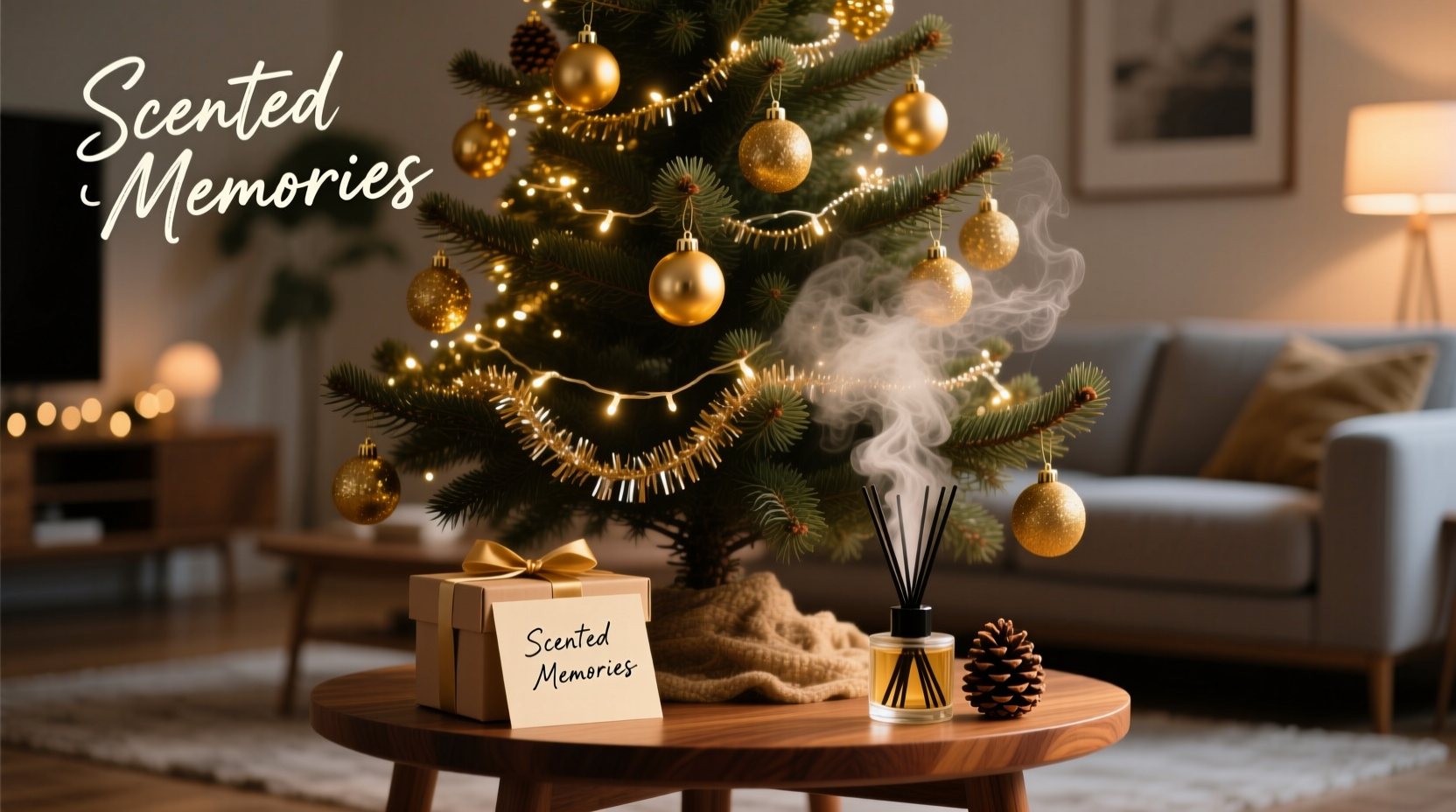
Our sense of smell is uniquely wired to the limbic system—the brain’s emotional and memory-processing center. Unlike visual or auditory input, olfactory signals bypass the thalamus and travel directly to the amygdala and hippocampus. This neurobiological shortcut explains why a single whiff of balsam fir can instantly transport someone to their grandparents’ living room in 1997, or why the scent of cinnamon and clove triggers visceral warmth and anticipation. Research from the Monell Chemical Senses Center confirms that odor-evoked memories are not only more emotionally intense but also more likely to be retrieved spontaneously and with greater sensory detail than those triggered by other cues.
However, not all tree-related scents carry equal psychological weight. A 2021 study published in Environment and Behavior tested participant responses to four common conifer profiles: balsam fir (rich, sweet, resinous), Douglas fir (bright, citrus-tinged), white pine (soft, slightly honeyed), and Scotch pine (sharp, turpentine-like). Participants consistently rated balsam fir as most “nostalgic” and “comforting,” while Scotch pine scored highest for “alerting” but lowest for “cozy.” Crucially, the study found that *authenticity perception*—whether participants believed the scent matched a “real Christmas tree”—was strongly tied to congruence between visual cues (needles, bark texture, branch density) and olfactory input. When a lush, full Fraser fir was paired with a synthetic balsam spray, 84% reported enhanced immersion; when the same spray was applied to a sparse, needle-shedding artificial tree with visible plastic joints, over 60% described the combination as “dissonant” or “uncanny.”
“The power of tree scent isn’t just in the molecules—it’s in the coherence of the entire sensory tableau. A mismatched fragrance doesn’t just fail to enhance; it can subtly undermine trust in the experience itself.” — Dr. Lena Torres, Environmental Psychologist and author of Scent & Season: How Smell Shapes Holiday Well-being
Practical Methods: What Works—and What Doesn’t
Not all scent-integration strategies deliver equal results. Effectiveness depends on volatility (how quickly compounds evaporate), longevity, safety around heat and pets, and compatibility with tree physiology. Below is a comparison of five widely used approaches:
| Method | How It Works | Pros | Cons | Best For |
|---|---|---|---|---|
| Essential Oil Sprays (diluted) | Mist applied directly to branches 1–2x daily | Natural ingredients; customizable blends; immediate effect | Rapid evaporation; may dry needles faster; risk of residue buildup | Short-term enhancement (3–7 days); small to medium real trees |
| Scented Tree Water Additives | Liquid concentrate added to tree stand reservoir | Long-lasting; hydrates while scenting; no direct needle contact | Limited evidence of significant vapor release; may interfere with water uptake if overly viscous | Fresh-cut trees with active water absorption |
| Passive Diffusers (near base) | Ultrasonic or reed diffuser placed 12–18 inches from trunk | Consistent output; no tree contact; safe for artificial trees | No direct association with tree source; scent feels ambient rather than intrinsic | Artificial trees; allergy-sensitive households; modern minimalist decor |
| Pine Needle Infusions (DIY) | Fresh clippings steeped in warm water, then poured into stand | Fully natural; reinforces tree freshness; subtle, evolving aroma | Requires frequent replenishment; may promote mold if water isn’t changed every 2 days | Home gardeners; eco-conscious users; small real trees |
| Commercial “Tree Scent” Gels | Gel pods placed in tree stand or hung on lower branches | Slow-release; long shelf life; minimal maintenance | Often contain synthetic musks or phthalates; inconsistent dispersion; potential pet toxicity | Low-effort households; renters with strict no-spray policies |
A Real-World Example: The Anderson Family’s Three-Year Experiment
In Portland, Oregon, the Andersons—a family of four with two young children and a dog—began tracking their tree experience in 2021 after noticing their 7-foot Noble fir lost its signature scent within 48 hours of setup. They committed to a controlled three-year comparison:
- 2021 (Baseline): No added scent. Used tap water in stand. Noted strong initial aroma fading by Day 2; children said the tree “looked like Christmas but didn’t smell like it.”
- 2022 (Essential Oil Spray): Daily mist of 12 drops balsam fir + 3 drops orange essential oil in 1 cup distilled water. Result: Scent remained perceptible through Day 9, but needle drop increased by ~18% compared to baseline—likely due to accelerated evaporation stress.
- 2023 (Hybrid Approach): Pine needle infusion (1/4 cup fresh clippings in 1 gallon stand water, refreshed every 48 hrs) + passive reed diffuser (balsam/clove blend) placed behind the tree. Result: Consistent, layered scent profile lasting 14 days; needle retention matched 2021 baseline; children spontaneously commented, “It smells like walking in the woods near Grandma’s cabin.”
What stood out wasn’t just longevity—it was *dimensionality*. The infusion provided a soft, green, damp-earth foundation, while the diffuser added warmth and spice. Together, they created a richer, more believable olfactory environment than either method alone.
Step-by-Step: Building a Coherent, Safe Scent Strategy
Enhancing tree fragrance effectively requires intention—not just application. Follow this sequence to maximize impact while protecting your tree and household:
- Assess Your Tree Type & Environment: Is it freshly cut (ideal for water-based methods), potted (avoid additives that alter soil pH), or artificial (use only ambient diffusion)? Note proximity to heating vents, windows, and pets.
- Optimize Hydration First: Before scenting, ensure your tree stand holds at least one quart of water per inch of trunk diameter. Make a fresh 1/4-inch cut straight across the base and place in water within two hours. A well-hydrated tree emits more natural volatile organic compounds (VOCs).
- Choose One Primary Method: Select based on your assessment—infusion for real trees, passive diffusion for artificial or sensitive homes. Avoid layering sprays *and* gels; competing delivery systems reduce efficacy and increase risk.
- Introduce Gradually: Begin scenting on Day 2—not Day 1—to let natural aroma establish. Use half the recommended concentration initially. Observe reactions from family members and pets for 24 hours.
- Maintain & Monitor: Refresh infusions every 48 hours. Wipe diffuser reeds weekly. Discard any cloudy or slimy water immediately. Discontinue use if you notice increased needle drop, discoloration, or respiratory irritation.
FAQ: Addressing Common Concerns
Can scented additives harm my real Christmas tree?
Yes—some can. Synthetic gels or alcohol-based sprays may clog the xylem vessels responsible for water uptake, accelerating dehydration. Even natural additives like honey or sugar (sometimes recommended online) feed bacteria and mold in the stand water, forming biofilm that blocks absorption. Stick to clean, plant-based infusions or EPA-approved, non-toxic commercial additives labeled specifically for live trees.
Are essential oils safe around pets and children?
Not universally. Tea tree, eucalyptus, citrus, and pine oils can be toxic to cats and dogs if ingested or inhaled in high concentrations. Children under five are more susceptible to respiratory irritation from volatile compounds. If you have pets or young children, choose pet-safe oils (like lavender or copaiba) at very low dilution (5 drops per cup), or opt for passive diffusion placed well out of reach. Never apply oils where pets might lick branches.
Why does my artificial tree smell “chemical” instead of “pine”?
Most artificial trees are made from PVC or PE plastics that emit volatile organic compounds (VOCs) like vinyl chloride and phthalates—especially when new or exposed to heat. These odors are inherently incompatible with natural conifer profiles. Masking them with pine scent rarely works; instead, air out the tree outdoors for 48 hours before bringing it inside, and use activated charcoal pouches nearby to absorb off-gassing compounds. Then introduce scent via a separate, dedicated diffuser—not sprays on the plastic itself.
Conclusion: Enhancing Meaning, Not Just Aroma
Adding scent to your Christmas tree does enhance the experience—but only when done thoughtfully, safely, and in service of deeper connection. It’s not about manufacturing nostalgia or covering up shortcomings. It’s about honoring how profoundly scent anchors us to time, place, and feeling. A well-chosen, well-applied fragrance can soften the edges of a hectic December, invite slower presence, and make ritual feel more intentional. It can help a child associate the rustle of tinsel with the warmth of cinnamon, or remind a grieving adult of shared laughter beneath the same boughs years ago. That power is real. But it’s fragile. It dissolves under synthetic overload, inconsistency, or disregard for the tree’s physical needs.
So this year, pause before reaching for the strongest pine spray on the shelf. Ask yourself: What memory do I want this tree to hold? What feeling should linger in the room long after the ornaments are packed away? Then choose your method—not for intensity, but for integrity. Let scent serve the season, not dominate it. And when your family gathers beneath the lights, breathe deeply—not because the aroma is loud, but because it feels true.




 浙公网安备
33010002000092号
浙公网安备
33010002000092号 浙B2-20120091-4
Comments
No comments yet. Why don't you start the discussion?