
In an era where chronic stress has become a public health concern, people are turning to alternative therapies with growing interest. Aromatherapy—using essential oils extracted from plants for therapeutic purposes—is one of the most popular. Lavender on your pillow, eucalyptus in your shower, citrus diffused in your office—these practices are common, but do they genuinely reduce stress, or are we simply responding to expectation?
The debate isn’t trivial. If aromatherapy works primarily through the placebo effect, that doesn’t make it useless. But understanding its true mechanism can help us use it more effectively, set realistic expectations, and integrate it wisely into mental wellness routines.
The Science of Smell and Stress Regulation
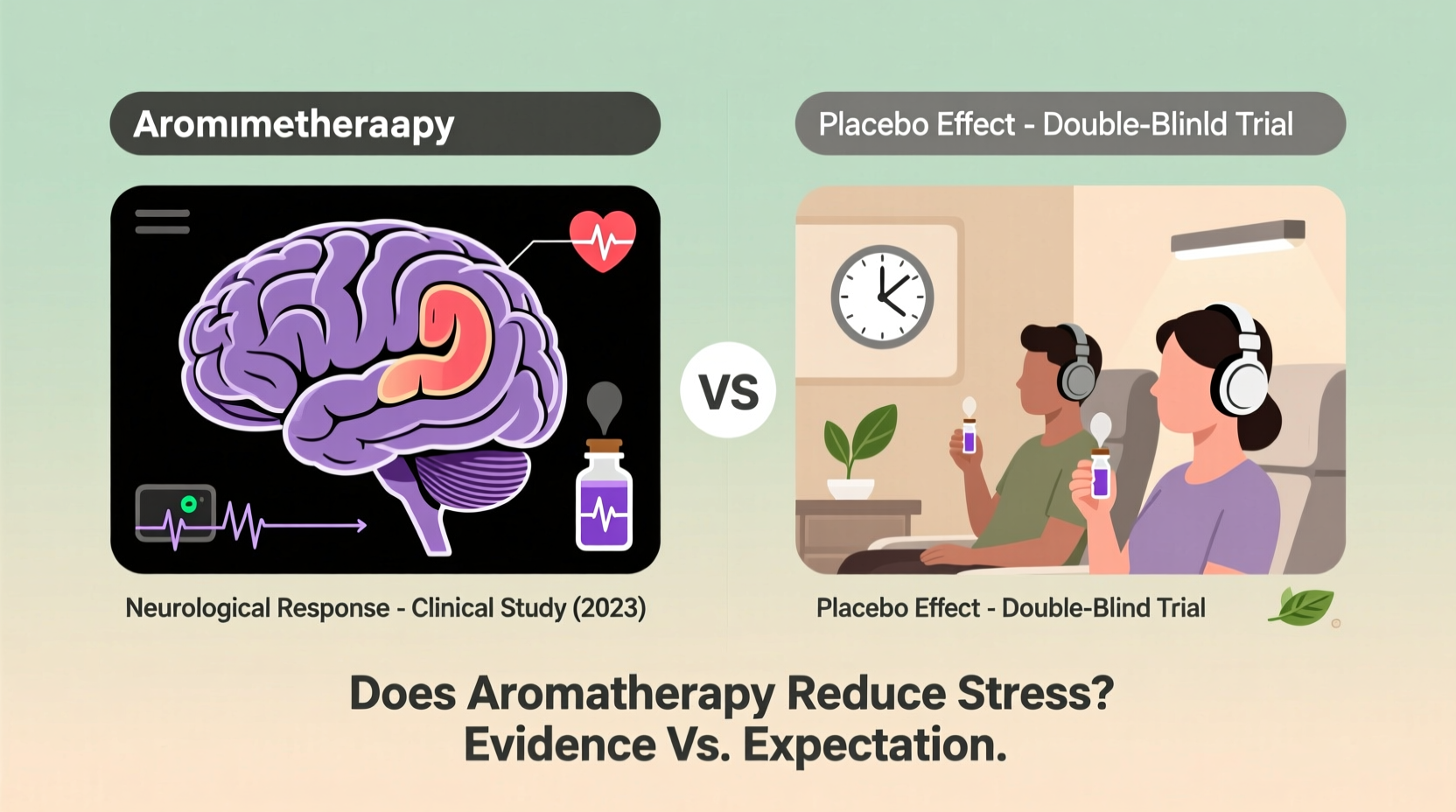
The olfactory system—the body’s sense of smell—is uniquely wired to influence emotion and memory. Unlike other senses, smell bypasses the thalamus and travels directly to the limbic system, which governs emotions, motivation, and long-term memory. This direct neural pathway explains why a whiff of pine needles might instantly evoke childhood camping trips or why certain scents trigger calm—or anxiety.
When inhaled, aromatic molecules interact with olfactory receptors in the nasal cavity. These signals are sent to the amygdala and hippocampus, brain regions involved in emotional processing and stress response. In theory, this means certain scents could modulate physiological reactions like heart rate, cortisol levels, and nervous system activity.
Studies using functional MRI have shown that lavender, for example, reduces activity in the amygdala, suggesting a dampening of fear and anxiety responses. Similarly, bergamot and ylang-ylang have been associated with increased parasympathetic (\"rest-and-digest\") nervous system activity, which counteracts the \"fight-or-flight\" state.
“Olfaction is the only sensory system with immediate access to the emotional brain. That gives scent a unique advantage in influencing mood and stress.” — Dr. Rachel Herz, Cognitive Neuroscientist and Author of *The Scent of Desire*
Clinical Evidence: What Does the Research Say?
Over the past two decades, numerous clinical trials have investigated whether aromatherapy produces measurable reductions in stress markers. The results are mixed but increasingly supportive under specific conditions.
A 2020 meta-analysis published in Complementary Therapies in Clinical Practice reviewed 35 randomized controlled trials involving over 2,500 participants. It found that inhalation of lavender essential oil significantly reduced self-reported anxiety and lowered physiological indicators such as systolic blood pressure and heart rate, particularly in preoperative and dental settings.
Another study conducted at Meiji University in Japan demonstrated that inhaling lemon essential oil improved cognitive performance while reducing salivary cortisol levels—a key biomarker of stress. Participants exposed to lemon aroma showed a 20% greater reduction in cortisol compared to controls.
However, not all studies show consistent results. Some research indicates minimal difference between real essential oils and unscented placebos when participants don’t know which they’re receiving. This raises the question: Is the benefit coming from the chemical properties of the oil, or from belief?
Placebo or Not? The Power of Belief in Healing
The placebo effect is often dismissed as “it’s all in your head,” but modern neuroscience shows it’s very much real—and powerful. Expectation can activate the same neurochemical pathways as pharmaceutical drugs. Placebos have been shown to trigger dopamine release, reduce pain perception, and even improve motor function in Parkinson’s patients.
In the context of aromatherapy, belief plays a significant role. If someone associates lavender with relaxation due to repeated positive experiences—such as using it before bedtime or during spa treatments—their brain may automatically initiate calming responses upon exposure, regardless of the oil’s pharmacological activity.
Yet, here's the nuance: **even if part of aromatherapy’s benefit is placebo, it doesn’t mean it’s ineffective.** The mind-body connection is legitimate. A 2018 study in PLOS ONE found that participants who believed they were inhaling a “calming” scent reported lower stress—even when they were actually smelling a neutral compound. However, those who received real lavender oil still showed greater improvements in objective measures like skin conductance (a marker of sympathetic nervous system arousal).
This suggests a dual mechanism: some effects are pharmacological, others psychological—but both contribute to real outcomes.
How to Use Aromatherapy Effectively: A Practical Guide
Whether the benefits stem from biochemistry or belief, how you use aromatherapy matters. Intentional, consistent application increases the likelihood of meaningful results.
Step-by-Step: Building a Stress-Reducing Aromatherapy Routine
- Choose evidence-backed oils: Start with essential oils that have clinical support—lavender, bergamot, frankincense, and chamomile top the list for stress reduction.
- Select your delivery method: Inhalation is most effective. Use a diffuser, personal inhaler, or add a few drops to a tissue. Avoid heating oils excessively, as this can degrade active compounds.
- Create a ritual: Pair scent with a calming habit—deep breathing, journaling, or meditation. Repetition strengthens the brain’s association between the smell and relaxation.
- Use consistently for 2–4 weeks: Like any behavioral intervention, effects may be subtle at first. Track changes in mood, sleep quality, or perceived stress levels.
- Adjust based on response: Not all oils work for everyone. Some find citrus uplifting but overstimulating at night; others may dislike floral notes. Personal preference matters.
| Essential Oil | Key Benefits | Best Time to Use | Scientific Support Level |
|---|---|---|---|
| Lavender (Lavandula angustifolia) | Reduces anxiety, improves sleep quality | Evening, before bed | High – multiple RCTs and meta-analyses |
| Bergamot (Citrus bergamia) | Elevates mood, lowers cortisol | Morning or midday | Moderate – promising clinical data |
| Frankincense (Boswellia spp.) | Deepens breath, supports meditation | Meditation, prayer, yoga | Low-Moderate – limited human trials |
| Ylang-Ylang (Cananga odorata) | Lowers blood pressure, induces calm | Evening, during massage | Moderate – small but consistent studies |
| Peppermint (Mentha piperita) | Increases alertness, may reduce tension headaches | Daytime, during work | High – for focus, moderate for stress |
Real-World Example: A Nurse’s Shift Routine
Sarah, a 38-year-old ICU nurse in Portland, began using aromatherapy after experiencing burnout during the pandemic. Her shifts were emotionally taxing, and she struggled with insomnia and irritability.
She started diffusing lavender oil for 20 minutes before bed and carried a personal inhaler with bergamot during breaks. Within two weeks, she noticed she fell asleep faster and felt less reactive to stressful situations at work.
What made the difference wasn’t just the scent—it was the ritual. Taking five minutes to step outside, close her eyes, and inhale deeply became a psychological boundary between work stress and personal recovery. Over time, the mere act of opening the inhaler triggered a relaxation response, even when she didn’t actively think about it.
While Sarah acknowledges she might be influenced by expectation, she says, “It doesn’t matter if it’s placebo. I’m sleeping better, I’m calmer with my kids, and I feel more in control. That’s what counts.”
Common Mistakes That Undermine Results
- Using synthetic fragrances instead of essential oils: Perfumed candles or air fresheners may smell nice but lack the terpenes and esters responsible for therapeutic effects.
- Overexposure: Too much scent too often can lead to olfactory fatigue or even irritation. Rotate oils weekly to maintain sensitivity.
- Expecting instant results: Aromatherapy is subtle. It works best as part of a broader self-care strategy, not as a standalone cure.
- Neglecting safety: Some oils (like citrus) are phototoxic. Others (e.g., rosemary) can be stimulating. Always research contraindications, especially during pregnancy or with medical conditions.
FAQ: Your Aromatherapy Questions Answered
Can aromatherapy replace anti-anxiety medication?
No. While aromatherapy can be a helpful complementary tool, it should not replace prescribed treatment for clinical anxiety or depression. Always consult a healthcare provider before making changes to your mental health regimen.
Is there a risk of becoming dependent on essential oils?
There is no evidence of physical dependence. However, psychological reliance can occur if someone believes they cannot relax without a scent. To prevent this, vary your relaxation techniques—combine aromatherapy with mindfulness, movement, or music.
Are diffusers safe for pets?
Not always. Cats, in particular, lack certain liver enzymes to metabolize essential oil compounds, making oils like tea tree, citrus, and peppermint potentially toxic. Birds are also highly sensitive. When in doubt, opt for indirect methods like personal inhalers or avoid diffusion in pet-inhabited spaces.
Final Thoughts: Beyond the Placebo Debate
The question isn’t whether aromatherapy is “just” a placebo—it’s whether it helps. And the answer, supported by both science and lived experience, is yes—for many people, under the right conditions.
The truth likely lies in integration: certain essential oils contain bioactive compounds that interact with the nervous system, while the ritual, expectation, and sensory pleasure amplify the benefit. This synergy between chemistry and psychology is not a weakness—it’s a strength.
In a world where stress is omnipresent and pharmaceutical solutions come with side effects, low-risk, accessible tools like aromatherapy deserve thoughtful consideration. They won’t solve systemic stressors, but they can offer moments of relief, recentering, and resilience.
“The most effective therapies often engage both body and belief. Aromatherapy may not be magic, but it taps into ancient pathways of healing that medicine is only beginning to understand.” — Dr. Alan Hirsch, Neurologist and Founder of the Smell & Taste Treatment and Research Foundation




 浙公网安备
33010002000092号
浙公网安备
33010002000092号 浙B2-20120091-4
Comments
No comments yet. Why don't you start the discussion?