
Anxiety affects millions worldwide, prompting a growing interest in accessible, non-pharmaceutical interventions. Among them, aromatherapy stands out as a popular, appealingly natural option. The idea of calming nerves with a few drops of lavender oil seems almost too good to be true—yet countless people swear by it. But does aromatherapy genuinely reduce anxiety, or is its impact limited to placebo effects and situational comfort? To answer this, we need to look beyond anecdotal claims and examine clinical research, neurological mechanisms, and practical applications.
Aromatherapy involves using concentrated plant extracts—primarily essential oils—for therapeutic purposes. These oils are typically inhaled via diffusers, applied topically (when diluted), or used in massage. While often grouped under alternative medicine, some elements of aromatherapy intersect with neuroscience and psychology, particularly through the olfactory system’s direct link to the brain’s limbic region, which governs emotion and memory.
The Science Behind Smell and Emotion
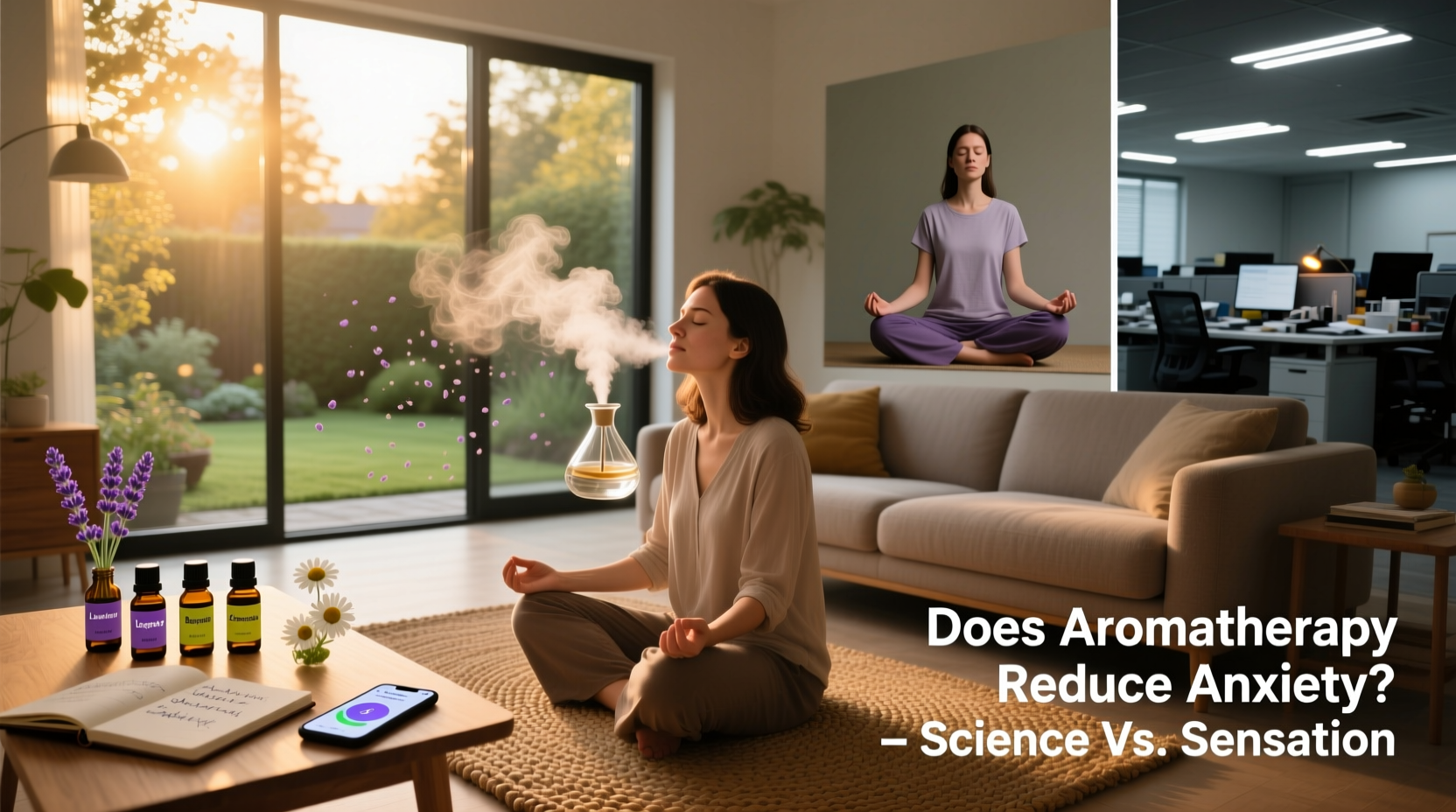
The human sense of smell is uniquely wired. Unlike other senses, olfactory signals bypass the thalamus and go directly to the amygdala and hippocampus—areas responsible for emotional processing and memory formation. This explains why a scent can instantly evoke a powerful emotional response, such as nostalgia, calm, or even distress.
When you inhale an essential oil, volatile compounds enter the nasal cavity and bind to olfactory receptors. These signals travel to the limbic system, potentially influencing mood, heart rate, blood pressure, and stress hormone levels like cortisol. For example, studies have shown that linalool—a compound found in lavender—can modulate GABA receptors in the brain, similar to how benzodiazepines work, though with far milder effects.
“Olfaction has a privileged neural pathway to the emotional centers of the brain. That gives aromatherapy a biologically plausible mechanism—not just a placebo.” — Dr. Rachel Nguyen, Neuroscientist and Olfactory Researcher, University of Edinburgh
This direct connection suggests that certain scents aren’t merely symbolic comforts; they may actively influence physiological states. However, biological plausibility doesn’t equate to consistent, measurable outcomes across individuals.
Clinical Evidence: What Does the Research Say?
Over the past two decades, dozens of studies have examined aromatherapy’s impact on anxiety. Results are mixed but generally lean toward modest benefit—especially in controlled settings like hospitals, dental offices, or pre-surgery environments.
- A 2017 meta-analysis published in Complementary Therapies in Clinical Practice reviewed 16 randomized controlled trials and found that aromatherapy significantly reduced anxiety levels compared to control groups, with lavender being the most effective.
- A 2020 study in Journal of Alternative and Complementary Medicine showed that patients exposed to bergamot oil before surgery had lower cortisol levels and self-reported anxiety than those in the placebo group.
- However, a 2022 Cochrane Review concluded that while some trials report positive results, methodological flaws—such as small sample sizes, lack of blinding, and subjective measurement tools—limit confidence in the findings.
In other words, the evidence supports a potential role for aromatherapy in anxiety reduction—but not as a standalone treatment. Its efficacy appears strongest when used as a complementary approach alongside established therapies like cognitive behavioral therapy (CBT) or medication.
Situational vs. Systemic Effects: Where Aromatherapy Succeeds (and Fails)
One reason aromatherapy’s reputation is polarizing lies in the difference between situational relief and systemic change. Aromatherapy is rarely capable of resolving chronic anxiety disorders, but it can effectively ease acute, context-specific stress.
For instance, someone with generalized anxiety disorder (GAD) is unlikely to find long-term relief from diffusing ylang-ylang alone. However, that same person might experience noticeable calm during a panic attack when inhaling vetiver oil—especially if they’ve previously associated the scent with safety and relaxation.
This distinction underscores a key principle: aromatherapy often functions through conditioned responses. If you consistently use a particular scent during meditation or deep breathing, your brain learns to associate it with relaxation. Over time, exposure to that scent—even briefly—can trigger a parasympathetic response, slowing heart rate and reducing muscle tension.
| Scenario | Likely Aromatherapy Effect | Supporting Evidence |
|---|---|---|
| Dental visit anxiety | Moderate reduction in self-reported stress | Multiple RCTs show decreased anxiety scores with lavender inhalation |
| Chronic PTSD | Minimal standalone effect; possible adjunct support | Limited data; more effective when paired with trauma therapy |
| Insomnia due to stress | Improved sleep quality and reduced nighttime anxiety | Lavender capsules (Silexan) approved in Germany for restlessness |
| Panic attacks | Situational calming, especially with prior conditioning | Anecdotal reports supported by neurobiological plausibility |
The table illustrates that aromatherapy isn’t universally ineffective—it simply operates within specific boundaries. Its strength lies in managing transient stressors, enhancing existing coping strategies, and creating sensory anchors for emotional regulation.
Effective Essential Oils for Anxiety: What Works and How to Use Them
Not all essential oils are created equal when it comes to anxiety relief. Some have stronger scientific backing than others. Below is a curated list of the most researched and clinically relevant options.
- Lavender (Lavandula angustifolia): The most studied essential oil for anxiety. Clinical trials support its use for general anxiety, sleep disturbances, and pre-procedural stress. Can be inhaled, applied topically (diluted), or taken orally in standardized forms like Silexan.
- Bergamot (Citrus bergamia): Known for its uplifting yet calming properties. Shown to reduce cortisol and improve mood in hospital settings. Best used in diffusers; avoid sun exposure after topical application due to phototoxicity.
- Frankincense (Boswellia carterii): Traditionally used in meditation and spiritual practices. Emerging evidence suggests anti-anxiety effects via modulation of neurotransmitters. Often blended with other oils for enhanced effect.
- Vetiver (Vetiveria zizanioides): Deep, earthy scent with grounding properties. Frequently used for ADHD and hyperarousal. Ideal for nighttime diffusion or personal inhalers.
- Clary Sage (Salvia sclarea): Shown to reduce cortisol and regulate mood, particularly in women. May interact with estrogen, so consult a doctor if you have hormone-sensitive conditions.
Mini Case Study: A Nurse’s Shift Routine
Marisa, a 38-year-old ICU nurse in Toronto, began experiencing heightened anxiety during night shifts, especially after several critical patient losses. Despite trying meditation apps and prescribed sleep aids, she struggled with hypervigilance and insomnia.
On the suggestion of a colleague, she started using a personal aromatherapy inhaler with a blend of lavender, bergamot, and frankincense. She used it during her 10-minute breaks and before bedtime. Within three weeks, she reported improved ability to “switch off” after work and fewer episodes of nighttime rumination.
Her success wasn’t due to the oils alone. She combined their use with a five-minute breathing exercise and a consistent wind-down routine. The scent became a psychological cue: inhale the blend, and the body begins to relax. Over time, the association strengthened, making the response faster and more reliable.
Marisa’s case exemplifies how aromatherapy works best when integrated into a structured self-care practice. The oils didn’t cure her anxiety—but they provided a tangible tool to manage its daily toll.
Step-by-Step Guide: Building an Aromatherapy Routine for Anxiety
If you're considering aromatherapy as part of your anxiety management strategy, follow this step-by-step approach for maximum effectiveness.
- Identify Your Triggers: Note when and where your anxiety peaks—morning rush, work meetings, bedtime. This helps determine when to use aromatherapy.
- Select 1–2 Evidence-Based Oils: Start with lavender or bergamot. Avoid complex blends initially to isolate effects.
- Choose a Delivery Method:
- Diffuser: For home or office use.
- Inhaler stick: Portable, discreet, ideal for on-the-go relief.
- Topical roll-on: Apply to wrists or temples (always diluted).
- Create a Ritual: Pair scent use with a calming activity—deep breathing, journaling, or stretching—to build a conditioned response.
- Monitor and Adjust: Keep a brief log for two weeks. Note changes in mood, sleep, or physical symptoms. Discontinue if irritation occurs.
“Consistency turns a simple scent into a signal. The brain learns: this smell means safety.” — Dr. Lena Torres, Integrative Psychology Specialist
Common Misconceptions and Limitations
Aromatherapy is often oversold. It’s not a miracle cure, nor should it replace professional mental health care. Understanding its limitations prevents disappointment and misuse.
- It’s not FDA-approved: In the U.S., essential oils are classified as cosmetics or fragrances, not medicines. Claims about treating anxiety are not regulated.
- Quality varies widely: Many commercial products contain synthetic additives or diluted oils. Look for GC/MS testing reports and botanical names on labels.
- Not everyone responds: Individual differences in olfactory sensitivity, genetics, and past experiences affect outcomes. Some people feel nothing; others may even find certain scents overwhelming.
- Risks exist: Essential oils can cause allergic reactions, interact with medications, or be toxic if ingested improperly. Pregnant women and pets require special caution.
FAQ
Can aromatherapy replace anti-anxiety medication?
No. While some oils may support symptom management, they are not substitutes for prescribed treatments, especially for moderate to severe anxiety disorders. Always consult a healthcare provider before making changes to your regimen.
How quickly does aromatherapy work for anxiety?
Effects can be felt within minutes when inhaled, particularly in acute situations. However, lasting benefits usually develop over days or weeks of consistent use, especially when paired with behavioral techniques.
Is there a risk of dependency on essential oils?
There is no physiological addiction, but psychological reliance can occur if someone avoids developing other coping skills. Use aromatherapy as a tool, not a crutch.
Checklist: Using Aromatherapy Safely and Effectively
- ☑ Choose high-quality, pure essential oils from reputable brands
- ☑ Dilute properly for topical use (1–3% in carrier oil)
- ☑ Patch test before widespread application
- ☑ Use in well-ventilated areas; limit diffusion to 30–60 minutes at a time
- ☑ Avoid use around infants, pregnant women, or pets without research
- ☑ Combine with proven anxiety-reducing practices (mindfulness, exercise, therapy)
- ☑ Consult your doctor if you have respiratory conditions or take medications
Conclusion: A Nuanced Answer to a Complex Question
So, does aromatherapy really reduce anxiety, or is it situational? The answer is both. Scientifically, certain essential oils—particularly lavender and bergamot—have demonstrated measurable effects on stress physiology and self-reported anxiety. Neurologically, the olfactory-limbic connection provides a credible pathway for scent-induced calm.
Yet its effectiveness is highly contextual. Aromatherapy excels in momentary relief, ritual reinforcement, and sensory anchoring. It shines brightest not as a cure, but as a complement—a subtle nudge toward relaxation in a world full of triggers. For some, it’s a lifeline; for others, a pleasant placebo. The difference often lies in expectations, consistency, and integration with broader wellness strategies.
Ultimately, aromatherapy isn’t about magic. It’s about mindfulness, habit, and the profound power of sensory cues. When used wisely, it can become a meaningful part of a resilient, responsive approach to mental well-being.




 浙公网安备
33010002000092号
浙公网安备
33010002000092号 浙B2-20120091-4
Comments
No comments yet. Why don't you start the discussion?