
Aromatherapy has long been embraced in wellness circles as a natural way to ease tension, improve mood, and promote relaxation. From lavender-scented candles to eucalyptus-infused diffusers, the use of essential oils is widespread. But beneath the calming marketing claims lies a deeper question: Does aromatherapy actually reduce stress, or is its perceived benefit merely the result of individual scent preferences? The answer isn’t a simple yes or no—it’s layered in neuroscience, psychology, and subjective experience.
To understand whether aromatherapy holds real therapeutic value or simply plays into personal taste, we need to examine how scents interact with the brain, what scientific studies reveal about their effects, and how individual differences shape our responses. This article dives into the evidence, explores the role of personal bias, and offers practical insights for those considering aromatherapy as a tool for stress relief.
The Science Behind Smell and Stress Regulation
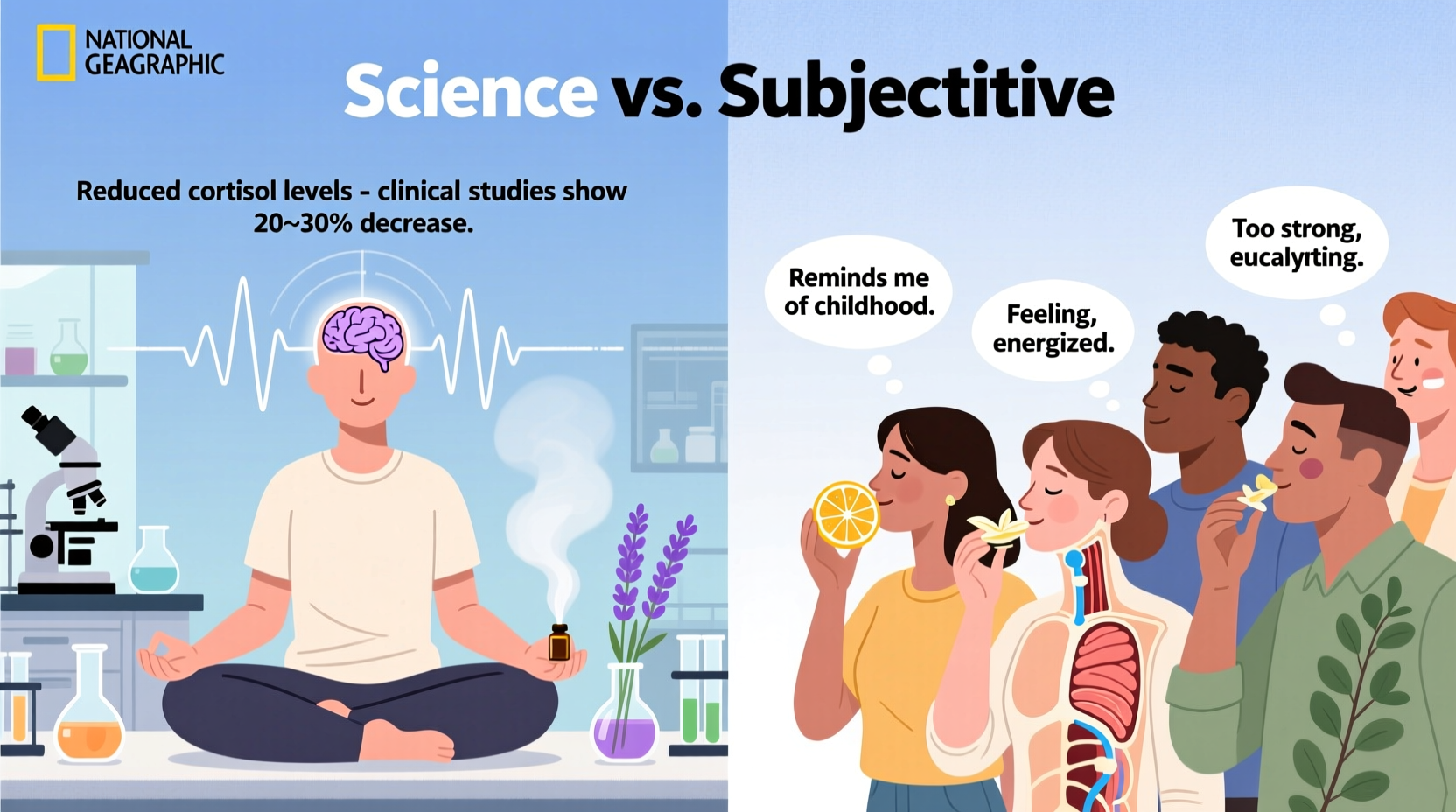
The human olfactory system—the sense of smell—is uniquely wired to influence emotions and physiological states. Unlike other senses, olfactory signals bypass the thalamus and travel directly to the limbic system, the part of the brain responsible for memory, emotion, and arousal. This direct neural pathway explains why a familiar scent can instantly evoke a powerful memory or shift your mood.
When you inhale an essential oil, odor molecules bind to receptors in the nasal cavity, sending signals to the amygdala and hippocampus—key areas involved in emotional processing and stress response. Research shows that certain scents may modulate activity in these regions, potentially reducing cortisol levels (a primary stress hormone) and influencing heart rate and blood pressure.
A 2017 meta-analysis published in *Complementary Therapies in Clinical Practice* reviewed 16 clinical trials and found that aromatherapy significantly reduced anxiety levels across diverse populations, including preoperative patients and individuals with chronic stress. While promising, the authors noted variability in outcomes, suggesting that not all scents work equally well for everyone.
“Olfaction has a privileged connection to the emotional brain. Scents don’t just trigger feelings—they can reshape them.” — Dr. Rachel Herz, Cognitive Neuroscientist and Author of *The Scent of Desire*
Essential Oils with Evidence-Based Calming Effects
While personal preference matters, some essential oils have demonstrated consistent calming effects in controlled studies. These are not universally effective, but they show statistically significant results across multiple trials:
- Lavender (Lavandula angustifolia): Perhaps the most studied essential oil for stress reduction. A double-blind, placebo-controlled study in *Phytomedicine* (2010) showed that oral lavender capsules reduced anxiety symptoms comparably to low-dose benzodiazepines, without sedative side effects. Inhalation studies also report lowered cortisol and improved sleep quality.
- Orange (Citrus sinensis): Known for its uplifting properties, orange essential oil has been shown to reduce anxiety in dental patients and pregnant women during labor. Its limonene content may support dopamine and serotonin modulation.
- Bergamot (Citrus bergamia): Used traditionally in Earl Grey tea, bergamot essential oil has demonstrated anxiolytic effects in both animal and human studies. One trial found that diffusing bergamot oil in a hospital waiting room led to measurable decreases in self-reported anxiety and salivary cortisol.
- Chamomile (Matricaria chamomilla): Often consumed as tea, chamomile’s essential oil also shows mild sedative and anti-anxiety properties, particularly due to apigenin, a flavonoid that binds to GABA receptors.
Personal Scent Preference vs. Biological Response
This is where the debate intensifies. Can a scent be objectively calming, or does its effect depend entirely on whether you like the smell?
Studies suggest both factors play a role. A 2021 study in *Nature Human Behaviour* found that while certain molecular structures in scents tend to correlate with relaxation (e.g., linalool in lavender), individual associations heavily influence outcomes. For example, someone who associates rose scent with a grandmother’s garden may find it soothing, even if rose oil lacks strong pharmacological activity.
In contrast, a person who dislikes floral notes might feel irritated by the same scent—even if it's scientifically proven to lower heart rate. This indicates that psychological conditioning often overrides biochemical potential.
However, research also reveals cases where disliked scents still produce physiological relaxation. In one experiment, participants rated sandalwood as “unpleasant,” yet their galvanic skin response (a measure of nervous system arousal) indicated reduced stress after exposure. This suggests that biological mechanisms can operate independently of conscious preference—though the effect is typically weaker.
Do’s and Don’ts of Matching Scents to Stress Relief
| Do | Don’t |
|---|---|
| Start with well-researched oils like lavender, bergamot, or frankincense | Assume all “calming” blends are effective—many are diluted or synthetic |
| Test small amounts first to assess personal comfort and reaction | Use undiluted essential oils directly on skin without carrier oil |
| Combine aromatherapy with mindfulness or deep breathing for enhanced effect | Expect immediate or dramatic results—effects are subtle and cumulative |
| Keep a scent journal to track emotional and physical responses | Ignore headaches or nausea—these may signal sensitivity or overexposure |
Step-by-Step Guide to Using Aromatherapy for Stress Reduction
If you're curious whether aromatherapy can help you manage stress, follow this structured approach to separate placebo from genuine benefit:
- Identify Your Stress Triggers: Note when and where you feel most anxious—commuting, work deadlines, social events. This helps determine optimal usage times.
- Select 2–3 Evidence-Based Oils: Begin with lavender, bergamot, or chamomile. Avoid complex blends initially.
- Choose a Delivery Method:
- Diffuser: Ideal for ambient exposure. Use 3–5 drops in water for 30–60 minutes.
- Inhaler Stick: Portable and precise. Great for on-the-go stress moments.
- Topical Application: Dilute 1–2 drops in 1 tsp carrier oil (like jojoba) and apply to wrists or temples.
- Create a Routine: Use the same oil at the same time daily for two weeks (e.g., before bed or during lunch breaks).
- Track Your Response: Record changes in mood, sleep quality, heart rate, or perceived stress using a journal or app.
- Evaluate Objectively: After two weeks, ask: Did my body respond differently, regardless of whether I liked the scent?
Mini Case Study: Office Workers and Lavender Diffusion
In a 2020 pilot study conducted at a mid-sized tech company in Portland, OR, researchers tested the impact of ambient lavender diffusion on employee stress levels. Over four weeks, a diffuser ran for two hours each morning in a shared workspace, alternating between lavender oil and a neutral control (unscented diffuser).
Participants were unaware of which week involved real aromatherapy. They submitted daily stress ratings and wore wrist monitors tracking heart rate variability (HRV), a marker of autonomic balance.
Results showed a 14% average improvement in HRV during lavender weeks, along with 22% lower self-reported stress. However, three employees reported no change or increased agitation. Upon follow-up, all three said they disliked floral scents and associated lavender with cleaning products.
This case illustrates the dual nature of aromatherapy: measurable physiological benefits exist, but personal aversion can negate or reverse them. The takeaway? Aromatherapy works best when aligned with both science and personal resonance.
Expert Insight: Bridging Biology and Subjectivity
Dr. Naomi Chen, integrative neurologist and researcher at the Mind-Body Institute, emphasizes a balanced view:
“Aromatherapy sits at the intersection of pharmacology and psychology. Certain terpenes in essential oils do interact with neurotransmitter systems. But the mind’s interpretation of a scent—shaped by memory, culture, and expectation—can amplify or block those effects. The most effective approach combines bioactive oils with mindful engagement.”
She recommends treating aromatherapy not as a standalone cure, but as a complementary tool within a broader stress-management strategy that includes sleep hygiene, movement, and cognitive techniques.
Frequently Asked Questions
Can aromatherapy replace medication for anxiety?
No. While some essential oils may help manage mild stress or situational anxiety, they are not substitutes for clinical treatment. Individuals with diagnosed anxiety disorders should consult a healthcare provider before using aromatherapy as a supplement—not a replacement—for therapy or medication.
Why does the same scent calm one person but irritate another?
This stems from both biology and life experience. Genetically, people vary in olfactory receptor sensitivity. Culturally, scents carry different meanings—rose may mean romance to one person, illness to another (e.g., associated with hospitals). Past experiences create strong neural imprints that override general trends.
Are synthetic fragrances as effective as essential oils?
Generally, no. Most synthetic fragrances lack the active phytochemicals (like linalool or limonene) that interact with the nervous system. Some may even cause headaches or irritation. For therapeutic purposes, 100% pure essential oils are preferred.
Conclusion: A Personalized Path to Calm
Aromatherapy does have the capacity to reduce stress—but not uniformly. Scientific evidence supports the biological plausibility of certain essential oils in modulating the nervous system. At the same time, personal scent preference acts as a powerful filter, capable of enhancing or negating those effects.
The most effective use of aromatherapy lies in personalization: choosing oils backed by research while honoring individual sensory experiences. It’s not about finding a one-size-fits-all solution, but about tuning into your body’s unique responses.
If you’re exploring aromatherapy for stress relief, start with intention and curiosity. Test methodically, track outcomes, and remain open to both data and personal insight. When used wisely, scent can become a quiet ally in your wellness journey—not because it magically calms everyone, but because it can help you reconnect with a sense of peace that’s already within reach.




 浙公网安备
33010002000092号
浙公网安备
33010002000092号 浙B2-20120091-4
Comments
No comments yet. Why don't you start the discussion?