
For decades, humans have relied on natural light cycles to regulate their sleep patterns. But in the modern world, artificial light—especially blue-enriched light from screens and LEDs—has disrupted this ancient rhythm. As a result, blue light blocking has emerged as a popular solution for improving sleep. But does it actually work? Or is it just another wellness trend with little scientific backing? This article dives into peer-reviewed research, expert insights, and real-world evidence to answer that question clearly and definitively.
The Science of Light and Sleep Regulation
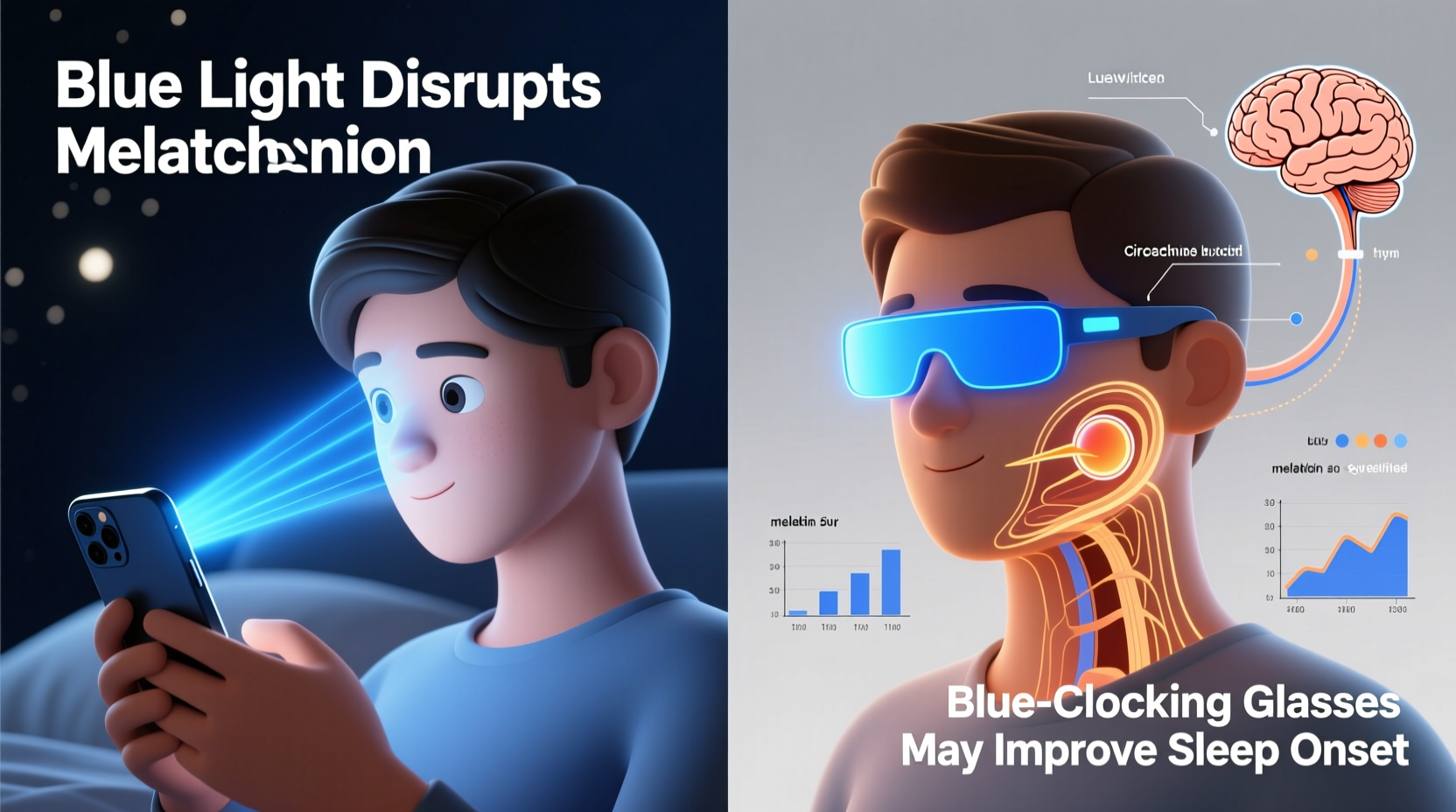
Sleep isn’t just about fatigue—it’s governed by a complex biological system known as the circadian rhythm. This internal clock runs on a roughly 24-hour cycle and is primarily influenced by environmental cues, especially light. The key player in this process is melatonin, a hormone produced by the pineal gland in response to darkness.
Melatonin levels typically begin rising in the evening, peak during the night, and decline in the morning. Exposure to light, particularly in the blue spectrum (wavelengths between 460–480 nm), suppresses melatonin production. This suppression is evolutionarily adaptive: bright blue-rich daylight signals wakefulness. However, when we’re exposed to similar wavelengths at night—from smartphones, tablets, or LED lighting—the brain receives conflicting signals.
“Even moderate levels of evening light exposure can delay melatonin onset by 30 to 90 minutes, effectively shifting your biological clock later.” — Dr. Charles Czeisler, Professor of Sleep Medicine, Harvard Medical School
A landmark 2015 study published in Proceedings of the National Academy of Sciences compared participants reading from a light-emitting e-reader versus a printed book before bed. Those using the e-reader took longer to fall asleep, had reduced REM sleep, felt less alert in the morning, and experienced a delayed circadian rhythm. The conclusion: nighttime screen use directly impairs sleep quality and timing.
How Blue Light Blocking Claims Are Tested
Blue light blocking products come in several forms: glasses with amber or red-tinted lenses, screen filters, software apps (like Night Shift or f.lux), and even specialized light bulbs. The core claim across all these tools is that reducing blue light exposure in the evening will support natural melatonin release and improve sleep.
To evaluate this, researchers use controlled experiments measuring:
- Melatonin levels before and after intervention
- Sleep onset latency (how long it takes to fall asleep)
- Total sleep duration and efficiency
- Circadian phase shifts (measured via dim light melatonin onset, or DLMO)
- Subjective reports of sleep quality and alertness
A 2020 meta-analysis in the Journal of Clinical Sleep Medicine reviewed 17 studies on blue light filtering interventions. It found that participants wearing blue-blocking glasses in the evening showed significant improvements in sleep onset and overall sleep quality, especially when used consistently for at least two weeks. The effect was more pronounced in people with existing sleep disorders or irregular schedules.
Do Blue Light Glasses Actually Work?
Glasses are among the most studied blue light blocking tools. High-quality lenses filter specific wavelengths, usually between 400–500 nm. Not all glasses are equal, however. Some consumer products claim “blue light blocking” but only reduce a small fraction of relevant wavelengths.
A 2017 randomized controlled trial published in Chronobiology International gave one group of office workers amber-tinted glasses to wear for three hours before bed over a two-week period. The control group wore clear lenses. Results showed the amber lens group reported better sleep quality, improved mood, and higher daytime alertness. Melatonin levels were also significantly higher compared to baseline.
However, not all studies show strong effects. A 2021 study in Journal of Sleep Research found that while blue-blocking glasses slightly improved subjective sleep quality, there was no measurable change in objective sleep metrics like total sleep time or sleep efficiency when monitored via actigraphy.
This discrepancy highlights an important nuance: psychological expectations (the placebo effect) may play a role. If someone believes they’re taking a proactive step toward better sleep, they may report feeling more rested—even if physiological changes are minimal.
Screen Filters vs. Glasses: What Works Best?
Many people rely on built-in device features like Apple’s Night Shift or Android’s Blue Light Filter. These shift screen color temperature toward warmer tones in the evening. But do they go far enough?
Research suggests limitations. A 2019 study from the University of Manchester found that while warm-screen modes reduce some blue light, they don't eliminate the melatonin-suppressing effect entirely. The reason? Even dimmed screens emit enough short-wavelength light to interfere with circadian signaling, especially in dark rooms.
In contrast, physical blue-blocking glasses provide consistent filtration regardless of screen settings. They also protect against ambient blue light from room lighting—a factor often overlooked.
| Method | Blocks Ambient Light? | Effective Wavelength Range | Scientific Support | Best Use Case |
|---|---|---|---|---|
| Night Shift / f.lux | No | Partial (450–500 nm) | Moderate | Casual evening use |
| Blue Light Glasses (Amber) | Yes | Strong (400–500 nm) | High | Regular screen users, shift workers |
| Red-Tinted Glasses | Yes | Complete (400–600 nm) | Very High | Extreme light sensitivity, insomnia |
| Physical Screen Filters | No | Partial | Low-Moderate | Supplemental protection |
“The most effective approach combines behavioral changes with physical barriers. Just turning down screen brightness isn’t enough—filtering the right wavelengths matters.” — Dr. Victoria Revell, Circadian Rhythm Researcher, University of Surrey
Real-World Example: A Shift Worker’s Experience
Consider Maria, a 34-year-old nurse working rotating night shifts. After nights on duty, she struggles to fall asleep during the day due to sunlight exposure. Her doctor recommended red-tinted blue light blocking glasses to wear during her commute home and while winding down.
She began using them consistently, pairing them with blackout curtains and a white noise machine. Within two weeks, she reported falling asleep 25 minutes faster and waking up less frequently. Her sleep tracking app showed increased deep sleep duration. While individual results vary, Maria’s case reflects findings from studies on shift workers, where blue light blocking has been shown to advance melatonin onset and improve daytime sleep consolidation.
This example underscores a broader principle: blue light blocking works best as part of a holistic sleep hygiene strategy, not as a standalone fix.
Actionable Steps to Maximize Benefits
If you're considering blue light blocking, here’s a science-backed timeline to integrate it effectively:
- 6–8 PM: Begin transitioning indoor lighting. Replace cool-white LEDs with warm-white bulbs (below 3000K).
- 2 Hours Before Bed: Put on blue light blocking glasses if using screens or exposed to bright lights.
- 1 Hour Before Bed: Enable device night modes and reduce screen brightness to minimum comfortable levels.
- 30 Minutes Before Bed: Avoid screens altogether. Opt for reading a physical book or listening to audio.
- At Bedtime: Ensure the bedroom is completely dark. Use blackout curtains if needed.
Checklist: Optimizing Evening Light Exposure
- ✅ Switch to warm-colored lighting in the evening (2700K–3000K)
- ✅ Use blue light blocking glasses if screen use is unavoidable
- ✅ Enable night mode on all devices by sunset
- ✅ Limit screen time in the last 60 minutes before bed
- ✅ Avoid bright overhead lights; use lamps with warm bulbs instead
- ✅ Keep devices out of the bedroom or use grayscale mode at night
- ✅ Maintain a consistent bedtime routine to reinforce circadian cues
Frequently Asked Questions
Can blue light blocking glasses help with insomnia?
Yes, especially for individuals whose insomnia is linked to delayed sleep phase or excessive evening screen use. Studies show that consistent use of amber or red-tinted glasses can advance melatonin onset and improve sleep continuity. However, they should be combined with cognitive behavioral therapy for insomnia (CBT-I) for best results in chronic cases.
Are there any side effects of wearing blue light blocking glasses?
Generally, no serious side effects exist. Some users report temporary color distortion, which usually resolves with adaptation. Red-tinted glasses can make tasks like reading or driving difficult at night and should only be used indoors before sleep. Avoid wearing them during daylight hours unless medically advised, as morning light exposure helps regulate circadian rhythm.
Do children benefit from blue light blocking?
Preliminary evidence suggests yes. Children and adolescents are particularly sensitive to light-induced melatonin suppression. A 2022 study in Pediatrics found that teens who wore blue-blocking glasses in the evening fell asleep faster and had improved attention the next day. However, the primary focus should remain on limiting screen time before bed rather than relying solely on filters.
Conclusion: A Tool, Not a Cure-All
Blue light blocking does help sleep—but not as a magic bullet. The scientific consensus supports its effectiveness in reducing melatonin suppression and improving sleep onset, particularly when used consistently and as part of a broader sleep hygiene routine. Whether through glasses, lighting adjustments, or screen settings, minimizing disruptive light exposure in the evening aligns your biology with restful sleep.
The strongest benefits are seen in people with high screen exposure, irregular schedules, or circadian rhythm disorders. For others, even small changes—like enabling night mode or wearing affordable blue-blocking glasses—can yield noticeable improvements in how quickly they fall asleep and how rested they feel upon waking.




 浙公网安备
33010002000092号
浙公网安备
33010002000092号 浙B2-20120091-4
Comments
No comments yet. Why don't you start the discussion?