
Fidgeting—tapping your foot, bouncing your leg, drumming your fingers, or shifting in your seat—is often seen as a nervous habit or a sign of restlessness. But behind this seemingly trivial behavior lies a physiological phenomenon with real metabolic implications. The quiet truth is that these small, unconscious movements may be burning more calories than you think. While no one would mistake fidgeting for a full workout, emerging research suggests that these tiny bursts of activity, collectively known as non-exercise activity thermogenesis (NEAT), can add up in meaningful ways over time. For individuals looking to manage weight without drastic lifestyle changes, understanding the role of fidgeting could unlock a subtle but sustainable path to energy expenditure.
Understanding NEAT: The Hidden Calorie Burner
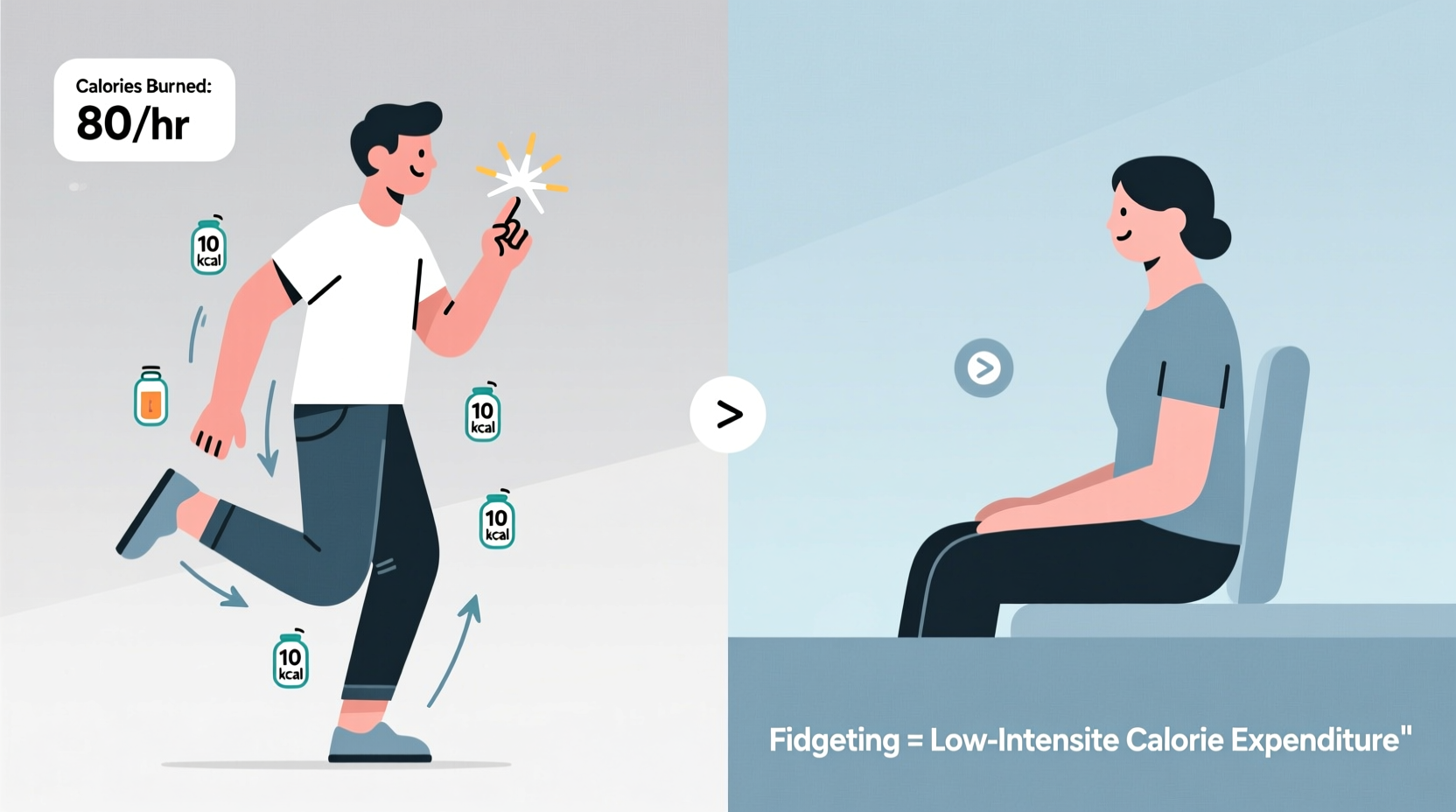
Non-exercise activity thermogenesis (NEAT) refers to all the physical activities you do that are not sleeping, eating, or structured exercise. This includes walking to work, typing, gardening, standing up from your desk, and yes—fidgeting. Unlike formal workouts, NEAT happens throughout the day, often without conscious effort. What makes NEAT powerful is its cumulative effect. A 2005 study published in *Science* found that individuals who maintained their weight without dieting tended to stand or move around for nearly two additional hours per day compared to those who gained weight—even when both groups reported similar levels of formal exercise.
Fidgeting falls squarely under the NEAT umbrella. Movements like leg jiggling, pen clicking, or pacing while on the phone might seem insignificant individually, but they engage muscles and require energy. Over weeks and months, these micro-movements can contribute to a noticeable calorie deficit, especially for people with sedentary lifestyles.
“Small movements matter more than we realize. The energy burned through fidgeting can vary widely between individuals—and that variation can influence long-term weight management.” — Dr. James Levine, Endocrinologist and NEAT Research Pioneer
How Many Calories Does Fidgeting Actually Burn?
The exact number of calories burned by fidgeting depends on body weight, movement intensity, and duration. However, researchers have developed estimates based on observational studies. On average:
- Light fidgeting (e.g., finger tapping, slight leg movement): ~50–100 calories per hour
- Moderate fidgeting (e.g., consistent leg bouncing, shifting posture): ~100–150 calories per hour
- Vigorous fidgeting (e.g., pacing, arm movements, full-body shifts): ~150–250 calories per hour
To put this into perspective, someone who fidgets moderately for three hours during an office workday could burn an extra 300–450 calories—equivalent to a 30-minute jog. While most people don’t fidget continuously, even intermittent movement adds up. Over a year, burning just 100 extra calories daily through NEAT translates to roughly 10 pounds of potential fat loss, assuming diet remains constant.
Can Fidgeting Aid Weight Loss? The Subtle Advantage
Fidgeting alone will not replace cardiovascular exercise or strength training, nor should it be relied upon as a primary weight-loss strategy. However, it can serve as a valuable secondary tool—especially for people struggling with prolonged sitting or limited mobility.
A landmark study conducted at the Mayo Clinic observed participants placed in controlled overfeeding conditions. Despite consuming excess calories, some individuals resisted weight gain due to increased spontaneous physical activity, including fidgeting. These natural “non-gainers” subconsciously moved more—standing, stretching, toe-tapping—burning hundreds of extra calories daily without realizing it.
This suggests a biological predisposition: some people are naturally more active at rest. But the good news is that NEAT behaviors, including fidgeting, can be cultivated. Intentionally incorporating small movements into daily routines can help close the gap between sedentary habits and passive calorie expenditure.
Who Benefits Most from Fidgeting?
Not everyone fidgets equally. Certain factors influence how much NEAT a person generates:
- Genetics: Some individuals are naturally inclined to move more at rest.
- Body composition: Leaner individuals tend to exhibit higher NEAT levels.
- Diet: High-protein diets may increase spontaneous activity.
- Environment: Open workspaces, standing desks, and walkable homes encourage movement.
While genetics play a role, environment and mindset are within your control. By making subtle adjustments, even the most stationary individuals can increase their fidget-like activity.
Practical Ways to Increase Fidgeting and NEAT
You don’t need to become a constant motion machine. Instead, focus on integrating low-effort, high-frequency movements into your existing routine. The goal is consistency, not intensity.
Step-by-Step Guide to Boost Daily Fidgeting
- Assess your current stillness: Track how many hours you spend sitting completely still. Use a journal or app for one week.
- Introduce movement triggers: Pair routine actions (e.g., phone ringing, email alert) with a small motion like shoulder rolls or ankle circles.
- Optimize your workspace: Replace your chair with a wobble stool, use a footrest, or place supplies just out of reach to encourage reaching and standing.
- Incorporate standing intervals: Stand while reading emails, taking calls, or watching TV. Even two minutes every hour helps.
- Wear less restrictive clothing: Tight clothes suppress movement. Looser attire allows for easier shifting and stretching.
- Track progress: Note changes in energy levels, posture, or waistband comfort—not just the scale.
Do’s and Don’ts of Effective Fidgeting
| Do’s | Don’ts |
|---|---|
| Change positions frequently—even slightly | Stay seated in the same posture for over an hour |
| Use tools like stress balls or foot pedals | Rely solely on intense workouts to offset sedentary time |
| Take short walking breaks after meals | Suppress natural urges to move due to social norms |
| Encourage fidgeting in children and teens | View fidgeting as unproductive or distracting without cause |
| Combine fidgeting with mindfulness or deep breathing | Replace sleep or recovery time with forced movement |
Real Example: Sarah’s Office Transformation
Sarah, a 34-year-old data analyst, spent nearly nine hours a day seated. Despite regular gym sessions, she noticed gradual weight gain and persistent back pain. After learning about NEAT, she made small changes: she replaced her office chair with a balance disc, set a timer to stand every 45 minutes, and began pacing during phone calls. She also stopped suppressing her natural tendency to tap her foot, instead embracing it as productive movement.
Within three months, Sarah hadn’t changed her diet or gym routine, but she lost 6 pounds and reported improved focus and reduced stiffness. Her resting heart rate dropped, and her step count increased by 2,000 steps daily—not from walking more, but from incidental motion. Her experience illustrates how subtle, consistent fidgeting can complement traditional fitness efforts.
Expert Insights on Movement and Metabolism
Dr. Susan Joy, sports medicine physician and author, emphasizes that modern life is designed for stillness—but our bodies aren’t.
“We’ve engineered movement out of daily life. The average person takes fewer than 5,000 steps a day. Yet our physiology evolved for constant motion. Fidgeting isn’t a quirk—it’s a remnant of our active past trying to reassert itself.” — Dr. Susan Joy, MD, American College of Sports Medicine
Experts agree: the key isn’t to force unnatural behavior, but to create environments that make movement effortless. Standing desks, walking meetings, and ergonomic furniture all support higher NEAT without requiring willpower or time investment.
FAQ: Common Questions About Fidgeting and Weight Loss
Can fidgeting really help me lose weight?
Yes, but indirectly. Fidgeting increases daily calorie expenditure through NEAT. While it won’t lead to rapid weight loss, consistently burning an extra 100–300 calories per day can result in several pounds of fat loss per year, especially when combined with a balanced diet.
Is fidgeting unhealthy or a sign of anxiety?
Occasional fidgeting is normal and healthy. However, excessive or disruptive movement may be linked to ADHD, anxiety, or restlessness. If fidgeting interferes with sleep, concentration, or relationships, consult a healthcare provider. For most people, though, mild fidgeting is a neutral or beneficial behavior.
Can I train myself to fidget more?
You can't force natural fidgeting, but you can encourage movement-rich habits. Try using a standing desk, wearing a fitness tracker that reminds you to move, or placing everyday items (like water bottles or notebooks) just out of reach. Over time, your body adapts to more frequent micro-movements.
Final Thoughts: Embrace Movement, Not Perfection
Weight loss is rarely about single solutions. It’s the accumulation of small, sustainable choices that creates lasting change. Fidgeting may seem too minor to matter, but science shows otherwise. Every tap, shift, and bounce contributes to your body’s energy balance. In a world where sitting has been called “the new smoking,” reclaiming movement—even in its smallest forms—is an act of self-care.
You don’t need to run marathons or spend hours in the gym to influence your metabolism. Sometimes, the most effective strategies are the ones you don’t even notice. By reframing fidgeting not as a distraction, but as a form of silent resistance against sedentary living, you empower yourself to move more—without having to try harder.




 浙公网安备
33010002000092号
浙公网安备
33010002000092号 浙B2-20120091-4
Comments
No comments yet. Why don't you start the discussion?