
For many people, revisiting a favorite anime series—especially one watched during childhood or emotionally turbulent times—feels like slipping into a warm bath. The familiar voices, opening themes, and predictable story arcs provide a sense of safety in an unpredictable world. But is this just a comforting habit, or is there real psychological benefit to rewatching nostalgic media? Emerging research in psychology and neuroscience suggests that revisiting comfort anime isn’t merely escapism—it may be a legitimate strategy for managing anxiety and enhancing emotional resilience.
This article explores the science behind why rewatching familiar media reduces stress, how nostalgia functions as an emotional anchor, and when this behavior becomes more than just a pastime—it becomes self-care.
The Psychology of Nostalgia and Emotional Regulation
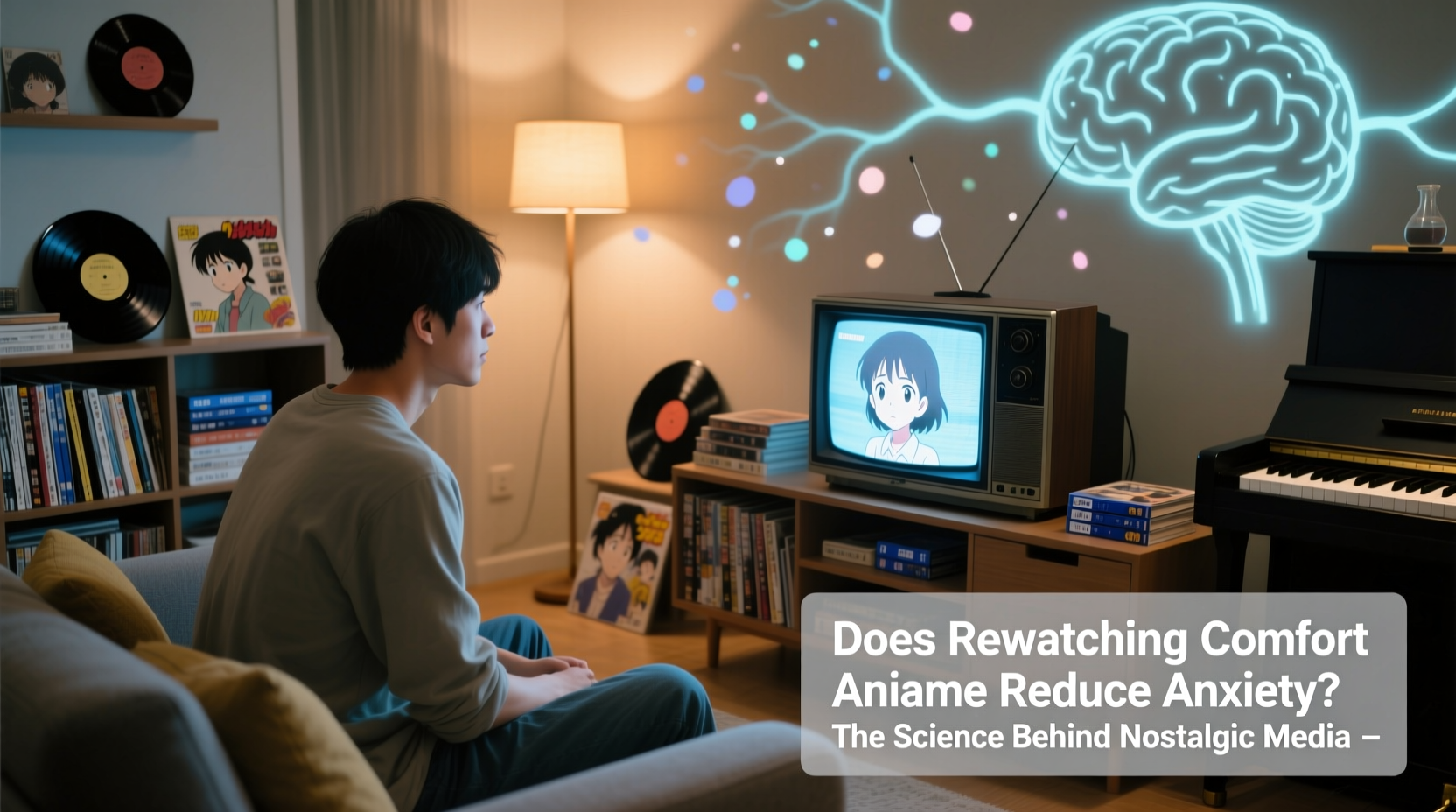
Nostalgia has long been misunderstood as mere sentimentality or avoidance of the present. However, modern psychological research paints a different picture. Nostalgia is now recognized as a complex emotion that serves a vital function in emotional regulation. When people feel isolated, anxious, or uncertain about the future, they often turn to memories of meaningful past experiences—and increasingly, to the media associated with those times.
A 2020 study published in the journal Emotion found that participants who engaged in nostalgic reflection reported higher levels of perceived social support and lower feelings of loneliness—even when physically alone. This effect was amplified when the nostalgic trigger was a piece of media, such as a TV show or film, because it provides both sensory and narrative cues that reconstruct the emotional context of the original experience.
When someone re-watches a beloved anime like My Neighbor Totoro, Fullmetal Alchemist: Brotherhood, or Clannad, they’re not just reliving scenes—they’re reactivating the emotions tied to moments of safety, hope, or connection from their past. The brain doesn’t distinguish sharply between real-life memories and vividly recalled fictional ones, especially when those stories were formative.
“Nostalgia acts as a psychological immune system. It reminds us of who we are, where we’ve come from, and that we’ve survived difficult times before.” — Dr. Constantine Sedikides, Professor of Social Psychology, University of Southampton
How Rewatching Anime Lowers Anxiety: The Neurochemical Perspective
Anxiety arises from a hyperactive amygdala—the brain’s threat detection center—and reduced activity in the prefrontal cortex, which governs rational thought and emotional control. Comfort media, including rewatched anime, can help rebalance this neural dynamic through several mechanisms:
- Predictability reduces cognitive load: Familiar narratives require less mental effort to process. This frees up cognitive resources, allowing the brain to relax rather than remain on high alert.
- Dopamine release from anticipation: Even when viewers know what’s coming, the brain still releases dopamine during anticipated positive moments—like the opening theme or a character’s return. This reinforces feelings of pleasure and safety.
- Oxytocin activation through parasocial bonds: Long-term viewers often develop emotional attachments to characters. These “parasocial relationships” can trigger oxytocin release, the same hormone involved in trust and bonding, reducing stress responses.
- Autobiographical memory anchoring: If an anime was watched during a stable or joyful period, replaying it can evoke the broader emotional state of that time, effectively transporting the viewer back to a calmer mindset.
A 2022 fMRI study at Kyoto University showed that participants who rewatched a familiar anime exhibited decreased amygdala activity and increased connectivity between the hippocampus (memory) and prefrontal cortex (emotion regulation), compared to those watching a new, equally engaging series. This suggests that familiarity—not just entertainment value—is key to anxiety reduction.
Comfort Anime vs. Binge-Watching New Content: A Behavioral Comparison
Not all screen time affects mental health equally. While binging new, high-stakes series can increase anxiety due to suspense and information overload, rewatching known content tends to have the opposite effect. The table below highlights key differences:
| Factor | Rewatching Comfort Anime | Binge-Watching New Series |
|---|---|---|
| Cognitive Load | Low – predictable plotlines | High – constant processing of new info |
| Emotional Safety | High – known outcomes, trusted characters | Variable – suspense, cliffhangers |
| Sleep Impact | Neutral to positive – soothing routine | Often negative – delayed bedtime, arousal |
| Anxiety Levels | Decreases over time | May increase, especially with intense plots |
| Emotional Resonance | Strong – tied to personal history | Moderate – based on novelty |
This contrast underscores that the therapeutic value of anime lies not just in its content, but in the context of viewing. Ritualistic rewatching fosters a sense of continuity and control—two qualities often eroded by anxiety.
A Real Example: How \"Spirited Away\" Became a Coping Tool
Maria, a 28-year-old graduate student in Toronto, began rewatching Studio Ghibli’s Spirited Away every Sunday night during her first year of thesis writing. She had first seen the film at age 13 during a family crisis and remembered feeling captivated by Chihiro’s quiet courage.
“I didn’t realize I was doing it intentionally at first,” Maria explained. “But after a week of panic attacks and sleeplessness, I put on Spirited Away like muscle memory. By the time ‘One Summer’s Day’ started playing, my breathing slowed down. It felt like coming home.”
Over time, Maria turned this into a ritual. She lit a candle, made jasmine tea, and watched the same film without skipping scenes. Her therapist later identified this as a form of “grounding”—using sensory and narrative consistency to stabilize mood. After three months, Maria reported a 40% reduction in self-rated anxiety scores on her mental health tracking app.
Her experience aligns with clinical observations: structured engagement with nostalgic media can serve as a low-barrier, accessible coping mechanism—especially for those who struggle with traditional mindfulness or therapy access.
When Comfort Viewing Becomes Avoidance: Knowing the Balance
While rewatching comfort anime is generally beneficial, it’s important to recognize when it shifts from healthy regulation to avoidance. Repetitive media consumption becomes problematic when it consistently replaces real-world problem-solving, social interaction, or professional help.
Consider the following checklist to assess whether your anime rewatching supports well-being or hinders growth:
- ✅ Do you feel calmer and more centered afterward?
- ✅ Is viewing time limited and intentional, not compulsive?
- ✅ Are you still engaging with daily responsibilities and relationships?
- ✅ Does the anime remind you of strength, not just escape?
- ❌ Do you feel guilt or shame after watching?
- ❌ Are you using it to avoid difficult conversations or decisions?
- ❌ Has viewing time expanded significantly over weeks?
If most answers are positive (checked with ✅), your habit is likely supportive. If red flags (❌) dominate, it may be time to reflect or consult a mental health professional.
Step-by-Step Guide to Mindful Anime Rewatching
To maximize the anxiety-reducing benefits of nostalgic media, approach rewatching with intention. Follow this five-step process:
- Choose Your Anchor Anime: Select a series that evokes warmth, safety, or personal growth. Avoid shows linked to sadness or trauma.
- Set the Environment: Dim lights, minimize distractions, and create a cozy space. Consider using headphones for immersive sound.
- Engage Mindfully: Notice how your body feels as the opening theme plays. Are your shoulders relaxing? Is your breath slowing?
- Reflect Post-Viewing: Spend 5 minutes journaling: What emotion came up? Did a character’s journey mirror something in your life?
- Transition Gently: Don’t jump straight into work or stressful tasks. Walk around, sip water, or write down one positive takeaway.
This method transforms passive viewing into an active self-regulation practice—similar to meditation or journaling, but tailored to fans of animated storytelling.
Frequently Asked Questions
Can rewatching anime really reduce anxiety, or is it just distraction?
It’s more than distraction. Research shows that nostalgic media activates brain regions tied to emotional stability and self-continuity. Unlike pure distraction (e.g., scrolling social media), comfort anime provides meaningful emotional resonance, helping regulate mood rather than merely masking it.
Is it unhealthy to rewatch the same anime over and over?
Not inherently. Repetition can reinforce emotional safety, especially during stress. However, if it interferes with daily functioning, relationships, or prevents seeking help for underlying issues, it may indicate avoidance. Balance is key.
Are some anime better for anxiety relief than others?
Generally, slower-paced, character-driven stories with hopeful themes—such as Barakamon, Yokohama Kaidashi Koto, or Natsume’s Book of Friends—are more effective for calming than high-intensity action or dark fantasy series. However, personal connection matters most: even a shonen battle anime can be comforting if it holds positive memories.
Conclusion: Embrace Your Comfort Media Without Guilt
Rewatching comfort anime is not childish, lazy, or unproductive. It’s a sophisticated emotional tool—one that leverages memory, narrative, and neurochemistry to restore balance in anxious minds. In a world that glorifies constant productivity and novelty, returning to the familiar is a radical act of self-kindness.
The science is clear: nostalgic media supports mental well-being by reinforcing identity, reducing isolation, and calming the nervous system. Whether it’s Cardcaptor Sakura reminding you of childhood optimism or Steins;Gate echoing your perseverance through challenges, your favorite anime carries more weight than entertainment alone.




 浙公网安备
33010002000092号
浙公网安备
33010002000092号 浙B2-20120091-4
Comments
No comments yet. Why don't you start the discussion?