
In an age where smartphones, tablets, and laptops are extensions of our daily lives, it’s common to scroll through social media, watch a show, or answer emails right up until lights out. But a growing concern has emerged: does this habit actually increase the likelihood of nightmares? While some dismiss it as an overblown myth, mounting research suggests that nighttime screen exposure may indeed disrupt sleep quality—and potentially influence dream content. The relationship between screen use and nightmares isn’t just about brightness; it involves neurochemistry, circadian rhythms, and psychological stimulation.
Understanding whether screen time truly causes nightmares—or if the effect is exaggerated—requires examining scientific studies, sleep physiology, and real-world habits. This article explores the evidence, identifies contributing factors, and offers actionable strategies to protect both sleep and dream health.
The Science Behind Screen Light and Sleep Disruption
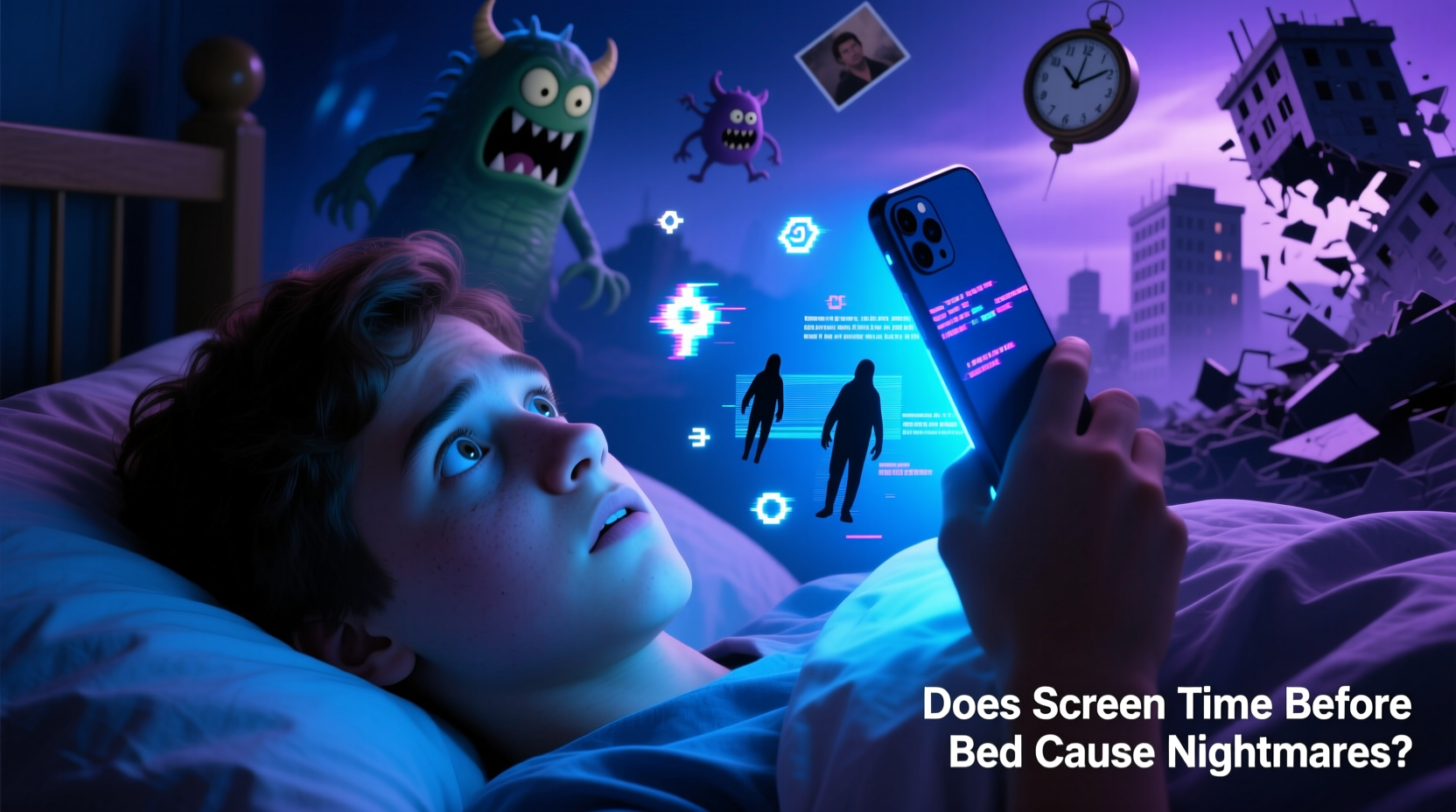
Digital screens emit blue light, a high-energy wavelength that closely mimics daylight. When absorbed by the retina, especially in the evening, blue light suppresses melatonin—a hormone critical for regulating sleep-wake cycles. Normally, melatonin levels rise in the evening, signaling the body that it’s time to wind down. But exposure to screens can delay this release by 30 minutes or more, pushing back the onset of sleep.
A study published in the Journal of Clinical Endocrinology & Metabolism found that participants exposed to two hours of screen light before bedtime experienced a 23% suppression of melatonin and reported feeling less sleepy. This delay doesn't just affect how quickly you fall asleep—it alters the architecture of your sleep cycle, particularly reducing REM (rapid eye movement) sleep early in the night and causing a “REM rebound” later on.
REM rebound occurs when the brain compensates for lost REM sleep by increasing its duration and intensity during later sleep cycles, typically in the second half of the night. Since most vivid dreams—including nightmares—occur during REM, this rebound effect may heighten emotional dreaming, making disturbing or intense dreams more likely.
“Even moderate screen use before bed can shift circadian timing and amplify emotional arousal during sleep, creating fertile ground for nightmares.” — Dr. Rebecca Robbins, sleep scientist at Harvard Medical School
Content Matters More Than We Think
While blue light plays a key role, the content consumed before bed may be equally—if not more—influential. Watching suspenseful shows, engaging in heated social media debates, or playing action-packed video games activates the sympathetic nervous system, increasing heart rate, cortisol levels, and mental alertness. This state of arousal carries over into sleep, shaping the narrative and emotional tone of dreams.
Research from the University of Montreal analyzed dream journals of individuals who regularly used screens before bed and found a 40% higher incidence of anxiety-themed dreams compared to those who avoided screens. Participants who watched horror films or stressful news were twice as likely to report nightmares within 72 hours.
This suggests that it’s not merely the device, but what happens on it, that contributes to disturbing dreams. The brain doesn’t fully disconnect during sleep; it continues processing emotional stimuli from the day. If the last input before sleep is fear-inducing or emotionally charged, the subconscious may replay or reframe those themes during dreaming.
Is the Nightmare Link Exaggerated?
Despite compelling evidence, some experts argue that the connection between screen time and nightmares is overstated. Not everyone who uses a phone before bed experiences nightmares, and individual differences in sensitivity play a major role. Factors such as baseline anxiety, sleep disorders, medication use, and overall mental health can all influence dream content independently of screen exposure.
Moreover, many people conflate poor sleep quality with nightmares. Waking up frequently due to disrupted sleep increases dream recall, especially from REM stages. A person might remember a mildly unsettling dream they would have otherwise forgotten, then attribute it to screen use—even if the dream wasn’t truly a nightmare.
Additionally, correlation does not equal causation. While studies show a link between screen use and nightmares, they often rely on self-reported data, which can be biased. Controlled laboratory studies are fewer and sometimes show mixed results. For example, a 2021 meta-analysis in Sleep Medicine Reviews concluded that while screen time delays sleep onset, the direct impact on nightmare frequency was “modest and inconsistent across populations.”
So, is the risk exaggerated? In some cases, yes—especially when screen use is framed as a universal nightmare trigger. However, dismissing the link entirely overlooks a meaningful pattern for a significant subset of users, particularly adolescents and individuals with anxiety disorders.
Who Is Most at Risk?
Certain groups appear more vulnerable to screen-induced nightmares:
- Teenagers: Their circadian rhythms naturally shift later, making them prone to late-night screen use. Combined with hormonal changes and emotional sensitivity, this increases susceptibility to vivid or distressing dreams.
- People with anxiety or PTSD: These individuals already experience heightened emotional arousal and disrupted REM sleep. Screens can amplify these effects, leading to more frequent nightmares.
- Heavy social media users: Constant exposure to curated, competitive, or negative content can create low-grade stress that surfaces in dreams.
- Night owls and shift workers: Irregular sleep schedules make them more dependent on screens for relaxation, increasing cumulative exposure during biologically sensitive hours.
A mini case study illustrates this pattern:
Mini Case Study: Emma, Age 17
Emma, a high school senior, began experiencing frequent nightmares after starting a new habit of watching true crime documentaries before bed. She reported waking up anxious, remembering detailed dreams involving being chased or trapped. Her sleep diary showed she averaged only 6.5 hours of sleep and spent 90 minutes on her phone nightly. After switching to reading fiction books under warm lighting and stopping screen use by 9 PM, her nightmares decreased from 4–5 per week to 1 every two weeks within three weeks. While other factors may have contributed, the change in pre-sleep routine was the most consistent variable.
Practical Strategies to Reduce Nightmare Risk
You don’t need to eliminate screen use entirely—but adjusting how and when you use devices can significantly reduce the risk of nightmares and improve overall sleep quality. Consider the following steps:
Step-by-Step Guide: Building a Screen-Smart Bedtime Routine
- Set a digital curfew: Stop using screens at least 60–90 minutes before bed. Use this time for low-stimulation activities like reading, journaling, or light stretching.
- Use night mode wisely: Enable blue light filters (like Night Shift or f.lux), but don’t rely on them completely. They reduce but do not eliminate blue light exposure.
- Dim screen brightness: Lower brightness manually in the evening, even with night mode enabled.
- Avoid emotionally charged content: Skip thrillers, violent games, or contentious discussions before sleep. Opt for calming content like nature videos or instrumental music—if screen use is unavoidable.
- Charge outside the bedroom: Remove temptation by keeping phones and tablets in another room overnight. Use a traditional alarm clock instead.
- Practice a wind-down ritual: Replace screen time with a consistent routine that signals safety and relaxation to the brain—such as sipping herbal tea, meditating, or listening to soft music.
| Do’s | Don’ts |
|---|---|
| Read a physical book before bed | Scroll through social media in bed |
| Use apps with grayscale mode | Watch fast-paced or scary content at night |
| Keep your phone face-down or in airplane mode | Respond to work emails after 8 PM |
| Use smart bulbs with warm tones in the evening | Play competitive video games before sleep |
Frequently Asked Questions
Can blue light filters prevent nightmares?
Blue light filters help reduce melatonin suppression and may improve sleep onset, but they don’t address the psychological impact of content. A filtered screen still delivers stimulating visuals and narratives that can influence dreams. Filters are helpful but not a complete solution.
Are nightmares caused by screens dangerous?
Occasional nightmares are normal and not harmful. However, frequent nightmares—especially if they disrupt sleep or cause daytime distress—can contribute to insomnia, fatigue, and mood disorders. Chronic nightmare disorder affects about 4% of adults and may require cognitive-behavioral therapy or medical evaluation.
What if I need my phone for work or emergencies?
If screen use is unavoidable, minimize risk by using dark mode, lowering brightness, and avoiding emotionally intense tasks. Consider setting boundaries, such as reserving emergency communication for specific hours or using a separate device for urgent alerts.
Final Thoughts: Balance Over Elimination
The idea that screen time before bed causes nightmares isn’t universally true for everyone, but it’s far from exaggerated for many. The combination of blue light disruption, emotional arousal, and REM sleep alterations creates a plausible biological pathway for increased nightmare frequency. While not every late-night scroll leads to terrifying dreams, the cumulative impact on sleep quality is well-documented.
Rather than aiming for perfection, focus on progress. Small changes—like shifting screen use earlier in the evening, choosing calming content, and creating tech-free zones in the bedroom—can yield noticeable improvements in both sleep and dream experiences. Sleep is not just about quantity; it’s about quality, continuity, and emotional restoration. Protecting that process means being intentional about what you expose your mind to in the final moments before rest.




 浙公网安备
33010002000092号
浙公网安备
33010002000092号 浙B2-20120091-4
Comments
No comments yet. Why don't you start the discussion?