
Waking up with a scratchy, dry throat is a common complaint—especially during winter months or in arid climates. Many people turn to humidifiers as a solution, believing that adding moisture to the air will soothe irritated tissues and improve sleep quality. While humidifiers can offer real relief, they also carry potential risks, particularly when used improperly. The most pressing concern? Mold growth. This article explores whether running a humidifier overnight truly helps with dry throat symptoms and evaluates the conditions under which it might introduce health hazards like mold into your sleeping environment.
How Humidifiers Can Relieve Dry Throat
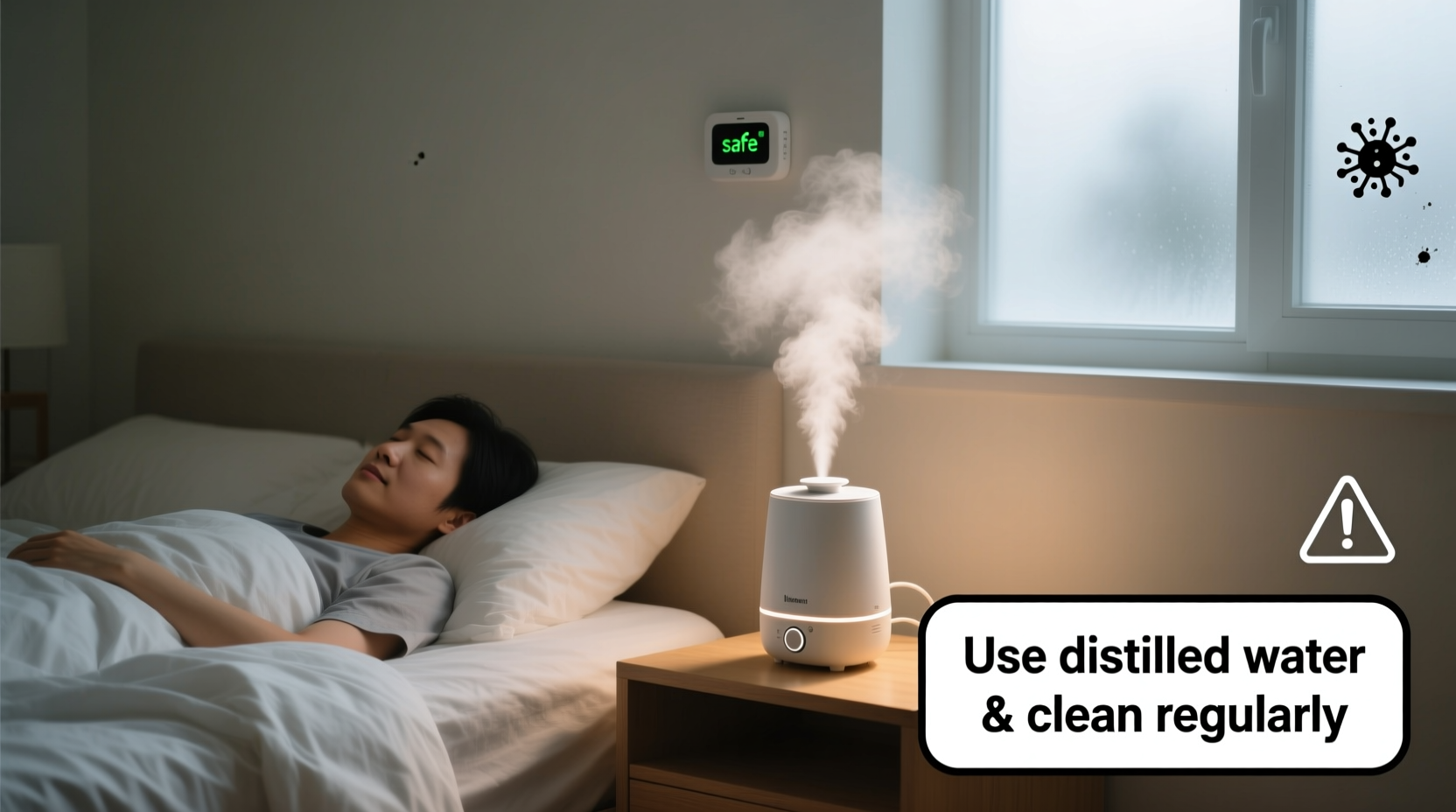
Dry air pulls moisture from your body, including your respiratory tract. In low-humidity environments—common in heated indoor spaces during winter—the mucous membranes lining your nose and throat can become dehydrated. This leads to irritation, coughing, and that uncomfortable morning soreness.
Humidifiers work by releasing water vapor into the air, increasing relative humidity. When levels are maintained between 30% and 50%, the air feels less harsh on your airways. For individuals who breathe through their mouth at night, suffer from allergies, or live in dry regions, this added moisture can significantly reduce throat discomfort.
A study published in the Journal of Allergy and Clinical Immunology found that maintaining optimal indoor humidity reduces nasal congestion and improves mucociliary clearance—the process by which your body removes pathogens from the respiratory tract. This means not only does a properly humidified room ease dry throat symptoms, but it may also support better overall respiratory function during sleep.
The Link Between Humidifiers and Mold Growth
While humidifiers provide benefits, they can become breeding grounds for biological contaminants if not managed correctly. Mold thrives in damp, warm environments—conditions that poorly maintained humidifiers readily supply.
When excess moisture accumulates on walls, ceilings, carpets, or bedding due to overuse or incorrect settings, it creates an ideal habitat for mold spores. These microscopic fungi release airborne particles that, when inhaled, can trigger allergic reactions, asthma attacks, and respiratory irritation—ironically worsening the very symptoms the humidifier was meant to alleviate.
Portable humidifiers, especially ultrasonic models, pose a higher risk because they disperse fine water droplets (mist) directly into the air. If the tank isn’t cleaned regularly, bacteria and mold can grow inside and be aerosolized along with the mist. According to the U.S. Environmental Protection Agency (EPA), unclean humidifiers can emit harmful microorganisms and minerals, potentially leading to “humidifier fever” or hypersensitivity pneumonitis in extreme cases.
“Humidifiers are beneficial when used correctly, but neglecting maintenance turns them into sources of indoor pollution.” — Dr. Linda Rosenstock, Former Director, National Institute for Occupational Safety and Health (NIOSH)
Best Practices for Safe and Effective Use
The key to gaining the benefits of a humidifier without inviting mold lies in consistent care and proper operation. Here’s how to use one safely while targeting dry throat relief:
1. Monitor Indoor Humidity Levels
Invest in a hygrometer—an inexpensive device that measures relative humidity. Keep levels between 30% and 50%. Below 30%, the air remains too dry; above 60%, condensation forms on surfaces, encouraging mold.
2. Clean Your Humidifier Daily
Empty the tank every morning and rinse it thoroughly. Wipe down all internal surfaces with a soft cloth. Once a week, perform a deep clean using a mixture of white vinegar and water (1:1 ratio) or a manufacturer-approved disinfectant. Never use bleach unless explicitly recommended by the manufacturer, as it can damage plastic components and leave toxic residues.
3. Replace Water Daily
Stagnant water promotes microbial growth. Always refill the tank with fresh, preferably distilled, water before each use. Do not let water sit overnight after use.
4. Position the Unit Strategically
Place the humidifier on an elevated, non-porous surface away from walls and furniture. Avoid placing it near electronics or absorbent materials like curtains or bedding, which can trap moisture.
5. Use the Right Type for Your Needs
Cool mist humidifiers are generally safer for bedrooms than warm mist models, which involve boiling water and pose scald risks. Ultrasonic units are quiet but require more frequent cleaning due to their tendency to aerosolize impurities.
| Humidifier Type | Pros | Cons | Mold Risk Level |
|---|---|---|---|
| Ultrasonic | Quiet, energy-efficient, cool mist | Can disperse minerals and microbes if not cleaned | High (if unmaintained) |
| Evaporative | Self-regulating humidity output, less likely to over-humidify | Louder fan noise, requires wick filter replacement | Moderate |
| Warm Mist (Steam) | Kills some bacteria in water, silent operation | Higher energy use, burn hazard, small tanks | Low to Moderate |
Mini Case Study: Sarah’s Winter Relief Journey
Sarah, a 38-year-old teacher in Denver, struggled with chronic dry throat every winter. Her home had forced-air heating, and indoor humidity often dropped below 25%. She purchased a cool-mist ultrasonic humidifier and ran it nightly on her nightstand. Within two days, her throat felt noticeably better.
But after three weeks without cleaning the unit, she began experiencing nasal congestion and occasional wheezing. A mold inspection revealed black specks inside the tank and around the base. After discarding the old humidifier and switching to a new evaporative model with weekly cleaning habits, her symptoms resolved. Now, she uses a digital hygrometer and adheres to a strict maintenance schedule, enjoying symptom-free winters ever since.
Sarah’s experience illustrates both the power and the peril of bedroom humidifiers. Proper usage brings fast relief; negligence introduces new health concerns.
Step-by-Step Guide to Nightly Humidifier Use
To maximize throat comfort while minimizing mold risk, follow this nightly routine:
- Check humidity: Use a hygrometer to confirm room levels are below 50%. If above, delay use.
- Prepare the tank: Fill with distilled water only. Avoid tap water to prevent mineral buildup.
- Inspect the unit: Ensure no visible slime, film, or odor is present. If detected, clean immediately.
- Position safely: Place on a tray to catch spills, at least 3 feet from your bed and away from walls.
- Set appropriate output: Start on low; increase only if needed. High settings often exceed safe humidity thresholds.
- Turn off in the morning: Empty remaining water and allow components to air-dry completely.
- Clean weekly: Disassemble and soak parts in vinegar solution once per week.
Do’s and Don’ts of Bedroom Humidifier Use
| Do’s | Don’ts |
|---|---|
| Use distilled water | Use tap water (high in minerals) |
| Clean the tank daily | Let water sit for multiple nights |
| Monitor humidity with a hygrometer | Run continuously without monitoring |
| Replace filters as recommended | Ignore manufacturer maintenance guidelines |
| Place on a waterproof tray | Set directly on wood or carpet |
Frequently Asked Questions
Can a humidifier cure a sore throat?
No, a humidifier cannot cure infections or viral illnesses causing sore throats. However, it can alleviate dryness-related irritation and support faster healing by keeping mucous membranes moist. It's best used as a symptomatic aid, not a treatment.
How do I know if my humidifier is growing mold?
Signs include a musty odor, visible dark spots inside the tank or nozzle, or increased allergy symptoms when the unit is running. Regular inspection and cleaning prevent these issues. If you suspect mold, discontinue use and clean thoroughly or replace the unit.
Is it safe to sleep with a humidifier every night?
Yes, if you maintain proper humidity levels (30–50%) and keep the device clean. Continuous use is acceptable as long as the unit is well-maintained and doesn’t over-humidify the room. Consider models with automatic shut-off and built-in humidistats for added safety.
Conclusion: Balancing Relief and Risk
Sleeping with a humidifier can indeed help with dry throat—provided it’s used thoughtfully. The right amount of moisture soothes irritated tissues, supports natural defenses, and enhances sleep comfort. But without diligent upkeep, that same device can become a hidden source of mold spores and airborne allergens, undermining your health instead of improving it.
The difference between benefit and harm comes down to consistency: checking humidity, cleaning tanks, using distilled water, and positioning the unit wisely. With these practices in place, a bedroom humidifier becomes a reliable ally against seasonal dryness. Without them, it risks doing more damage than good.




 浙公网安备
33010002000092号
浙公网安备
33010002000092号 浙B2-20120091-4
Comments
No comments yet. Why don't you start the discussion?