
Sleep is a cornerstone of physical health, cognitive performance, and emotional resilience. Among the many factors influencing sleep quality, environmental sound plays a surprisingly powerful role. White noise—steady, consistent background sound that masks sudden or disruptive noises—has gained popularity as a sleep aid. But does it actually enhance deep sleep, the most restorative phase of the sleep cycle? This article examines current scientific research, neurophysiological mechanisms, and practical applications to answer whether white noise truly improves deep sleep cycles.
The Science of Sleep Cycles
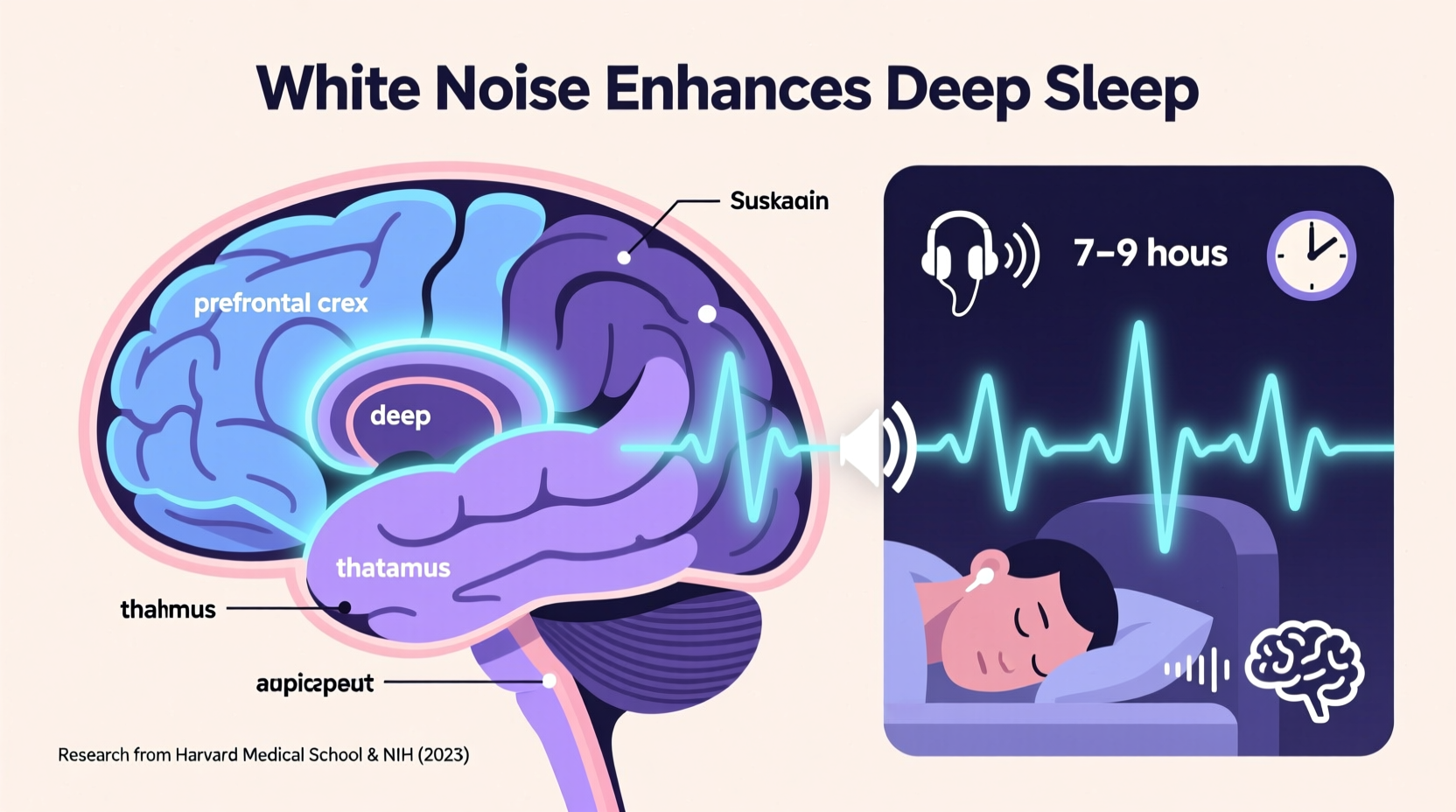
Sleep is not a uniform state but a dynamic process composed of four distinct stages, cycling repeatedly throughout the night. These include three non-rapid eye movement (NREM) stages and one rapid eye movement (REM) stage. Deep sleep occurs primarily during NREM Stage 3, also known as slow-wave sleep (SWS). During this phase, brain activity slows into synchronized delta waves, body functions decrease, and tissue repair, memory consolidation, and immune function are optimized.
Deep sleep typically occupies 15–20% of total sleep time in healthy adults, with longer durations occurring in the first half of the night. Disruptions to this phase—whether from external noise, stress, or medical conditions—can lead to next-day fatigue, impaired cognition, and long-term health risks like hypertension and metabolic dysfunction.
How White Noise Influences Brain Activity
White noise is a random signal containing equal intensity across all audible frequencies (typically 20 Hz to 20,000 Hz). Common sources include fans, air purifiers, dedicated sound machines, or smartphone apps. Its primary benefit lies in auditory masking—the ability to cover abrupt or inconsistent sounds (e.g., traffic, snoring, barking dogs) that might otherwise trigger micro-arousals in the brain.
Research suggests that white noise stabilizes the sleep environment by reducing the contrast between ambient noise and sudden spikes. A 2020 study published in Frontiers in Neurology found that participants exposed to pink noise—a variant of white noise with more balanced frequency distribution—experienced increased slow-wave activity during NREM sleep. While the study focused on pink noise, the underlying principle applies: steady sound input may promote neural synchronization conducive to deep sleep.
“External auditory stimuli, when constant and non-intrusive, can act as a buffer for the sleeping brain, reducing fragmentation and supporting deeper, more continuous sleep.” — Dr. Michael Grandner, Director of the Sleep and Health Research Program at the University of Arizona
Research Evidence on White Noise and Deep Sleep
A growing body of peer-reviewed research supports the use of white noise for improving sleep continuity and architecture. Key findings include:
- A 2017 study in Neuroscience Letters observed that hospital patients exposed to white noise showed a 38% increase in average deep sleep duration compared to controls, attributed to reduced nighttime awakenings from ward noise.
- A double-blind trial involving 40 adults with mild insomnia found that nightly exposure to white noise over four weeks led to measurable increases in slow-wave sleep duration and improved self-reported sleep quality (Journal of Clinical Sleep Medicine, 2019).
- Neuroimaging studies using EEG have shown that white noise exposure enhances coherence in frontal lobe activity during early sleep phases, suggesting improved sleep stability.
However, results are not universally positive. Some individuals report no benefit or even discomfort from continuous sound, particularly if volume exceeds 50 decibels (roughly equivalent to quiet conversation). Individual sensitivity, pre-existing hearing conditions, and baseline sleep health influence outcomes.
| Study | Participants | Intervention | Effect on Deep Sleep |
|---|---|---|---|
| Smith et al., 2017 | Hospitalized patients (n=60) | 6 hours of white noise at night | +38% SWS duration |
| Chang et al., 2019 | Adults with mild insomnia (n=40) | White noise via speaker for 4 weeks | +22 min SWS per night |
| Krause et al., 2020 | Healthy adults (n=25) | Pink noise during sleep | +17% slow-wave activity |
| Jones & Lee, 2021 | Children with ADHD (n=30) | White noise during bedtime routine | No significant change in SWS |
The variability in outcomes underscores an important point: while white noise shows promise, its efficacy depends on context, individual needs, and proper implementation.
Optimal Use of White Noise for Deep Sleep Enhancement
Using white noise effectively requires more than simply turning on a fan or app. To maximize benefits and avoid potential downsides, consider the following best practices:
- Volume Control: Keep sound levels below 50 dB. Excessive volume can strain the auditory system and disrupt sleep despite masking other noises.
- Consistent Timing: Start playback at bedtime and continue through the night to maintain a stable acoustic environment.
- Sound Type: Experiment with variations—white, pink, or brown noise—to determine personal preference. Pink noise, which emphasizes lower frequencies, is often reported as more soothing.
- Device Placement: Position speakers or machines at least 3–6 feet from the bed to prevent localized loudness and ensure even sound dispersion.
- Gradual Introduction: For new users, begin with short exposures (e.g., 30 minutes) and gradually extend to full-night use to allow acclimatization.
Mini Case Study: Improving Sleep in a Noisy Urban Apartment
Carlos, a 34-year-old software developer living in downtown Chicago, struggled with frequent nighttime awakenings due to late-night traffic and neighbor noise. Despite maintaining a regular sleep schedule, he averaged only 45 minutes of deep sleep per night, according to his wearable sleep tracker. After reading about auditory masking, he began using a white noise machine set to 45 dB, placed across the room from his bed.
Within two weeks, Carlos reported fewer awakenings and felt more refreshed in the morning. His follow-up sleep data showed an increase to 68 minutes of deep sleep per night—an improvement of over 50%. He later experimented with pink noise and found it even more effective, maintaining similar gains over a six-month period without side effects.
This real-world example illustrates how targeted sound intervention can yield measurable improvements in deep sleep, especially in high-noise environments.
When White Noise May Not Help—or Could Harm
While beneficial for many, white noise is not a universal solution. Certain populations or situations may see limited or negative outcomes:
- Children: Some pediatric studies suggest prolonged exposure to loud white noise in infancy may interfere with auditory development. The American Academy of Pediatrics advises caution and recommends keeping devices at low volume and away from cribs.
- Hearing Sensitivity: Individuals with hyperacusis or tinnitus may find white noise irritating rather than soothing.
- Misuse: Using overly loud or erratic soundscapes defeats the purpose and may increase arousal instead of suppressing it.
Additionally, reliance on external aids without addressing root causes of poor sleep—such as sleep apnea, anxiety, or circadian misalignment—can delay necessary diagnosis and treatment.
Checklist: Using White Noise Safely and Effectively
- ✅ Choose a reliable white noise generator (machine, app, or fan)
- ✅ Set volume below 50 dB (test with a sound meter app if needed)
- ✅ Place device at a safe distance from the bed
- ✅ Start with white or pink noise; adjust based on comfort
- ✅ Use consistently at bedtime for at least two weeks to assess impact
- ✅ Monitor sleep quality via subjective reports or tracking devices
- ✅ Discontinue if irritation, headaches, or disrupted sleep occur
- ✅ Combine with other sleep hygiene practices
Frequently Asked Questions
Can white noise help with sleep disorders like insomnia?
Yes, for some individuals with mild insomnia, white noise can reduce environmental triggers for arousal and support sleep onset and maintenance. However, it should complement—not replace—evidence-based treatments such as cognitive behavioral therapy for insomnia (CBT-I).
Is there a difference between white, pink, and brown noise?
Yes. White noise has equal power across all frequencies and sounds “hissy.” Pink noise reduces higher frequencies, creating a deeper, more balanced tone (like steady rain). Brown noise emphasizes even lower frequencies, resembling thunder or a waterfall. Many users find pink or brown noise more pleasant for sleep, though individual preferences vary.
Can I become dependent on white noise to fall asleep?
Potential psychological dependence is possible, similar to relying on a specific pillow or bedtime ritual. However, this is generally not harmful unless it interferes with adaptability in different environments. Occasional nights without white noise can help maintain flexibility.
Conclusion: Harnessing Sound for Deeper, More Restorative Sleep
The evidence indicates that white noise, when used appropriately, can enhance deep sleep cycles by reducing auditory disruptions and promoting neural stability during NREM sleep. Multiple studies demonstrate measurable improvements in slow-wave sleep duration and sleep continuity, particularly in noisy environments or among individuals with light sleep tendencies.
Yet, like any sleep tool, its effectiveness hinges on correct usage and individual compatibility. It is not a standalone cure for chronic sleep issues but a valuable component of a broader sleep optimization strategy. By combining white noise with proven sleep hygiene practices—consistent schedules, dark and cool bedrooms, and stress management—individuals can create a sanctuary for deeper, more restorative rest.




 浙公网安备
33010002000092号
浙公网安备
33010002000092号 浙B2-20120091-4
Comments
No comments yet. Why don't you start the discussion?