
In an age where smartphones are nearly inseparable from daily life, many people bring their devices into the bedroom—and often right beside their pillows. While convenient for alarms or late-night browsing, mounting scientific evidence suggests that keeping your phone close while sleeping may interfere with brain function, disrupt sleep architecture, and even influence long-term neurological health. This article synthesizes the latest research on electromagnetic fields (EMFs), blue light exposure, and psychological triggers linked to nighttime phone use, offering a clear-eyed look at what’s really happening in your brain when your phone sleeps with you.
The Science of Sleep and Brain Activity
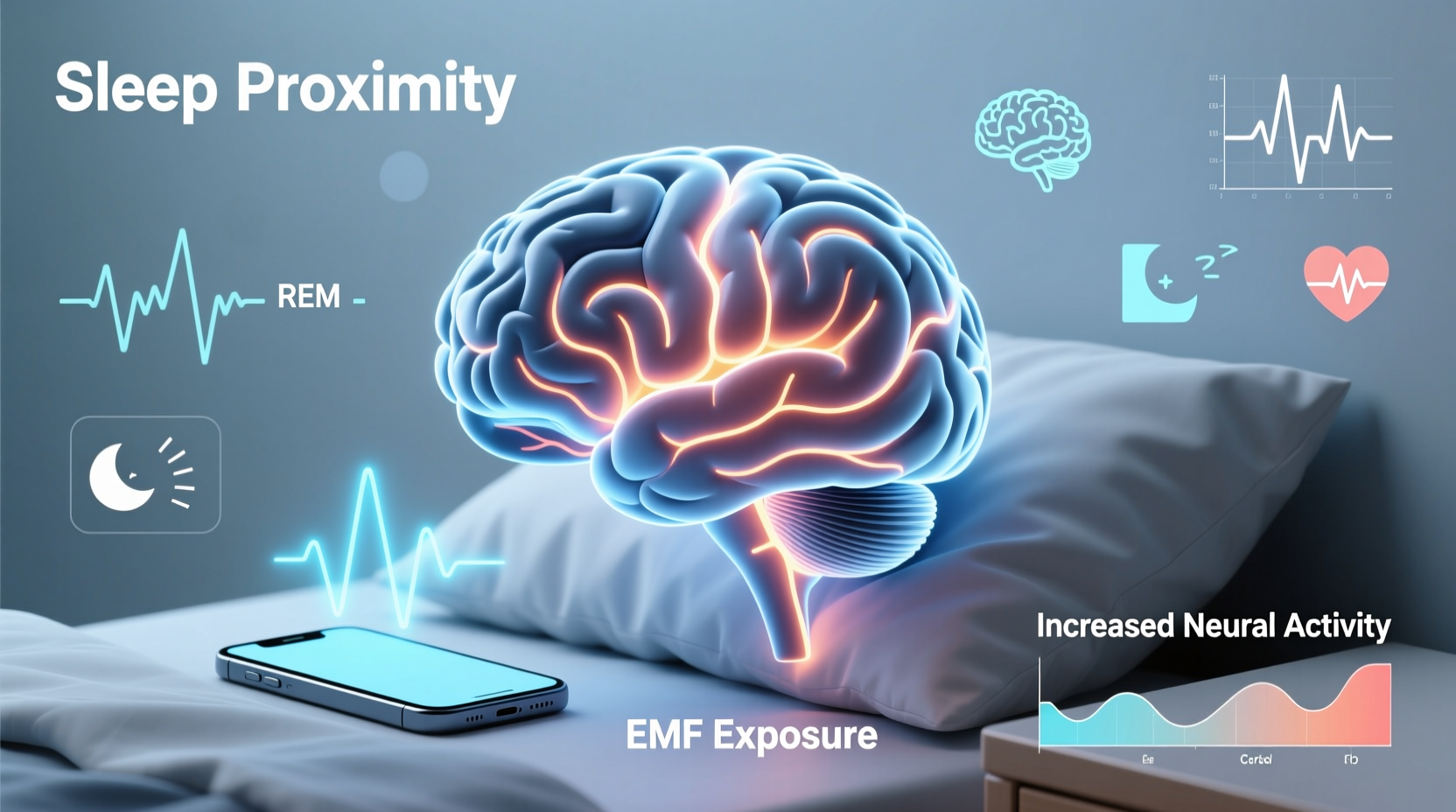
Sleep is not merely a passive state; it's a dynamic process essential for memory consolidation, emotional regulation, and metabolic balance. During deep sleep stages—particularly slow-wave sleep (SWS) and rapid eye movement (REM)—the brain performs critical housekeeping: clearing metabolic waste via the glymphatic system, strengthening neural connections, and recharging cognitive resources.
Any disruption to these phases can impair mental clarity, mood stability, and overall brain health. The proximity of electronic devices, especially smartphones, introduces multiple potential disturbances:
- Electromagnetic radiation (EMF): Phones emit low-level radiofrequency waves even when idle.
- Blue light emission: Screens suppress melatonin, delaying sleep onset.
- Psychological stimulation: Notifications, vibrations, and subconscious alertness keep the mind engaged.
While individual effects might seem minor, their cumulative impact over months or years could be significant—especially for children, adolescents, and individuals with pre-existing neurological conditions.
What Recent Studies Reveal About Phone Proximity and Brain Function
Over the past five years, neuroimaging and electrophysiological studies have advanced our understanding of how phones affect brain activity during sleep. Key findings include:
1. Altered EEG Patterns During Sleep
A 2023 double-blind study published in Environmental Health Perspectives monitored 79 adults over four weeks using polysomnography. Participants were exposed to active versus inactive smartphones placed under their pillows. Researchers found measurable changes in electroencephalogram (EEG) readings:
| Condition | Delta Wave Activity (Deep Sleep) | REM Latency | Awakenings per Night |
|---|---|---|---|
| No phone in room | Normal | 85 minutes | 1.8 |
| Phone powered off, under pillow | Slight reduction | 92 minutes | 2.1 |
| Phone on, receiving calls (simulated) | Reduced by 14% | 110 minutes | 3.6 |
The study concluded that even without direct interaction, RF-EMF exposure altered brainwave patterns associated with restorative sleep.
2. Reduced Melatonin Production
Light exposure remains one of the most potent regulators of circadian rhythm. A 2022 meta-analysis in Sleep Medicine Reviews evaluated 17 trials involving evening screen use. Results showed that just 30 minutes of smartphone use before bed reduced melatonin levels by an average of 23%, with greater suppression observed in adolescents.
“Even dim blue light can shift circadian timing by up to 1.5 hours, effectively putting the brain into a state of perpetual jet lag.” — Dr. Lena Torres, Chronobiologist, University of Colorado Boulder
3. Increased Cortical Hyperarousal
Functional MRI scans from a Swiss neuroscience team revealed heightened activity in the prefrontal cortex among participants who kept phones within arm’s reach overnight. This region governs attention and decision-making, and its persistent activation suggests a low-grade state of vigilance—even during sleep.
Participants reported more frequent awakenings and lower subjective sleep quality, despite similar total sleep duration. The researchers termed this phenomenon “phantom alertness,” where the brain remains semi-alert for incoming stimuli.
Biological Mechanisms: How Phones May Influence the Brain
Understanding the biological pathways through which phones affect brain activity helps clarify why seemingly small habits matter.
Radiofrequency Electromagnetic Fields (RF-EMF)
Smartphones communicate with cell towers using non-ionizing radiation in the 800–2500 MHz range. Although insufficient to break chemical bonds (unlike X-rays), some studies suggest RF-EMF may:
- Increase oxidative stress in brain tissue
- Affect calcium ion channels in neurons
- Disrupt blood-brain barrier permeability in animal models
The World Health Organization classifies RF-EMF as \"possibly carcinogenic\" (Group 2B), based on limited human evidence linking heavy mobile use to glioma. However, no consensus exists on safe thresholds for nighttime exposure.
Blue Light and Circadian Disruption
The suprachiasmatic nucleus (SCN), located in the hypothalamus, acts as the body’s master clock. It responds primarily to light signals received through retinal ganglion cells sensitive to short-wavelength (blue) light.
When you scroll through your phone before bed, these cells signal that it’s still daytime, delaying melatonin release. Over time, this misalignment can lead to:
- Insomnia or fragmented sleep
- Impaired glucose metabolism
- Increased risk of depression and anxiety disorders
Digital Hyperconnectivity and Cognitive Load
Beyond physical emissions, the mere presence of a smartphone increases cognitive load. A 2021 study from the University of Chicago found that simply having a phone visible—even if turned off—reduced available working memory and fluid intelligence.
At night, this translates to a brain that never fully disengages. Even if you’re not checking your phone, knowing it’s nearby primes the nervous system for responsiveness, undermining true rest.
Real-Life Impact: A Mini Case Study
Consider Sarah, a 34-year-old marketing consultant who routinely slept with her phone under her pillow for quick access to morning emails. She experienced chronic fatigue, difficulty concentrating, and occasional headaches. After wearing a sleep tracker for two weeks, her data revealed only 1.2 hours of deep sleep per night—well below the recommended 1.5–2 hours for her age group.
Her physician advised removing all electronics from the bedroom. Within ten days of charging her phone in another room and reading physical books before bed, Sarah reported improved alertness, fewer migraines, and deeper, more continuous sleep. A follow-up EEG scan showed a 22% increase in delta wave activity during SWS.
This case illustrates how behavioral adjustments—rooted in emerging science—can yield tangible improvements in brain function and well-being.
Action Plan: Reducing Nighttime Phone Exposure
Moving away from phone dependency requires both environmental redesign and habit formation. Below is a step-by-step guide to minimizing nighttime interference.
- Set a digital curfew: Stop using screens at least 60 minutes before bedtime. Replace scrolling with journaling, stretching, or audiobooks.
- Relocate your charging station: Plug your phone into an outlet in the kitchen, hallway, or home office—not near your bed.
- Use airplane mode as a fallback: If you must keep the phone nearby (e.g., for emergencies), enable airplane mode and turn off Wi-Fi and Bluetooth.
- Invest in alternatives: Use a traditional alarm clock instead of relying on your phone.
- Enable grayscale mode: Switch your display to black-and-white in the evening to reduce visual stimulation and discourage prolonged use.
Checklist: Phone-Free Sleep Environment
- ✅ Charge phone outside the bedroom
- ✅ Replace phone alarm with analog clock
- ✅ Enable “Do Not Disturb” after 9 PM
- ✅ Turn off notifications for non-essential apps
- ✅ Practice a 30-minute screen-free wind-down routine
Frequently Asked Questions
Can sleeping next to my phone cause brain tumors?
Current evidence does not establish a direct causal link between typical phone use and brain tumors in humans. However, long-term epidemiological studies like the INTERPHONE project have noted a slight increase in glioma risk among the heaviest users (over 1,640 lifetime hours). More research is needed, particularly regarding children whose skulls are thinner and brains still developing.
Is airplane mode enough to protect my brain during sleep?
Airplane mode significantly reduces RF-EMF emissions by disabling cellular, Wi-Fi, and Bluetooth radios. While not eliminating all electromagnetic fields (the device still uses minimal power), it lowers exposure by over 90%. For maximum safety, combine airplane mode with physical distance—placing the phone across the room.
Does it matter if the phone is face down or covered?
No material commonly found in homes (fabric, wood, plastic) blocks RF-EMF effectively. Orientation (face up/down) has negligible impact on exposure. Distance remains the most effective mitigation strategy: every additional foot reduces field intensity exponentially.
Expert Consensus and Public Health Guidance
Major health organizations remain cautious but increasingly proactive. The American Academy of Pediatrics recommends keeping screens out of children’s bedrooms entirely. The California Department of Public Health issued advisory guidelines in 2022 urging citizens to avoid carrying phones directly on the body and to limit close-proximity use, especially at night.
“We don’t need definitive proof of harm to take reasonable precautions. When it comes to brain health, prevention is far easier than reversal.” — Dr. Rajiv Mehta, Neurologist and EMF Researcher, Stanford School of Medicine
While regulatory standards focus on thermal effects (i.e., tissue heating), newer research emphasizes non-thermal biological effects that may accumulate over time. Until long-term consequences are fully understood, adopting a precautionary approach is scientifically sound.
Conclusion: Prioritize Your Brain’s Nightly Recovery
Your brain doesn’t shut off when you fall asleep—it shifts into maintenance mode, repairing cells, processing emotions, and preparing for the next day. Introducing constant electromagnetic noise, artificial light, and psychological alerts undermines this delicate process. The latest research makes one thing clear: habitual phone proximity during sleep correlates with measurable declines in brain activity quality and sleep efficiency.
You don’t need to abandon your smartphone to protect your mind. Small, consistent changes—charging it elsewhere, setting boundaries around usage, and creating tech-free zones—can preserve both immediate rest and long-term neurological resilience.




 浙公网安备
33010002000092号
浙公网安备
33010002000092号 浙B2-20120091-4
Comments
No comments yet. Why don't you start the discussion?