
The Christmas tree is more than a festive centerpiece—it’s a psychological and visual anchor in your living space. While many focus on ornaments or lights, the height of the tree plays a surprisingly powerful role in shaping how a room feels. From altering perceived ceiling height to influencing spatial flow, the scale of your tree can subtly transform your environment. Understanding this dynamic helps you choose not just a tree that fits, but one that enhances your home’s atmosphere.
How Tree Height Influences Spatial Perception
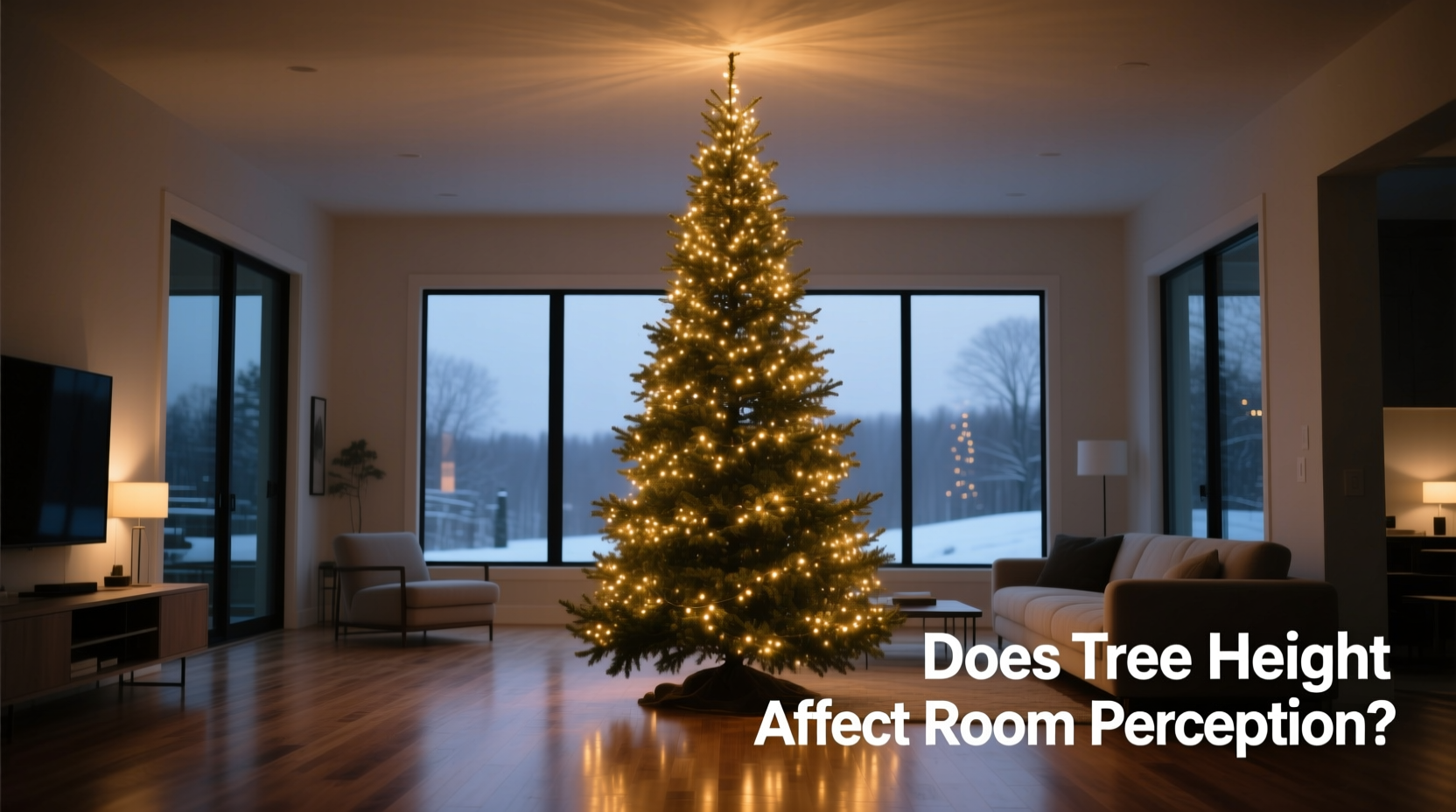
Human perception of space relies heavily on vertical cues. A tall object like a Christmas tree draws the eye upward, creating a sense of vertical extension. In rooms with high ceilings, a full-height tree reinforces grandeur. In contrast, an oversized tree in a low-ceilinged room can feel oppressive, compressing the space visually. Conversely, a tree that’s too short may appear insignificant, failing to command attention and leaving the room feeling under-decorated.
Interior designers often use the “rule of thirds” when placing large furnishings: an object should occupy roughly one-third of the vertical space to feel balanced. For a standard 8-foot ceiling, a 6- to 7-foot tree aligns well with this principle. It fills the space without dominating it. In rooms with vaulted ceilings, trees reaching 9 or even 10 feet can maintain proportionality, especially if paired with tall window treatments or built-in shelves.
Psychological Impact of Tree Scale
The emotional response to a Christmas tree is deeply tied to its scale. A towering tree can evoke awe and nostalgia, recalling childhood memories of grand displays in public halls or family homes. This emotional resonance amplifies the sense of celebration and abundance. However, in smaller homes or apartments, an overly large tree may trigger subconscious discomfort—read as clutter or imbalance—undermining the intended cheer.
Research in environmental psychology suggests that spaces perceived as harmonious reduce stress and improve mood. A tree that disrupts visual balance—either by scraping the ceiling or looking dwarfed in a large room—can create subtle tension. The ideal tree supports a feeling of cohesion, where decor complements architecture rather than competes with it.
“Scale isn’t just about fit—it’s about emotional resonance. A well-proportioned tree makes a room feel both festive and serene.” — Lena Peterson, Interior Psychologist & Author of *Designing for Emotional Comfort*
Choosing the Right Height: A Practical Guide
Selecting the optimal tree height involves more than measuring clearance. Consider sightlines, furniture placement, and lighting. A tree that blocks windows or interrupts conversation zones will feel intrusive, regardless of its dimensions. Walk through your room’s typical traffic patterns before finalizing placement.
Step-by-Step: Measuring for the Perfect Fit
- Measure the distance from floor to ceiling at the intended tree location.
- Subtract 6–12 inches to accommodate a star, angel, or decorative topper.
- Account for the tree stand, which typically adds 4–6 inches in height.
- Assess nearby furniture: ensure the tree doesn’t obscure lamps, artwork, or seating areas.
- Visualize the fully decorated tree—ornaments and lights add visual weight, making a tree appear larger.
In open-plan living areas, consider how the tree appears from multiple angles. A central placement benefits from symmetry; a tree that’s too tall may loom over adjacent kitchen or dining zones. In corner placements, slightly taller trees can work, as they’re viewed primarily from the front and side.
Room-Specific Recommendations
Different room types respond uniquely to tree height. What works in a spacious great room may overwhelm a cozy den. Below is a comparison of ideal tree heights based on common room profiles.
| Room Type | Ceiling Height | Recommended Tree Height | Notes |
|---|---|---|---|
| Standard Living Room | 8 feet | 6.5 – 7 feet | Allows space for topper; balances vertical proportion |
| Great Room / Open Plan | 9–12 feet | 8 – 10 feet | Taller trees enhance volume; avoid under-scaled trees |
| Apartment / Studio | 8 feet | 5.5 – 6.5 feet | Prevents visual crowding; maintains open feel |
| Entryway / Foyer | 8–9 feet | 4 – 5 feet | Smaller trees avoid obstructing movement |
| Children’s Room | 7.5–8 feet | 4 – 5 feet | Easier for kids to help decorate; safer |
Mini Case Study: The Balanced Tree Transformation
Sarah, a homeowner in Portland, initially chose a 9-foot tree for her 8-foot-ceilinged living room, eager to recreate the majesty of department store displays. Once assembled, the tree touched the ceiling, bending slightly at the top. Lights and ornaments made it appear even bulkier. Guests remarked that the room felt “stuffy” despite ample square footage.
After consulting an interior stylist, Sarah switched to a 7-foot tree the following year. She added a lightweight fabric angel topper and used reflective ornaments to amplify light. The change was immediate: the room felt more open, and the tree appeared more intentional. “It didn’t lose any of the magic,” she said. “If anything, it looked more elegant because it wasn’t fighting the space.”
This case illustrates that perceived size matters more than actual height. By respecting architectural limits, Sarah enhanced both comfort and aesthetic appeal.
Common Mistakes and How to Avoid Them
- Ignoring the topper: Forgetting to account for a star or angel can result in a tree that physically touches the ceiling, creating a claustrophobic effect.
- Over-decorating a tall tree: Heavy garlands and large ornaments increase visual mass, making a tall tree feel overwhelming.
- Placing too close to walls: A tall tree needs breathing room. If placed flush against a wall, it loses depth and appears flat.
- Mismatching tree size to room function: A massive tree in a small entryway hinders foot traffic and distracts from the room’s purpose.
Checklist: Selecting Your Ideal Tree Height
Before purchasing or cutting your tree, run through this checklist to ensure harmony with your space:
- ✅ Measure ceiling height at the display site.
- ✅ Subtract 6–12 inches for topper clearance.
- ✅ Add 4–6 inches for the stand when calculating total height.
- ✅ Check line of sight: does the tree block windows, art, or lighting?
- ✅ Assess foot traffic: is there at least 18–24 inches of clearance around the base?
- ✅ Consider decor weight: will heavy ornaments make the tree look bottom-heavy?
- ✅ Visualize from key viewpoints: couch, doorway, kitchen—does it feel balanced?
Frequently Asked Questions
Can a short tree still feel festive?
Absolutely. A well-decorated 5- to 6-foot tree in a properly scaled room can radiate warmth and charm. Use layered lighting, themed ornaments, and a cohesive color palette to amplify impact. Smaller trees also work well on tables or in alcoves, creating intimate holiday vignettes.
What if my ceiling is higher than 10 feet?
In rooms with vaulted ceilings, standard trees may look undersized. Consider a 10- to 12-foot tree, or use creative solutions like suspending a star from the ceiling above a 9-foot tree to extend its perceived height. Alternatively, flank a shorter tree with tall candle holders or evergreen topiaries to create a vertical ensemble.
Does artificial vs. real tree affect perception?
Yes. Artificial trees often have denser foliage and uniform shapes, making them appear larger than real trees of the same height. Real trees vary in fullness and may have natural gaps, giving them a lighter visual footprint. When substituting one for the other, adjust expectations accordingly—downsizing by half a foot may be necessary when switching from real to artificial.
Conclusion: Design with Intention
The height of your Christmas tree is not a trivial detail—it’s a design decision that shapes how you and your guests experience your home during one of the most emotionally charged times of the year. A thoughtfully sized tree enhances spatial harmony, supports positive emotions, and becomes a true centerpiece of celebration. Whether you live in a compact apartment or a sprawling farmhouse, the goal isn’t maximum height, but maximum resonance.




 浙公网安备
33010002000092号
浙公网安备
33010002000092号 浙B2-20120091-4
Comments
No comments yet. Why don't you start the discussion?