
Storms trigger intense fear in many dogs. The sudden thunderclaps, flashing lightning, and changes in barometric pressure can send even well-adjusted pets into panic mode. For owners, witnessing this distress is heartbreaking—and urgent relief becomes a top priority. Two popular tools have emerged to help: anxiety vests (like the ThunderShirt) and calming collars (such as Adaptil). But when seconds count during a storm, which one acts faster? And more importantly, which offers reliable, science-backed comfort?
This article breaks down how each product works, compares their onset times, effectiveness, and limitations, and provides actionable guidance based on veterinary insights and real-world use.
How Anxiety Vests Work: Pressure-Based Calming
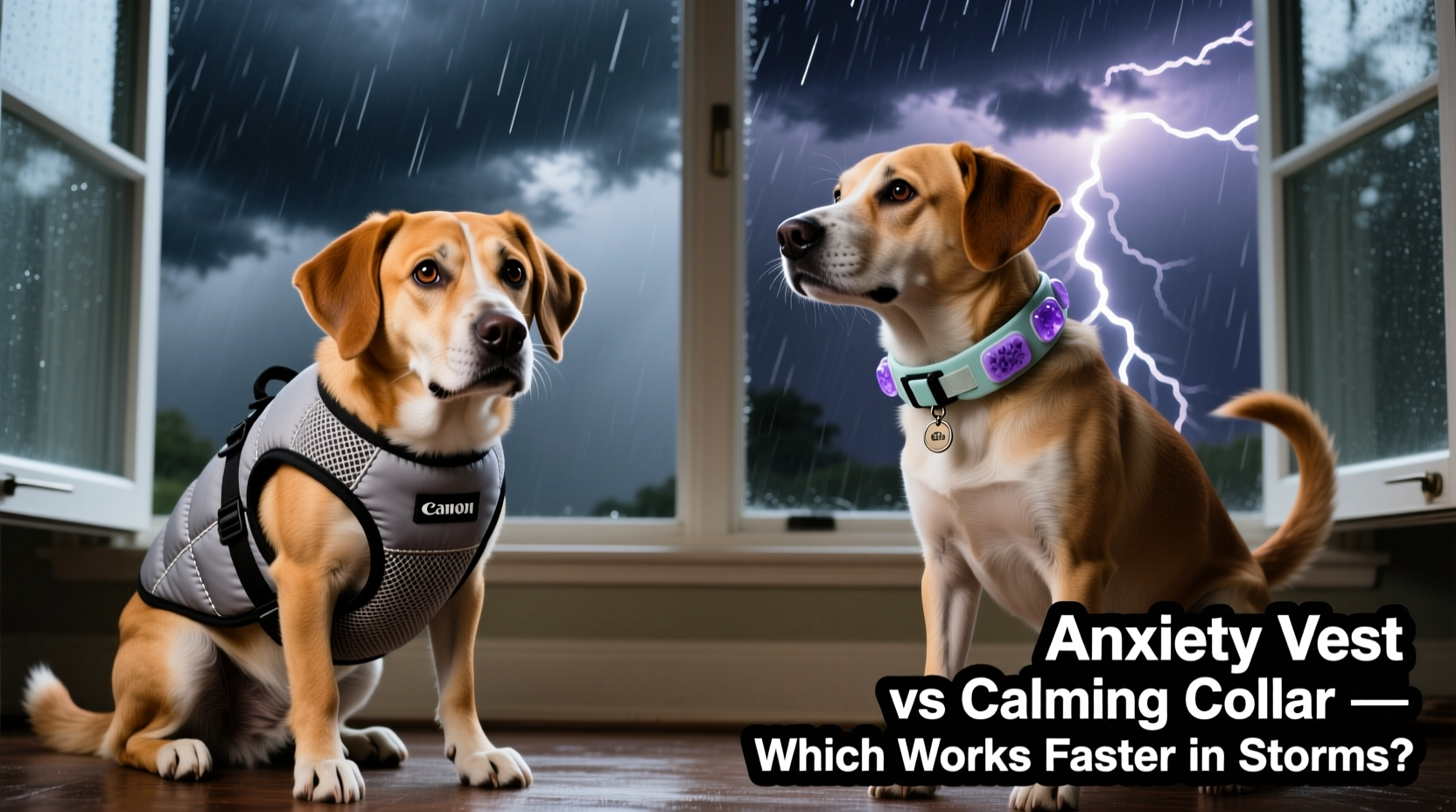
Anxiety vests apply gentle, constant pressure around a dog’s torso—similar to swaddling an infant or using a weighted blanket on humans. This concept, known as deep pressure therapy (DPT), has been studied for decades in both human and animal psychology. The theory is that firm but non-restrictive touch stimulates the parasympathetic nervous system, helping reduce heart rate and cortisol levels.
Brands like ThunderShirt are designed with stretchable, breathable fabric that wraps snugly around the chest and back. When properly fitted, the vest mimics the feeling of being hugged, which many dogs find reassuring during high-stress events like thunderstorms.
The physical mechanism means effects can be nearly immediate—often within 30 seconds to 2 minutes after correct application. However, success varies by dog. Some respond instantly; others show little change. A 2018 study published in *Applied Animal Behaviour Science* found that 78% of dogs wearing pressure garments showed reduced vocalization and pacing during simulated thunderstorms—but only when combined with familiar environmental cues like favorite toys or hiding spots.
How Calming Collars Work: Pheromone-Based Relief
Calming collars release synthetic versions of natural pheromones. Dogs naturally produce appeasing pheromones when nursing to comfort their puppies. Products like Adaptil replicate these chemical signals, aiming to trigger feelings of security and familiarity.
The collar emits molecules continuously over 30 days and works through the vomeronasal organ—a specialized scent receptor in the dog’s nose. Unlike medication or supplements, pheromone collars don’t enter the bloodstream. Instead, they influence emotional states via olfactory pathways linked directly to the limbic system, the brain’s emotional center.
Because pheromones require time to build up in the environment and saturate the dog’s sensory input, calming collars are not instant solutions. Most manufacturers recommend wearing the collar for at least 5–7 days before a stressful event for optimal effect. During active storms, the impact may take 15–30 minutes to become noticeable—if present at all.
“Pheromone therapy is best used preventively. It sets a baseline of calm rather than stopping panic once it starts.” — Dr. Sarah Langham, DVM, Veterinary Behavior Consultant
Speed Comparison: Which Works Faster During Storms?
When a storm hits unexpectedly, speed matters. Here's a direct comparison of response time and practical utility:
| Feature | Anxiety Vest | Calming Collar |
|---|---|---|
| Onset Time | 30 seconds – 2 minutes | 15–30 minutes (after sustained use) |
| Best For | Acute episodes (e.g., sudden thunderstorm) | Chronic anxiety, long-term management |
| Requires Pre-Use? | No, but acclimation helps | Yes, ideally worn for days prior |
| Durability During Storm | Immediate and consistent | Gradual, depends on exposure history |
| Scientific Support | Moderate (behavioral studies) | Strong (multiple peer-reviewed trials) |
| Effect Wears Off | Within minutes of removal | Up to several hours post-removal |
The data clearly shows that **anxiety vests act faster** during acute storm events. If your dog begins trembling at the first rumble of thunder, a properly fitted vest can provide rapid tactile reassurance. In contrast, calming collars function more like background support—they’re excellent for reducing overall reactivity but lack immediacy.
Real-World Case: Max, the Storm-Fearing German Shepherd
Max, a 4-year-old German Shepherd from Ohio, began showing severe storm anxiety at age two. His owner, Lisa, described his behavior during thunderstorms: shaking, hiding under beds, chewing door frames, and barking uncontrollably. She tried both a ThunderShirt and an Adaptil collar separately before combining them.
During a summer thunderstorm, she put the ThunderShirt on Max just as the sky darkened. Within 90 seconds, his panting slowed and he moved to lie near her on the couch instead of retreating to the bathroom. The Adaptil collar had been on for five days prior. When asked why she used both, Lisa said: “The collar keeps him less reactive overall, but when the thunder hits, the vest is what actually calms him down right then.”
This aligns with clinical recommendations: use calming collars as preventive maintenance and anxiety vests as emergency interventions.
Step-by-Step Guide: Using Both Tools Together for Maximum Effect
For dogs with moderate to severe storm anxiety, relying on a single method may not suffice. A layered approach increases the likelihood of success. Follow this timeline to optimize both products:
- Week 1–2: Introduce the anxiety vest calmly. Let your dog sniff it, place treats inside, and reward brief wear sessions. Goal: No resistance when putting it on.
- Day 1: Apply the calming collar. Choose a low-stress day. Ensure skin is dry and fit snugly (you should fit two fingers beneath).
- Days 1–7: Monitor baseline behavior. Note any changes in reactivity, sleep quality, or general demeanor.
- Before forecasted storm: Activate protocol. Put on the anxiety vest 10–15 minutes before expected storm activity—even if skies are clear.
- During storm: Combine with environmental controls. Close blinds, play white noise or classical music (e.g., Through a Dog’s Ear), and stay nearby without over-coddling.
- After storm: Remove vest, keep collar on. Reinforce calm behavior with quiet praise or a treat. Do not reward panic.
This sequence leverages the slow-building benefit of pheromones while ensuring immediate access to tactile comfort when needed.
Common Misconceptions and Mistakes
- Mistake: Expecting miracles from one tool alone. Neither product cures noise phobia. They are aids, not replacements for training or medical treatment.
- Mistake: Using a too-tight or too-loose vest. Improper fit reduces effectiveness. The vest should cover the chest without restricting movement or breathing.
- Mistake: Putting on the vest during panic. Struggling to dress a terrified dog increases stress. Practice during neutral times.
- Mistake: Relying solely on collars for acute events. Calming collars aren't fast-acting. They work best as part of a long-term plan.
When to Consider Additional Support
While anxiety vests and calming collars help many dogs, some cases require more intervention. Signs that your dog needs advanced care include:
- Self-injury during storms (e.g., chewing paws, breaking teeth on crates)
- Refusing food or water for hours before/after storms
- Extreme vocalization lasting beyond the storm
- Attempting escape or destructive behavior targeting doors/windows
In such cases, consult a veterinarian or certified veterinary behaviorist. Options may include:
- Short-term anti-anxiety medications (e.g., trazodone, alprazolam)
- Desensitization training using sound recordings
- Environmental modifications (soundproof room, basement safe zone)
A 2021 review in the *Journal of Veterinary Behavior* emphasized that multimodal treatment—combining behavioral, environmental, and pharmacological approaches—yields the highest success rates for noise aversion.
Frequently Asked Questions
Can I use an anxiety vest and calming collar together?
Yes, and it’s often recommended. The calming collar provides ongoing emotional stability, while the vest delivers immediate physical comfort during peak stress. There are no known interactions between the two.
Do calming collars work for all dogs?
No. Studies show about 60–70% of dogs respond positively to DAP (dog-appeasing pheromone) collars. Non-responders may benefit more from pressure therapy, dietary supplements (like L-theanine or CBD), or prescription medication.
How tight should an anxiety vest be?
Snug enough to maintain contact with the torso but loose enough to allow full range of motion. You should be able to slide two fingers comfortably underneath the fabric at any point. Over-tightening can increase anxiety.
Final Recommendations: Choosing Based on Your Dog’s Needs
If you're asking which works faster during storms, the answer is clear: **anxiety vests deliver quicker relief**. Their mechanical action provides almost instant feedback to the nervous system, making them ideal for sudden weather changes.
However, calming collars excel in prevention. Used consistently, they lower a dog’s baseline anxiety, making them less likely to spiral into panic when a storm approaches. Think of the collar as daily mental hygiene and the vest as an emergency toolkit.
For best results, combine both. Start with a calming collar weeks before storm season begins. Pair it with an anxiety vest you’ve trained your dog to accept. Add environmental controls like sound masking and safe spaces. This holistic strategy gives your dog multiple layers of support—exactly what sensitive animals need when facing overwhelming stimuli.
“The most effective anxiety management isn’t about quick fixes—it’s about creating a predictable, secure world for a dog who feels out of control.” — Dr. Karen Overall, DACVB, Canine Behavior Specialist
Take Action Today
Don’t wait for the next thunderstorm to test your dog’s limits. Assess their current anxiety level, invest in proven tools, and begin desensitization now. Whether you choose an anxiety vest, a calming collar, or both, consistency and preparation make all the difference. Your dog relies on you to create safety when the world feels chaotic. With the right approach, you can turn fear into resilience—one storm at a time.




 浙公网安备
33010002000092号
浙公网安备
33010002000092号 浙B2-20120091-4
Comments
No comments yet. Why don't you start the discussion?